
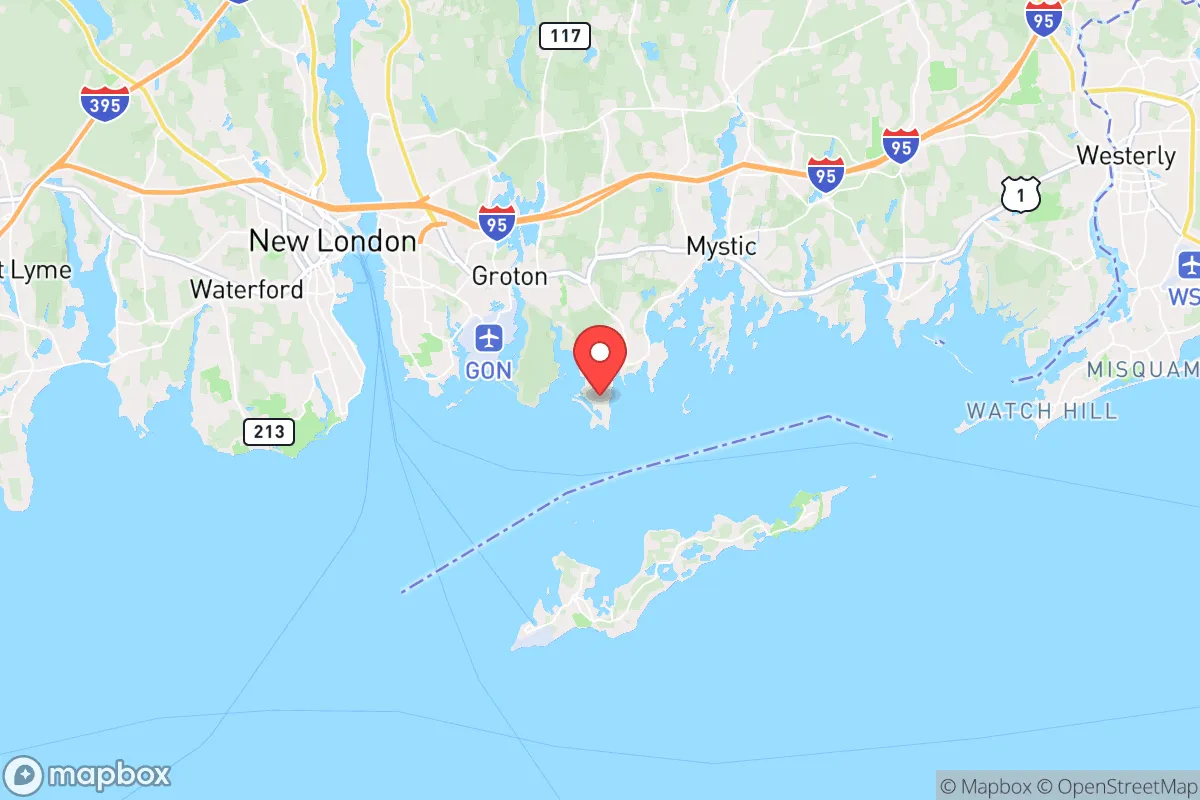
Political ClimatePolitical Climate in Groton Long Point, CT
District shown is the primary district for this city’s centroid. Cities may span multiple districts.
Local Political AnalysisPolitical Analysis of Groton Long Point, CT
Groton Long Point, Connecticut, has a Cook PVI of D+4, meaning it leans about four points more Democratic than the national average. But if you’ve lived here as long as I have, you know that number doesn’t tell the whole story. This place used to be a quiet, independent-minded coastal community where folks kept to themselves and didn’t much care for outsiders telling them how to live. Over the last decade or so, that’s been shifting. The political lean is still moderate on paper, but the progressive influence from nearby New London and the growing pressure from state-level policies out of Hartford are making it harder to ignore the direction things are heading.
How it compares
Compared to surrounding towns, Groton Long Point is a bit of an outlier. Head west to Mystic or north to Ledyard, and you’ll find communities that still vote reliably red or at least purple. But Groton Long Point’s D+4 rating puts it closer to New London’s deep-blue politics than most locals would like. The difference is that New London has embraced the full progressive agenda—higher taxes, more regulations, and a general attitude that government knows best. Here in the Point, we’ve always valued our privacy and our property rights. The contrast is stark when you look at how the town handles things like zoning or beach access. While neighboring towns are pushing back against state mandates on housing and environmental rules, Groton Long Point has been quietly going along with more oversight. It’s a slow creep, but it’s there.
What this means for residents
For those of us who’ve been here a while, the biggest concern is that the political shift is starting to affect daily life. Property taxes have been creeping up, not just because of inflation but because the town is adopting more state-mandated programs that come with strings attached. There’s talk of stricter building codes and environmental restrictions that could make it harder to maintain your own home the way you want. The local school board has also seen a push for curriculum changes that prioritize social justice over traditional academics. It’s not a full takeover yet, but the pattern is familiar: a small, vocal group pushes for change, and before you know it, you’re filling out more forms and getting less say in your own backyard. If you value personal freedom and minimal government interference, this is something to keep an eye on.
On the cultural side, Groton Long Point still has a strong sense of community—neighbors help each other out, and the summer crowd brings a laid-back vibe. But the political undercurrent is real. You’ll hear more talk at the local coffee shop about state overreach and the erosion of local control. The long-term trajectory, if current trends hold, is a slow but steady move toward the kind of progressive policies that have already reshaped places like New Haven and Hartford. For now, it’s still a great place to live if you want a mix of coastal charm and relative independence. But if you’re thinking of moving here, just know that the political climate is changing, and not everyone is happy about it.

State Political ClimatePolitical Climate in Connecticut
State Political AnalysisPolitical Environment in the State
Connecticut has shifted from a classic swing state to a reliably blue stronghold over the past 20 years, with Democrats now holding every statewide office and supermajorities in the legislature. The state voted for Hillary Clinton by 13 points in 2016 and Joe Biden by 20 points in 2020, a dramatic leftward lurch from 2000 when George W. Bush lost it by just 6 points. The dominant coalition is a mix of wealthy suburbanites in Fairfield County, union households in Hartford and New Haven, and a growing population of out-of-state transplants from New York and Massachusetts who bring progressive voting habits with them.
Urban vs. rural divide
The political map of Connecticut is a tale of three distinct regions. The southwestern corner, anchored by Stamford, Greenwich, and Norwalk, is the engine of Democratic dominance—these affluent commuter towns vote like mini versions of Manhattan, with Greenwich going from a Republican stronghold to a 55% Biden town in 2020. The old industrial cities—Hartford, New Haven, Bridgeport, and Waterbury—are deep blue, delivering 70-80% Democratic margins thanks to unionized public sector workers and minority communities. The rural eastern half of the state, including Litchfield County, the Quiet Corner (Windham County), and towns like Killingly and Canterbury, remains reliably Republican, but these areas are losing population and political clout. The 2020 election saw Fairfield County flip decisively blue, while New London County shifted left by 8 points, driven by the growth of Mystic and Stonington as second-home destinations for New Yorkers. The only county that voted for Trump in 2020 was Litchfield County, and even there, the margin was just 51-48.
Policy environment
Connecticut’s policy environment is a case study in progressive governance with a heavy price tag. The state has the highest combined state and local tax burden in the nation, with a progressive income tax topping out at 6.99% and property taxes among the highest in the country—the median effective property tax rate is 2.14%, more than double the national average. The regulatory posture is aggressive: Connecticut was the first state to mandate paid family leave (up to 12 weeks at 95% wage replacement, capped at $900/week), funded by a 0.5% payroll tax on all workers. Education policy is dominated by the teachers’ unions, with per-pupil spending exceeding $20,000 but mediocre outcomes—only 37% of students are proficient in math. The state has universal mail-in voting, no voter ID law, and same-day voter registration, making it one of the easiest places to vote in the country. Healthcare is heavily regulated, with a state-run exchange (Access Health CT) and a public option for small businesses. The 2023 passage of a “safe harbor” law for gender-affirming care made Connecticut a sanctuary state for minors seeking transition-related medical procedures, overriding parental consent laws in other states.
Trajectory & freedom
Connecticut is becoming less free by almost any measure, with the legislature consistently expanding government control over personal and economic decisions. The 2023 gun control package banned the open carry of firearms, raised the purchasing age to 21, and required a state-issued permit for all ammunition purchases—one of the strictest regimes in the country. Parental rights took a hit with the 2021 “Safe Schools” law, which allows schools to withhold information about a child’s gender identity or sexual orientation from parents if the school deems it necessary. Medical autonomy is eroding: the 2022 “Right to Reproductive Freedom” law codified abortion access and removed parental notification requirements for minors, while the 2023 gender-affirming care law shields providers from out-of-state lawsuits. Property rights are under pressure from a 2023 “fair share” housing law that allows the state to override local zoning to force higher-density development in suburban towns. On the tax front, the 2024 budget added a new 1% surcharge on capital gains over $500,000, further squeezing retirees and business owners. The only bright spot for freedom advocates was the 2023 repeal of the “death tax” (estate tax) on estates under $7.1 million, a modest win that still leaves Connecticut with one of the lowest estate tax thresholds in the Northeast.
Civil unrest & political movements
Connecticut has seen relatively little street-level unrest compared to other blue states, but organized political movements are active on both sides. The “CT 2A” movement (Second Amendment advocacy) is robust, with regular rallies at the state capitol in Hartford drawing hundreds of gun owners, particularly from the eastern and northwestern counties. The 2020 Black Lives Matter protests in New Haven and Hartford were large but mostly peaceful, leading to the creation of a state police accountability task force. Immigration politics are a flashpoint: Connecticut is a sanctuary state under a 2019 law that prohibits state and local law enforcement from cooperating with federal immigration authorities, and the 2023 “Trust Act” expanded these protections. The town of Danbury saw a high-profile standoff in 2023 when the mayor tried to opt out of the sanctuary policy, only to be overruled by the state attorney general. Election integrity is a growing concern among conservatives: the 2020 election saw widespread use of drop boxes and no-excuse absentee voting, and a 2023 law made these permanent. The “Stop the Steal” movement has a small but vocal presence, particularly in Litchfield and Tolland counties, where local Republican town committees have passed resolutions questioning the 2020 results. Secession rhetoric is minimal, but there is a persistent undercurrent of “Northern New England” separatism in the rural northeast, where some residents feel abandoned by Hartford.
Projection
Over the next 5-10 years, Connecticut will likely become more Democratic and more progressive, driven by demographic trends that favor the left. The state is losing native-born residents—about 20,000 people per year—but gaining wealthy out-of-state transplants from New York and Massachusetts who are culturally liberal and fiscally tolerant of high taxes. The Fairfield County suburbs will continue to shift left as older Republican homeowners sell to younger Democratic families. The rural Republican strongholds will continue to shrink in population and political influence, though they may gain some clout through gerrymandering if Republicans can hold the state Senate. The biggest wildcard is the state’s fiscal crisis: Connecticut has over $30 billion in unfunded pension liabilities, and the 2024 budget still relies on one-time federal funds. If taxes rise further to cover these obligations, the state could see an acceleration of out-migration among high-earners, potentially flipping some suburban districts. But for now, the trajectory is clear: more regulation, higher taxes, and an expanding role for the state in personal decisions. A conservative moving in now should expect to be a permanent minority in a state that is increasingly hostile to their values.
Bottom line for a new resident: If you value low taxes, gun rights, parental control over education, and local zoning autonomy, Connecticut is a tough place to call home. The state’s progressive policies are entrenched and likely to deepen, and the cost of living—both financial and cultural—is high. The best bet for a conservative is to target the Litchfield County towns (like Kent, Salisbury, or Cornwall) or the eastern Connecticut rural areas (like Woodstock or Pomfret), where you’ll find like-minded neighbors and lower property taxes, but you’ll still be subject to state-level policies that you can’t change at the ballot box. If you’re moving for a job in New York or Boston, consider living just over the border in New York’s Dutchess County or Massachusetts’ Hampden County, where the tax and regulatory climate is more favorable.
* Values derived from national, state, county, city and local statistics and may differ in a specific area. Last updated: 2026-05-03T20:21:56.000Z
Narrative content on this page is AI-generated and may contain mistakes. Verify any details that matter before acting on them.
ReloMaps may earn a commission from affiliate links at no extra cost to you.

