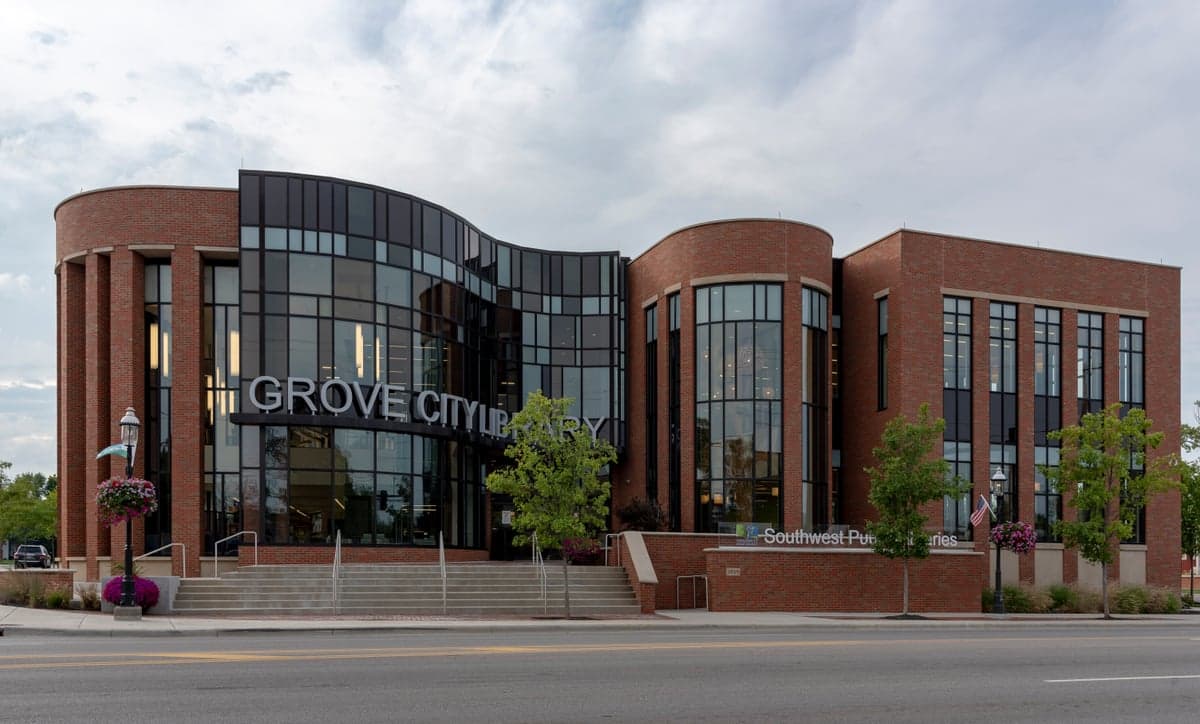
Photo: Wikipedia
Quality of Life in Grove City, OH
A high quality of life with strong walkability, manageable living costs, healthy neighborhood signals, and solid amenity access.
What does Quality of Life tell us?
Quality of Life blends cost of living, nearby amenities, socioeconomic signals, and neighborhood character. City-level scores represent the whole municipality; individual neighborhoods can differ.
What does this tell us?
Quality of Life blends cost of living, nearby amenities, socioeconomic signals, and neighborhood character. City-level scores represent the whole municipality; individual neighborhoods can differ.
Cost of Living
6% above national average
The Real Cost of Living in Grove City, OH for 2026
| Tier | Individual | Family (4) |
|---|---|---|
| Survival | $20k | $38k |
| Comfortable | $55k | $81k |
| Luxury | $143k+ | $221k+ |
| Elite (Top 5%) | $168k+ | $260k+ |
112%
The Area Signal
A metric tracking the socioeconomic signals of the area.


Hobbies
Explore the areaGroceries
2 within 10 miles
Gas
0 within 10 miles
Hospital
3 within 20 miles
Airport
John Glenn Columbus International Airport
Post Office
USPS — Dublin, OH
Critical Amenities
Quality-of-Life Analysis
Grove City, Ohio, presents a quality of life defined by solidly middle-to-upper-middle-class affluence, attracting a mix of young families, long-term residents, and Columbus commuters who prioritize good schools and suburban safety over urban excitement. With a cost of living index of 106—six points above the national average—the city offers a tangible trade-off: higher housing costs than the national norm, but significantly lower than the pricey inner-ring suburbs of Bexley or Upper Arlington. The typical resident is a homeowner in a single-family detached house, commuting roughly 22 minutes into downtown Columbus or to major employment hubs like the Rickenbacker area or the Ohio State University campus.
Cost of living, housing affordability, and how Grove City compares to nearby suburbs
Grove City’s housing market is the primary driver of its above-average cost of living. The median home value sits at $283,300, which is notably higher than the national median but still roughly $50,000 to $80,000 less than comparable homes in Dublin or New Albany. For renters, the median monthly rent of $1,282 is competitive for the Columbus metro, offering more square footage per dollar than neighborhoods like Clintonville or the Short North. Property taxes in Franklin County are moderate, and the city’s lack of a local income tax (beyond the state and county levels) helps offset the higher home prices. Compared to the national average, a family earning $75,000 annually will find the housing market tight but manageable, especially if they are moving from a high-cost coastal market. The average commute of 22.2 minutes is shorter than the national average of 26 minutes, a practical advantage for workers employed at major nearby employers like Amazon’s fulfillment centers, Mount Carmel Grove City Hospital, or the state government offices downtown.
What daily life is like for families: schools, parks, and local amenities
Daily life in Grove City revolves around its well-regarded public school system, South-Western City Schools, which serves the city and surrounding townships. The district is one of the largest in Ohio, and while it does not have the top-tier academic rankings of suburban districts like Olentangy, it offers strong programs, particularly in career-technical education and athletics. Families spend weekends at the sprawling Grove City Parks and Recreation system, which includes the 100-acre Fryer Park with its walking trails, fishing ponds, and the historic Century Village. The city’s commercial spine along Stringtown Road and Broadway is filled with big-box retailers, chain restaurants, and local staples like the Grove City Brewing Company. The rhythm is decidedly suburban: school drop-offs, weekend soccer games, and trips to the nearby Scioto River for kayaking or fishing. For a change of pace, downtown Columbus is a 20-minute drive, offering the Columbus Museum of Art, the Arena District, and the Short North’s galleries and dining scene.
Grove City is an ideal fit for families and professionals who want a stable, safe suburban environment with a reasonable commute to Columbus jobs, but who do not require the prestige or price tag of the city’s elite northern suburbs. Empty-nesters downsizing from larger homes also find value here, as do first-time buyers priced out of more expensive Franklin County communities. The city’s steady population growth—up roughly 10% since 2010—reflects its appeal as a practical, middle-ground choice in a metro area where housing costs are rising faster than wages. For those who value good schools, a 22-minute commute, and a home under $300,000, Grove City delivers a quality of life that is both attainable and comfortable.

Crime in Grove City, OH
Generally safer than 71% of comparable U.S. locations.
Violent CrimeViolent Crime Analysis
Property CrimeProperty Crime Analysis
Crime Analysis
Grove City, Ohio, presents a mixed safety profile for prospective residents. The city’s violent crime rate of 207.9 per 100,000 residents is notably lower than the national average, but its property crime rate of 2,475.2 per 100,000 is significantly higher, placing it above both state and national benchmarks. This combination means that while the risk of a violent encounter is relatively low, the likelihood of experiencing theft, burglary, or vandalism is a tangible concern for households and businesses.
Crime in context
When compared to broader Ohio and U.S. figures, Grove City’s violent crime rate is roughly 40% lower than the national average of approximately 380 per 100,000, and also below the Ohio state average of about 300 per 100,000. This is a positive indicator for personal safety. However, the property crime rate is a different story. It exceeds the national average of roughly 1,950 per 100,000 and is well above the Ohio average of around 2,100 per 100,000. This disparity suggests that property-related offenses, particularly theft from vehicles and residential burglaries, are more prevalent here than in many peer communities. The city’s proximity to Columbus, a major metropolitan hub, may contribute to this dynamic, as transient crime patterns often affect suburban rings.
What residents experience
Daily life in Grove City for most residents does not involve violent crime, but property crime is a recurring nuisance. Common reports include stolen packages from porches, unlocked car break-ins, and occasional garage burglaries. The city’s police department maintains a visible presence and has implemented community policing initiatives, but the sheer volume of property offenses strains resources. A critical factor for readers to weigh is the broader legal environment in Franklin County, which includes Columbus. Franklin County has elected progressive prosecutors and judges who have adopted policies such as cash bail reform, reduced sentencing for property crimes, and diversion programs for repeat offenders. While these policies aim to reduce incarceration, critics argue they result in more criminals on the street and a revolving-door justice system that undermines deterrence. For victims, this can mean stolen property is rarely recovered and perpetrators face minimal consequences, eroding trust in the system.
Neighborhood-level variation in Grove City is modest but noticeable. Older, established areas near the city center and along Park Street tend to have slightly lower crime reports, while newer subdivisions near the I-71 corridor and commercial zones like Stringtown Road see higher rates of property crime due to easier access and higher traffic. The southwestern quadrant of the city, closer to the Franklin-Madison county line, generally reports fewer incidents. Prospective residents should consult the Grove City Police Department’s online crime map and consider factors like street lighting, neighborhood watch activity, and proximity to major roads when choosing a specific area. Overall, the city is safe for families and professionals who take standard precautions, but the combination of elevated property crime and a lenient regional justice system warrants careful consideration.
* Values derived from national, state, county, city and local statistics and may differ in a specific area. Last updated: 2026-04-19T05:12:10.000Z
Narrative content on this page is AI-generated and may contain mistakes. Verify any details that matter before acting on them.
ReloMaps may earn a commission from affiliate links at no extra cost to you.

