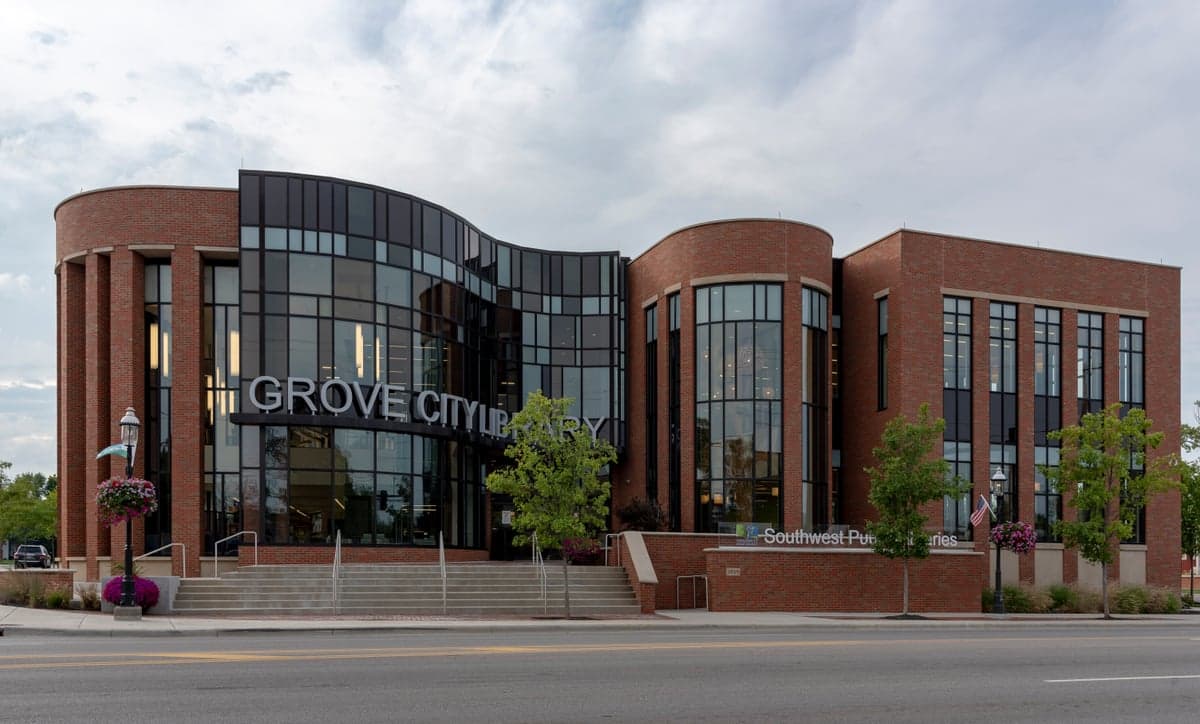
Photo: Wikipedia
Political ClimatePolitical Climate in Grove City, OH
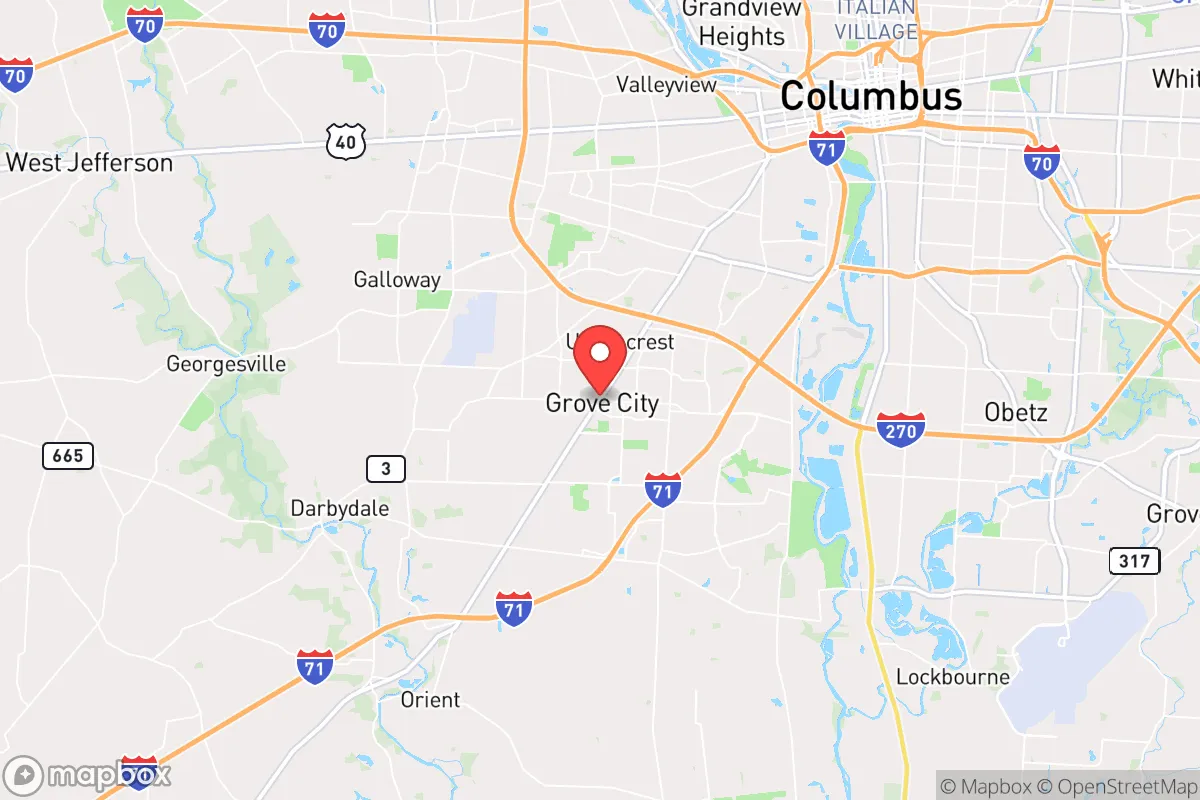
District shown is the primary district for this city’s centroid. Cities may span multiple districts.
Local Political AnalysisPolitical Analysis of Grove City, OH
Grove City, Ohio, has long been a reliably conservative community, and that hasn't changed much despite the broader shifts you see in Franklin County. The Cook PVI sits at R+4, which tells you the district leans Republican, but it’s not a deep-red stronghold like you’d find further south in Pickaway County. Over the last decade, you’ve seen the city hold steady in its voting patterns, even as Columbus to the north has swung hard left. The real story here is that Grove City has become a bit of a bulwark—a place where folks still value limited government and personal responsibility, even as the state capital pushes a more progressive agenda.
How it compares
If you drive ten minutes north into Columbus proper, you’re in a completely different political world—solidly blue, with all the big-city policies that come with it. Head east to Canal Winchester or south to the more rural parts of Pickaway County, and you’ll find communities that are even more conservative than Grove City. The contrast is sharpest with nearby Upper Arlington and Bexley, which have trended left in recent years, especially on social issues. Grove City sits in that sweet spot: conservative enough that you don’t feel like an outsider, but close enough to the city that you still deal with some of the spillover from Franklin County’s progressive leadership, like higher property taxes and zoning restrictions that feel like government overreach.
What this means for residents
For the average person living here, the political climate means you can generally expect local government to stay out of your business. The city council and school board have historically leaned conservative, which keeps things like mask mandates, vaccine passports, and heavy-handed business regulations at bay. That said, you’ve got to keep an eye on the county level—Franklin County commissioners have been pushing things like gun control measures and tax hikes that don’t reflect Grove City’s values. It’s a constant tug-of-war, and the concern is that as Columbus expands, those progressive policies will creep further south. The long-term worry is that if the city doesn’t stay vigilant, you could see the same kind of overreach that’s turned other Ohio suburbs into mini versions of the city.
Culturally, Grove City still feels like a small town in a lot of ways. The annual Arts in the Alley festival and the Grove City Farmers Market are big community events, and you don’t get the sense that anyone’s trying to push an agenda at them. The schools are solid, and parents have a real say in what their kids are taught—something that’s becoming rare in other parts of the state. But there’s a growing unease about the direction of the state as a whole. The recent push for more centralized control from Columbus, whether it’s on housing mandates or environmental regulations, feels like a direct threat to the local autonomy that makes Grove City work. If you’re looking for a place where you can still live your life without the government breathing down your neck, this is it—for now. But keep your ear to the ground, because the political winds are shifting, and not in a way that respects the freedoms folks here have always valued.

State Political ClimatePolitical Climate in Ohio
State Political AnalysisPolitical Environment in the State
Ohio has long been the quintessential swing state, but over the past decade it has shifted decisively to the right, with Donald Trump carrying it by 8 points in both 2016 and 2020 and by a wider margin in 2024. The state’s political center of gravity now rests with its sprawling exurbs, small industrial cities, and vast rural stretches, while the once-dominant Democratic machine in Cuyahoga County (Cleveland) and Franklin County (Columbus) has lost its statewide veto power. For a conservative considering relocation, Ohio offers a solidly Republican state government, a low-tax environment, and a cultural landscape that still values traditional institutions, though the major metros remain blue islands that can feel like a different country.
Urban vs. rural divide
The political map of Ohio is a study in stark contrasts. The three C’s — Cleveland, Columbus, and Cincinnati — are Democratic strongholds, with Hamilton County (Cincinnati) and Franklin County (Columbus) voting blue by double digits in recent cycles. But outside those urban cores, the state is deeply red. The I-71 corridor from Cincinnati to Cleveland is a political fault line: the suburbs of West Chester, Mason, and Liberty Township in the Cincinnati metro are reliably Republican, while the inner-ring suburbs like Shaker Heights and Cleveland Heights are progressive bastions. The Mahoning Valley around Youngstown, once a union-driven Democratic stronghold, has flipped hard to the right, with Trump winning Mahoning County in 2020 after it went for Obama twice. The rural northwest (think Findlay, Lima, and the farmland stretching to Toledo) and the Appalachian southeast (Athens County excepted) are among the most conservative regions in the Midwest. The divide isn’t just urban vs. rural — it’s also about college towns like Athens (home to Ohio University) and Oxford (Miami University), which vote heavily Democratic, versus the surrounding counties that vote 70%+ Republican.
Policy environment
Ohio’s policy environment under Republican Governor Mike DeWine and a supermajority legislature has been broadly conservative, though not without frustrations for liberty-minded residents. The state has a flat income tax that was cut to 3.5% in 2023, with further reductions scheduled, and no tax on Social Security benefits. Property taxes are moderate, though recent reappraisals in fast-growing counties like Delaware and Warren have caused sticker shock for homeowners. On education, Ohio has a robust school choice program: the EdChoice Scholarship allows students in underperforming districts to attend private or parochial schools, and the state has expanded charter school access. However, the state board of education has been a battleground over curriculum transparency and parental rights. On healthcare, Ohio expanded Medicaid under the Affordable Care Act, a decision many conservatives view as a fiscal drag, but the state has not pursued a state-based exchange. Election laws have tightened: SB 1 (2023) requires photo ID for voting, limits drop boxes, and shortens the absentee ballot window — changes that have drawn lawsuits from the left but are popular with conservatives who want election integrity. The state also has a constitutional carry law (permitless carry) that took effect in 2022, and it remains a right-to-work state in practice, though the law was repealed by referendum in 2011.
Trajectory & freedom
On the freedom front, Ohio has been a mixed bag. The good news: constitutional carry (HB 227) passed in 2022, eliminating the need for a permit to carry a concealed firearm. The state also passed a parental bill of rights (HB 8) in 2023, requiring schools to notify parents of any medical or mental health services offered to their children and to allow parents to opt out of sexually explicit instructional materials. On the concerning side, the 2023 Issue 1 referendum enshrined a right to abortion in the state constitution, overriding the legislature’s six-week heartbeat bill. This was a major loss for pro-life advocates and shows how direct democracy can bypass the legislature. Additionally, Issue 2 legalized recreational marijuana, which many conservatives opposed on public health grounds. The state also saw a controversial energy policy under HB 6, which bailed out nuclear and coal plants and led to a corruption scandal that sent former House Speaker Larry Householder to prison. On property rights, Ohio has not passed a strong takings reform law, and eminent domain remains a concern in areas targeted for renewable energy projects. The trajectory is toward more direct democracy, which cuts both ways — it can protect gun rights but also override the legislature on social issues.
Civil unrest & political movements
Ohio has seen its share of political flashpoints. The 2020 protests in Columbus and Cincinnati over George Floyd’s death were large but largely peaceful, though there were instances of looting and property damage. The 2022 election integrity protests were smaller and more localized, centered on county board of elections meetings in places like Warren County and Butler County, where activists demanded audits and hand-counts. The immigration debate is less intense than in border states, but the arrival of Haitian migrants in Springfield (Clark County) in 2023-2024 caused a local backlash over housing and school resources, with the city council passing a resolution opposing further resettlement. The anti-vaccine mandate movement was strong in rural Ohio, with school board meetings in Delaware County and Medina County becoming heated over mask mandates and vaccine requirements for students. The Ohio Freedom Alliance and local Moms for Liberty chapters have been active in school board races, particularly in the Cincinnati and Columbus suburbs. There is also a growing nullification movement around federal gun laws, with several counties passing Second Amendment sanctuary resolutions, though these are symbolic. The most visible political movement in 2024 was the anti-Issue 1 campaign, which saw massive spending from out-of-state progressive groups and a coordinated effort by churches and pro-life organizations that ultimately failed.
Projection
Over the next 5-10 years, Ohio will likely become more Republican at the state level but more polarized internally. The in-migration from the Northeast and California is modest compared to Texas or Florida, but it is concentrated in the Columbus and Cincinnati suburbs, which are trending purple. The Mahoning Valley and the I-75 corridor from Toledo to Dayton will continue to drift right as union influence wanes and manufacturing jobs are replaced by logistics and warehousing. The Democratic strongholds will become smaller but more intensely blue, meaning the state will not flip back to swing-state status unless the GOP nominates a weak candidate. The direct democracy trend is the wild card: expect more ballot initiatives on minimum wage, paid leave, and redistricting reform, which could erode the legislature’s power. For a conservative moving in, the state will remain a safe haven for gun rights, school choice, and low taxes, but the cultural battles will intensify in the suburbs, and the state government will face constant pressure from progressive ballot initiatives.
Bottom line for a new resident: Ohio is a solidly conservative state with a Republican supermajority, low taxes, and strong gun rights, but the major cities and college towns are progressive enclaves that will feel like a different world. If you’re looking for a place where your vote counts, your kids can attend a school of your choice, and you can carry a firearm without a permit, Ohio delivers. Just be prepared for the occasional ballot initiative that undoes the legislature’s work, and keep an eye on the suburbs — they’re the front line of the culture war. If you land in West Chester, Liberty Township, or Delaware County, you’ll find like-minded neighbors and a government that mostly stays out of your business. If you end up in Cleveland Heights or Athens, you’ll be in a blue bubble that votes the opposite way. Choose your county wisely.
* Values derived from national, state, county, city and local statistics and may differ in a specific area. Last updated: 2026-04-19T05:12:10.000Z
Narrative content on this page is AI-generated and may contain mistakes. Verify any details that matter before acting on them.
ReloMaps may earn a commission from affiliate links at no extra cost to you.

