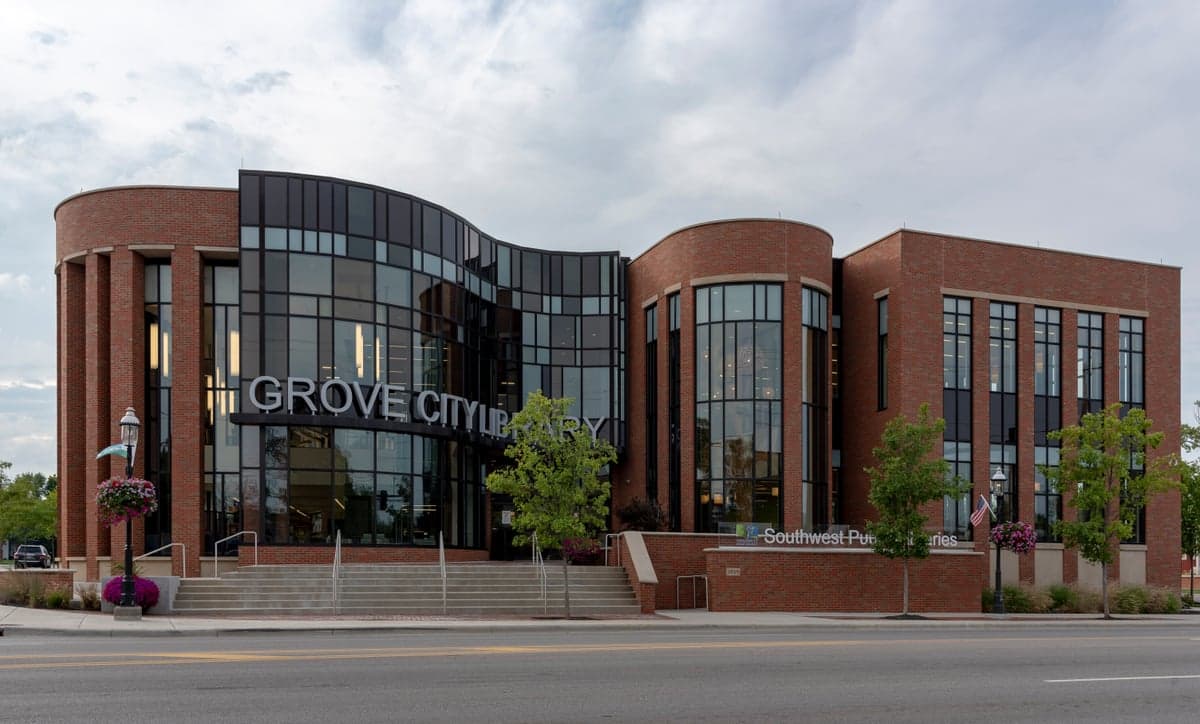
Photo: Wikipedia
Strategic Assessment of Grove City, OH
Multiple tactical vulnerabilities. Population density, target proximity, or disaster risk are likely compounding. A retreat property and exit planning is required.
What does the Strategic Assessment tell us?
Our Strategic Assessment grades tactical survivability of an area. Major population centers, military targets, fallout zones, natural disasters, and border exposure all drive risk — lower exposure means a more defensible position in a crisis.
This is heavily inspired by Joel Skousen's Strategic Relocation book. Highly recommended you checkout the book ($)What does this tell us?
Our Strategic Assessment grades tactical survivability of an area. Major population centers, military targets, fallout zones, natural disasters, and border exposure all drive risk — lower exposure means a more defensible position in a crisis.
This is heavily inspired by Joel Skousen's Strategic Relocation book. Highly recommended you checkout the book ($)Strategic Pillars

Key Distances
Regional Safe Places
Below is our recommended "safe zones" in Ohio and the surrounding area based on our strategic heuristics. For most people, it's unrealistic to live in a “safe zone” full-time due to work, family or other personal reasons. They tend to be more rural. However, many of these areas are perfect for second homes and retreat properties that double as a vacation home or even a short-term rental.

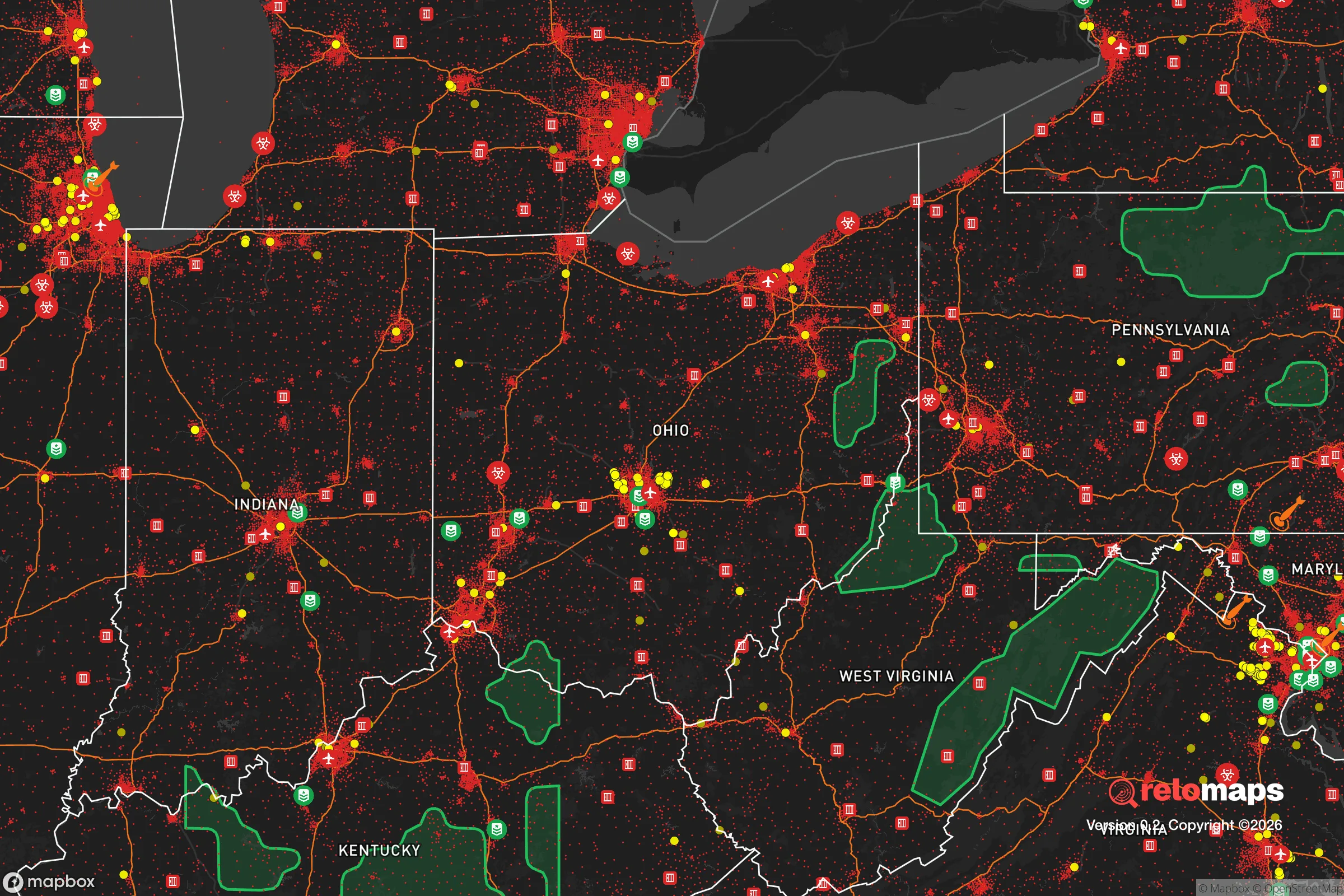


Important Note: For informational purposes only. This does not mean nothing bad ever happens in the green zones. Please use common sense. This is based on public data and modeled with AI. We tried to take a conservative approach but mistakes happen. We update this regularly as new information becomes available.
Solar Generator Recommendations
Backup power matters more here than in safer locations. We've picked three solar generators across budgets and capacity tiers — start with the budget unit if you only need a few essentials, or step up if you want to run a fridge and HVAC for days at a time.

Jackery Portable Power Station Explorer 300
Budget OptionPower on the Go: Weighing only 11 lbs, it's convenient to set up and store with book-sized foldable solar panels

BLUETTI Portable Power Station AC180
Designed for both indoor and outdoor scenarios, AC180 is highly capable as it has a robost capacity and continuous output power.

EF ECOFLOW DELTA Pro Ultra Power Station
Upgraded PickEcoFlow DELTA Pro Ultra is a whole-home energy system designed to grow with your family. Integrated with the Smart Home Panel 2, it scales to meet your evolving energy needs — keeping your home powered, intelligent, and secure through every stage of life.
We earn a commission, at no additional cost to you.
Strategic Assessment Analysis
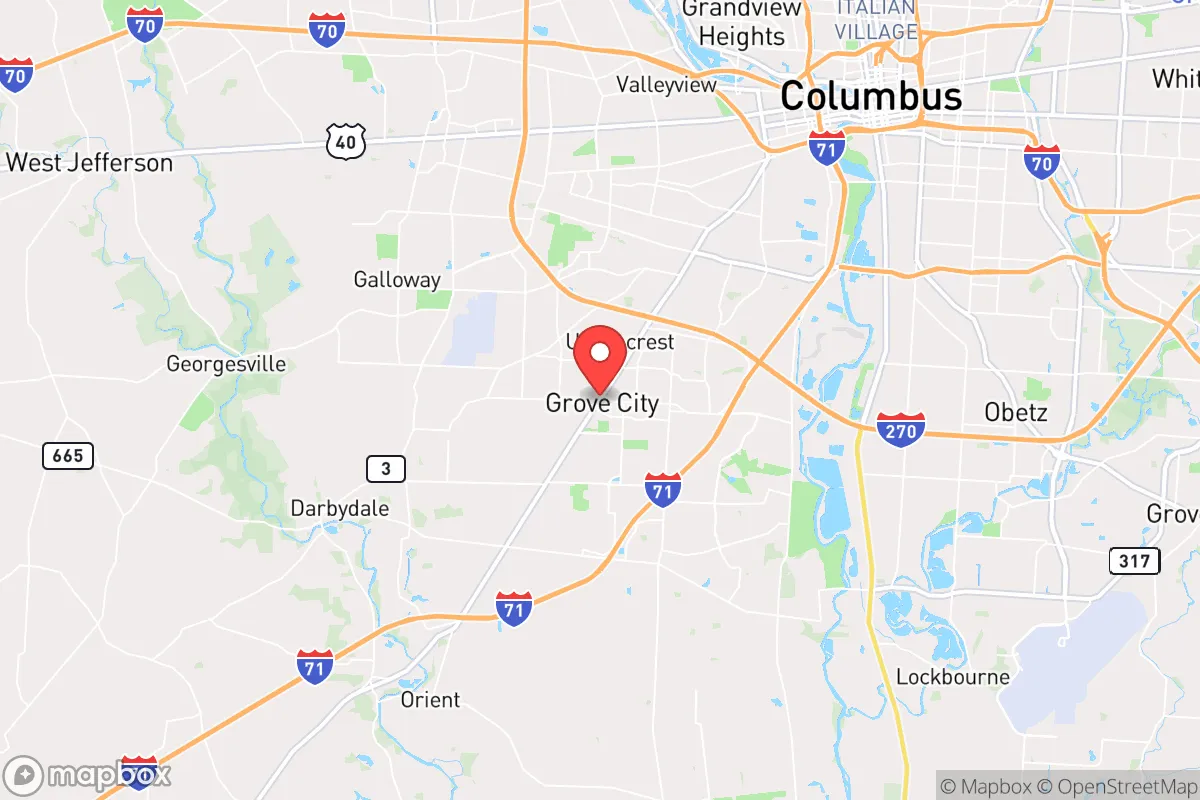
Grove City, Ohio, sits in a strategic sweet spot that resilience-minded relocators should take seriously: close enough to Columbus to access its economic and logistical infrastructure, yet far enough from the urban core to offer a buffer against the worst-case scenarios of civic unrest or mass-casualty events. The city's position along I-71 and I-270 gives it a mobility advantage that many suburban communities lack, while its location in the Scioto River Valley provides natural water resources and defensible terrain. For a conservative-leaning individual or family weighing long-term preparedness, Grove City offers a blend of suburban stability, agricultural adjacency, and industrial redundancy that is increasingly rare in the Midwest.
Geographic position and natural advantages for long-term security
Grove City's geography is its first and most underappreciated asset. The city sits on the western flank of the Columbus metropolitan area, placing it on the "downwind" side of prevailing weather patterns—meaning fallout from a major event at the state capital would likely drift east, not west. The Scioto River runs just east of the city, providing a reliable surface water source that can be tapped for filtration or irrigation if municipal systems fail. The surrounding terrain is gently rolling, with enough tree cover and agricultural land to support small-scale food production without the isolation that makes a property a target. The city's elevation, roughly 850 feet above sea level, keeps it above the floodplain of the Scioto, reducing the risk of catastrophic flooding even during extreme weather events. For a relocator thinking in decades, not just years, the combination of water access, defensible topography, and proximity to fertile soil makes Grove City a more viable long-term hold than many suburban alternatives.
The city's position relative to critical infrastructure is also worth noting. Grove City is within 15 miles of Rickenbacker International Airport, a major cargo hub and Air National Guard base that would likely remain operational during a national emergency. The presence of military logistics infrastructure nearby is a double-edged sword—it could attract attention in a conflict scenario—but it also means that the area is likely to be prioritized for power restoration, fuel supply, and security patrols. The city's own municipal water system draws from deep aquifers, not surface reservoirs, which reduces vulnerability to contamination or sabotage. For a prepper, these are not guarantees, but they are significant advantages over communities that rely entirely on surface water or single-point-of-failure utilities.
Risks, exposures, and proximity to fallout-relevant landmarks
No strategic assessment is honest without acknowledging the downsides, and Grove City has several that a relocator must weigh carefully. The most obvious risk is its proximity to Columbus—just 10 miles from downtown. In a scenario involving civil unrest, mass-casualty events, or a coordinated attack, the urban core would be a primary target, and Grove City sits within the likely "spillover" zone. The city is also within 20 miles of the Defense Supply Center Columbus, a major military logistics hub that could be a target for sabotage or protest activity. The presence of I-71 and I-270 means that evacuation routes could become chokepoints during a crisis, and the city's own population of roughly 45,000 would strain local resources if a mass exodus from Columbus occurred.
There are also less obvious exposure points. Grove City lies within the 50-mile radius of the Davis-Besse Nuclear Power Station, located about 90 miles north near Toledo. While that distance provides some safety margin, a major release event could still affect air quality and water sources in the region. The city's industrial corridor along I-71 includes chemical storage facilities and distribution centers that could become secondary hazards during a disaster. For a relocator with a survivalist mindset, the key takeaway is that Grove City is not a remote bug-out location—it is a suburban buffer zone. That means it offers better odds than living inside Columbus proper, but it is not a standalone fortress. The strategic value lies in its ability to serve as a staging ground for deeper retreat into rural Ohio, not as a final redoubt.
Practical resilience for a relocator: food, water, energy, and defensibility
For a family or individual looking to build practical resilience, Grove City's infrastructure offers a mixed but workable foundation. The city's water system is municipally supplied, but the presence of the Scioto River and numerous private wells in the surrounding county means that a relocator with the right equipment can secure an independent water source. The soil in the region is loamy and well-drained, suitable for vegetable gardens and small orchards, and the growing season runs from April to October—long enough for a serious home food production effort. Local farmers' markets and agricultural supply stores in nearby Orient and Commercial Point provide access to seeds, tools, and livestock feed without relying on big-box retailers that could close during disruptions.
Energy resilience is more challenging. Grove City is served by American Electric Power, and the grid is typical of the Midwest—reliable in normal times but vulnerable to weather events and cyberattacks. Solar potential is moderate; the region averages about 170 sunny days per year, which is enough for a grid-tied system with battery backup but not for full off-grid independence. Natural gas is widely available, which is a plus for heating and cooking during power outages, but a relocator should plan for at least two weeks of backup power and fuel storage. Defensibility is where Grove City shines relative to denser suburbs. The city's layout includes a mix of older neighborhoods with mature trees and newer developments with cul-de-sacs, both of which offer natural chokepoints and limited sightlines for potential threats. The presence of multiple entry points from I-71 and I-270 is a vulnerability, but the city's police department maintains a visible presence and has mutual-aid agreements with surrounding jurisdictions. For a relocator, the practical advice is to choose a property on the western or southern edges of the city, away from the major highway interchanges, and to invest in a well, solar panels, and a secure outbuilding for food storage.
Community resilience is an often-overlooked factor, and Grove City has a strong one. The city's population skews conservative, with a high rate of homeownership and a culture of self-reliance that is evident in the number of local churches, gun clubs, and volunteer fire departments. The Franklin County Fairgrounds, located just east of the city, hosts regular preparedness and agricultural events, and the nearby Ohio State University Extension office offers workshops on food preservation and livestock management. For a relocator who values social cohesion as a survival asset, Grove City offers a network of like-minded individuals without the isolation of a rural compound.
The overall strategic picture for Grove City is one of calculated compromise. It is not a remote sanctuary, and it will not shield a relocator from every risk. But for a conservative-leaning individual or family who wants to stay connected to economic opportunity while building a defensible, resource-secure home base, it offers a rare combination of advantages. The city's location provides a buffer from the worst of urban chaos, its natural resources support independent living, and its community culture aligns with the values of preparedness and self-sufficiency. In a world where the line between stability and crisis is thinning, Grove City is a place where a prepared relocator can thrive—not by hiding from the storm, but by being ready to weather it.

* Values derived from national, state, county, city and local statistics and may differ in a specific area. Last updated: 2026-04-19T05:12:10.000Z
Narrative content on this page is AI-generated and may contain mistakes. Verify any details that matter before acting on them.
ReloMaps may earn a commission from affiliate links at no extra cost to you.

