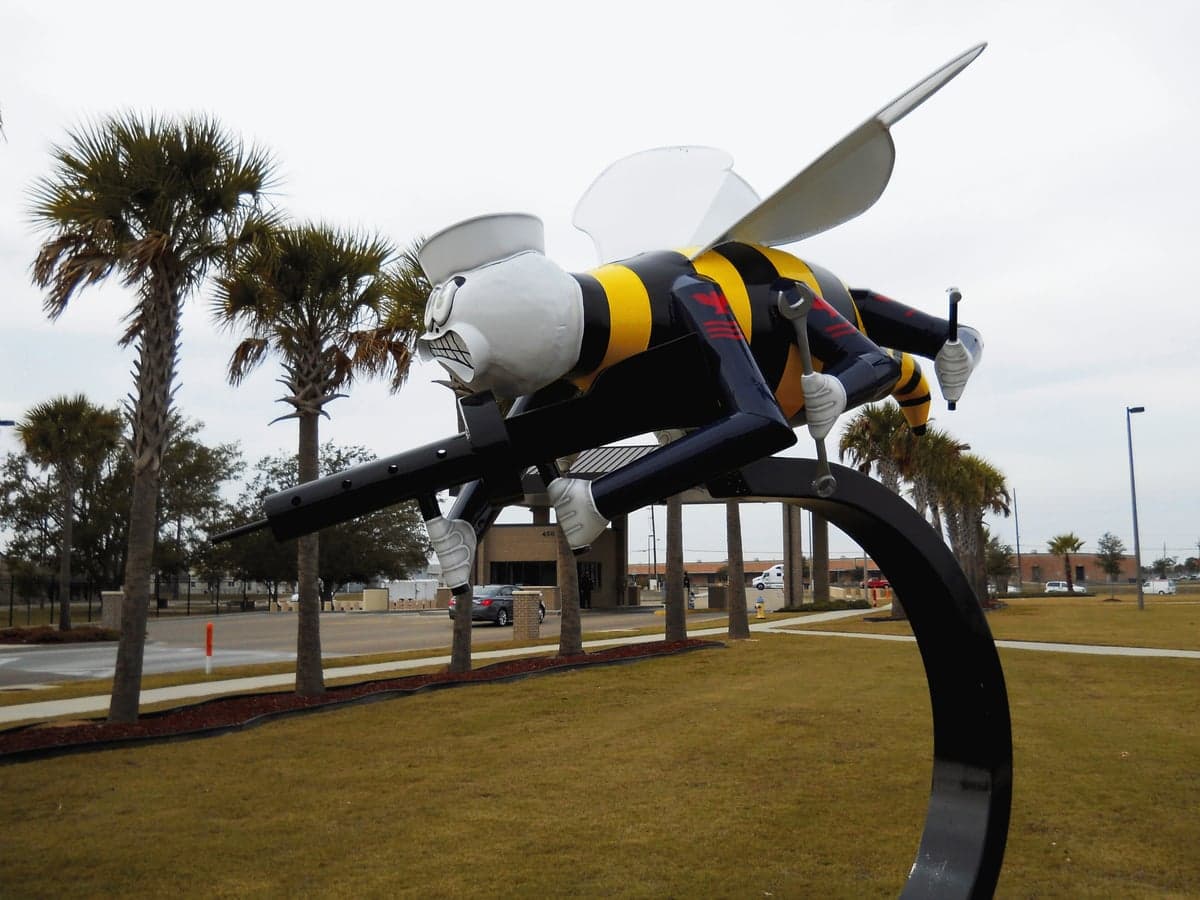
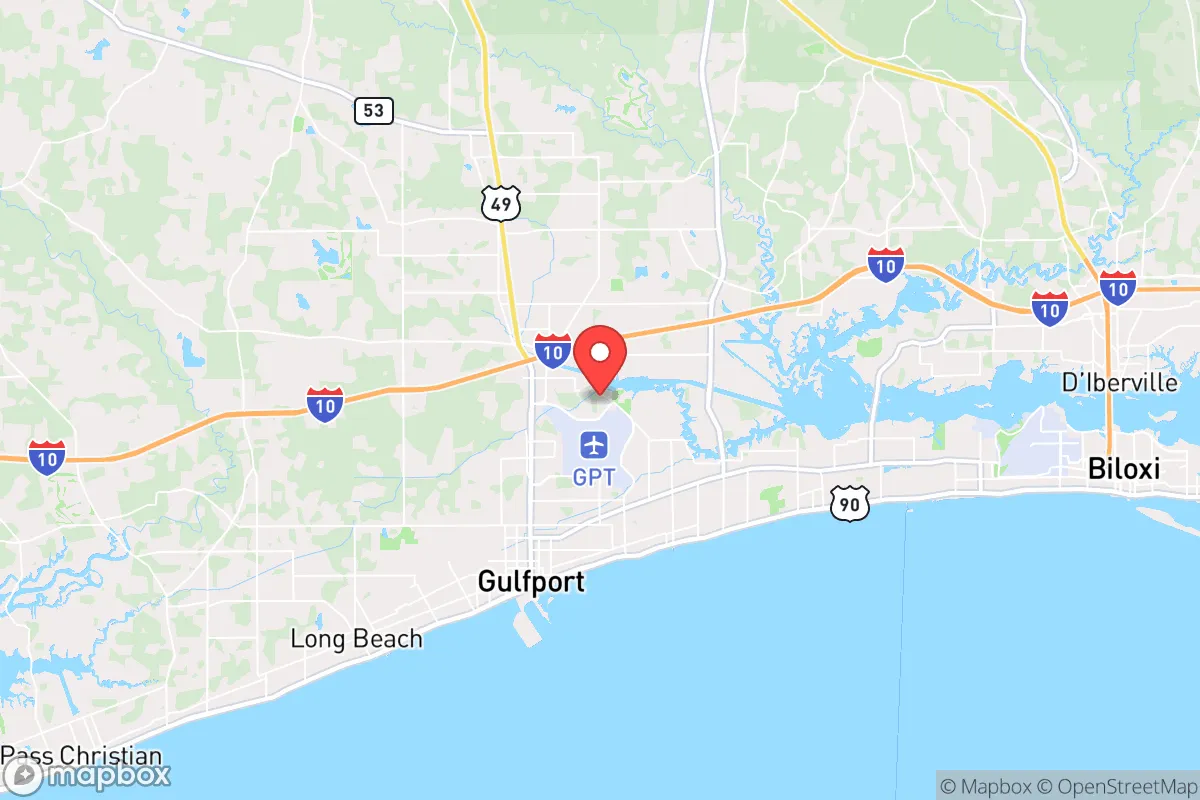
Photo: Wikipedia
Strategic Assessment of Gulfport, MS
Meaningful friction. Expect exposure to either population pressure, blast zones, or natural disaster risk. Consider buying a retreat property.
What does the Strategic Assessment tell us?
Our Strategic Assessment grades tactical survivability of an area. Major population centers, military targets, fallout zones, natural disasters, and border exposure all drive risk — lower exposure means a more defensible position in a crisis.
This is heavily inspired by Joel Skousen's Strategic Relocation book. Highly recommended you checkout the book ($)What does this tell us?
Our Strategic Assessment grades tactical survivability of an area. Major population centers, military targets, fallout zones, natural disasters, and border exposure all drive risk — lower exposure means a more defensible position in a crisis.
This is heavily inspired by Joel Skousen's Strategic Relocation book. Highly recommended you checkout the book ($)Strategic Pillars

Key Distances
Regional Safe Places
Below is our recommended "safe zones" in Mississippi and the surrounding area based on our strategic heuristics. For most people, it's unrealistic to live in a “safe zone” full-time due to work, family or other personal reasons. They tend to be more rural. However, many of these areas are perfect for second homes and retreat properties that double as a vacation home or even a short-term rental.
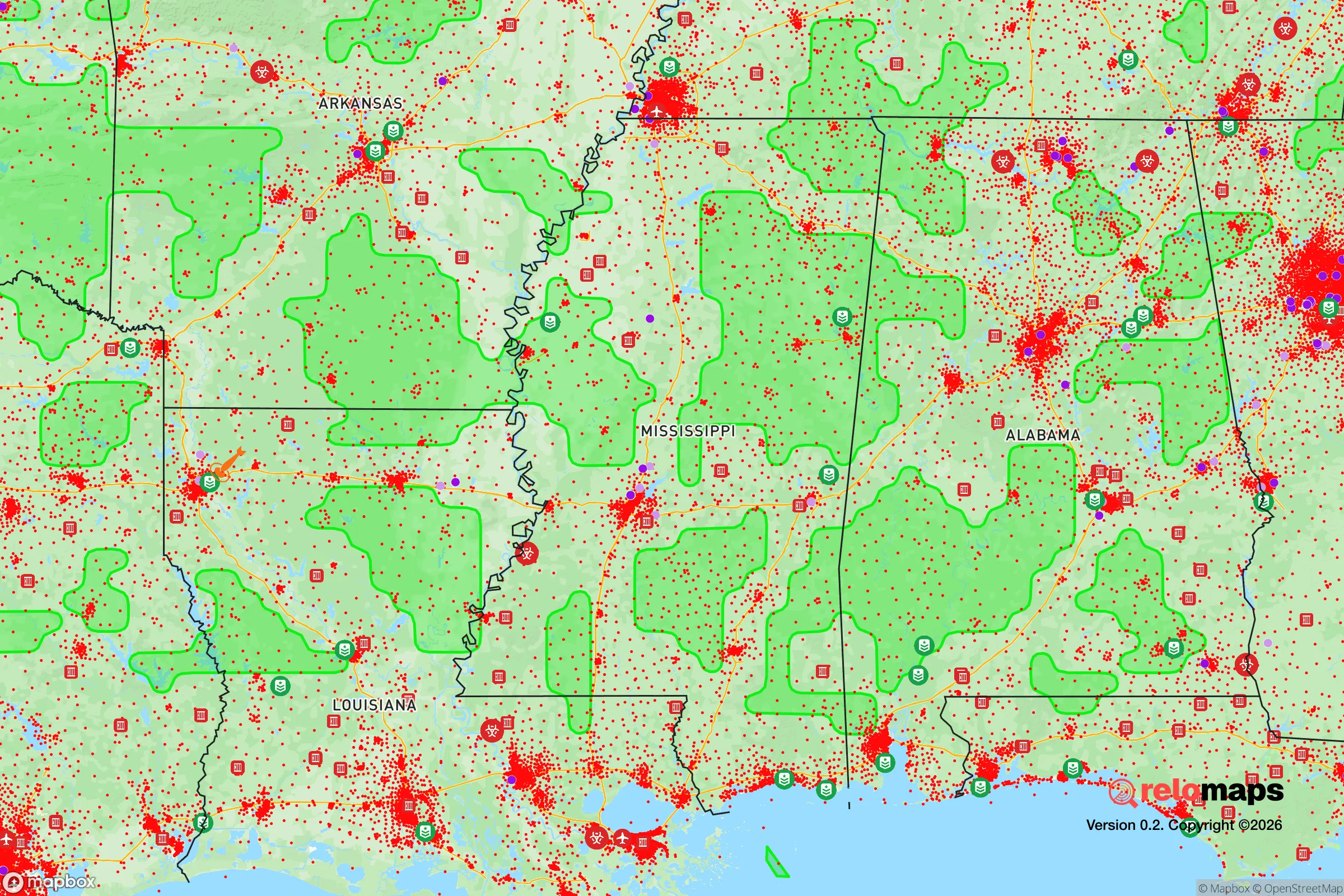
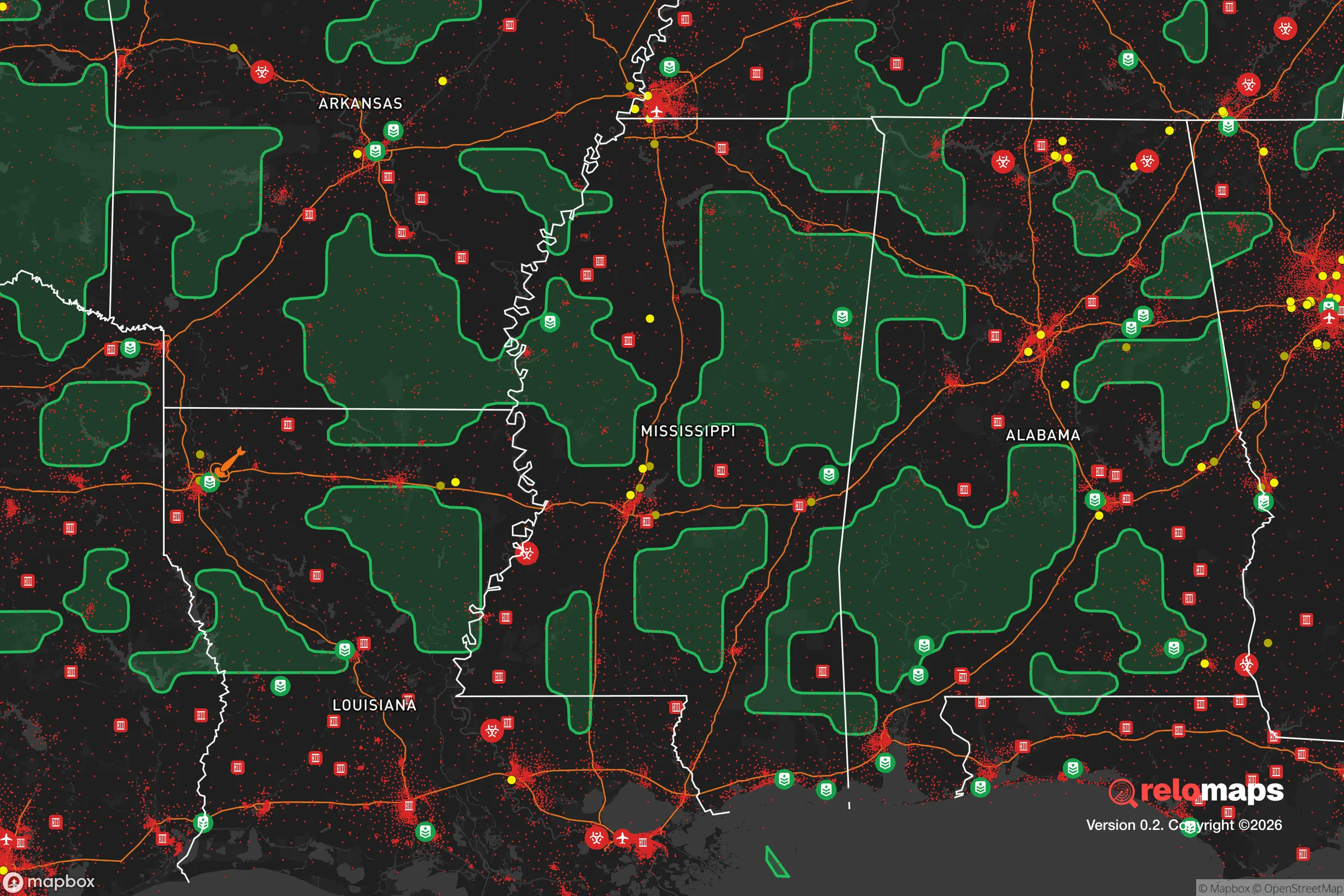


Important Note: For informational purposes only. This does not mean nothing bad ever happens in the green zones. Please use common sense. This is based on public data and modeled with AI. We tried to take a conservative approach but mistakes happen. We update this regularly as new information becomes available.
Solar Generator Recommendations
Backup power matters more here than in safer locations. We've picked three solar generators across budgets and capacity tiers — start with the budget unit if you only need a few essentials, or step up if you want to run a fridge and HVAC for days at a time.

Jackery Portable Power Station Explorer 300
Budget OptionPower on the Go: Weighing only 11 lbs, it's convenient to set up and store with book-sized foldable solar panels

BLUETTI Portable Power Station AC180
Designed for both indoor and outdoor scenarios, AC180 is highly capable as it has a robost capacity and continuous output power.

EF ECOFLOW DELTA Pro Ultra Power Station
Upgraded PickEcoFlow DELTA Pro Ultra is a whole-home energy system designed to grow with your family. Integrated with the Smart Home Panel 2, it scales to meet your evolving energy needs — keeping your home powered, intelligent, and secure through every stage of life.
We earn a commission, at no additional cost to you.
Strategic Assessment Analysis
Gulfport, Mississippi, sits on a narrow strip of land between the Gulf of Mexico and a network of bayous, offering a mix of strategic advantages and serious vulnerabilities for anyone thinking long-term about resilience. Its location along the I-10 corridor places it within a few hours of New Orleans, Mobile, and the sprawling military-industrial complex of the Gulf Coast, but that proximity cuts both ways—it’s close to potential fallout zones while still being far enough from the densest population centers to offer a buffer. For a conservative-leaning relocator focused on self-sufficiency and weathering civic unrest or large-scale disasters, Gulfport presents a trade-off: the natural environment provides resources and defensibility, but the region’s history of hurricanes, industrial infrastructure, and proximity to major cities demands a clear-eyed assessment of risks.
Geographic position and natural advantages for long-term survival
Gulfport’s position on the Mississippi Sound gives it direct access to the Gulf of Mexico, which is a double-edged sword. On the plus side, the water provides a reliable source of seafood, a transportation route for small craft, and a natural barrier against ground-based threats from the south. The surrounding wetlands and pine forests offer cover and resources—timber for construction, fresh water from the Biloxi River and Bayou Bernard, and fertile soil for small-scale agriculture if you’re willing to work the sandy loam. The area’s flat terrain makes it easy to set up a defensible homestead, though it also means flooding is a constant concern. The climate is subtropical, with mild winters and long growing seasons, which is a major advantage for food production compared to northern states. The local economy is heavily tied to the Port of Gulfport, a deep-water port that handles container shipping and military cargo, which could be a lifeline for supplies in a crisis—or a target for disruption. The presence of Keesler Air Force Base in nearby Biloxi adds a layer of security, as military assets could stabilize the region during unrest, but it also makes the area a potential target for adversaries.
Risks, exposures, and proximity to fallout-relevant landmarks
The biggest threat to Gulfport is its vulnerability to hurricanes, which have historically devastated the region—Hurricane Katrina in 2005 being the most recent catastrophic example. Storm surge can push water miles inland, and the flat topography offers no natural protection. For a prepper, this means any long-term setup must account for evacuation or hardened structures, which adds cost and complexity. Beyond weather, the area’s proximity to New Orleans (about 70 miles west) and Mobile (about 60 miles east) introduces risks tied to urban collapse. Both cities have significant crime rates, and in a scenario of widespread unrest, refugees could flow along I-10 into Gulfport. The Port of Gulfport itself handles hazardous materials, including chemicals and fuels, which could become a contamination source if damaged. The nearby Chevron Pascagoula Refinery (about 40 miles east) and the Ingalls Shipbuilding yard in Pascagoula are high-value industrial targets that could draw attention in a conflict. The Mississippi Gulf Coast is also home to several military installations—Keesler, the Naval Construction Battalion Center in Gulfport, and the Stennis Space Center to the west—which are strategic assets that could be targeted in a major conflict, potentially creating fallout zones. For a survivalist, the key takeaway is that Gulfport is not a remote hideaway; it’s a coastal hub with infrastructure that could become a liability in a crisis.
Practical resilience for a relocator: food, water, energy, and defensibility
For someone looking to set up a resilient homestead, Gulfport offers a mixed bag. Fresh water is accessible via shallow wells in many areas, but the water table is close to the surface and can be contaminated by saltwater intrusion during storms or by industrial runoff from the port and nearby refineries. Rainwater collection is a viable backup, with the region averaging about 60 inches of rain per year. Food production is feasible—the long growing season supports vegetables, citrus, and even tropical fruits like bananas in sheltered spots, and the Gulf provides fish, shrimp, and crabs. However, the soil is sandy and low in organic matter, so raised beds and composting are necessary for serious gardening. Hunting is limited to small game like deer and feral hogs in the pine forests, but public land is scarce. Energy independence is achievable with solar panels, as the area gets plenty of sun, but hurricane winds require robust mounting systems. Defensibility is a challenge—the flat, open terrain offers few natural chokepoints, and the dense suburban sprawl along the coast means neighbors are close. A rural property farther north, toward the DeSoto National Forest, would offer more seclusion and better defensibility, but that comes with longer supply lines. The local community is generally conservative and self-reliant, with a strong hunting and fishing culture, which can be an asset for networking and mutual aid. Gun laws in Mississippi are favorable, with no permit required for concealed carry and strong castle doctrine protections, which is a plus for personal security.
The overall strategic picture for Gulfport is one of calculated risk. It’s not a bug-out location for a total collapse scenario—the hurricane threat and proximity to industrial and military targets are too significant. But for someone who wants to stay connected to the Gulf Coast economy while building a resilient lifestyle, it offers a workable base if you’re willing to invest in hardening your property and have a plan for seasonal evacuation. The area’s natural resources, mild climate, and conservative culture are genuine advantages, but they come with strings attached: you’re never more than a few hours from a major city, and the coast’s history of disasters means you can’t afford to be complacent. For a relocator with a prepper mindset, Gulfport is a place to live with eyes open—not a sanctuary, but a viable option if you’re prepared to adapt.

* Values derived from national, state, county, city and local statistics and may differ in a specific area. Last updated: 2026-04-29T18:49:47.000Z
Narrative content on this page is AI-generated and may contain mistakes. Verify any details that matter before acting on them.
ReloMaps may earn a commission from affiliate links at no extra cost to you.

