
Photo: Wikipedia
Political ClimatePolitical Climate in Gulfport, MS
District shown is the primary district for this city’s centroid. Cities may span multiple districts.
Local Political AnalysisPolitical Analysis of Gulfport, MS
Gulfport, Mississippi, has long been a solidly conservative community, and the numbers back that up. The Cook Partisan Voting Index (PVI) for the area sits at R+21, meaning the district votes about 21 points more Republican than the national average. That’s not a fluke—it’s a reflection of the values most folks here hold dear: personal responsibility, limited government, and a deep respect for the Second Amendment. Over the past decade, the political lean has only hardened, with local elections consistently favoring candidates who prioritize fiscal restraint and traditional social values. You don’t see the wild swings you get in other parts of the country; Gulfport stays the course, even as coastal Mississippi sees some demographic shifts.
How it compares
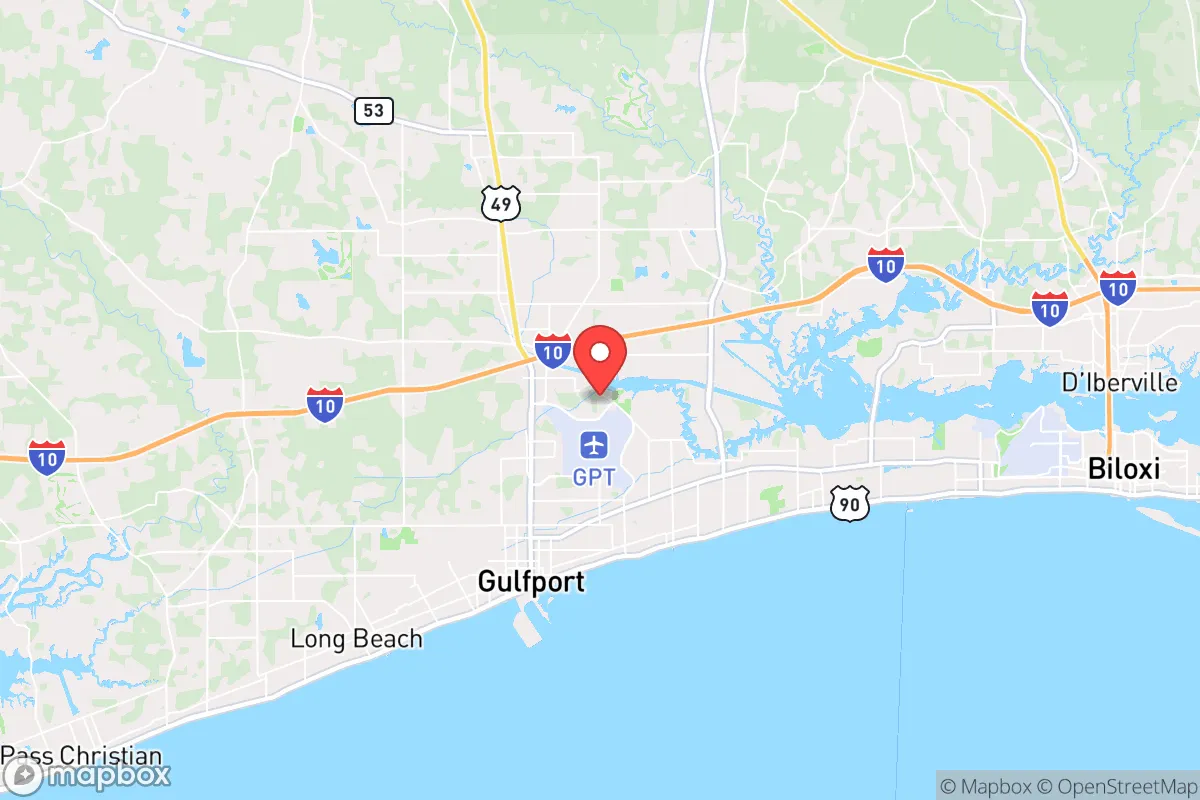
If you drive just a few miles east to Biloxi, you’ll find a similar conservative vibe, though the casino industry there brings a slightly more transient population that can lean a bit more moderate on economic issues. Head north toward Hattiesburg, and you’ll hit a college town that’s noticeably more progressive—especially around the University of Southern Mississippi campus, where you’ll see more yard signs for Democratic candidates and talk of “equity” initiatives. But Gulfport? It’s the anchor of the coast’s conservative belt. Neighboring Long Beach and Pass Christian are even more reliably red, with local politics focused on keeping property taxes low and zoning laws loose. The contrast is sharpest when you compare Gulfport to New Orleans, just an hour west across the state line—a city that’s gone all-in on progressive policies like defunding police and sanctuary city status. Gulfport residents watch that experiment with a wary eye, grateful that their own leaders haven’t followed suit.
What this means for residents
For the people who live here, the political climate translates into a daily life with fewer government intrusions. You won’t find mask mandates lingering in 2026, nor will you see the kind of overreach that tries to dictate what you can do with your property or your business. The local school board has resisted the push for critical race theory and gender ideology curricula, keeping the focus on reading, math, and vocational skills. Taxes are low—Mississippi has no state income tax on wages, and Harrison County keeps property rates among the lowest in the Gulf South. That means more money stays in your pocket, and you’re free to spend it how you see fit. The trade-off? Public services are lean. If you want top-tier infrastructure or robust social programs, you’ll have to look elsewhere. But for most residents, that’s a fair exchange for keeping government out of their lives.
One thing that sets Gulfport apart is its strong military and veteran presence—Keesler Air Force Base in Biloxi is a major employer, and the local culture respects service and sacrifice. You’ll see flags flying high and a general distrust of any politician who talks about defunding the military or cutting veterans’ benefits. There’s also a palpable skepticism toward federal overreach, especially when it comes to environmental regulations on the fishing and shipping industries that drive the local economy. The long-term outlook? As long as Gulfport stays true to its roots—prioritizing freedom, low taxes, and local control—it’ll remain a haven for those who feel squeezed by progressive policies elsewhere. But keep an eye on the coast: if the influx of remote workers from blue states continues, there’s always a risk that some of those big-government ideas might creep in. For now, though, Gulfport is holding the line.

State Political ClimatePolitical Climate in Mississippi
State Political AnalysisPolitical Environment in the State
Mississippi is one of the most reliably conservative states in the nation, with a deep-rooted Republican lean that has only solidified over the past two decades. The state has voted for the GOP presidential candidate in every election since 1980, and in 2024, Donald Trump carried Mississippi by roughly 17 points, a margin that reflects the state’s enduring cultural and political alignment with traditional values. The dominant coalition is a blend of rural, faith-based conservatives, suburban families, and a growing number of transplants from more liberal states who are drawn to Mississippi’s low taxes and slower pace of life. Over the last 10-20 years, the shift has been unmistakable: once a Democratic stronghold at the local level, Mississippi now holds a Republican supermajority in both chambers of its legislature, and the last Democrat to win a statewide office did so in 2007. For a conservative-leaning individual or parent, this is a state where the political winds are firmly at your back.
Urban vs. rural divide
The political map of Mississippi is a textbook study in the urban-rural split, but with a twist: even the state’s largest cities lean more moderate than liberal. Jackson, the capital and largest city, is the lone Democratic stronghold, consistently voting blue by wide margins—Biden won Hinds County by 38 points in 2020—but it’s an island in a sea of red. The Gulf Coast cities like Biloxi and Gulfport are reliably Republican, though they have a libertarian streak on issues like gambling and coastal development. The Memphis suburbs in DeSoto County, including Southaven and Olive Branch, are among the fastest-growing and most conservative areas in the state, with DeSoto County voting +35 for Trump in 2024. Meanwhile, the Golden Triangle region—Columbus, Starkville, and West Point—is a mixed bag: Starkville, home to Mississippi State University, tilts slightly more moderate, while the surrounding rural counties are deep red. The Delta region, including Greenville and Clarksdale, is the poorest and most Democratic-leaning rural area, but its population decline means its political influence is shrinking. In short, if you’re looking for a conservative environment, you’ll find it almost everywhere outside of Jackson proper.
Policy environment
Mississippi’s policy environment is a dream for those who prioritize limited government and personal responsibility. The state has no income tax on wages—a flat 4% rate was phased out by 2026—and property taxes are among the lowest in the nation, with a median effective rate of just 0.65%. Sales tax is a bit higher at 7%, but there’s no tax on groceries or prescription drugs. The regulatory posture is aggressively pro-business: Mississippi is a right-to-work state with minimal zoning restrictions outside of major cities, making it easy to start a business or build a home. On education, the state has embraced school choice, with a robust charter school law and a growing Education Scholarship Account (ESA) program that lets parents use public funds for private or homeschool expenses. Healthcare is a mixed bag: Mississippi did not expand Medicaid under Obamacare, which keeps costs lower for taxpayers but leaves a higher uninsured rate. Election laws are strict but fair—voter ID is required, early voting is limited, and absentee ballots require a notarized signature or witness. For a conservative parent, the policy environment here is designed to let you live your life without the state getting in the way.
Trajectory & freedom
Mississippi is on a clear trajectory toward more personal freedom, not less, and recent legislation proves it. In 2024, the state passed a constitutional carry law, allowing any adult who can legally possess a firearm to carry it openly or concealed without a permit—a major win for Second Amendment advocates. The same year, the legislature enacted the Mississippi Parental Rights Act, which codifies that parents have the fundamental right to direct their child’s upbringing, education, and healthcare, including the right to opt out of any school curriculum or medical treatment they find objectionable. On medical freedom, Mississippi banned mRNA vaccine mandates for state employees and contractors in 2023, and it has one of the strongest medical conscience clauses in the country, allowing doctors and nurses to refuse participation in procedures they find morally objectionable. Property rights are protected by a strong eminent domain law that requires just compensation and a public purpose test. The only area where freedom is arguably contracting is in the realm of abortion: after the Dobbs decision, Mississippi’s trigger law banned nearly all abortions, with no exceptions for rape or incest—a stance that aligns with the state’s conservative values but is a non-issue for most relocating families. Overall, the trend is toward expanding individual liberty, not restricting it.
Civil unrest & political movements
Mississippi is not a hotbed of civil unrest, but it has its flashpoints. The most visible political movement in recent years has been the Parents’ Rights movement, which gained steam after COVID-era school closures and mask mandates. Groups like Mississippi Parents for School Choice and local chapters of Moms for Liberty have been active in school board meetings, particularly in Madison and Rankin County, pushing back against critical race theory and gender ideology in classrooms. On the left, the Mississippi Poor People’s Campaign and NAACP chapters in Jackson have organized protests over voting rights and police reform, but these have been small and localized. Immigration politics are relatively quiet—Mississippi has a small foreign-born population (about 2.5%), and there are no sanctuary cities. The state did pass a law in 2024 requiring local law enforcement to cooperate with ICE, which has been popular. Election integrity is a live issue: after the 2020 election, Mississippi tightened its absentee ballot rules and launched a voter roll cleanup that removed over 10,000 ineligible names. There’s no serious secessionist or nullification rhetoric here—Mississippians are generally satisfied with the status quo. A new resident would notice that political activism is polite and focused on local issues, not street-level confrontation.
Projection
Over the next 5-10 years, Mississippi is likely to become even more conservative, driven by two key trends: in-migration and demographic shifts. The state is seeing a steady influx of families and retirees from high-tax, high-regulation states like California, Illinois, and New York, who are drawn to Mississippi’s low cost of living and cultural values. These newcomers tend to be even more conservative than native Mississippians, as they’re fleeing progressive policies. Meanwhile, the state’s rural Delta region continues to lose population, reducing the Democratic vote share. The Gulf Coast and DeSoto County will continue to grow, reinforcing the Republican majority. The only wildcard is the Jackson metro area, which may see a modest influx of remote workers from blue states, but even there, the suburbs like Madison and Ridgeland are solidly red. Expect the legislature to push further on school choice, tax cuts, and Second Amendment protections. For someone moving in now, the Mississippi of 2035 will look very much like the Mississippi of today—only more so.
For a conservative-leaning individual or parent, Mississippi offers a political environment that is stable, predictable, and aligned with traditional values. You won’t find the culture wars of coastal states here—no mask mandates, no CRT battles in schools, no high taxes eating your paycheck. The state respects your right to raise your family as you see fit, keep and bear arms, and run a business without bureaucratic interference. If you’re looking for a place where the government stays out of your life and your neighbors share your values, Mississippi is a solid bet. Just avoid Jackson proper, and you’ll be fine.
* Values derived from national, state, county, city and local statistics and may differ in a specific area. Last updated: 2026-04-29T18:49:47.000Z
Narrative content on this page is AI-generated and may contain mistakes. Verify any details that matter before acting on them.
ReloMaps may earn a commission from affiliate links at no extra cost to you.

