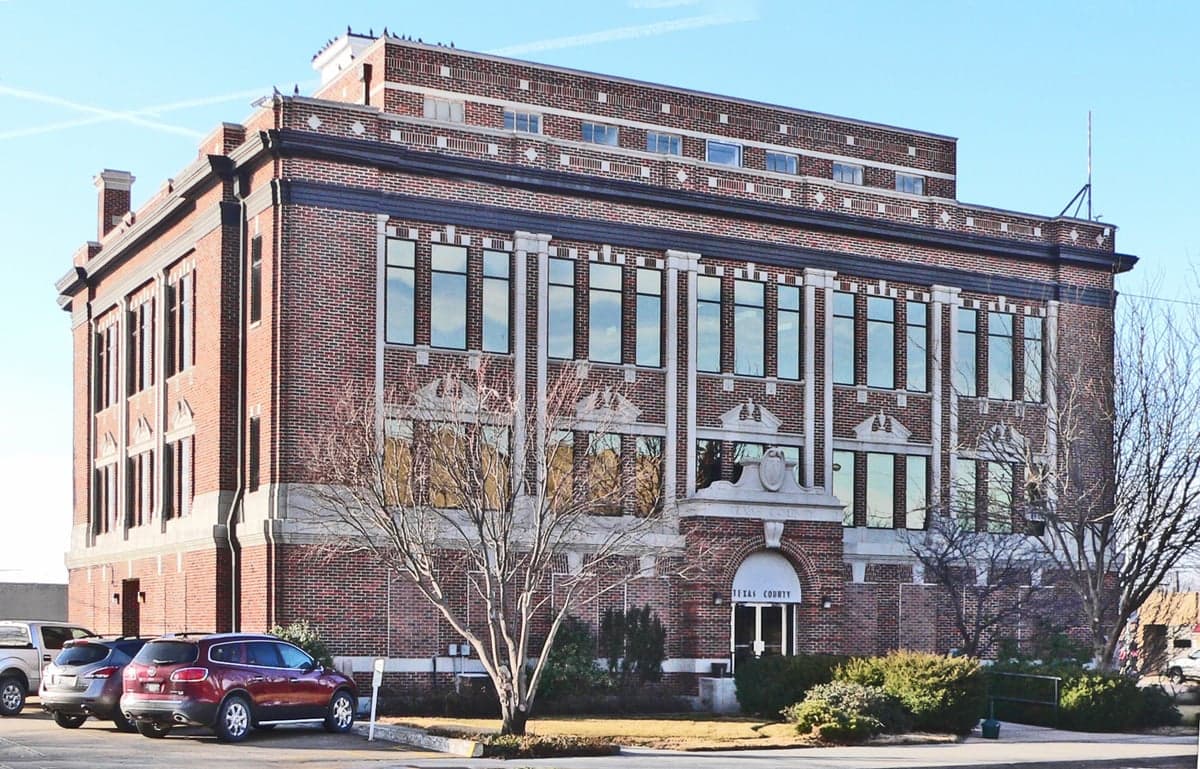
Photo: Wikipedia
Political ClimatePolitical Climate in Guymon, OK
District shown is the primary district for this city’s centroid. Cities may span multiple districts.
Local Political AnalysisPolitical Analysis of Guymon, OK
Guymon, Oklahoma, sits deep in the heart of the Oklahoma Panhandle, and its political DNA is as conservative as the red dirt it’s built on. The Cook PVI of R+23 isn’t just a number—it’s a reflection of a community that has long valued personal responsibility, limited government, and a way of life that doesn’t ask for permission. For decades, this area has been a reliable Republican stronghold, and while the national winds shift, Guymon has stayed remarkably steady, though you can feel a subtle tension creeping in from the edges.
How it compares
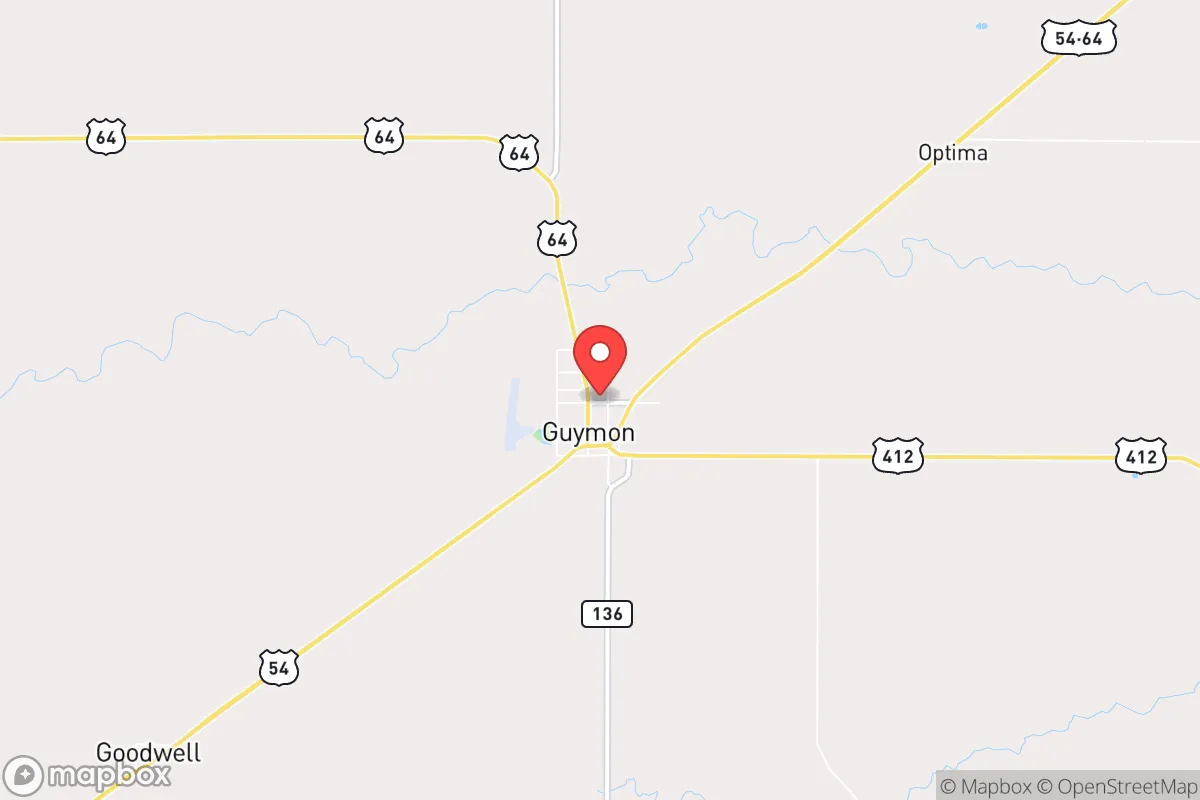
To understand Guymon’s political climate, you have to look at the map. Drive an hour east to Woodward, and you’ll find a similar conservative bent, but it’s a little more tempered—more of an R+15 feel, with a few more folks willing to split tickets. Head south to Liberal, Kansas, just across the state line, and you’re in a place that’s been trending leftward, with a growing Hispanic population and a city council that’s started flirting with progressive policies on housing and policing. That’s the contrast that makes Guymon stand out. Here, the local government still largely sticks to the basics: keeping taxes low, staying out of your business, and letting the oil and gas industry—along with the massive Seaboard Foods pork plant—drive the economy without a lot of red tape. The surrounding Texas County is one of the most reliably red in the state, and you don’t hear much talk about defunding anything or reimagining public safety. It’s a place where the Second Amendment is still a given, not a debate.
What this means for residents
For the people who live here, the political climate translates into a daily life that feels free from the kind of government overreach you see in bigger cities. You don’t have to worry about a zoning board telling you what color to paint your fence or a school board pushing critical theory on your kids. The local school system, Guymon Public Schools, still operates with a focus on basics and local control, and the city council meetings are short and to the point. That said, there’s a quiet concern among long-time residents about the direction of the state as a whole. Oklahoma City and Tulsa have started to see more progressive influence, and some worry that state-level mandates—like potential expansions of Medicaid or new environmental regulations on agriculture—could trickle down and disrupt the hands-off approach that makes Guymon work. The biggest worry I hear from folks is that the next generation might not hold the line as firmly, especially as younger families move in from more liberal areas for jobs at the plant or in the oil fields.
One cultural distinction that sets Guymon apart is its strong sense of self-reliance. There’s no public transit system, and nobody’s asking for one. The local churches and the chamber of commerce handle most of the community safety nets, not the government. You’ll see a lot of “Don’t Tread on Me” flags flying next to American flags, and it’s not just for show. The biggest policy debate in recent memory wasn’t about a new tax or a social program—it was about whether to allow a wind farm on county land, and the opposition won largely on the argument that it would infringe on property rights. That’s Guymon in a nutshell: a place that still believes the best government is the one that governs least, and a community that’s watching the national trends with a wary eye, hoping the next wave of change passes them by.

State Political ClimatePolitical Climate in Oklahoma
State Political AnalysisPolitical Environment in the State
Oklahoma has long been one of the most reliably Republican states in the nation, with a deep-red partisan lean that has only deepened over the past two decades. The state hasn’t voted for a Democratic presidential candidate since 1964, and in 2024, Donald Trump carried it by over 34 points. The dominant coalition is a mix of rural conservatives, evangelical Christians, and energy-sector workers, with a growing libertarian streak that pushes back against federal overreach. Over the last 10-20 years, the state has shifted further right, driven by in-migration from blue states and a backlash against progressive policies in neighboring Texas and Colorado.
Urban vs. rural divide
The political map of Oklahoma is starkly divided between its few urban centers and the vast rural expanse. Oklahoma City and its suburbs, particularly Edmond and Yukon, lean Republican but are more moderate than the rest of the state, with pockets of Democratic influence in the urban core. Tulsa is similarly split—midtown and south Tulsa are reliably red, while north Tulsa and parts of the city center show Democratic strength. The real engine of Republican dominance is the rural and small-town vote. Counties like Texas County in the Panhandle, Canadian County west of OKC, and Rogers County near Tulsa routinely deliver 80%+ Republican margins. The only reliably Democratic counties are Oklahoma County (home to OKC) and Tulsa County, and even those are trending redder as suburban voters move in. The Panhandle and southwest Oklahoma are among the most conservative regions in the entire country, with strong libertarian and constitutionalist influences.
Policy environment
Oklahoma’s policy environment is aggressively conservative, with a focus on low taxes, limited regulation, and cultural conservatism. The state has a flat income tax of 4.75%, with ongoing legislative efforts to reduce it further, and no estate tax. Sales taxes are high—often over 9% in cities like Norman and Stillwater—but property taxes are among the lowest in the nation. The regulatory posture is business-friendly, especially in energy and agriculture, with minimal red tape for oil and gas extraction. Education policy has been a flashpoint: the state has one of the strongest school choice programs in the country, including the Oklahoma Parental Choice Tax Credit, which allows families to use public funds for private or homeschool expenses. Healthcare is a mixed bag—the state refused Medicaid expansion until 2021, and while it’s now in place, access in rural areas remains limited. Election laws are strict: voter ID is required, absentee ballot deadlines are tight, and the state has purged inactive voters aggressively. Governor Kevin Stitt has signed multiple bills restricting abortion, protecting gun rights, and banning critical race theory in schools.
Trajectory & freedom
Oklahoma is becoming more free in many respects, particularly on economic and Second Amendment fronts. In 2024, the state passed constitutional carry (permitless carry of firearms), joining over half the country. The Oklahoma Second Amendment Association has been a powerful force, pushing back against any federal gun control efforts. Parental rights have expanded significantly: the Parents’ Bill of Rights (2022) guarantees parents access to curriculum and medical records, and the state has banned transgender procedures for minors. Medical autonomy took a hit with the near-total abortion ban (SB 612, 2022), which has no exceptions for rape or incest—a position that even some conservatives find extreme. Property rights are strong, with no statewide zoning mandates and minimal eminent domain abuse. Taxation is trending downward, with the income tax rate dropping from 5% to 4.75% in 2024 and further cuts proposed. However, the state has also expanded government surveillance through the Oklahoma State Bureau of Investigation’s enhanced data collection on protests and political activity, which raises concerns for privacy-minded residents.
Civil unrest & political movements
Oklahoma has seen relatively little civil unrest compared to coastal states, but there have been notable flashpoints. The 2020 George Floyd protests in Tulsa and Oklahoma City were large but mostly peaceful, though they sparked a backlash that fueled the election of more hardline conservatives. The Tulsa Race Massacre centennial in 2021 brought national attention and led to debates over reparations and historical education, which remain contentious. Immigration politics are less heated than in border states, but Oklahoma City and Guymon have seen tensions over growing Hispanic populations. The state has no sanctuary cities, and Governor Stitt signed a bill requiring local law enforcement to cooperate with ICE. Election integrity controversies have been minimal—Oklahoma’s voting system is widely trusted, though some activists on the right have pushed for hand-counting ballots. The Oklahoma Freedom Caucus in the state legislature has been a driving force for nullification-style bills, including a 2023 resolution asserting state sovereignty over federal gun laws. Visible flashpoints include the annual Oklahoma City Pride Parade, which draws both large crowds and counter-protests, and the ongoing debate over Ten Commandments monuments at the state capitol.
Projection
Over the next 5-10 years, Oklahoma is likely to become even more conservative, driven by two key trends: in-migration from blue states like California and Illinois, and the continued exodus of younger, more liberal residents to Texas or Colorado. The influx of remote workers and retirees is boosting suburban growth in places like Edmond, Bixby, and Mustang, which are reliably red but may introduce more moderate fiscal conservatism. The rural areas will remain deeply red, but population decline could weaken their political clout. The biggest wild card is the energy transition—if oil and gas decline, the state’s economy and political culture could shift. For now, expect more school choice expansion, further income tax cuts, and continued battles over abortion and transgender rights. The state’s libertarian streak will likely grow, with more pushback against federal mandates and surveillance. Someone moving in now should expect a state that is politically stable, culturally conservative, and increasingly resistant to progressive trends elsewhere.
For a new resident, the bottom line is this: Oklahoma offers a high degree of personal freedom on guns, taxes, and education, but with a heavy hand on social issues and some government overreach in surveillance and abortion policy. If you value low taxes, strong Second Amendment protections, and a community that shares traditional values, you’ll feel at home. If you’re looking for a place where government stays out of your life entirely, you’ll find allies here, but you’ll also need to navigate a state that isn’t shy about legislating morality. The political climate is stable, predictable, and unlikely to surprise you—for better or worse.
* Values derived from national, state, county, city and local statistics and may differ in a specific area. Last updated: 2026-04-24T05:48:18.000Z
Narrative content on this page is AI-generated and may contain mistakes. Verify any details that matter before acting on them.
ReloMaps may earn a commission from affiliate links at no extra cost to you.

