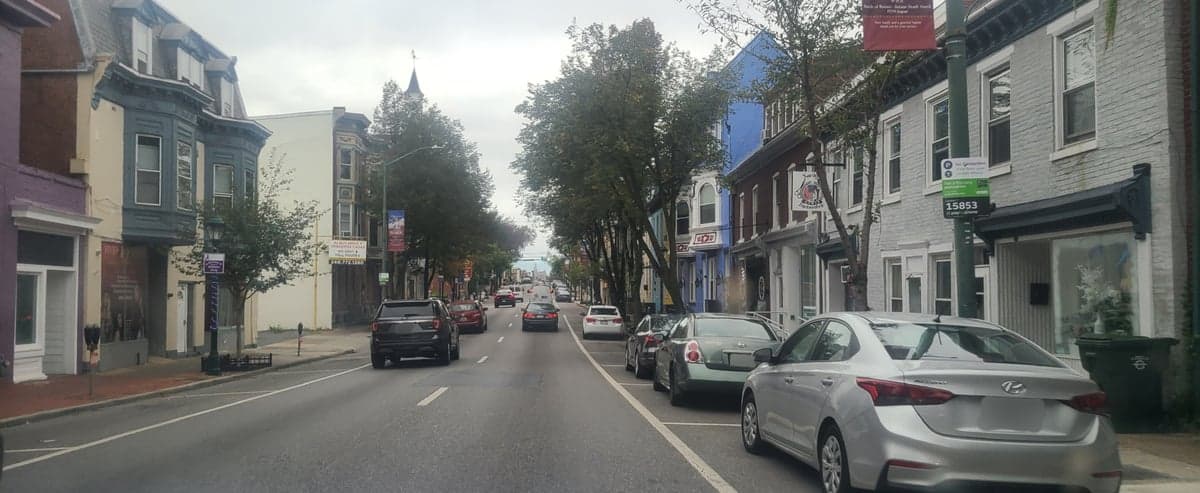
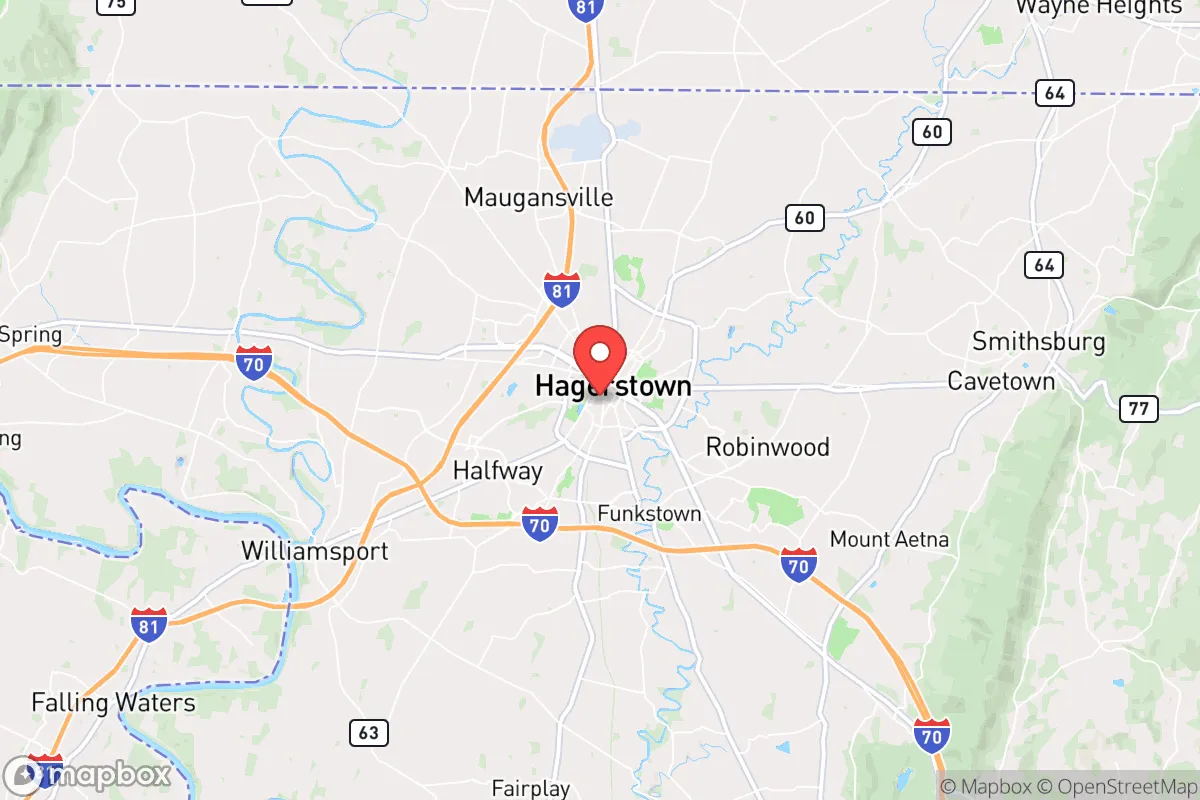
Photo: Wikipedia
Personal Sovereignty in Hagerstown, MD
Viable for self-reliance. Generally workable, though some barriers may limit total independence.
What does Personal Sovereignty tell us?
Personal Sovereignty measures your capacity for self-reliance and independence with minimal government friction. Higher scores mean fewer barriers between you and the way you want to live... but it assumes you have the space you need and good neighbors.
What does this tell us?
Personal Sovereignty measures your capacity for self-reliance and independence with minimal government friction. Higher scores mean fewer barriers between you and the way you want to live... but it assumes you have the space you need and good neighbors.
State Policy
Energy independence: Importer (8% of energy produced in-state)
Personal Liberty
Homesteading

Personal Liberty Analysis
For the individualist or prepper evaluating Hagerstown, Maryland, personal sovereignty here is a mixed bag — a blue-state regulatory framework layered over a historically independent Appalachian-Mid-Atlantic culture. You won't find the wide-open autonomy of rural Texas or Idaho, but you also won't face the suffocating oversight of Montgomery County or the D.C. suburbs. Hagerstown sits in Washington County, a region that votes reliably red in a blue state, and that tension shapes everything from your tax burden to your ability to keep a loaded rifle by the back door. The key question isn't whether Maryland respects your autonomy — it largely doesn't, by design — but whether Hagerstown's geography, local politics, and community norms give you enough breathing room to live on your own terms while the state apparatus grinds in the background.
Tax burden and regulatory posture in Washington County
Maryland is a high-tax state, period. The state income tax is progressive, topping out at 5.75%, and Washington County adds its own local income tax of 2.8% — that's a combined marginal rate of 8.55% for higher earners. Property taxes are moderate for the region: the county rate is roughly $1.04 per $100 of assessed value, with Hagerstown city adding another $0.68 if you live inside city limits. That's not West Virginia cheap, but it's far less than the 1.5%+ you'd see in the D.C. suburbs. The regulatory posture is where the friction shows. Maryland has a state-level building code with energy and environmental add-ons that can complicate DIY construction or major renovations. Permitting for a detached garage or a workshop can take weeks, and the state's stormwater management requirements apply even to modest residential projects. For the prepper, this means you cannot simply throw up a shipping container bunker or a large pole barn without navigating the bureaucracy. However, Washington County's planning department is known for being more practical and less ideological than its counterparts closer to Baltimore or Annapolis. If you're willing to file the right forms and pay the fees, you can generally get what you want — it just takes patience and a thick skin.
Self-defense and gun law specifics in Maryland
This is the sore spot for anyone serious about personal sovereignty. Maryland is one of the most restrictive states in the nation for firearms ownership. You need a state-issued Handgun Qualification License (HQL) to purchase a handgun, which requires a training course, fingerprinting, and a background check that can take 30 days or more. The state also bans so-called "assault weapons" by name — including AR-15s, AK-pattern rifles, and many common semi-automatic platforms. Magazine capacity is capped at 10 rounds. Concealed carry is shall-issue in theory after the Bruen decision, but the Maryland State Police still make the process arduous, with a 16-hour training requirement and a $75 application fee. Open carry is effectively illegal for civilians. On the positive side, Washington County's sheriff, Doug Mullendore, is a Second Amendment supporter who has publicly stated he will not enforce certain state gun laws he deems unconstitutional. Local gun culture is strong — there are multiple gun shops, ranges, and private clubs in the area, and the rural parts of the county are full of people who hunt and shoot regularly. You can own firearms here; you just have to jump through hoops the Founders never imagined. For the prepper, the practical workaround is to buy what you can legally own (bolt guns, lever actions, pump shotguns, and handguns under the HQL system) and store them discreetly. The state's red flag law also means a disgruntled neighbor or ex could theoretically trigger a confiscation order, so keep your circle tight and your affairs private.
Self-reliance and homesteading viability: lot sizes, zoning, and off-grid feasibility
Hagerstown itself is a city of rowhouses and small lots, but the surrounding Washington County is where the homesteading potential lives. Zoning in the county's Agricultural (A) and Rural Residential (RR) districts allows for livestock, gardens, and outbuildings with minimal fuss. Minimum lot sizes in the Agricultural zone are typically 5 acres, and many parcels in the county run 10 to 50 acres — enough for a serious garden, a few head of cattle, or a small orchard. Off-grid feasibility is limited by Maryland's building code, which requires connection to the electrical grid for new construction in most areas, though solar panels with net metering are allowed and even incentivized. Rainwater collection is legal but must comply with state health department guidelines if used for potable water. Composting toilets are permitted under certain conditions, but you'll need a septic system designed by a licensed engineer. The real constraint is the state's attitude: Maryland does not encourage off-grid living as a lifestyle choice. You cannot simply buy land, park a camper, and call it home — the state requires a permanent dwelling with approved utilities. That said, many preppers in the area work around this by buying a property with an existing house (often a fixer-upper) and then building out their self-reliance systems incrementally. The county's agricultural extension office is actually helpful for soil testing, pest management, and canning resources. For the serious homesteader, Washington County offers a viable middle ground: you can produce much of your own food and water, but you'll have to play the permit game for your infrastructure.
Personal liberties: parental rights, medical autonomy, speech, and property
Parental rights in Maryland are under active pressure. The state has a comprehensive sex education mandate that includes LGBTQ+ content, and parents cannot opt their children out of specific lessons — only the entire health curriculum. School boards in Washington County are more conservative than the state average, but they must follow state law. Medical autonomy is similarly constrained: Maryland has strict vaccine mandates for school attendance, with only narrow medical exemptions. Religious exemptions were effectively eliminated in 2023. For the prepper concerned about medical freedom, this means you either homeschool (which is legal but requires a portfolio review and standardized testing) or you accept the state's vaccination schedule. Free speech is generally protected, though Maryland has a hate crime statute that can be applied broadly, and the state's anti-SLAPP law is weak — meaning a frivolous lawsuit could chill your speech if you criticize local officials or businesses. Property rights are where Washington County shines relative to the state. The county has no county-level rent control, no inclusionary zoning mandates, and a relatively straightforward subdivision process. Eminent domain abuse is rare, and the county's comprehensive plan is more oriented toward preserving agricultural land than imposing urban-style density. For the individualist, the property you buy here is largely yours to use, within the bounds of state environmental and building codes. The county assessor's office is professional and transparent, and tax appeals are handled fairly.
Overall, Hagerstown and Washington County offer a sovereignty profile that is best described as "guarded but workable." You are not free from the state's reach — Maryland will tax you, regulate your guns, mandate your children's education content, and require permits for your homestead projects. But the local culture, the rural geography, and the practical attitudes of county officials give you more room to maneuver than you'd find in the state's urban cores. For the prepper or survivalist who values community and land over absolute legal freedom, this area is a realistic compromise. If you need total autonomy, look to West Virginia or Pennsylvania. If you need to stay within commuting distance of the I-81 corridor and the mid-Atlantic job market, Hagerstown is one of the better options in a state that does not share your values. The key is to buy land outside city limits, keep a low profile, and build your resilience quietly. The state may not respect your sovereignty, but the county will mostly leave you alone — and that, in 2026, is worth something.

* Values derived from national, state, county, city and local statistics and may differ in a specific area. Last updated: 2026-04-22T01:48:30.000Z
Narrative content on this page is AI-generated and may contain mistakes. Verify any details that matter before acting on them.
ReloMaps may earn a commission from affiliate links at no extra cost to you.

