
Photo: Wikipedia
Political ClimatePolitical Climate in Hailey, ID
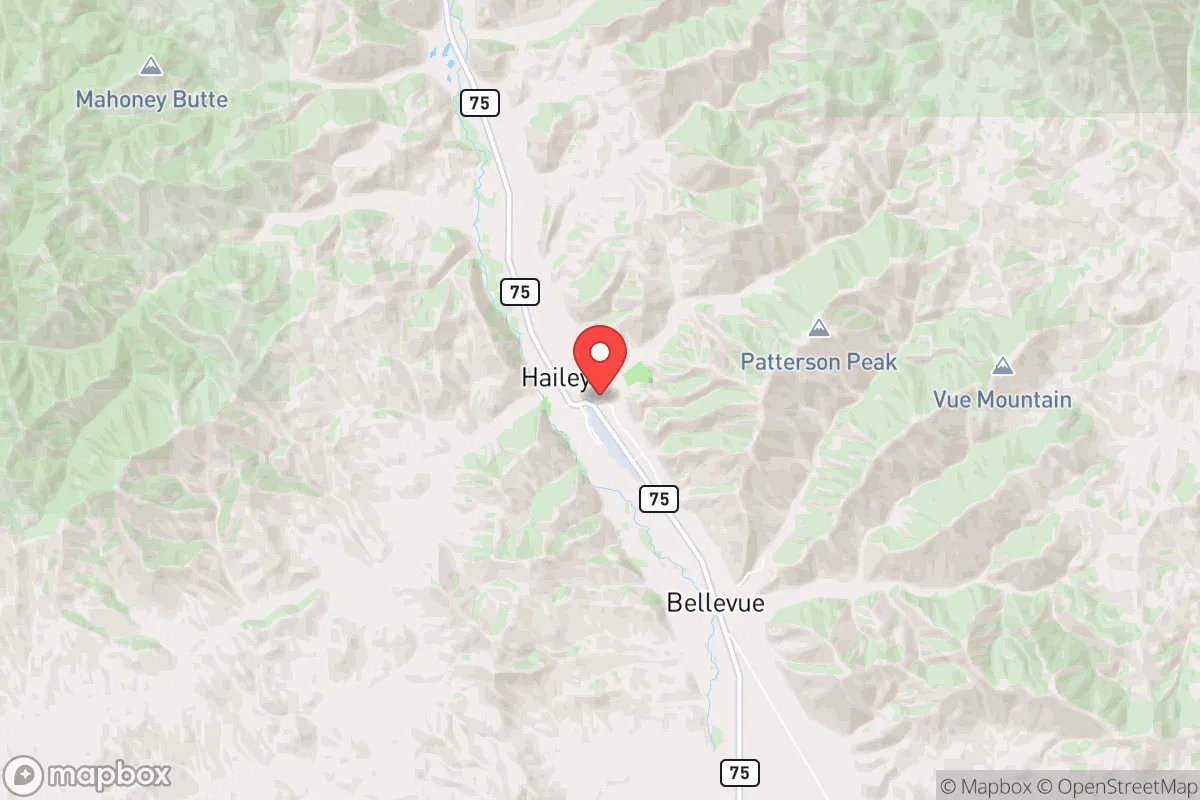
District shown is the primary district for this city’s centroid. Cities may span multiple districts.
Local Political AnalysisPolitical Analysis of Hailey, ID
Hailey, Idaho, sits in Blaine County, and if you’ve been around here long enough, you know the political landscape has shifted more than the Big Wood River after a spring thaw. The area’s Cook PVI is R+13, which tells you the county as a whole leans solidly Republican, but Hailey itself has become a bit of a blue dot in a red sea over the last decade. It used to be a place where folks minded their own business and let you live your life, but now you’re seeing more progressive energy creeping in, especially from newcomers who’ve moved up from places like California or Portland. The long-term trajectory feels like a tug-of-war: the surrounding rural areas—think Bellevue to the south or Ketchum up the road—are holding the line on conservative values, but Hailey’s city council and local boards are starting to flirt with policies that raise eyebrows for anyone who values personal freedom and limited government.
How it compares
If you drive ten minutes south to Bellevue, you’ll find a town that still feels like old-school Idaho: folks wave from their trucks, and the local government keeps its nose out of your business. Head north to Ketchum, and you’re in a different world entirely—it’s a resort town with a heavy progressive tilt, where mask mandates and climate resolutions are the norm. Hailey sits right in the middle, but it’s leaning closer to Ketchum’s vibe every year. The contrast is stark when you look at county-level voting: Blaine County went for Biden in 2020, but the precincts around Hailey were split almost down the middle. Meanwhile, the rest of the county—places like Carey or Picabo—voted red by wide margins. That R+13 rating masks the fact that Hailey’s local elections are increasingly decided by a vocal minority pushing for things like stricter land-use regulations and diversity initiatives, which feel like government overreach to a lot of us who just want to be left alone.
What this means for residents
For the average person living here, the political shift means you’re seeing more rules that nibble at your personal freedoms. The city has floated ideas like mandatory composting programs and tighter short-term rental caps, which sound good on paper but end up as another layer of bureaucracy telling you how to run your own property. Property taxes have crept up too, partly because the local government is funding pet projects that don’t align with what most residents actually need—like bike lanes that get used three months a year. If you’re a conservative who values self-reliance, you’ll find yourself watching city council meetings more closely, because the progressive faction is organized and shows up. The good news is that the county sheriff and most law enforcement here still operate with a common-sense approach, and the Second Amendment is respected in practice, even if some local officials would prefer otherwise. But if this trend keeps up, you might start looking at homes in Bellevue or even further south to Jerome County, where the political climate is more predictable and less intrusive.
One thing that sets Hailey apart culturally is its mix of old ranching families and new remote workers, and that tension plays out in everything from school board decisions to zoning laws. The local school district has managed to avoid the worst of the culture wars so far, but there’s pressure to adopt curriculum changes that prioritize social agendas over academics. On the policy front, Hailey was an early adopter of plastic bag bans and has a reputation for being “green,” which sounds nice until you realize it means more fees and restrictions on small businesses. For a long-time resident like me, the worry is that Hailey is losing its independent, live-and-let-live character. If you’re thinking of moving here, keep an eye on the next few election cycles—if the progressive wave crests, you might find yourself in a town that feels more like a mini Portland than the Idaho you came for.

State Political ClimatePolitical Climate in Idaho
State Political AnalysisPolitical Environment in the State
Idaho has become one of the most reliably conservative states in the nation, with a Republican trifecta controlling the governorship, supermajorities in both legislative chambers, and a 2024 presidential margin of roughly +30 points for Donald Trump. Over the past two decades, the state has shifted sharply rightward as native populations and new arrivals from California, Washington, and Oregon have reinforced—rather than diluted—its conservative character. The dominant coalition is a blend of rural libertarians, evangelical Christians, and second-amendment absolutists, with the Idaho Freedom Caucus now wielding significant influence in the legislature.
Urban vs. rural divide
The political map is starkly divided between a handful of blue-leaning urban islands and a deep-red rural expanse. Boise and its immediate suburbs in Ada County have trended purple over the last decade, with the city of Boise itself voting Democratic in recent presidential cycles by margins of 10-15 points. However, the surrounding Treasure Valley communities—Meridian, Eagle, and Kuna—remain solidly conservative, often voting Republican by 20-30 points. The real action is in the rural counties: Lemhi, Custer, and Butte counties regularly deliver 80-85% Republican votes. A notable shift occurred in Kootenai County (Coeur d’Alene), which flipped from a competitive swing county in the 1990s to a Republican stronghold (+25 points in 2024) as conservative Californians and Washingtonians relocated there. The only other blue dots are Moscow (home to the University of Idaho) and Blaine County (Sun Valley), both of which vote Democratic but are too small to affect statewide outcomes.
Policy environment
Idaho’s policy environment is aggressively pro-liberty by design. The state has no income tax on individuals or corporations, a flat property tax system with a homeowner’s exemption, and a sales tax capped at 6%. The legislature has passed a series of school choice measures, including the 2023 expansion of the Empowering Parents grant program, which directs state funds to private school tuition and homeschooling supplies. Education policy is heavily tilted toward local control, with no statewide mask or vaccine mandates ever enacted. Healthcare remains largely private, with the state rejecting Medicaid expansion implementation delays and instead embracing a work requirement waiver. Election laws are among the most secure in the nation: voter ID is required, same-day registration is not allowed, and the 2024 legislative session passed a ban on ballot drop boxes except at county election offices. The state also has a constitutional carry law (permitless concealed carry) and a 2023 law prohibiting the enforcement of federal gun regulations that violate the Second Amendment.
Trajectory & freedom
Idaho is becoming more free, not less, and the trend is accelerating. The 2024 legislative session saw the passage of the Idaho Parental Rights Act, which codifies parents’ authority over medical decisions, education, and religious upbringing. The Medical Freedom Act (2023) prohibits employers and government entities from requiring COVID-19 vaccines as a condition of employment or service. On property rights, the state passed a 2024 law limiting homeowners’ association authority to restrict solar panels and vegetable gardens. The Idaho Freedom Caucus has successfully pushed for a flat income tax elimination (already achieved), a ban on any state enforcement of federal red flag laws, and a 2025 bill that would allow counties to secede from the state if they feel the state government has overreached. The only area of concern for liberty-minded residents is the growing influence of the Church of Jesus Christ of Latter-day Saints in local politics, which has led to some restrictions on alcohol sales and Sunday business hours in heavily Mormon counties like Franklin and Bear Lake.
Civil unrest & political movements
Idaho has seen remarkably little civil unrest compared to coastal states. The most visible political movements are on the right: the Idaho Freedom Foundation and the Three Percenters have a visible presence in northern Idaho, particularly around Bonners Ferry and Sandpoint. In 2020, the state saw a handful of small Black Lives Matter protests in Boise and Coeur d’Alene, but they were dwarfed by counter-protests and were largely peaceful. Immigration politics are a flashpoint: the 2024 legislature passed a bill allowing local law enforcement to cooperate with ICE, and the governor signed an executive order banning sanctuary cities. The Constitutional Sheriff movement is strong in rural counties like Boundary and Owyhee, where sheriffs have publicly stated they will not enforce any federal gun confiscation orders. Election integrity remains a hot topic: the 2022 audit of Ada County’s election results found no irregularities, but the legislature passed a 2023 law requiring hand-count audits of all races. The only notable left-wing activism is centered in Boise’s North End and around the University of Idaho, where a small but vocal group pushes for rent control and environmental regulations—so far without success.
Projection
Over the next 5-10 years, Idaho will likely become even more conservative as in-migration from blue states continues to be disproportionately composed of conservatives fleeing high taxes and government overreach. The Idaho Department of Labor projects the state will add 200,000 new residents by 2030, with most settling in the Treasure Valley and northern Idaho. This will likely shift Ada County further right as new arrivals from California and Washington vote Republican. The Idaho Freedom Caucus is expected to push for a full elimination of property taxes, a school voucher program, and a state-level constitutional amendment to protect gun rights. The only wild card is the growing influence of the tech industry in Boise, which could bring a more libertarian-leaning but still conservative workforce. A new resident moving in now should expect to find a state that is actively reducing government footprint, protecting parental rights, and resisting federal overreach—but also one where local politics can be intensely personal and where community involvement is expected.
Bottom line for a new resident: If you’re moving to Idaho for freedom, you’re arriving at the right time. The state is on a trajectory of expanding personal liberty, lowering taxes, and protecting constitutional rights. But don’t expect a hands-off government—local communities are tight-knit and expect participation. You’ll find a place where your vote matters, your voice is heard, and your rights are respected, but you’ll also need to engage with your neighbors and your county commissioners to keep it that way. Idaho is not a place for passive residents; it’s a place for people who want to build something.
* Values derived from national, state, county, city and local statistics and may differ in a specific area. Last updated: 2026-05-01T04:21:54.000Z
Narrative content on this page is AI-generated and may contain mistakes. Verify any details that matter before acting on them.
ReloMaps may earn a commission from affiliate links at no extra cost to you.

