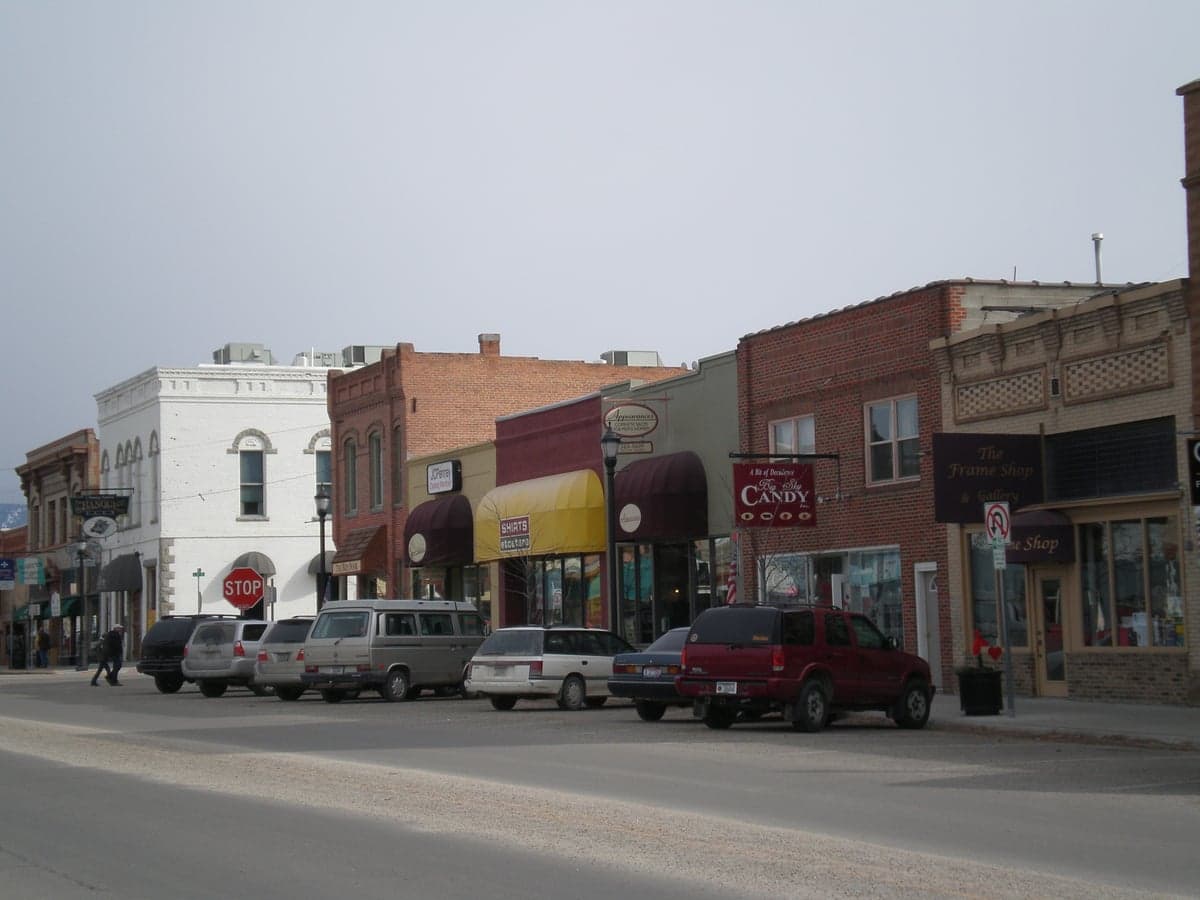
Photo: Wikipedia
Personal Sovereignty in Hamilton, MT
Viable for self-reliance. Generally workable, though some barriers may limit total independence.
What does Personal Sovereignty tell us?
Personal Sovereignty measures your capacity for self-reliance and independence with minimal government friction. Higher scores mean fewer barriers between you and the way you want to live... but it assumes you have the space you need and good neighbors.
What does this tell us?
Personal Sovereignty measures your capacity for self-reliance and independence with minimal government friction. Higher scores mean fewer barriers between you and the way you want to live... but it assumes you have the space you need and good neighbors.
State Policy
Energy independence: Net exporter (120% of energy produced in-state)
Personal Liberty
Homesteading

Personal Liberty Analysis
Hamilton, Montana, offers a notably high degree of personal sovereignty relative to most of the United States, particularly for those who prioritize minimal government interference in daily life. Nestled in the Bitterroot Valley, this town of roughly 5,000 people operates within a state that has consistently pushed back against federal overreach, from gun rights to land use. For the survivalist or prepper, Hamilton’s environment is defined by a combination of low regulatory density, a strong culture of self-reliance, and a legal framework that generally favors individual autonomy over collective mandates. The key question is whether this autonomy is robust enough to withstand the pressures of a changing world, and the answer, based on current conditions, leans heavily in the affirmative.
Tax burden and regulatory posture: How much freedom does your paycheck keep?
Montana’s tax structure is a significant draw for those seeking to maximize personal control over their finances. There is no state sales tax, which means every dollar you earn or spend stays out of the state’s hands—a direct benefit for anyone stockpiling supplies or investing in property. The state income tax is a flat 6.75% as of 2026, which is moderate but not negligible; however, property taxes in Ravalli County are relatively low compared to the national average, with effective rates around 0.7% of assessed value. This keeps the cost of owning land—critical for homesteading—manageable. On the regulatory front, Montana has a strong tradition of limited government. Occupational licensing is less burdensome than in coastal states, and there are no state-level mask or vaccine mandates currently in effect. The Bitterroot Valley, in particular, has a reputation for resisting federal land-use restrictions, with local officials often siding with private property rights over environmental regulations. For the prepper, this means fewer hurdles for building a root cellar, installing solar panels, or storing water tanks without triggering a permitting nightmare. The regulatory posture here is permissive, not punitive.
Self-defense and gun law specifics: What can you carry and where?
Montana is a constitutional carry state, meaning no permit is required to carry a concealed firearm for anyone legally allowed to possess one. Hamilton sits in Ravalli County, which is overwhelmingly pro-Second Amendment—local sheriffs have publicly stated they will not enforce federal gun laws they deem unconstitutional. This is not theoretical; in 2021, the county passed a Second Amendment sanctuary resolution, and enforcement of any future federal bans would likely be met with local resistance. For the survivalist, this means you can carry openly or concealed without bureaucratic interference. There are no magazine capacity restrictions, no "assault weapon" bans, and no waiting periods for purchase. Stand-your-ground laws are in effect, with no duty to retreat in any place you are lawfully present. Castle doctrine protections apply to your home and vehicle. The only notable limitation is that carrying in federal buildings or schools is restricted, but state law allows for concealed carry on school property with a permit. For those concerned about government overreach, the legal environment here is as close to a free zone as you’ll find in the lower 48.
Self-reliance and homesteading viability: Lot sizes, zoning, and off-grid feasibility
Hamilton’s rural character makes it a prime location for self-reliant living. Zoning in Ravalli County is minimal—most unincorporated areas have no zoning at all, meaning you can build a shop, keep livestock, or set up a greenhouse without seeking county approval. Lot sizes vary, but parcels under 5 acres are common near town, while 10- to 40-acre plots are available further into the valley. Off-grid living is legally feasible: Montana law does not require connection to municipal water or sewer if you have your own well and septic system. Solar panels are unrestricted, and many residents use them as primary power sources. Rainwater collection is legal and encouraged. The county does have building codes for new construction, but they are less stringent than in urban areas—no energy codes, for instance, and septic permits are straightforward. For the prepper, the ability to drill a well, install a composting toilet, and run a generator without interference is a major advantage. The Bitterroot Valley’s growing season is short (about 100 days), but the soil is fertile, and water rights are relatively easy to obtain for irrigation. This is not a place where the government will tell you how to live on your own land.
Personal liberties: Parental rights, medical autonomy, speech, and property
Parental rights are strongly protected in Montana. The state has a parental rights law that requires schools to notify parents of any medical or mental health services provided to minors, and parents have the right to opt their children out of any curriculum they find objectionable. In Ravalli County, school boards are conservative-leaning, and there is active community oversight of educational content. Medical autonomy is also robust: Montana has no state-level vaccine mandates for adults or children, and there are no restrictions on purchasing over-the-counter supplements or herbal medicines. The state passed a law in 2023 prohibiting discrimination against those who refuse medical treatments, including vaccines. Speech is protected by the Montana Constitution, which explicitly guarantees the right to free expression, and there are no hate speech laws that could be used to silence political dissent. Property rights are sacrosanct here—eminent domain is rarely used, and there is no state-level rent control or land-use planning that could restrict what you do on your own acreage. For the individualist, this legal framework means you can raise your children, treat your body, speak your mind, and use your land with minimal state interference. The only caveat is that federal land (like the Bitterroot National Forest) has its own rules, but state and local authorities generally defer to private property owners.
Compared to the rest of the country, Hamilton, MT, stands out as a stronghold of personal sovereignty. The combination of no sales tax, constitutional carry, minimal zoning, and robust parental rights creates an environment where government overreach is the exception, not the rule. For the survivalist or prepper, the Bitterroot Valley offers a rare blend of legal freedom and practical self-reliance—a place where you can actually live according to your own values without constant bureaucratic friction. While no location is immune from federal overreach or economic instability, Hamilton provides a legal and cultural buffer that is increasingly hard to find elsewhere. If you are looking to maximize personal autonomy in an uncertain world, this is one of the most viable options in the nation.

* Values derived from national, state, county, city and local statistics and may differ in a specific area. Last updated: 2026-04-30T02:58:11.000Z
Narrative content on this page is AI-generated and may contain mistakes. Verify any details that matter before acting on them.
ReloMaps may earn a commission from affiliate links at no extra cost to you.

