Photo: Wikipedia
Political ClimatePolitical Climate in Hamilton, MT
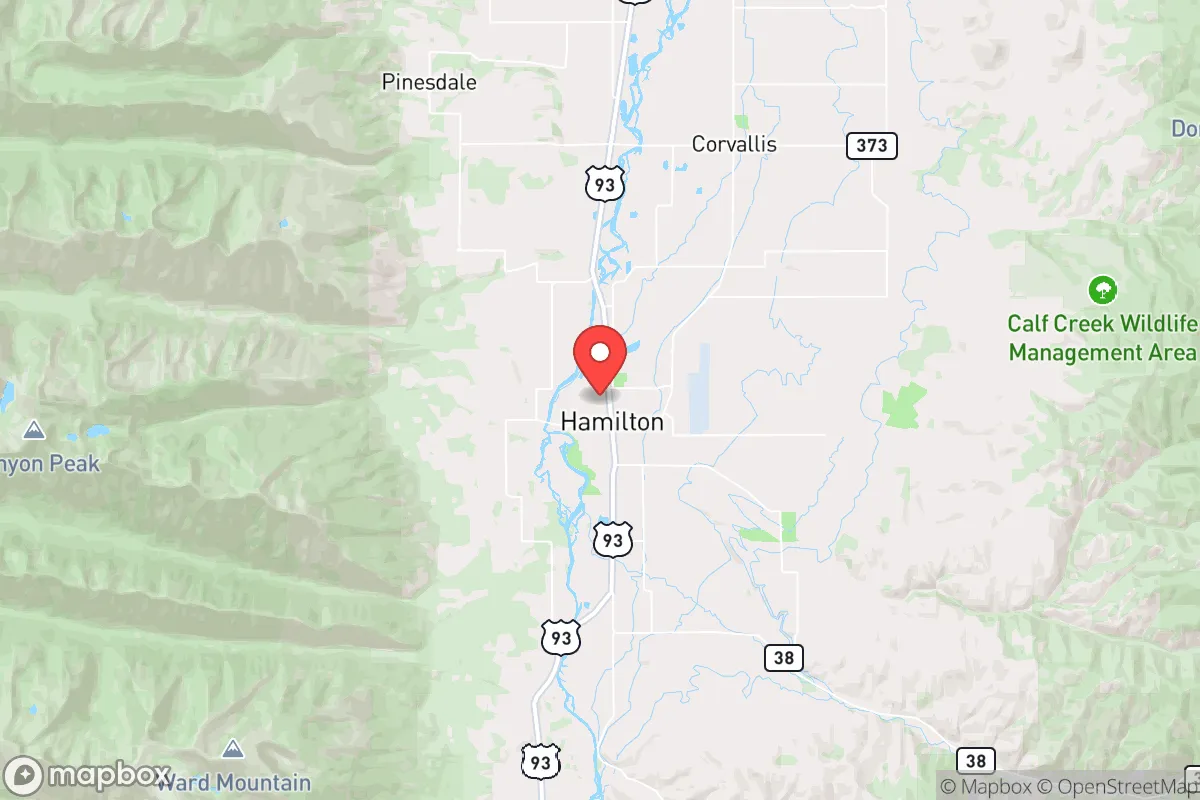
District shown is the primary district for this city’s centroid. Cities may span multiple districts.
Local Political AnalysisPolitical Analysis of Hamilton, MT
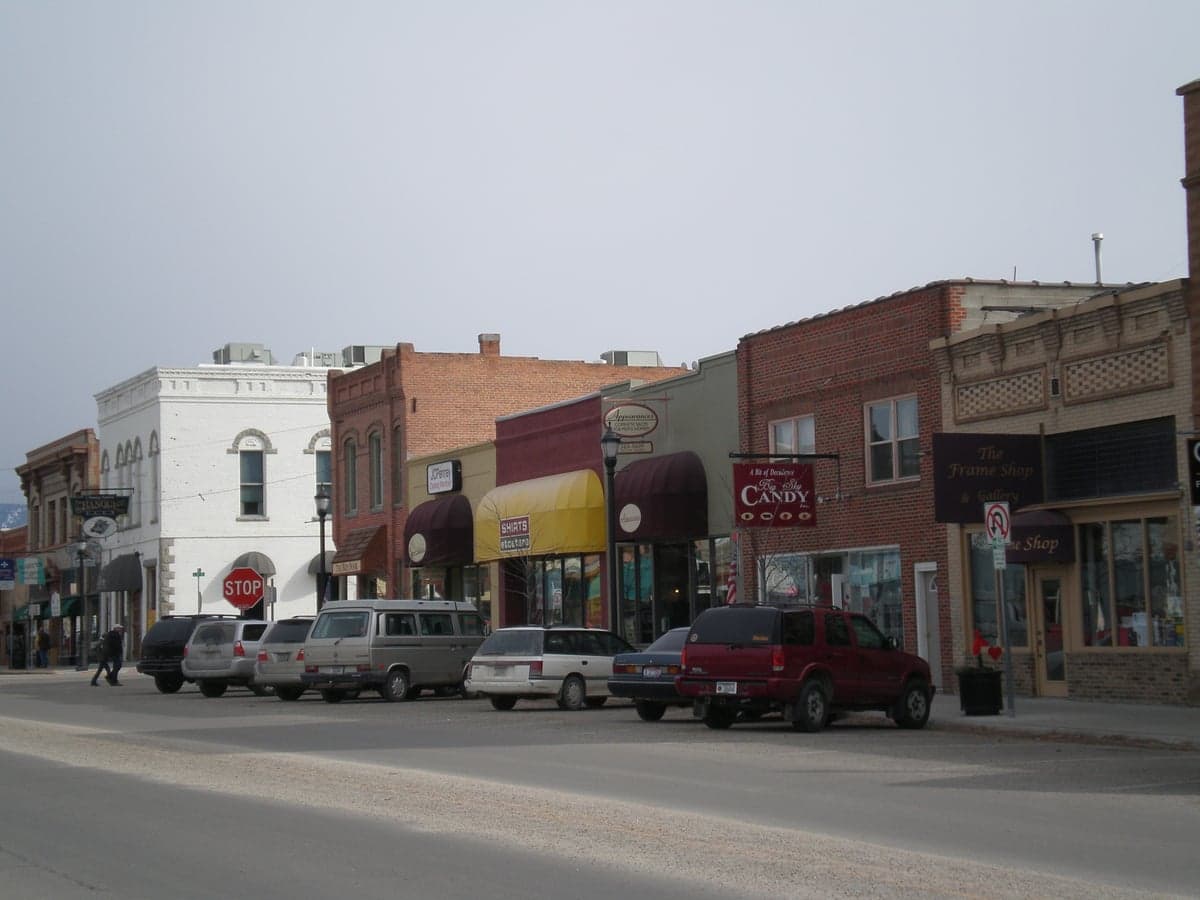
Hamilton, Montana, sits in the heart of the Bitterroot Valley, and politically, it’s about as solidly conservative as you’ll find in the state. The Cook PVI of R+5 actually feels a bit generous to the left when you’re walking down Main Street—local elections are dominated by Republicans, and the county commission has been reliably red for decades. But here’s the thing: it wasn’t always this way. Back in the 90s and early 2000s, Hamilton was more of a libertarian-leaning, live-and-let-live kind of place. The shift toward a more vocal, organized conservative majority really kicked in around 2016, driven by an influx of folks from California and Washington who were fleeing high taxes and overreach in their home states. They didn’t come here to turn Montana blue—they came to keep it red. The trajectory now is toward an even deeper shade of conservative, especially as younger families and remote workers settle in, looking for a place where the government stays out of your business.
How it compares
Drive 45 minutes north to Missoula, and you’ve entered a different world—a deep blue college town where the city council is openly progressive and the county voted +20 for Biden in 2020. That contrast is stark and growing. Hamilton sits in Ravalli County, which voted +31 for Trump in 2024, while Missoula County went +18 for Biden. The difference isn’t just in voting patterns; it’s in the feel of daily life. In Hamilton, you can still buy a rifle at the hardware store without a second glance. In Missoula, you’ll find more bike lanes and city ordinances about lawn watering. The surrounding towns—Stevensville, Victor, Darby—are even more rural and conservative than Hamilton, but they lack the economic base. Hamilton is the hub, and its politics reflect a mix of ranching heritage, Second Amendment culture, and a growing wariness of federal mandates. If you’re coming from a place like Portland or Seattle, the contrast will hit you the moment you see the “Don’t California My Montana” bumper stickers on every other truck.
What this means for residents
For the people who live here, the political climate means a few concrete things. First, property taxes are relatively low compared to the national average, and there’s no state sales tax—a direct result of conservative fiscal policy that keeps the government’s hands off your wallet. Second, gun laws are about as permissive as they get: no permit needed for concealed carry, no magazine bans, and a county sheriff who has publicly stated he won’t enforce any federal gun restrictions he deems unconstitutional. Third, schools in the Hamilton district still teach from a traditional curriculum, with local control over what’s in the library and the classroom—something that’s becoming a battleground in more progressive areas. The downside? If you’re hoping for robust public transit or a city-funded arts scene, you’ll be disappointed. The county government’s philosophy is “keep the taxes low and the services lean,” which means potholes take a while to get fixed and the local bus system is basically nonexistent. But for most residents, that trade-off is worth it to avoid the kind of government overreach they see in places like Missoula or Helena.
One cultural distinction that’s worth noting: Hamilton has a strong strain of constitutional conservatism that goes beyond party politics. The local Republican Party is active, but there’s also a vocal contingent of libertarians and independent-minded folks who are suspicious of any government—federal, state, or local—that tries to impose mandates. During the COVID-19 pandemic, Ravalli County was one of the first in Montana to openly defy the governor’s mask mandate, and the sheriff’s office made it clear they wouldn’t enforce lockdown orders. That spirit is still alive today. You’ll see it in the way the county commission pushes back on federal land-use restrictions, and in the way local businesses operate without a lot of red tape. The long-term concern among long-time residents is that the influx of new people—even conservative ones—could eventually dilute that independent streak. If enough newcomers bring their big-city expectations for government services, the political culture could shift. But for now, Hamilton remains a place where the prevailing attitude is: leave us alone, and we’ll leave you alone.

State Political ClimatePolitical Climate in Montana
State Political AnalysisPolitical Environment in the State
Montana has long been a reliably Republican state at the presidential level, voting for the GOP candidate in every election since 1968 except for Bill Clinton’s 1992 win, but the real story is the internal tension between a deeply libertarian, individualistic frontier culture and a growing influx of out-of-state transplants, particularly from California and the Pacific Northwest, who are reshaping the political landscape in places like Bozeman, Missoula, and Whitefish. The state’s overall partisan lean remains solidly red—Trump won by 16 points in 2020 and by over 20 in 2024—but the margin has tightened in the western mountain counties as new residents bring more progressive voting habits. Over the past two decades, the political trajectory has shifted from a sleepy, hands-off conservative consensus to a more polarized battleground where the old-school “leave me alone” ethos clashes with a newer, more activist brand of both left and right.
Urban vs. rural divide
The political map of Montana is a textbook case of urban-rural polarization. The state’s population centers—Missoula, Bozeman, Helena, and Billings—drive the blue vote, while the vast rural expanse of the eastern plains and the smaller towns in the west lean heavily red. Missoula County, home to the University of Montana, is the most reliably Democratic stronghold, voting for Biden by 18 points in 2020 and for progressive candidates down-ballot. Bozeman’s Gallatin County, once a conservative bastion, has flipped dramatically in the last decade as tech workers and remote professionals flooded in; it voted for Biden by 4 points in 2020 after going for Trump by 12 in 2016. Meanwhile, Billings’ Yellowstone County, the state’s most populous, remains a swing county that leans Republican but can be competitive in local races. The rural counties—like Phillips, Garfield, and McCone—routinely deliver 80-90% of their votes to Republicans, making the state’s overall red hue a product of land mass and low population density. The divide is stark: drive 20 minutes outside of Missoula or Bozeman, and you’re in deep red territory where “government” is still a four-letter word.
Policy environment
Montana’s policy environment is a mixed bag that reflects its libertarian roots but is increasingly influenced by the new arrivals. The state has no sales tax, which is a huge draw for conservatives, and property taxes are relatively low compared to the national average, though they’ve been creeping up as home values skyrocket in Bozeman and Missoula. The regulatory posture is generally light—permitting for new construction is faster than in most Western states—but the state government under Governor Greg Gianforte has pushed for more centralized control over land use and zoning, which rankles the old-timers who want counties to run their own show. Education policy is a flashpoint: Montana has a robust school choice movement, with a new tax credit scholarship program passed in 2023 that allows families to use state funds for private or homeschool expenses, but the teachers’ unions in Missoula and Bozeman are fighting it tooth and nail. Healthcare is a mixed bag—the state expanded Medicaid under the ACA in 2015, which was a pragmatic move that even some conservatives supported, but the Gianforte administration has added work requirements and is pushing for more private-sector solutions. Election laws are solid: Montana has voter ID requirements, no-excuse absentee voting, and a new law banning ballot harvesting, which passed in 2021. The state also has a strong tradition of citizen initiatives, which means voters can bypass the legislature on issues like marijuana legalization (passed in 2020) and Medicaid expansion.
Trajectory & freedom
Montana is at a crossroads on personal freedom. On the positive side, the state has some of the strongest gun rights in the nation—constitutional carry was passed in 2021, and there’s no state-level red flag law, despite repeated attempts by Democrats to push one through. Parental rights got a boost with the 2023 “Parents’ Bill of Rights,” which requires schools to notify parents about curriculum changes and medical decisions, a direct response to the woke activism seen in Missoula County Public Schools. Medical autonomy is a mixed bag: Montana banned nearly all abortions after 20 weeks in 2023, but a state Supreme Court ruling in 2024 struck down a parental notification requirement for minors, which was a setback for conservatives. Property rights are under pressure in the western counties, where local governments in Bozeman and Whitefish have imposed short-term rental caps and stricter building codes to manage the housing crisis, which feels like government overreach to many longtime residents. The biggest red flag is the state’s growing reliance on federal dollars—Montana receives more federal funding per capita than almost any other state, which gives the feds leverage over everything from highway projects to environmental regulations. The trajectory is toward more state-level control in some areas (guns, education) but more local government intervention in others (housing, land use), and the net effect is that freedom is becoming less uniform across the state.
Civil unrest & political movements
Montana has seen its share of political flashpoints, though they tend to be more organized and less violent than in other states. The most visible movement is the “Yellowstone County Patriots” and similar groups that have been active in school board meetings and county commission hearings, pushing back against mask mandates, critical race theory, and vaccine requirements. In 2021, the state saw a series of protests at the Capitol in Helena over COVID restrictions, with armed demonstrators demanding the governor reopen the economy—a movement that was largely successful, as Gianforte lifted most restrictions by summer 2021. On the left, the “Montana Environmental Information Center” and “Indigenous-led groups” have been active in opposing new mining and oil drilling projects, particularly the proposed Black Butte Copper Mine near White Sulphur Springs and the Keystone XL pipeline (which was ultimately canceled). Immigration politics are less of a flashpoint here than in border states, but there’s been growing tension in the agricultural counties of the Hi-Line, where meatpacking plants in Great Falls and Billings have drawn immigrant labor, leading to local debates over enforcement and sanctuary policies—though Montana has no sanctuary cities. Election integrity controversies flared up after 2020, with some rural counties calling for hand-count audits, but the state’s Republican Secretary of State, Christi Jacobsen, has maintained that Montana’s system is secure. The overall vibe is that Montanans are fiercely independent and don’t like being told what to do by anyone—whether it’s the federal government, the state capitol, or their own county commission.
Projection
Over the next 5-10 years, Montana is likely to become more politically competitive, but not in the way many expect. The in-migration from blue states will continue to turn Gallatin and Missoula counties bluer, but the new arrivals are also bringing their own brand of libertarian conservatism—many are fleeing high taxes and overregulation, so they’re not all voting for Democrats. The state’s population is projected to grow by 10-15% by 2035, with most of that growth concentrated in the western corridor from Bozeman to Kalispell, which will put pressure on housing, infrastructure, and local government. The state legislature will likely remain under Republican control, but the margin could narrow as the western counties gain more seats. The biggest wildcard is the state’s water rights and land use policies—as the climate dries out and more people move in, fights over water allocation and development will intensify, and the state government will have to choose between protecting private property rights and imposing centralized planning. For a conservative moving in now, expect to find a state that is still fundamentally free on guns, taxes, and education, but where local battles over housing, schools, and environmental regulations are becoming more common. The old Montana—where you could do what you wanted on your own land without anyone bothering you—is fading, but the new Montana is still a far cry from the overregulated states of the coasts.
For a new resident, the bottom line is that Montana offers a high degree of personal freedom compared to most states, but it’s not the libertarian paradise it was 20 years ago. You’ll find strong gun rights, low taxes, and a culture that values independence, but you’ll also encounter growing government involvement in housing, education, and land use, especially in the booming western towns. If you’re looking for a place where you can live your life without a lot of interference, Montana is still one of the best bets in the country—just be prepared to fight for it at the local level.
* Values derived from national, state, county, city and local statistics and may differ in a specific area. Last updated: 2026-04-30T02:58:11.000Z
Narrative content on this page is AI-generated and may contain mistakes. Verify any details that matter before acting on them.
ReloMaps may earn a commission from affiliate links at no extra cost to you.

