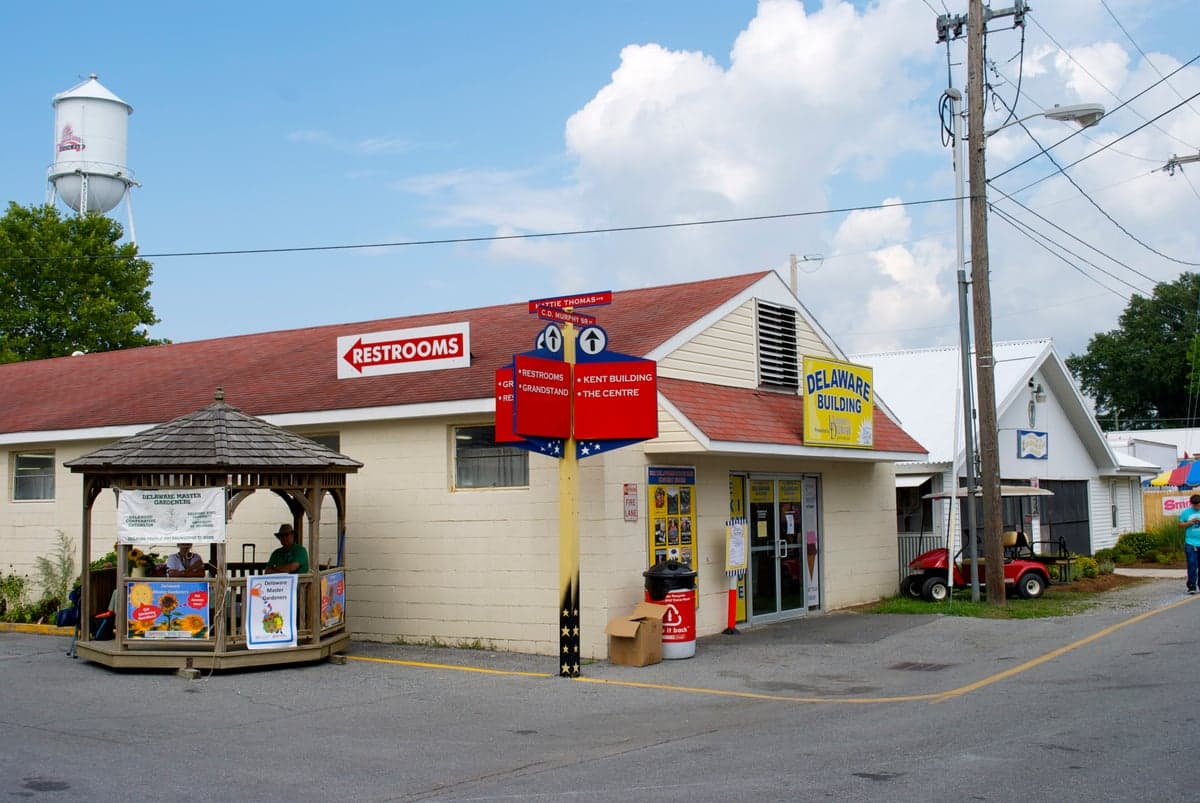
Photo: Wikipedia
Political ClimatePolitical Climate in Harrington, DE
District shown is the primary district for this city’s centroid. Cities may span multiple districts.
Inherited from parent state — no local data available.
Local Political AnalysisPolitical Analysis of Harrington, DE
Harrington, Delaware, sits in a D+8 Cook PVI district, which means it leans pretty reliably Democrat on paper, but the real story on the ground is a lot more complicated than that number suggests. I’ve lived here long enough to remember when this area was a quiet, conservative-leaning farming community where folks mostly kept to themselves and didn’t want the government poking its nose into their business. Over the last decade or so, the political climate has shifted noticeably as more people move in from places like Dover and even up from the more liberal parts of Sussex County, bringing a more progressive mindset with them. It’s not that Harrington has become a hotbed of activism, but you can feel the change in local elections and the way people talk about things like property rights and school policies.
How it compares
If you drive just 15 minutes north to Dover, you’ll find a much more pronounced progressive tilt, with a bigger government presence and a lot more focus on social programs and regulations. Head south toward Milford or even further to Georgetown, and you start hitting areas that feel more like the old Harrington—more independent, more skeptical of new taxes and mandates. The contrast is sharpest when you look at how different towns handled things like COVID restrictions or recent zoning changes. In Harrington, there’s still a strong undercurrent of “leave us alone,” but the political machine in Kent County as a whole is increasingly influenced by the state-level push from Dover. The D+8 rating masks a real split: the rural parts of the district vote red, while the town itself and the surrounding developments are where the blue votes pile up.
What this means for residents
For someone who values personal freedoms and wants to keep government overreach in check, the trend here is a bit concerning. You’re seeing more local ordinances that feel like they’re copied from bigger cities—things like stricter noise regulations, limits on short-term rentals, and even talk about “equity” initiatives in the school district. Property taxes have crept up, and there’s a growing push for more public spending on things that a lot of us see as unnecessary or even intrusive. The good news is that Harrington still has a strong core of folks who remember when the town ran on common sense and neighborly trust, not bureaucratic rules. Local elections are still competitive, and a few well-organized conservative candidates have managed to hold the line on things like zoning and school curriculum. But you have to stay engaged—if you sit back, the progressive wave from Dover will keep washing in.
One thing that sets Harrington apart from some of the more liberal towns nearby is the cultural resistance to being told what to do. You still see plenty of pickup trucks with American flags, and the local diner conversations are more likely to be about crop prices or hunting seasons than social justice campaigns. The state’s recent push for tighter gun laws and environmental regulations has been met with quiet but firm opposition here. Long-term, I’d say Harrington is at a crossroads: it could either hold onto its independent character or slowly morph into another bedroom community for Dover’s bureaucracy. If you’re thinking of moving here, just know that the political climate is shifting, and it’s going to take active, local involvement to keep the government from getting too comfortable in your backyard.

State Political ClimatePolitical Climate in Delaware
State Political AnalysisPolitical Environment in the State
Delaware, despite its small size, has a surprisingly complex political climate that leans reliably Democratic at the state level, but with a strong, often overlooked conservative undercurrent in its rural and coastal areas. Over the past 20 years, the state has shifted from a moderate, business-friendly swing state to a solidly blue stronghold, driven largely by the explosive growth of New Castle County and the influence of the Wilmington metro area. For a conservative considering relocation, the picture is mixed: low taxes and business-friendly incorporation laws coexist with increasingly progressive social policies and a growing regulatory footprint.
Urban vs. rural divide
The political map of Delaware is a textbook case of the urban-rural split. The northern third of the state, centered on Wilmington and the sprawling suburbs of Newark and Bear, is the Democratic engine room. New Castle County alone accounts for over 55% of the state’s population and delivers landslide margins for Democrats—often 65-70% of the vote. This area is home to the state’s largest employers, including Bank of America, JPMorgan Chase, and the University of Delaware, and its politics reflect the professional, educated, and increasingly progressive base. Drive south of the Chesapeake & Delaware Canal, and the landscape—and the politics—changes dramatically. Dover, the capital, is a purple island in a sea of red, with its own mix of military families from Dover Air Force Base and state government workers. Further south, Georgetown, Seaford, and Millsboro are solidly conservative, with strong agricultural and poultry industries (Perdue, Mountaire) and a growing retiree population. The coastal resort towns like Rehoboth Beach and Lewes are a wild card—they lean left culturally but are increasingly libertarian on taxes and property rights. The result is a state where the governor and legislature are firmly Democratic, but the southern two counties (Kent and Sussex) often vote Republican by double digits in local races.
Policy environment
Delaware’s policy environment is a study in contradictions. On the plus side for conservatives, the state has no sales tax and relatively low property taxes, which is a major draw for retirees and businesses. The corporate-friendly legal environment (the Court of Chancery) remains a huge asset. However, the state has aggressively expanded its regulatory reach in recent years. Income taxes are progressive and can hit 6.6% at the top bracket, and the state has a high gas tax. On social policy, the trend is unmistakably leftward. Delaware has codified abortion rights into law, expanded Medicaid under the ACA, and passed a statewide paid family and medical leave program that will be funded by a new payroll tax starting in 2026. The education system is heavily unionized, with school choice limited compared to neighboring Pennsylvania or Maryland. Election laws have been loosened significantly: no-excuse absentee voting and same-day registration are now permanent, and a vote-by-mail law was passed in 2024 (though it faces legal challenges). For a conservative, the policy environment feels increasingly like a smaller version of New Jersey or Maryland—good on taxes for now, but with a clear trajectory toward higher spending and more mandates.
Trajectory & freedom
On the freedom index, Delaware is moving in the wrong direction for conservatives. The most concerning trend is on Second Amendment rights. In 2022, Governor John Carney signed a package of gun control bills that included a ban on "assault weapons" (defined broadly), a ban on high-capacity magazines, and a requirement for a permit to purchase a handgun. These laws are among the strictest in the nation and are currently being challenged in court, but they remain on the books. On parental rights, the state has moved toward progressive orthodoxy: a 2023 law prohibits schools from notifying parents if a child changes their gender identity or pronouns, overriding parental authority. Medical freedom took a hit with strict COVID-era mandates that lasted longer than in neighboring states, and the state has not rolled back any of the emergency powers granted to the governor. Property rights are relatively strong, but the state has a growing problem with overregulation in coastal zones and a slow-moving eminent domain process. The overall trajectory is one of expanding government control over personal decisions, from healthcare to education to what you can own.
Civil unrest & political movements
Delaware is not a hotbed of civil unrest, but there have been notable flashpoints. The Black Lives Matter protests in Wilmington in 2020 were large and occasionally violent, leading to property damage and a heavy police response. The state’s sanctuary policies are a point of contention: while Delaware is not a formal sanctuary state, Wilmington and New Castle County have "welcoming city" ordinances that limit cooperation with ICE, which has frustrated conservatives in the more rural areas. The election integrity debate has been muted compared to other states, but the rapid expansion of mail-in voting and the state’s use of electronic poll books have raised concerns among conservative activists. On the right, the Delaware GOP is fractured between a moderate, business-friendly wing (centered in Sussex County) and a more populist, Trump-aligned faction. The most visible political movement in recent years has been the fight over parental rights in education, which has mobilized thousands of conservative parents in school board meetings across the state, particularly in Sussex and Kent counties. The issue of offshore wind farms has also become a political flashpoint, with many coastal residents—both liberal and conservative—united against the visual and environmental impact of projects like the proposed Skipjack Wind Farm.
Projection
Looking ahead 5-10 years, the demographic trends are not favorable for conservatives. The growth is concentrated in New Castle County, driven by the expansion of the Wilmington financial sector and the University of Delaware. The retiree influx into Sussex County is politically mixed—many are from blue states and bring their voting habits with them. The state’s in-migration is increasingly from the Northeast corridor, not the South, which reinforces the blue tilt. The Democratic supermajority in the legislature is likely to hold or expand, meaning more progressive policies on taxes, energy, and social issues are probable. The one wild card is the affordability crisis: as housing prices in New Castle County skyrocket, some younger families may move south, potentially shifting the political balance in Kent and Sussex over time. But for now, the state is on a clear path toward becoming a smaller version of Maryland—reliably blue, with high taxes on income and property, strict gun laws, and a regulatory environment that prioritizes government solutions over individual freedom.
Bottom line for a conservative moving to Delaware: You’ll find a low-tax haven for your business and property, but you’ll be living in a state where your political views are increasingly out of step with the government. If you value low regulation and no sales tax, the southern counties (especially Sussex) offer a more conservative lifestyle, but you’ll still be subject to state-level policies on guns, education, and parental rights that are moving left. It’s a trade-off: financial freedom in exchange for cultural and political friction. If you’re willing to engage in local politics and accept that the state government will not reflect your values, Delaware can still work. But if you’re looking for a state that is trending toward conservative governance, you’re better off looking south or west.
* Values derived from national, state, county, city and local statistics and may differ in a specific area. Last updated: 2026-04-29T20:14:57.000Z
Narrative content on this page is AI-generated and may contain mistakes. Verify any details that matter before acting on them.
ReloMaps may earn a commission from affiliate links at no extra cost to you.

