 Popular
Photo: Wikipedia
Quality of Life in Hartford, CT
A high quality of life with strong walkability, manageable living costs, healthy neighborhood signals, and solid amenity access.
What does Quality of Life tell us?
Quality of Life blends cost of living, nearby amenities, socioeconomic signals, and neighborhood character. City-level scores represent the whole municipality; individual neighborhoods can differ.
What does this tell us?
Quality of Life blends cost of living, nearby amenities, socioeconomic signals, and neighborhood character. City-level scores represent the whole municipality; individual neighborhoods can differ.
Cost of Living
6% below national average
The Real Cost of Living in Hartford, CT for 2026
| Tier | Individual | Family (4) |
|---|---|---|
| Survival | $19k | $37k |
| Comfortable | $42k | $62k |
| Luxury | $82k+ | $127k+ |
| Elite (Top 5%) | $113k+ | $175k+ |
73%
The Area Signal
A metric tracking the socioeconomic signals of the area.
Hobbies
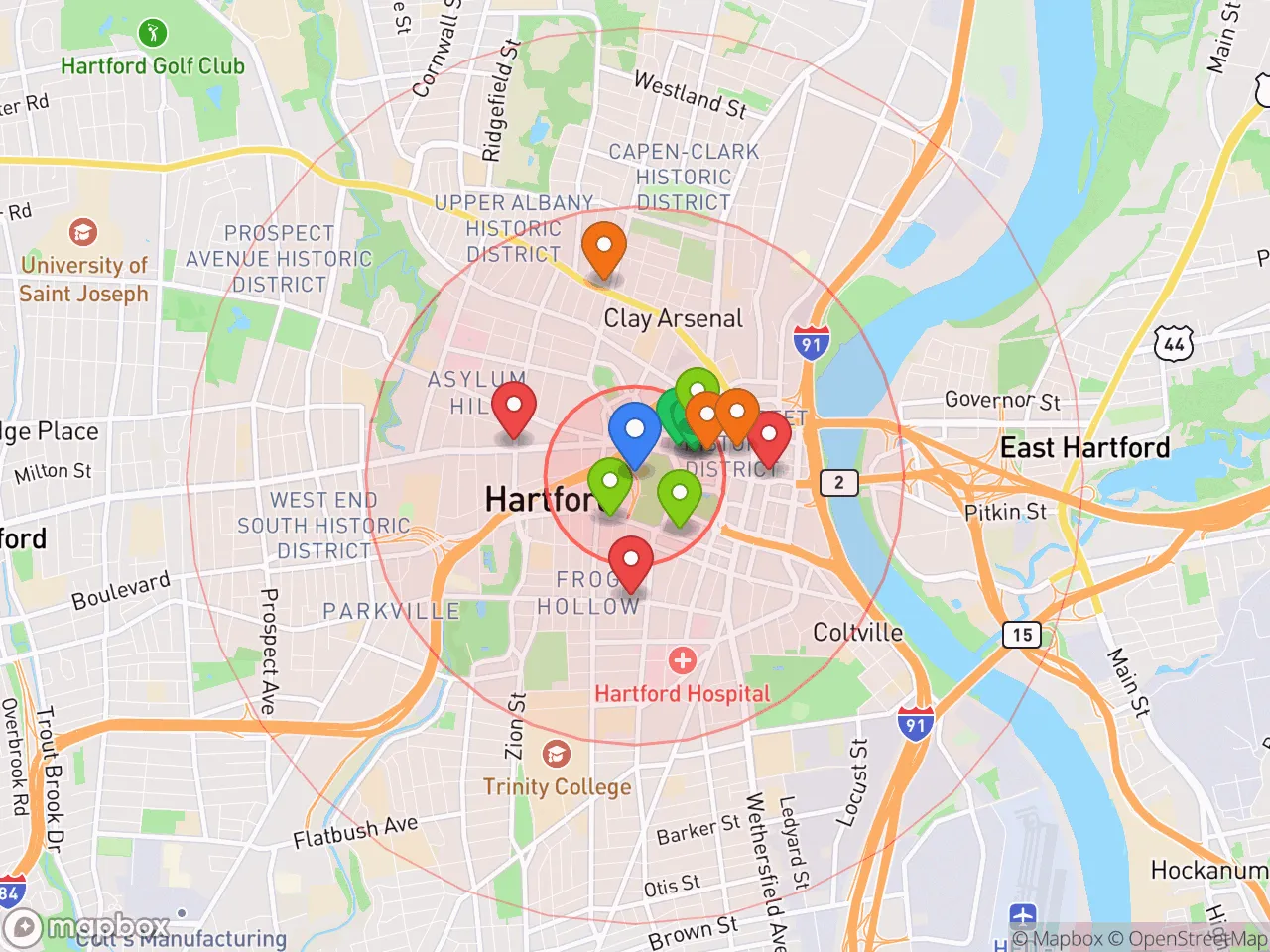
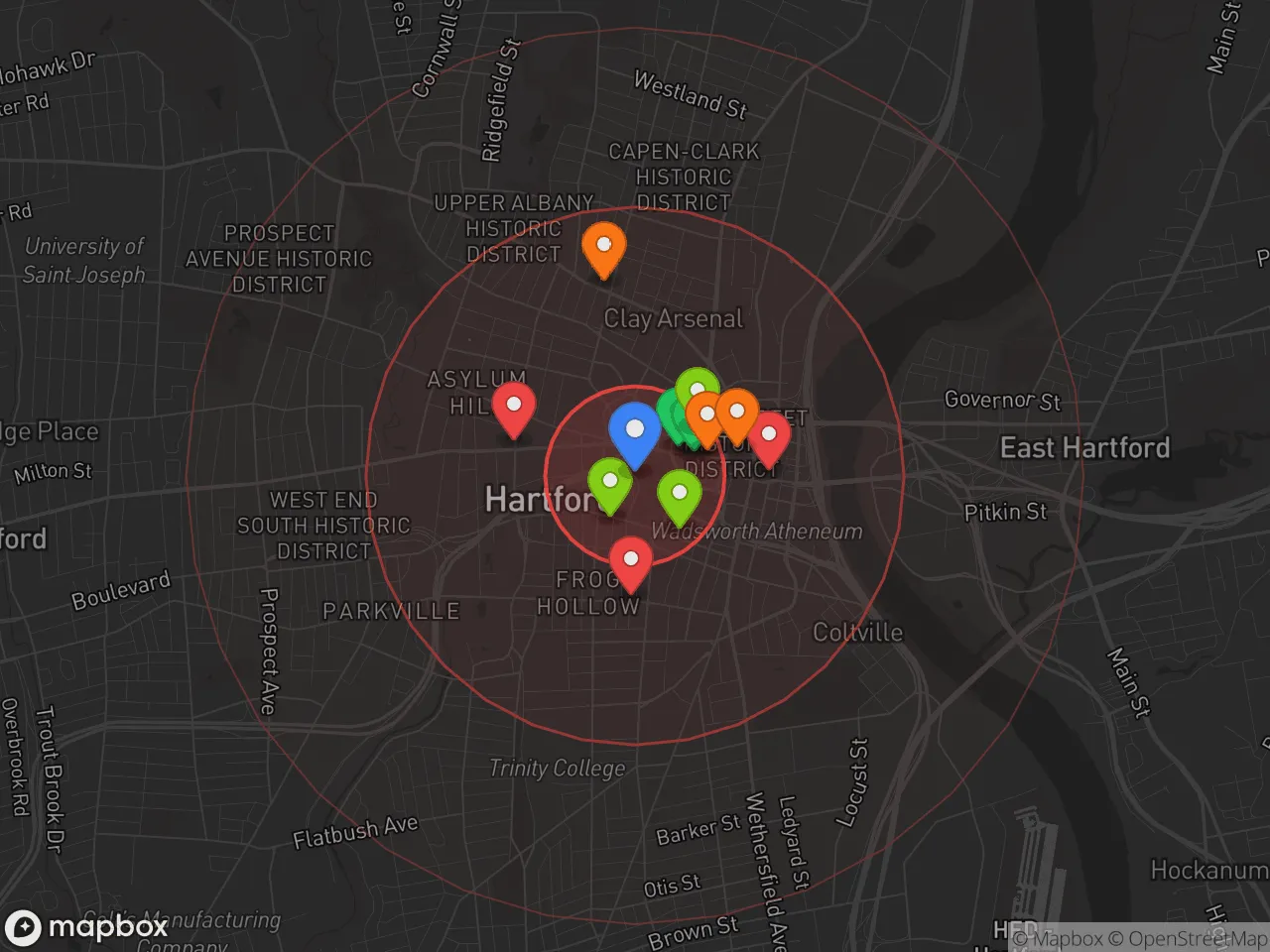
Explore the areaGroceries
7 within 10 miles
Gas
20 within 10 miles
Hospital
20 within 20 miles
Airport
JFK — John F. Kennedy International
Post Office
USPS — Hartford, CT
Critical Amenities
Quality-of-Life Analysis
Hartford, Connecticut, presents a quality-of-life profile that is notably more affordable than the surrounding region, with a cost of living index of 94 (6% below the national average) that stands in sharp contrast to the wealthier suburbs of the Farmington Valley or Fairfield County. The city’s population is a mix of long-term working-class families, a growing cohort of young professionals drawn to its revitalizing downtown, and a significant number of state government employees and insurance industry workers. While the city itself has a median household income below the state average, its affordability and central location make it a practical base for those who work in the capital region or commute to nearby employment hubs.
Cost of living, housing affordability, and how Hartford compares to nearby suburbs
Hartford’s housing market is a primary draw for budget-conscious residents. The median home value sits at $217,200, which is less than half the median in many of the affluent towns just west of the city, such as West Hartford ($400,000+) or Avon ($450,000+). Median rent is a relatively attainable $1,221, compared to over $1,800 in those same suburbs. This price gap means that a household earning the area’s median income can realistically afford to own a home in Hartford, whereas they would be priced out of most surrounding communities. However, this affordability comes with trade-offs: property taxes in Hartford are among the highest in the state (roughly 74 mills), which partially offsets the lower purchase price. The average commute time of 22.8 minutes is notably shorter than the national average of 26 minutes, a benefit of the city’s compact geography and its position as a hub for Interstates 84 and 91. Many residents find they can reach downtown offices, the Hartford Hospital complex, or Trinity College in under 20 minutes, a significant quality-of-life advantage over longer suburban commutes.
What daily life is like for families: schools, parks, and local amenities
Daily life in Hartford is shaped by its status as a small, walkable city with a strong civic core. The Hartford Public Schools system faces well-documented challenges, with many families opting for magnet schools (such as the Greater Hartford Academy of the Arts) or charter schools, which are accessible via a lottery system. For recreation, Bushnell Park anchors downtown with its carousel and seasonal events, while Elizabeth Park (shared with West Hartford) offers the nation’s oldest public rose garden. The city’s dining scene has improved markedly in recent years, with a concentration of new restaurants and breweries along Pratt Street and in the Parkville neighborhood. Cultural amenities are a major asset: the Wadsworth Atheneum, the Mark Twain House, and the Bushnell Center for the Performing Arts provide urban-level offerings without the crowds of a larger city. Grocery access is uneven, with full-service supermarkets concentrated in the South End and Blue Hills neighborhoods, though downtown has seen new markets open in mixed-use developments. The rhythm of life here is more urban than suburban, with a reliance on public transit (CTfastrak bus rapid transit) for some commuters, though a car remains essential for most errands.
Hartford is best suited for individuals and families who prioritize affordability and urban amenities over suburban school rankings and low property taxes. It works well for state employees, healthcare workers at Hartford Hospital or UConn Health, and professionals in the insurance sector who want a short commute and a lower housing payment. Families willing to navigate the magnet school system or invest in private education can find a vibrant, diverse community with strong cultural resources. Those seeking top-tier public schools, large single-family lots, or very low crime rates will likely be more comfortable in the surrounding suburbs. For the right resident, Hartford offers a rare combination in the Northeast: an urban lifestyle at a cost that leaves room in the budget for travel, savings, or other pursuits.

Crime in Hartford, CT
Higher crime rates than 68% of comparable U.S. locations.
Violent CrimeViolent Crime Analysis
Property CrimeProperty Crime Analysis
Crime Analysis
Hartford, Connecticut, faces a serious public safety challenge, with crime rates significantly exceeding both state and national averages. The city's violent crime rate stands at 452.1 incidents per 100,000 residents, while property crime is reported at 2,232.6 per 100,000. These figures place Hartford among the higher-risk urban centers in New England, a reality shaped by socioeconomic factors and, critically, by the progressive criminal justice policies enacted by local and state officials.
Crime in context
Hartford's violent crime rate is roughly 1.3 times higher than the national average and more than double the Connecticut state average. Property crime in the city is also elevated, running about 1.5 times the national rate. These statistics are not abstract; they reflect a tangible environment where residents and visitors face elevated risks of theft, assault, and robbery. The situation is compounded by the fact that Hartford is a relatively small city (roughly 120,000 residents) embedded in a larger metropolitan area, meaning crime patterns can spill over into surrounding suburbs. The progressive lean of Hartford's judiciary and district attorney's office has been a point of contention, with critics arguing that policies prioritizing diversion and reduced incarceration for repeat offenders have directly contributed to a revolving-door justice system, emboldening criminals and undermining deterrence.
What residents experience
For those living in Hartford, the daily reality involves navigating a landscape where property crime is a persistent nuisance and violent crime is a genuine concern. Car thefts, burglaries, and larcenies are common, with many residents investing in security systems and steering-wheel locks. Violent incidents, including shootings and armed robberies, are concentrated in specific areas but can occur citywide. The impact of progressive prosecutorial policies is felt acutely: offenders arrested for property crimes are often released quickly on reduced bail or into pretrial programs, leading to a sense among residents that the justice system does not prioritize their safety. This erodes trust in law enforcement and local government, as victims of crime frequently see perpetrators back on the streets within days.
Neighborhood-level variation is stark. Areas like the South End, Behind the Rocks, and the North End experience the highest concentrations of violent crime, while quieter residential pockets such as the West End and parts of the South Green show lower incident rates. However, no neighborhood is immune to the spillover effects of the city's broader crime problem. Prospective residents should research specific blocks and consult local crime maps, but should also understand that Hartford's overall safety profile is heavily influenced by a justice system that many argue prioritizes offender rehabilitation over public protection. For those considering relocation, the data and policy environment suggest a need for heightened vigilance and realistic expectations about personal safety.
* Values derived from national, state, county, city and local statistics and may differ in a specific area. Last updated: 2026-04-24T11:51:31.000Z
Narrative content on this page is AI-generated and may contain mistakes. Verify any details that matter before acting on them.
ReloMaps may earn a commission from affiliate links at no extra cost to you.

