 Popular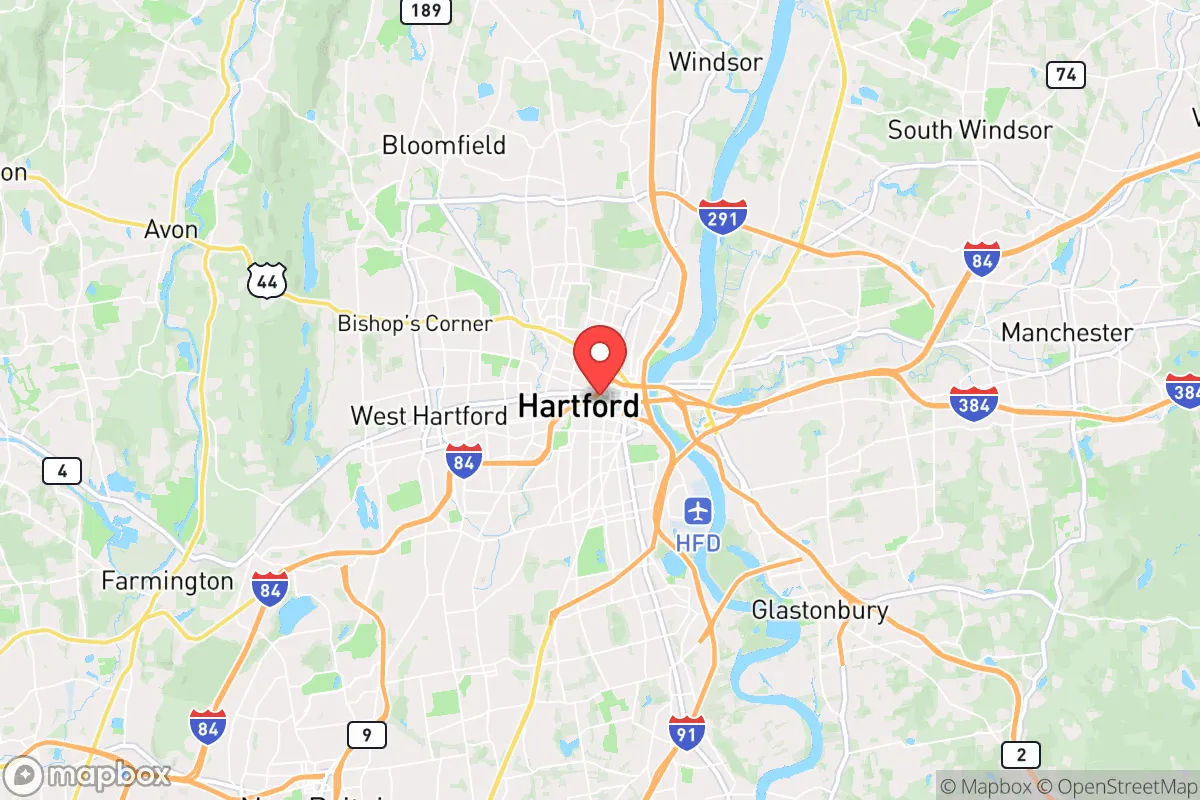
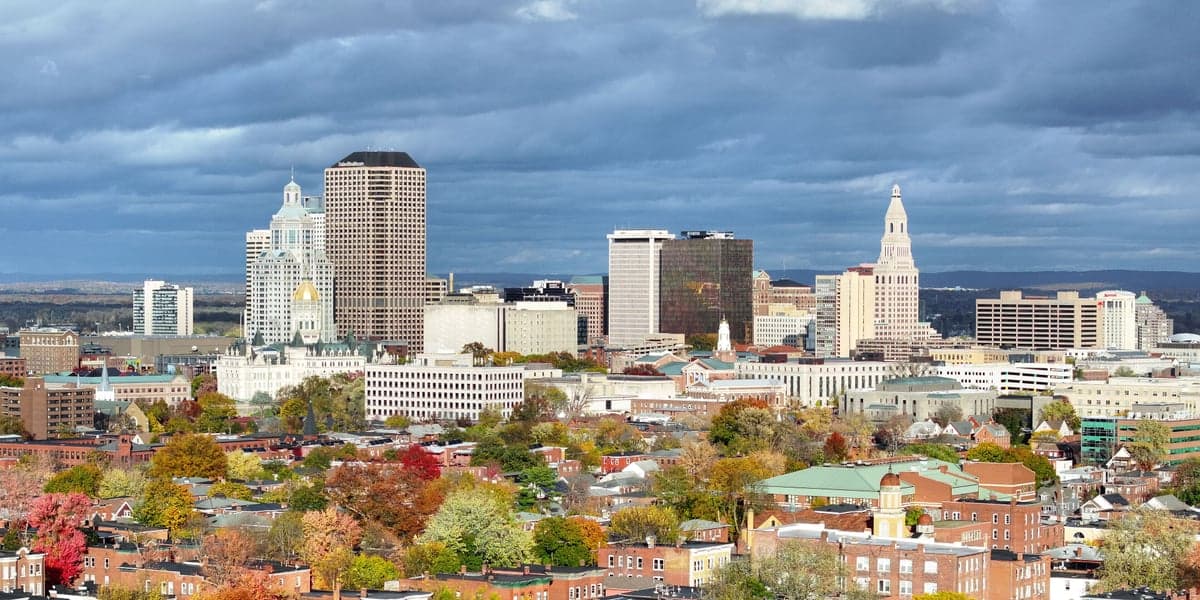
Photo: Wikipedia
Political ClimatePolitical Climate in Hartford, CT
District shown is the primary district for this city’s centroid. Cities may span multiple districts.
Local Political AnalysisPolitical Analysis of Hartford, CT
Hartford is about as blue as it gets in Connecticut, with a Cook PVI of D+12, meaning the city votes twelve points more Democratic than the national average. That’s not a surprise to anyone who’s lived here a while, but the shift over the last couple decades has been something to watch. It used to be a place where working-class folks of all stripes could find common ground, but now the politics here are dominated by a progressive machine that seems more focused on national talking points than on fixing potholes or keeping the lights on. The trajectory is pretty clear: more one-party control, more tax-and-spend policies, and a growing disconnect between what the city government does and what regular people actually need.
How it compares
If you drive ten miles west to West Hartford, you’ll find a different world politically. West Hartford is still reliably Democratic, but it’s a more moderate, suburban kind of blue—think well-funded schools and tidy neighborhoods, not the kind of aggressive social engineering you see in Hartford proper. Head east to Manchester or south to Wethersfield, and you get a mix of independent and conservative-leaning voters who are frankly tired of Hartford’s one-size-fits-all approach. The contrast is stark: in Hartford, the city council and mayor push policies like defunding police oversight and expanding sanctuary city protections, while surrounding towns are more focused on keeping property taxes in check and maintaining public safety. It’s like living in a bubble where the rest of the state’s concerns don’t matter.
What this means for residents
For the average person living in Hartford, the political climate translates into a few concrete headaches. First, taxes are high and services are mediocre—the classic trade-off when one party has no real opposition. You’ll see city hall push through progressive pet projects, like guaranteed income pilots or expanded public funding for advocacy groups, while basic stuff like snow removal and trash pickup gets spotty. Second, there’s a real sense that your personal freedoms—like choosing where your kids go to school or how you run your small business—take a backseat to government mandates. The school board, for instance, has been more focused on equity audits and renaming buildings than on improving reading scores. And if you’re a gun owner or someone who values Second Amendment rights, Hartford’s local ordinances are a constant reminder that the city government doesn’t trust you to make your own decisions.
On the cultural side, Hartford has a long history as an insurance hub, which gave it a certain conservative, buttoned-up character. That’s fading fast. The city’s current leadership leans hard into identity politics and climate activism, often at the expense of economic development. You see it in the push for bike lanes that sit empty, the crackdown on short-term rentals, and the endless debates over renter protections that make it harder for landlords to keep properties maintained. The long-term outlook? Unless there’s a serious course correction, Hartford risks becoming a cautionary tale—a place where progressive ideals sound good on paper but leave residents with fewer choices, higher costs, and less freedom to live their lives the way they see fit.

State Political ClimatePolitical Climate in Connecticut
State Political AnalysisPolitical Environment in the State
Connecticut has shifted from a classic swing state into a solidly blue stronghold over the past two decades, with Democrats now holding every statewide office and supermajorities in both legislative chambers. The state hasn't voted for a Republican presidential candidate since George W. Bush in 2004, and even then it was by a razor-thin margin. What was once a bastion of moderate Rockefeller Republicanism has transformed into a state where progressive policies dominate, driven largely by the affluent, educated suburbs of Fairfield County and the urban cores of Hartford and New Haven.
Urban vs. rural divide
The political map of Connecticut is a tale of three distinct regions. The southwestern corner, anchored by Stamford, Greenwich, and Norwalk, is the engine of the Democratic machine — these are wealthy commuter towns where high property taxes and a heavy regulatory environment are accepted as the price of proximity to New York City. The old industrial cities — Hartford, New Haven, and Bridgeport — reliably deliver massive Democratic margins, often exceeding 70-80% of the vote. In contrast, the eastern half of the state and the rural northwest, including towns like Litchfield, Woodstock, and Killingly, remain Republican-leaning, but their populations are too small to offset the urban and suburban blocs. The once-competitive suburbs of Danbury and Waterbury have trended blue in recent cycles, with Danbury flipping decisively in 2020 after decades of split results.
Policy environment
Connecticut's policy landscape is among the most progressive in New England. The state income tax tops out at 6.99%, and property taxes are notoriously high — the effective rate averages around 2.1%, among the highest in the nation. Sales tax is 6.35%, but it applies to a broad range of services. On education, the state mandates expansive curricula, including comprehensive sex education and ethnic studies requirements passed in recent years. Healthcare policy includes a public option for health insurance and strict insurance mandates. Election laws have been loosened significantly: no-excuse absentee voting was expanded during COVID and made permanent, and early voting was finally approved by voters in 2022 after years of legislative battles. The state also has some of the nation's strictest gun laws, including a 2023 law that bans carrying firearms in most public places and raises the purchasing age for rifles to 21.
Trajectory & freedom
On the freedom front, Connecticut has been moving decisively in one direction — less. The 2023 gun law, Public Act 23-53, effectively bans open carry and restricts concealed carry in "sensitive places" so broadly that it covers most of daily life. Parental rights took a hit with a 2021 law that allows minors 16 and older to consent to mental health treatment without parental notification, and a 2023 law that prohibits schools from requiring staff to notify parents of a student's gender identity. Medical autonomy has expanded in some areas — the state codified abortion rights in 2022 — but property rights remain constrained by strict zoning and environmental regulations that make building anything new a multi-year ordeal. The tax burden has not lightened; in 2023, the legislature passed a $51 billion budget that included new taxes on electric vehicles and a surcharge on capital gains, despite a massive surplus.
Civil unrest & political movements
Connecticut has seen relatively little of the large-scale civil unrest that has hit other states, but the political temperature has risen. The 2020 Black Lives Matter protests in Hartford and New Haven were large but mostly peaceful. On the right, the "2A Sanctuary" movement gained traction in about 20 rural towns, including Easton and Brooklyn, which passed resolutions vowing not to enforce certain state gun laws — though these are symbolic, as state preemption is strong. Immigration politics are a flashpoint: Connecticut is a sanctuary state, with a 2013 law (TRUST Act) that limits local police cooperation with federal immigration enforcement. In 2024, the legislature considered but did not pass a bill that would have prohibited ICE from using state facilities for detainment. Election integrity concerns have been raised by conservative groups over the expansion of absentee voting and the state's same-day voter registration, but no major scandals have emerged. The most visible political flashpoint for newcomers is likely the constant battle over car taxes — a uniquely Connecticut annoyance that hits every vehicle owner.
Projection
Looking ahead five to ten years, Connecticut's trajectory is unlikely to reverse. The demographic trends favor continued Democratic dominance: the state's population is aging, with young people leaving for lower-cost states, while the in-migration from New York City is overwhelmingly progressive professionals. The rural Republican towns are shrinking, while the urban and suburban Democratic strongholds are stable or growing slightly. The state's fiscal situation is precarious despite recent surpluses — pension liabilities for state employees exceed $40 billion, and the state's credit rating, while recently upgraded, remains among the lowest in the nation. A new resident moving in now should expect taxes to remain high or increase, gun laws to tighten further, and the cultural and political environment to continue shifting left. The only wild card is a potential federal intervention on sanctuary policies or a major economic downturn that could force spending cuts, but neither seems likely to fundamentally alter the state's political character.
For a conservative-leaning individual or family considering Connecticut, the bottom line is sobering. The state offers excellent schools, beautiful coastline, and proximity to major cities, but those come with a heavy price tag in taxes, regulations, and a political culture that is increasingly hostile to traditional values. If you value low taxes, gun rights, parental control over education, and a government that stays out of your life, Connecticut is likely a poor fit. If you can afford the cost and are willing to navigate a blue state's bureaucracy for the sake of job opportunities or family ties, the Litchfield Hills or the quieter corners of the eastern shoreline offer pockets of relative freedom — but they are islands in a rising tide.
* Values derived from national, state, county, city and local statistics and may differ in a specific area. Last updated: 2026-04-24T11:51:31.000Z
Narrative content on this page is AI-generated and may contain mistakes. Verify any details that matter before acting on them.
ReloMaps may earn a commission from affiliate links at no extra cost to you.

