 Popular
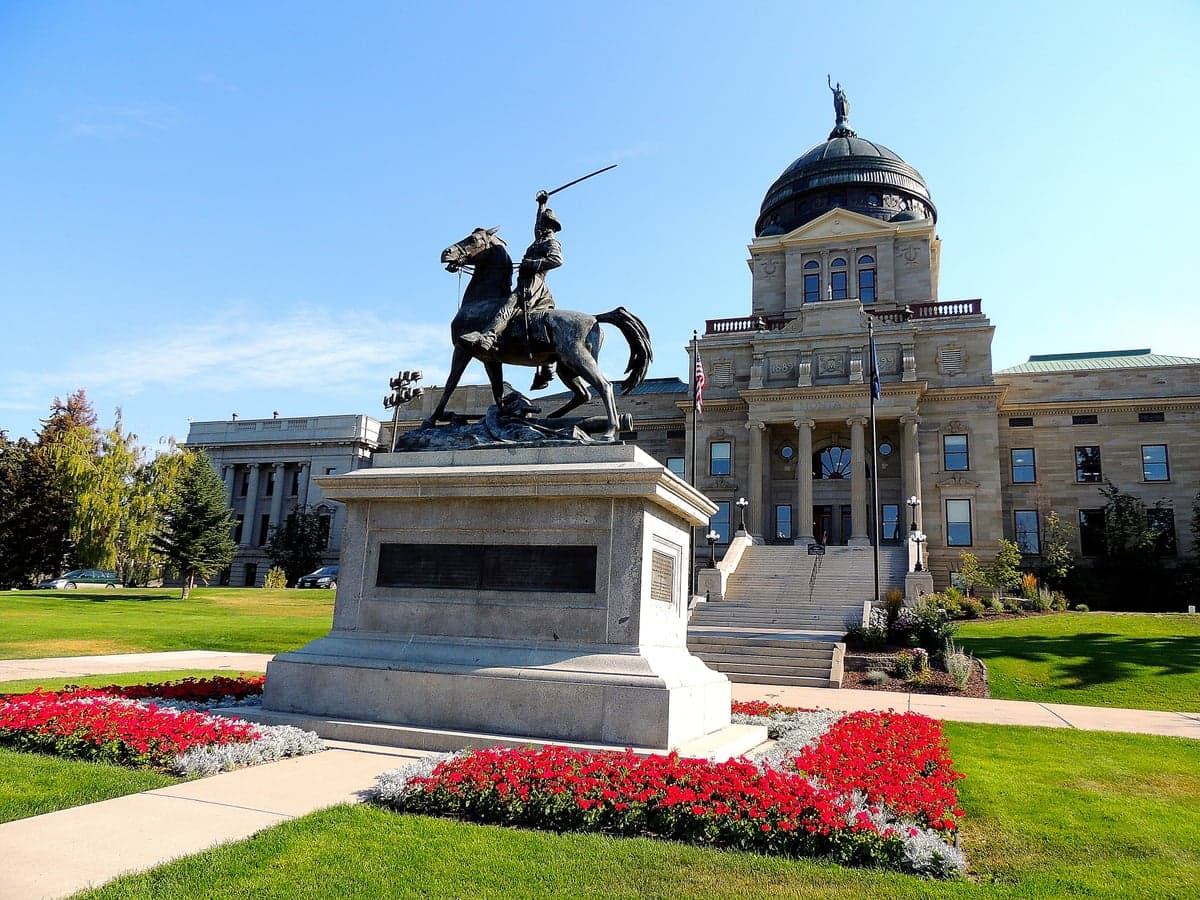
Photo: Wikipedia
Demographics of Helena, MT
Affluence Level in Helena, MT
A middle-class area roughly in line with national averages across income, home values, education, and employment.
People of Helena, MT
The people of Helena, Montana today form a predominantly white, highly educated, and politically moderate-to-conservative population of 33,126, with a distinctive character shaped by its history as a gold-rush boomtown turned state capital. The city is notably homogeneous — 87.2% white, with a foreign-born population of just 0.6% — and its residents are concentrated in historic neighborhoods like the Mansion District and the working-class core of the Last Chance Gulch area. Helena’s identity is marked by a blend of government professionals, retirees drawn to outdoor recreation, and a small but stable Hispanic community (4.8%) centered in the north side near the former railroad corridor.
How the city was settled and grew
Helena’s population history begins with the 1864 gold discovery in Last Chance Gulch, which drew thousands of prospectors — overwhelmingly white, native-born Americans and European immigrants — into what was then Sioux and Crow territory. The original boomtown was a chaotic tent city along the gulch, but by the 1870s, permanent neighborhoods emerged. The Mansion District, built on the east side of the gulch, housed the wealthy mine owners and bankers who financed the city’s growth, while Reeder’s Alley and the lower gulch area became home to Cornish, Irish, and German miners and tradesmen. The city’s designation as Montana’s territorial capital in 1875 and state capital in 1889 brought a second wave of government clerks, lawyers, and railroad workers, many settling in the Westside neighborhood near the Capitol building. By 1900, Helena’s population had reached roughly 10,000, and it remained a white-majority, Protestant-dominated city through the early 20th century, with a small Chinese community (largely displaced by the 1880s) and a handful of Black families working as porters and domestics.
Modern era (post-1965)
After the 1965 Hart-Cellar Act, Helena saw negligible immigration — the foreign-born share today is 0.6%, one of the lowest in any U.S. state capital. The city’s modern growth has been driven almost entirely by domestic in-migration: state government employees, retirees from the West Coast, and families seeking a lower cost of living and conservative social environment. Suburbanization after 1970 pushed development east and south, creating neighborhoods like Skyway and Helena Valley, which are overwhelmingly white and middle-class. The Hispanic population, now 4.8%, grew slowly through agricultural and construction work, with a visible cluster in the North Helena area near the old Milwaukee Road rail yards. The East/Southeast Asian community (0.7%) is small and largely professional, concentrated near the Capitol and Carroll College. The Indian-subcontinent population (0.2%) is tiny, mostly medical professionals at St. Peter’s Health. Black residents (0.8%) remain a very small presence, with no distinct neighborhood enclave. The city’s racial homogeneity has actually increased slightly since 2000, as white in-migration has outpaced minority growth.
The future
Helena’s population is projected to grow slowly — roughly 0.5–1% annually — driven by continued domestic migration from higher-cost states like California and Washington. The city is not tribalizing into distinct ethnic enclaves; rather, it is homogenizing, with new arrivals (overwhelmingly white and college-educated) dispersing into existing neighborhoods like the Upper Westside and newer subdivisions in the Helena Valley. The Hispanic community is growing slowly but steadily, likely reaching 6–7% by 2035, but remains geographically diffuse. The foreign-born share is unlikely to rise significantly given Montana’s limited economic pull for immigrants. The city’s high college attainment rate (50.4%) will continue to attract educated professionals, while the lack of major industry beyond government and healthcare means the population will remain relatively stable in size and character.
For someone moving in now, Helena is becoming a more expensive but still affordable, predominantly white, and politically conservative state capital where newcomers are quickly absorbed into a culture of outdoor recreation, civic engagement, and low crime. The city’s demographic future is one of slow, homogeneous growth — not diversification — making it a predictable and stable choice for families and individuals seeking a traditional small-city environment with strong institutional anchors.

* Values derived from national, state, county, city and local statistics and may differ in a specific area. Last updated: 2026-04-24T12:22:24.000Z
Narrative content on this page is AI-generated and may contain mistakes. Verify any details that matter before acting on them.
ReloMaps may earn a commission from affiliate links at no extra cost to you.

