 Popular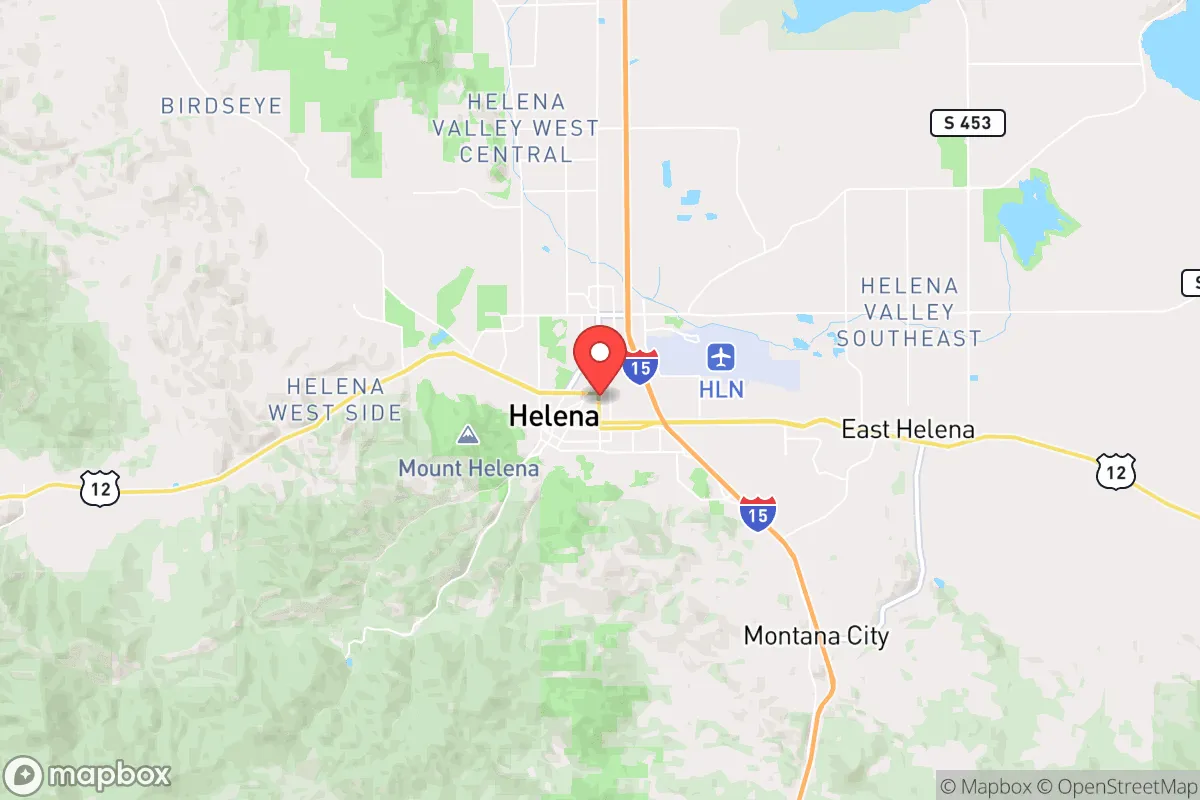
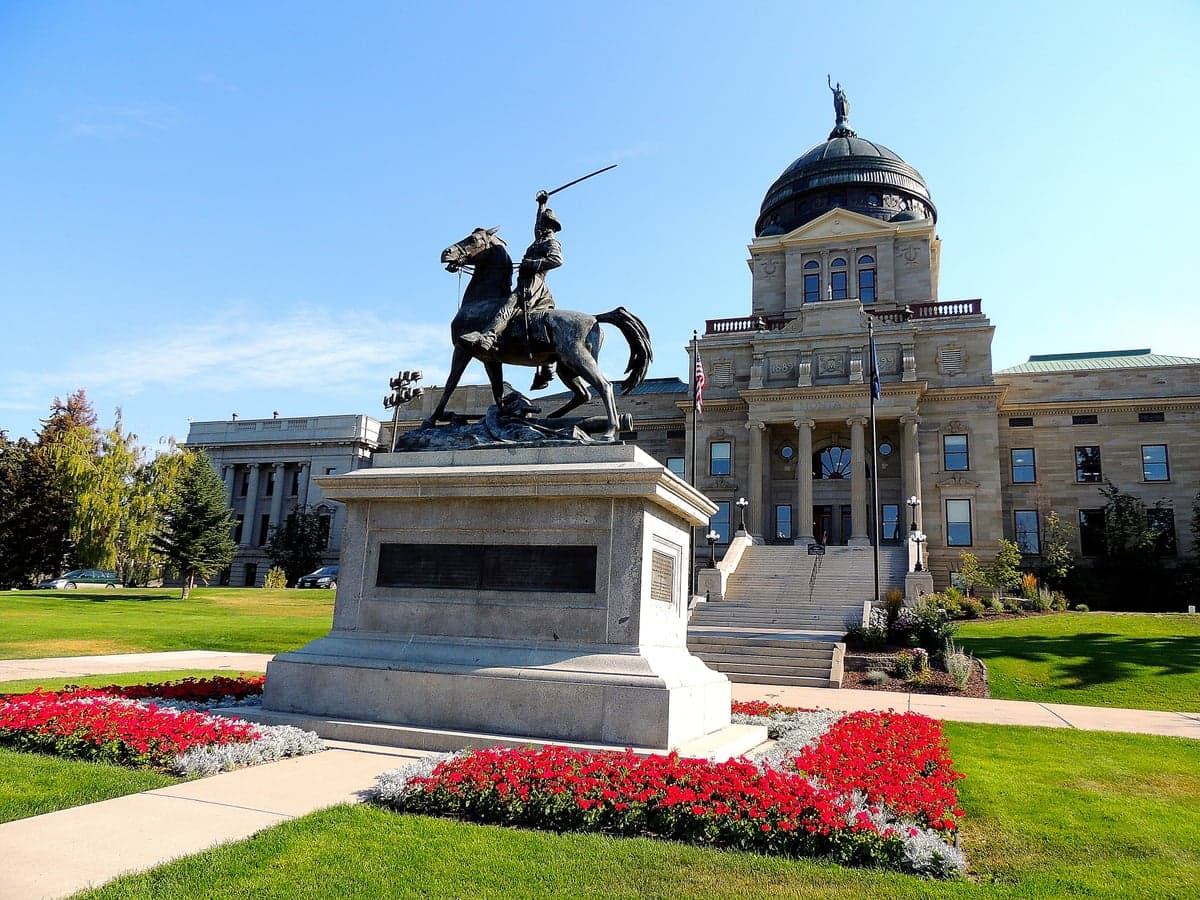
Photo: Wikipedia
Strategic Assessment of Helena, MT
Workable tactical position. Some exposure to population density or targets, but generally defensible in a crisis.
What does the Strategic Assessment tell us?
Our Strategic Assessment grades tactical survivability of an area. Major population centers, military targets, fallout zones, natural disasters, and border exposure all drive risk — lower exposure means a more defensible position in a crisis.
This is heavily inspired by Joel Skousen's Strategic Relocation book. Highly recommended you checkout the book ($)What does this tell us?
Our Strategic Assessment grades tactical survivability of an area. Major population centers, military targets, fallout zones, natural disasters, and border exposure all drive risk — lower exposure means a more defensible position in a crisis.
This is heavily inspired by Joel Skousen's Strategic Relocation book. Highly recommended you checkout the book ($)Strategic Pillars

Key Distances
Regional Safe Places
Below is our recommended "safe zones" in Montana and the surrounding area based on our strategic heuristics. For most people, it's unrealistic to live in a “safe zone” full-time due to work, family or other personal reasons. They tend to be more rural. However, many of these areas are perfect for second homes and retreat properties that double as a vacation home or even a short-term rental.
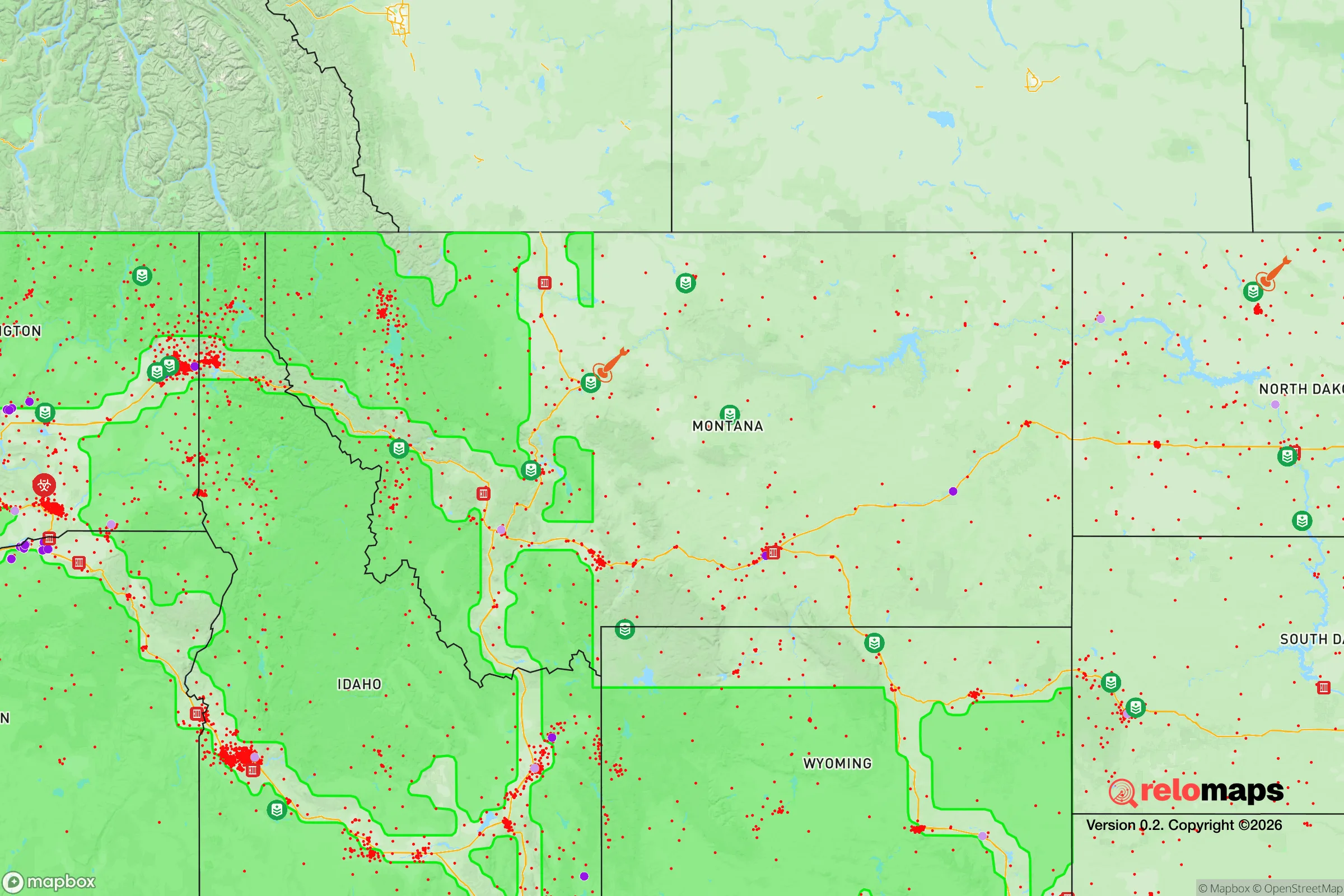


Important Note: For informational purposes only. This does not mean nothing bad ever happens in the green zones. Please use common sense. This is based on public data and modeled with AI. We tried to take a conservative approach but mistakes happen. We update this regularly as new information becomes available.
Solar Generator Recommendations
Backup power matters more here than in safer locations. We've picked three solar generators across budgets and capacity tiers — start with the budget unit if you only need a few essentials, or step up if you want to run a fridge and HVAC for days at a time.

Jackery Portable Power Station Explorer 300
Budget OptionPower on the Go: Weighing only 11 lbs, it's convenient to set up and store with book-sized foldable solar panels

BLUETTI Portable Power Station AC180
Designed for both indoor and outdoor scenarios, AC180 is highly capable as it has a robost capacity and continuous output power.

EF ECOFLOW DELTA Pro Ultra Power Station
Upgraded PickEcoFlow DELTA Pro Ultra is a whole-home energy system designed to grow with your family. Integrated with the Smart Home Panel 2, it scales to meet your evolving energy needs — keeping your home powered, intelligent, and secure through every stage of life.
We earn a commission, at no additional cost to you.
Strategic Assessment Analysis
Helena, Montana, offers a compelling strategic position for those prioritizing resilience and self-sufficiency, combining a state capital’s modest infrastructure with the isolation of the Northern Rockies. Its location in the Prickly Pear Valley, roughly 50 miles from the Continental Divide, provides natural barriers against large-scale population movement and offers a buffer from the chaos of major metropolitan corridors. For a relocator with a prepper mindset, Helena’s low population density—around 33,000 residents in the city proper and 80,000 in Lewis and Clark County—means fewer targets for civil unrest and a community that still values neighborly preparedness over government dependency.
Geographic position and natural advantages for long-term security
Helena sits at the intersection of several key geographic features that enhance its strategic value. The city is cradled by the Helena National Forest to the north and west, with the Big Belt Mountains rising to the east, creating a natural fortress that limits approach routes and provides ample cover for those needing to retreat deeper into wilderness. The Missouri River runs through the valley, offering a reliable water source that is less contested than in arid Western states. The area’s elevation—around 4,000 feet—means cooler summers and harsh winters, which naturally deter transient populations and reduce the risk of wildfire compared to lower-elevation Montana towns like Missoula or Bozeman. Helena’s position also places it within a day’s drive of multiple self-sufficient agricultural regions in the Golden Triangle wheat belt to the north, ensuring food supply lines that don’t rely on fragile interstate systems. The nearby Gates of the Mountains Wilderness, a rugged limestone canyon along the Missouri, provides a defensible fallback zone with limited access points, ideal for those planning a layered retreat strategy.
Risks, exposures, and proximity to fallout-relevant landmarks
No strategic assessment is complete without acknowledging vulnerabilities, and Helena has a few that demand attention. The city is roughly 90 miles from Malmstrom Air Force Base near Great Falls, a primary hub for the U.S. nuclear triad’s Minuteman III missile fields. In a worst-case scenario involving strategic strikes, this proximity could expose Helena to secondary effects like electromagnetic pulse (EMP) disruption or fallout drift, depending on wind patterns. The prevailing westerlies mean fallout from a strike on Malmstrom would likely push east, but any ground burst could still contaminate the Missouri River watershed that Helena depends on. Additionally, the city’s status as the state capital makes it a potential target for civil unrest or government-directed relocation efforts during a national emergency—think FEMA camps or martial law scenarios. The Interstate 15 corridor, which runs through Helena, connects it to Butte (70 miles south) and Great Falls (90 miles north), meaning any mass evacuation from those areas could funnel through the valley, creating choke points and resource strain. The nearby Helena Regional Airport, while small, could also become a vector for unwanted government or military presence during a crisis. For the survivalist, these risks are manageable with proper planning—stockpiling water filtration for potential contamination, avoiding main roads during unrest, and maintaining a low profile—but they are not negligible.
Practical resilience for a relocator: food, water, energy, and defensibility
Helena’s practical resilience for a relocator is strong, but it requires upfront investment. The city’s water supply comes from the Missouri River and several mountain reservoirs like Hauser Lake and Canyon Ferry Lake, which are managed by the Bureau of Reclamation. In a grid-down scenario, gravity-fed systems from these reservoirs could still provide water for a time, but a savvy prepper should secure a private well or a means to treat surface water—the Missouri is generally clean but could see contamination from upstream mining runoff or agricultural waste. Food security is bolstered by the surrounding agricultural county, with local farmers markets and a growing network of homesteaders in the Helena Valley. The area’s growing season is short (about 100 days), so cold-hardy crops and greenhouse setups are essential for year-round self-sufficiency. Energy-wise, Helena benefits from Montana’s deregulated grid and abundant renewable potential: solar panels perform well at this elevation, and the nearby Missouri River dams provide hydroelectric backup that is less prone to failure than coal or gas plants. For defensibility, the valley’s layout offers natural chokepoints—the main entry routes via I-15 and Highway 12 can be monitored or blocked with minimal effort. The city’s dispersed suburban layout, with many homes on acreage in areas like East Helena or the Scratchgravel Hills, allows for standoff distance from neighbors while still being close enough to form a mutual aid network. The local gun culture is robust, with multiple shooting ranges and a strong tradition of hunting, meaning firearms and ammunition are readily available and socially accepted—a key factor for those concerned with personal security during societal collapse.
The overall strategic picture for Helena is one of cautious optimism for the prepared relocator. It offers a rare combination of natural isolation, defensible terrain, and access to critical resources like water and agricultural land, all within a community that largely shares conservative values of self-reliance and preparedness. The risks—proximity to a nuclear missile field, capital-city status, and a single major highway—are real but can be mitigated with proper planning, such as choosing a home off the main corridor, investing in water storage and filtration, and building relationships with like-minded locals. For a single individual or family looking to weather the coming storms—whether economic collapse, civil unrest, or natural disasters—Helena provides a solid foundation that doesn’t require living off-grid in a remote cabin. It’s a place where you can maintain a normal life while quietly building the resilience to handle whatever comes next. Just don’t expect to keep your head down completely; in a small capital city, everyone knows everyone, and your preparedness efforts will be noticed. That’s not necessarily a bad thing—it means you’ll find your tribe faster.

* Values derived from national, state, county, city and local statistics and may differ in a specific area. Last updated: 2026-04-24T12:22:24.000Z
Narrative content on this page is AI-generated and may contain mistakes. Verify any details that matter before acting on them.
ReloMaps may earn a commission from affiliate links at no extra cost to you.

