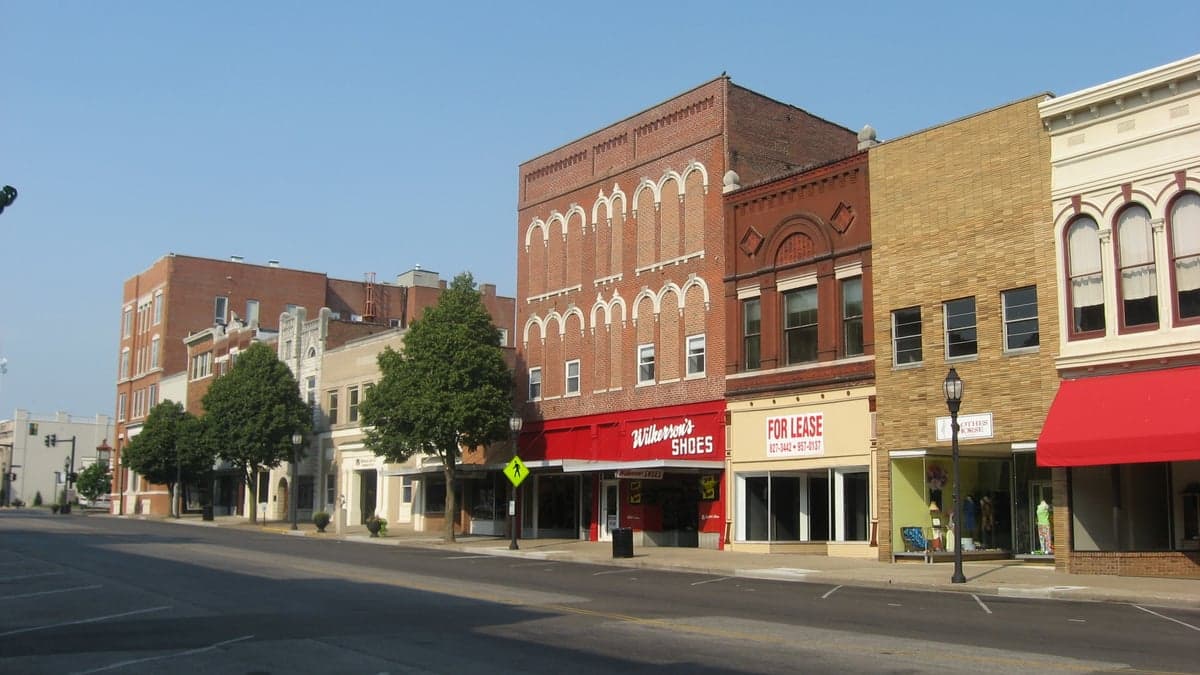
Photo: Wikipedia
Political ClimatePolitical Climate in Henderson, KY
District shown is the primary district for this city’s centroid. Cities may span multiple districts.
Local Political AnalysisPolitical Analysis of Henderson, KY
Henderson, Kentucky, is about as solidly conservative as they come, with a Cook PVI of R+23 that tells you everything you need to know about the local voting patterns. This isn't a purple area that flips back and forth; it's a place where Republican candidates routinely win by double digits, and the local culture reflects that. If you're looking at Henderson, you're looking at a community that has historically valued personal responsibility, limited government, and the right to live your life without a bunch of bureaucratic red tape. That said, like a lot of smaller cities, there's been a subtle shift in the last decade or so, with some younger folks and newcomers bringing in more progressive ideas, but the old guard still holds the line pretty firmly.
How it compares
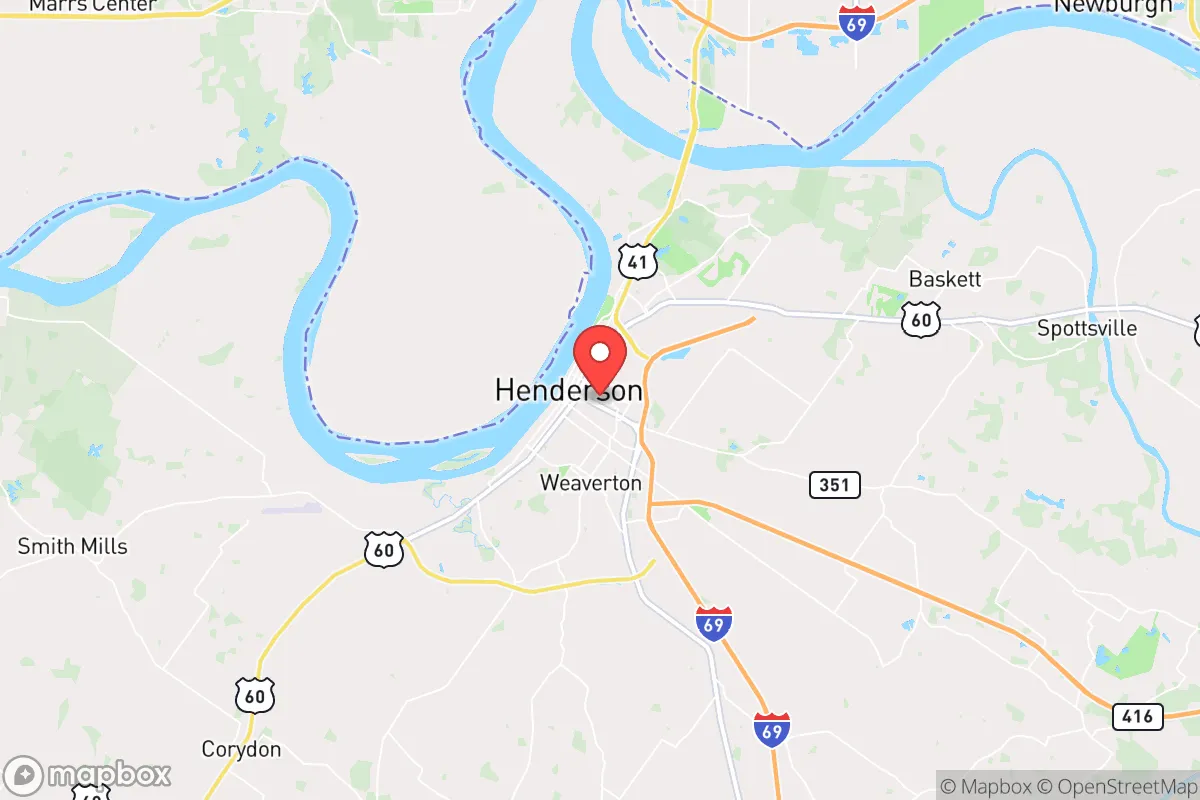
Compared to its neighbors, Henderson is the conservative anchor of the region. Drive across the bridge into Evansville, Indiana, and you'll feel the difference immediately—that city leans more moderate, with a stronger Democratic base and a more urban, progressive vibe. Head east toward Owensboro, and you'll find a similar conservative tilt, but Owensboro has a bit more of a corporate, Chamber-of-Commerce feel, while Henderson feels more like a working-class town where people mind their own business. The surrounding rural counties, like Union and Webster, are even redder than Henderson, but they lack the small-city amenities. So Henderson sits in a sweet spot: conservative enough to feel safe and familiar, but with enough population to have decent schools and a hospital. The contrast with Evansville is the most striking—you can literally see the political and cultural divide from the riverbank.
What this means for residents
For the most part, it means you can live your life without a lot of government overreach. The local government tends to keep taxes low, zoning is relatively relaxed, and there's not much appetite for the kind of progressive social engineering you see in bigger cities. You won't find a bunch of mask mandates or vaccine passports being pushed here—people generally believe those decisions should be left to individuals and families. The school board has been a battleground lately, with some parents fighting against critical race theory and gender ideology being pushed into the curriculum, and so far, the conservative majority has held the line. Property rights are respected, and the Second Amendment is a given—nobody's trying to take your guns. The biggest concern I have is that as Henderson grows, we might see more pressure from outside developers and state-level bureaucrats to impose "best practices" from places like Louisville or Lexington. That's the real threat: not a sudden revolution, but a slow creep of regulations and mandates that erode the freedom we've always enjoyed.
One thing that sets Henderson apart is its strong sense of community self-reliance. We don't look to Frankfort or Washington to solve our problems. The local churches, volunteer fire departments, and civic clubs handle a lot of the heavy lifting. There's a real "we take care of our own" attitude here, which is refreshing in a world where everyone seems to want the government to fix everything. The downside is that if you're coming from a more progressive area, you might find the social scene a bit insular—people are friendly, but they're not going to change their values to make you comfortable. The trajectory, as I see it, is that Henderson will remain conservative for the foreseeable future, but the fight will be over how much we let outside influences chip away at that. If you value personal freedom and a community that doesn't meddle, you'll fit right in. Just keep an eye on the school board meetings and the city council votes—that's where the real battles are happening.

State Political ClimatePolitical Climate in Kentucky
State Political AnalysisPolitical Environment in the State
Kentucky is a deeply red state, but it’s not the monolithic, rock-ribbed conservative stronghold many outsiders assume. The state’s political lean is solidly Republican at the federal and state level, with Donald Trump winning by 26 points in 2020 and 30 points in 2024, but the real story is the dramatic realignment over the past 20 years. In 2000, Kentucky was a swing state that went for George W. Bush by just 4 points; today, it’s a safe GOP lock, driven by the collapse of the old Blue Dog Democrat coalition in rural areas and the explosive growth of the conservative-leaning Louisville suburbs. The dominant coalition is a mix of rural, churchgoing voters, working-class manufacturing workers, and a growing number of exurban families fleeing Lexington and Louisville for more affordable, freer counties.
Urban vs. rural divide
The political map of Kentucky is a textbook case of the urban-rural chasm. The two major metros, Louisville (Jefferson County) and Lexington (Fayette County), are the only reliably blue areas, with Louisville voting for Biden by 20 points in 2020 and Lexington by 18. But these cities are shrinking as a share of the state’s population, while the surrounding suburbs and exurbs are exploding. Oldham County, just northeast of Louisville, is one of the most conservative counties in the state, voting +50 for Trump, and it’s where many families move to escape Louisville’s rising crime and progressive school board politics. Boone County, part of the Cincinnati metro in Northern Kentucky, is a classic suburban battleground that has shifted hard right, flipping from a Bush +10 county in 2004 to a Trump +25 county in 2024. The rural eastern coalfields—places like Pikeville and Harlan—are deep red, but they’re depopulating fast. The real growth is in the Bowling Green and Richmond corridors, where manufacturing and logistics jobs are drawing in younger, more conservative families from outside the state.
Policy environment
Kentucky’s policy environment is a mixed bag for conservatives. On the plus side, the state has a flat income tax that is being phased down from 5% to 4% by 2026, with a goal of elimination by 2030. There is no state property tax, and the sales tax is a low 6%. The regulatory posture is generally business-friendly, with a right-to-work law on the books and no state-level minimum wage above the federal $7.25. However, the state’s education policy is a flashpoint: the legislature passed a school choice bill in 2022 that created education opportunity accounts, but the state Supreme Court struck it down in 2023 as a violation of the state constitution’s ban on public funds going to private schools. That ruling has energized a movement to amend the constitution, but it’s a slow process. Healthcare is another sore spot: Kentucky expanded Medicaid under the Affordable Care Act, and while the state has added work requirements, the program remains large and expensive. Election laws are solid—voter ID is required, and the state has no no-excuse mail-in voting, which conservatives see as a safeguard against fraud. The state also passed a near-total abortion ban in 2019, with no exceptions for rape or incest, which remains in effect.
Trajectory & freedom
On the freedom front, Kentucky is moving in the right direction, but it’s not a libertarian paradise. The biggest win for personal liberty was the 2019 passage of constitutional carry, allowing law-abiding citizens to carry concealed firearms without a permit. The state also passed a “Stand Your Ground” law in 2022, removing the duty to retreat. Parental rights got a boost with the 2023 “Parents’ Bill of Rights,” which requires schools to notify parents of any changes to a child’s mental or physical health and prohibits instruction on sexual orientation or gender identity in elementary school. On medical freedom, Kentucky banned vaccine passports in 2021 and passed a law in 2023 prohibiting mask mandates in schools. The state also has a strong property rights tradition, with no statewide zoning and a low property tax burden. The biggest red flag is the state’s heavy reliance on federal dollars—Kentucky is one of the top 10 states for federal dependency, which gives the feds leverage over state policy. The state also has a high incarceration rate and a strict drug sentencing regime that some conservatives see as an overreach of government power.
Civil unrest & political movements
Kentucky has seen its share of political flashpoints, but they’re not the kind you see in Portland or Seattle. The 2020 Breonna Taylor protests in Louisville were the most significant, with the city seeing weeks of unrest, property damage, and a heavy police response. That event galvanized a progressive movement in Louisville that has since pushed for police reform and a civilian review board, but it also drove a massive exodus of families to the surrounding counties. The state has no sanctuary cities, and immigration politics are relatively quiet, though there is a growing Hispanic population in the Shelbyville and Simpsonville areas that has sparked some local tensions over housing and schools. Election integrity is a live issue: the 2020 election saw a minor controversy over ballot drop boxes in Louisville, leading to a 2021 law banning them statewide. There is a small but vocal secessionist movement in Eastern Kentucky, where some residents talk about forming a separate state called “East Kentucky” due to feeling ignored by Frankfort, but it’s mostly rhetorical. The most visible political movement is the growing network of conservative activist groups, like the Kentucky Family Foundation and the Kentucky Right to Life, which have been highly effective at pushing legislation through the Republican supermajority.
Projection
Over the next 5-10 years, Kentucky is likely to become more conservative, not less. The in-migration patterns are clear: people are moving from blue states like California, Illinois, and Ohio to the Bowling Green and Northern Kentucky areas, drawn by low taxes and a lower cost of living. These newcomers tend to be conservative-leaning, often fleeing progressive policies in their home states. The urban cores of Louisville and Lexington will continue to shrink as a share of the population, while the exurbs and rural areas grow. The state’s Republican supermajority is likely to hold, and the flat tax phase-out will continue, making Kentucky even more attractive to businesses and families. The biggest wildcard is the state’s education system: if the school choice amendment passes, it could trigger a wave of private school growth and further accelerate the exodus from public schools. The Medicaid expansion is a ticking time bomb—if federal funding ever gets cut, the state will face a massive budget hole. But for now, the trajectory is clear: Kentucky is becoming a freer, more conservative state, and that trend is likely to accelerate.
For a new resident, the bottom line is this: Kentucky offers a solid, conservative-friendly environment with low taxes, strong gun rights, and a growing economy, but it’s not without its warts. The state’s heavy reliance on federal money and its struggling public school system are real concerns. If you’re looking for a place where you can live your life without the government breathing down your neck, Kentucky is a good bet—just make sure you’re in the right county. Stick to the exurbs and rural areas, and you’ll find a community that shares your values. Avoid the urban cores unless you’re prepared for the progressive politics and higher crime that come with them. The state is on the right track, but it’s still a work in progress.
* Values derived from national, state, county, city and local statistics and may differ in a specific area. Last updated: 2026-04-21T10:48:18.000Z
Narrative content on this page is AI-generated and may contain mistakes. Verify any details that matter before acting on them.
ReloMaps may earn a commission from affiliate links at no extra cost to you.

