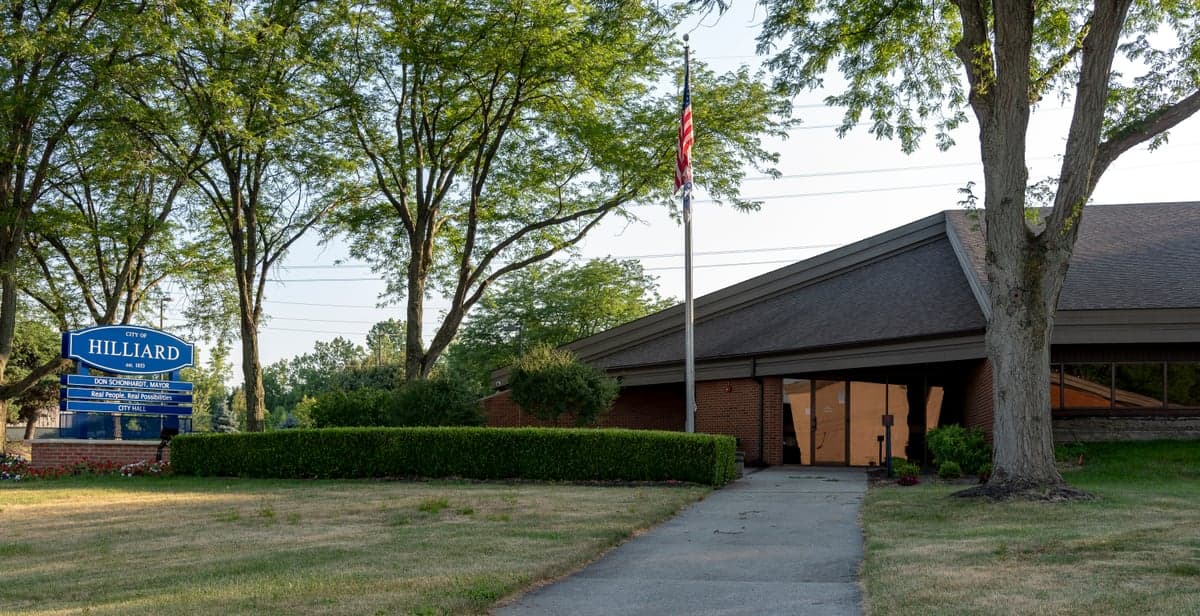
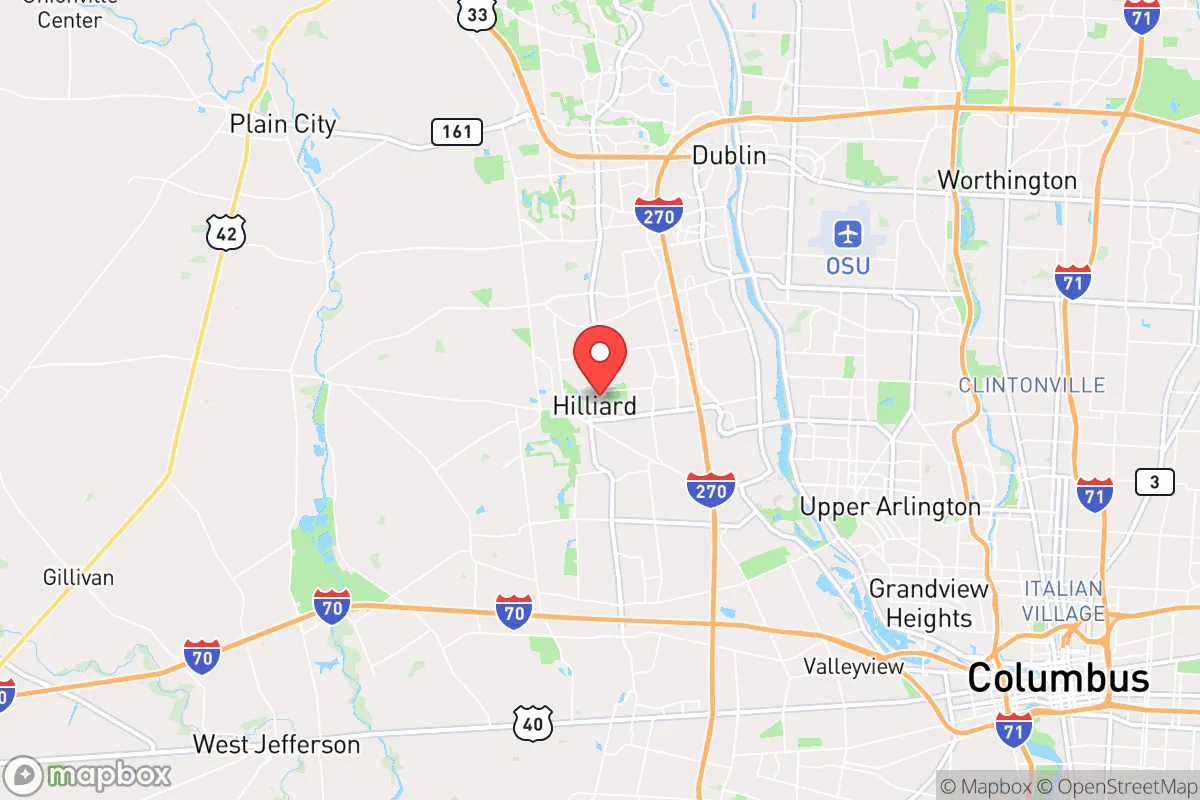
Photo: Wikipedia
Personal Sovereignty in Hilliard, OH
Viable for self-reliance. Generally workable, though some barriers may limit total independence.
What does Personal Sovereignty tell us?
Personal Sovereignty measures your capacity for self-reliance and independence with minimal government friction. Higher scores mean fewer barriers between you and the way you want to live... but it assumes you have the space you need and good neighbors.
What does this tell us?
Personal Sovereignty measures your capacity for self-reliance and independence with minimal government friction. Higher scores mean fewer barriers between you and the way you want to live... but it assumes you have the space you need and good neighbors.
State Policy
Energy independence: Importer (40% of energy produced in-state)
Personal Liberty
Homesteading

Personal Liberty Analysis
For the individual or family prioritizing personal sovereignty, Hilliard, Ohio, offers a mixed but generally favorable environment within the broader context of a state that has pushed back against federal overreach in several key areas. While no suburb of a major metro like Columbus is a libertarian utopia, Hilliard’s practical autonomy—measured by tax burden, gun laws, and local regulatory posture—is notably stronger than what you’d find in coastal blue states or even in nearby Franklin County’s core. The key is understanding where the state’s constitutional protections end and where local zoning and school board politics begin, as these will define your day-to-day freedom to live, defend, and provide for your family without government interference.
Tax burden and regulatory posture in a growing suburb
Ohio’s overall tax climate is a net positive for sovereignty-minded relocators. The state has a flat income tax rate of 3.5% as of 2026, down from higher progressive rates in prior years, and it continues to phase out the tax on business equipment and inventory. Hilliard itself adds a 2% municipal income tax, which is standard for Columbus suburbs and funds local services. Property taxes in the Hilliard City School District run around 1.8% to 2.2% of assessed value, which is moderate for the region but not cheap—expect to pay roughly $4,500 to $6,000 annually on a $300,000 home. The real win is on the regulatory side: Ohio is a right-to-work state (though not statutorily, the political climate is strongly anti-union), and the state preempts local governments from enacting their own minimum wage, paid leave, or plastic bag bans. This means Hilliard’s city council cannot layer on the kind of progressive business mandates you’d see in a city like Portland or Denver. For a prepper or survivalist, this translates to fewer bureaucratic hurdles when starting a home-based business, storing supplies, or running a small farm operation on your property. The state’s building codes are based on the Ohio Building Code, which is less restrictive than the International Residential Code in some areas, and there is no statewide ban on rainwater collection or composting, though local homeowners’ associations (HOAs) can still impose their own rules—a critical detail to verify before buying.
Self-defense and gun law specifics in Ohio
Ohio is a constitutional carry state, meaning no permit is required to carry a concealed handgun for anyone legally allowed to possess a firearm. This went into effect in 2022 and has not been rolled back, despite pressure from anti-gun groups. Hilliard is in Franklin County, which leans left politically, but the sheriff’s office has historically been pro-Second Amendment and issues concealed carry permits (now optional) without undue delay. The state also has “stand your ground” laws, with no duty to retreat in any place you are lawfully present. Magazine capacity is unrestricted, and there is no state-level assault weapons ban. The only notable restriction is that firearms are generally prohibited in government buildings, schools (with exceptions for licensed carriers in some parking lots), and establishments that derive more than half their income from alcohol sales. For a survivalist, this is a solid legal framework. You can keep a rifle in your truck, carry a sidearm while hiking at the nearby Battelle Darby Creek Metro Park, and train on your own property without fear of local ordinances banning storage or practice. The one watch-out: Ohio’s “red flag” law (SB 83) was passed in 2024, allowing family or law enforcement to petition for temporary firearm removal. It’s less aggressive than laws in states like California or Washington, but it’s on the books and could be weaponized by a vindictive neighbor or ex-spouse. Overall, Hilliard’s gun culture is quiet but lawful—you won’t get hassled for open carry, but you also won’t see many people doing it in the suburbs.
Self-reliance and homesteading viability: lot sizes, zoning, and off-grid feasibility
This is where Hilliard’s suburban character becomes a limiting factor for the serious prepper. Most residential lots in the city proper are one-third to one-half acre, with newer subdivisions squeezing homes onto quarter-acre plots. Zoning is primarily R-1 (single-family residential), which typically prohibits livestock, large garden structures, and non-standard outbuildings. Chickens are allowed in some areas with a permit and setback rules, but goats, pigs, or any “farm animals” are generally not permitted on lots under two acres. The city’s code also restricts front-yard fencing, limits accessory dwelling units (ADUs) to one per lot with strict size caps, and requires permits for any structure over 200 square feet. Off-grid living is effectively impossible within city limits: you must connect to municipal water and sewer, and solar panels are allowed but must be flush-mounted on roofs (no ground arrays in front yards). The silver lining is that Hilliard’s northern and western edges border Norwich and Brown townships, where zoning is much looser. A five-acre parcel in those areas can support a small homestead with chickens, a large garden, and even a backup generator or well, all without HOA interference. For the survivalist who wants suburban proximity but rural flexibility, the answer is to buy just outside Hilliard’s corporate limits—ideally in a township with no zoning or minimal restrictions. The city’s own comprehensive plan (updated 2023) explicitly discourages “rural residential” uses within the growth boundary, so don’t expect that to change.
Personal liberties: parental rights, medical autonomy, speech, and property
Ohio has become a battleground for parental rights, and the current legal landscape is favorable for families who want to opt out of government overreach. The state passed a Parents’ Bill of Rights in 2023 (HB 8), which requires schools to notify parents of any medical or mental health services offered to their child and to obtain consent before administering surveys on sensitive topics. Hilliard City Schools, while generally progressive, has complied with this law, and the district’s curriculum is subject to parental review under the state’s “transparency” mandates. Medical autonomy is more mixed: Ohio banned gender-affirming care for minors in 2024 (HB 68), which aligns with conservative values, but the state also has a vaccine mandate for school attendance (with medical and religious exemptions that are fairly easy to obtain). During the COVID era, Hilliard’s health department did not impose mask mandates beyond state guidance, and the city never enacted a local vaccine passport. On free speech, Ohio has no state-level “hate speech” law that criminalizes political expression, and Hilliard’s public forums (parks, library, council meetings) are open for lawful assembly. Property rights are protected by Ohio’s “takings” laws, which require just compensation for any regulatory taking, and the state has a strong tradition of defending against eminent domain abuse. The one area of concern is the increasing use of “public health” orders by the county health commissioner, which could theoretically be used to restrict gatherings or business operations in a future crisis. For now, Hilliard offers a solid baseline of personal liberty, but the survivalist should remain vigilant about local school board elections and county health board appointments, as these are the levers that could erode autonomy in a crisis.
In the broader landscape of American suburbs, Hilliard ranks as a solid B+ for personal sovereignty. It lacks the outright freedom of a rural Ohio county like Vinton or Meigs, where you can shoot on your property and build a bunker without a permit, but it far surpasses the regulatory nightmare of a Portland, Denver, or even a Columbus proper. The tax burden is manageable, the gun laws are among the best in the Midwest, and the state’s preemption laws keep local busybodies from layering on socialist-style mandates. The main compromises are zoning density and HOA restrictions, which limit self-reliance and off-grid capability. For the strategic relocator who wants to be within 20 minutes of a major airport and hospital while still maintaining the ability to defend their home, raise some of their own food, and keep the government out of their family’s medical decisions, Hilliard is a viable option—provided you choose your specific lot carefully and stay engaged with local politics to protect the freedoms you have.

* Values derived from national, state, county, city and local statistics and may differ in a specific area. Last updated: 2026-04-21T20:05:47.000Z
Narrative content on this page is AI-generated and may contain mistakes. Verify any details that matter before acting on them.
ReloMaps may earn a commission from affiliate links at no extra cost to you.

