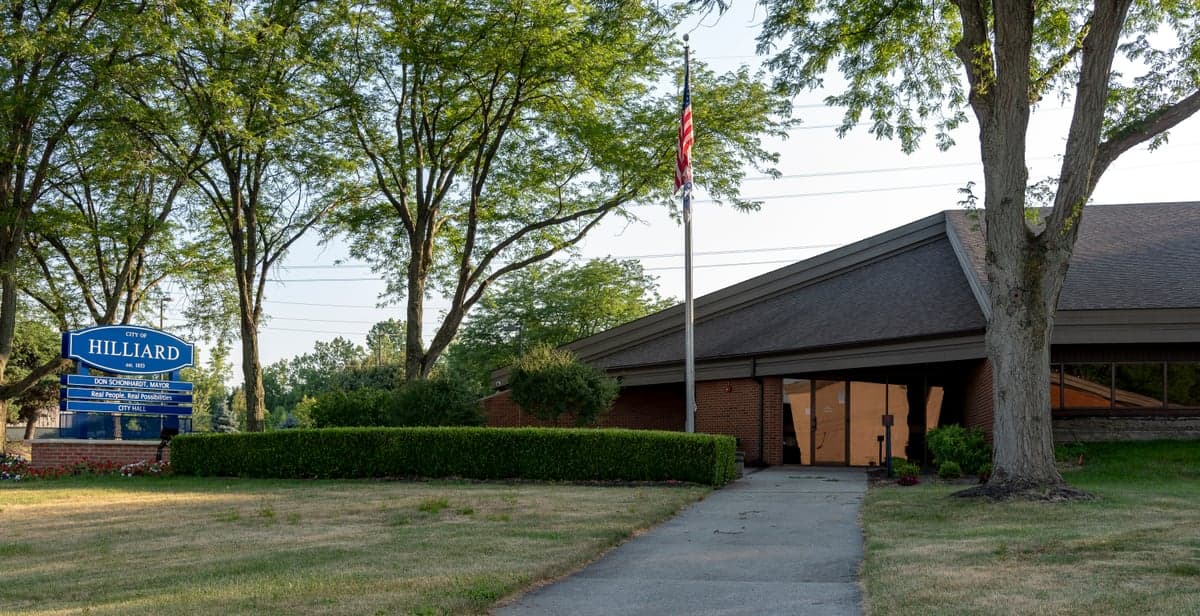
Photo: Wikipedia
Strategic Assessment of Hilliard, OH
Multiple tactical vulnerabilities. Population density, target proximity, or disaster risk are likely compounding. A retreat property and exit planning is required.
What does the Strategic Assessment tell us?
Our Strategic Assessment grades tactical survivability of an area. Major population centers, military targets, fallout zones, natural disasters, and border exposure all drive risk — lower exposure means a more defensible position in a crisis.
This is heavily inspired by Joel Skousen's Strategic Relocation book. Highly recommended you checkout the book ($)What does this tell us?
Our Strategic Assessment grades tactical survivability of an area. Major population centers, military targets, fallout zones, natural disasters, and border exposure all drive risk — lower exposure means a more defensible position in a crisis.
This is heavily inspired by Joel Skousen's Strategic Relocation book. Highly recommended you checkout the book ($)Strategic Pillars

Key Distances
Regional Safe Places
Below is our recommended "safe zones" in Ohio and the surrounding area based on our strategic heuristics. For most people, it's unrealistic to live in a “safe zone” full-time due to work, family or other personal reasons. They tend to be more rural. However, many of these areas are perfect for second homes and retreat properties that double as a vacation home or even a short-term rental.

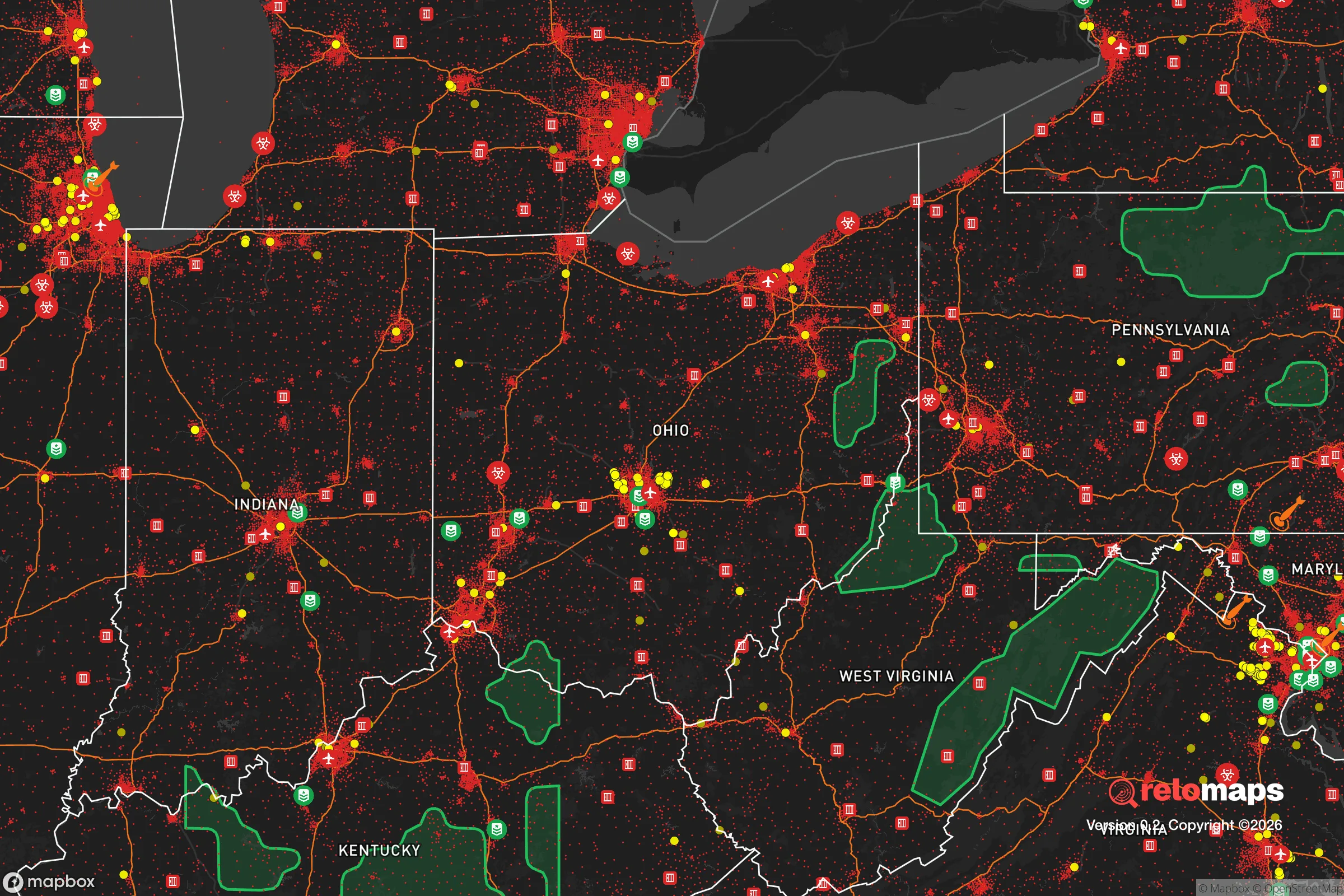


Important Note: For informational purposes only. This does not mean nothing bad ever happens in the green zones. Please use common sense. This is based on public data and modeled with AI. We tried to take a conservative approach but mistakes happen. We update this regularly as new information becomes available.
Solar Generator Recommendations
Backup power matters more here than in safer locations. We've picked three solar generators across budgets and capacity tiers — start with the budget unit if you only need a few essentials, or step up if you want to run a fridge and HVAC for days at a time.

Jackery Portable Power Station Explorer 300
Budget OptionPower on the Go: Weighing only 11 lbs, it's convenient to set up and store with book-sized foldable solar panels

BLUETTI Portable Power Station AC180
Designed for both indoor and outdoor scenarios, AC180 is highly capable as it has a robost capacity and continuous output power.

EF ECOFLOW DELTA Pro Ultra Power Station
Upgraded PickEcoFlow DELTA Pro Ultra is a whole-home energy system designed to grow with your family. Integrated with the Smart Home Panel 2, it scales to meet your evolving energy needs — keeping your home powered, intelligent, and secure through every stage of life.
We earn a commission, at no additional cost to you.
Strategic Assessment Analysis
Hilliard, Ohio, presents a mixed strategic picture for the conservative prepper or survivalist. Its location just northwest of Columbus offers a veneer of suburban stability, but that proximity to a major metropolitan area is both its greatest asset and its most significant vulnerability. The city’s resilience is tied directly to its ability to remain a quiet, functional suburb during a crisis, while its risks are amplified by the very infrastructure that makes it livable in peacetime. For a relocator prioritizing long-term security over short-term convenience, Hilliard requires a clear-eyed assessment of its geographic position, exposure to fallout-relevant targets, and practical self-sufficiency potential.
Geographic position and natural advantages for long-term security
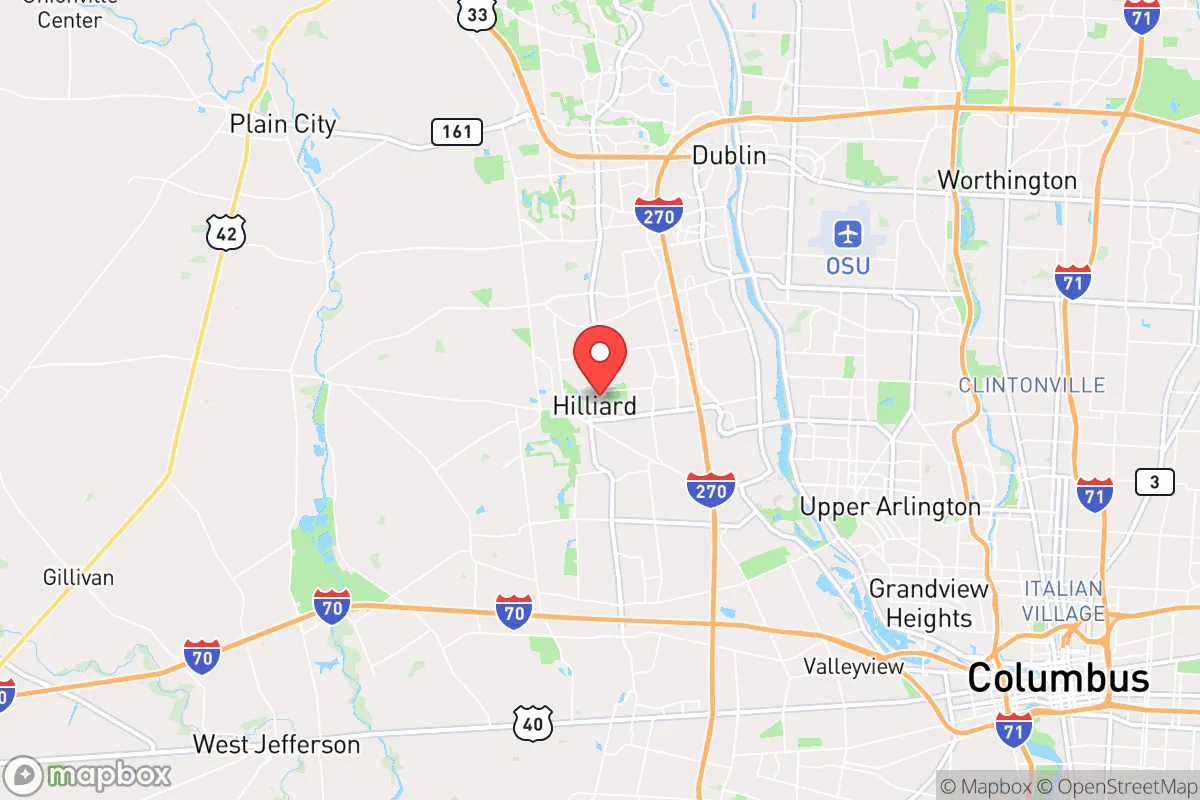
Hilliard sits on the relatively flat till plains of central Ohio, roughly 12 miles northwest of downtown Columbus. The area is not mountainous, but it does offer a few underappreciated natural advantages. The Scioto River and Big Darby Creek run nearby, providing surface water sources that could be critical in a grid-down scenario. The region’s geology is dominated by glacial till and limestone, which means groundwater is generally accessible via wells, though depth varies. The land is fertile, with a growing season long enough for subsistence gardening—corn, soybeans, and vegetables thrive here. The terrain itself is not defensible in a tactical sense; there are no ridges or chokepoints to control. However, the area’s low population density relative to Columbus proper (Hilliard’s population is around 40,000) and its patchwork of farmland and suburban developments offer a degree of spatial buffer. The city’s position along I-270, the outer beltway, is a double-edged sword: it provides quick egress from the metro area but also funnels traffic and potential refugees during an evacuation. For a relocator, the key natural advantage is the availability of arable land and water, not terrain-based security.
Risks, exposures, and proximity to fallout-relevant landmarks
The most glaring risk for Hilliard is its proximity to Columbus, a major population and logistics hub. In a scenario involving civil unrest, mass casualty events, or a large-scale disaster, Columbus would likely become a focal point for chaos. Hilliard’s location on the northwest side places it downwind of prevailing weather patterns from the city center, meaning smoke, chemical spills, or airborne contaminants from urban fires or industrial accidents could drift into the area. More critically, the city lies within 20 miles of several high-value targets: the Rickenbacker Air National Guard Base (southeast of Columbus), the Defense Supply Center Columbus (a major military logistics hub), and the Ohio State University campus (a potential target for symbolic attacks). The nearby I-70/I-71 interchange is a critical national freight corridor, making it a likely chokepoint for both military and civilian movement during a crisis. For a survivalist, these are not abstract concerns—they are concrete risks that could turn Hilliard into a secondary impact zone. The presence of a large, transient population in Columbus (over 900,000 in the city, 2.1 million in the metro) also means that any breakdown in order could trigger a mass exodus along the very highways that border Hilliard. The city’s own infrastructure—a single major hospital (OhioHealth Dublin Methodist, about 10 minutes away), a police force of roughly 60 officers, and a fire department with four stations—is adequate for daily life but would be overwhelmed in a regional crisis.
Practical resilience for a relocator: food, water, energy, and defensibility
For the individual or family looking to hunker down, Hilliard’s practical resilience is a mixed bag. Water is the most critical concern. The city draws its municipal supply from the Scioto River and groundwater wells, but a prolonged grid failure would shut down the treatment plants. A well on private property is a non-negotiable asset for any prepper here; without it, you are dependent on stored water or the unreliable goodwill of neighbors. Food is more promising. The surrounding farmland is productive, and local farmers’ markets (like the Hilliard Farmers Market) are a good source of fresh produce in season. However, the area is not a food-surplus region in the way the Midwest’s corn belt is; most of the local agriculture is commodity crops, not diversified subsistence farming. A relocator would need to establish a garden and possibly raise small livestock (chickens are permitted in most residential zones) to achieve meaningful food security. Energy is a vulnerability. The grid is reliable in normal times, but central Ohio is prone to severe thunderstorms and occasional ice storms that can knock out power for days. Solar panels with battery storage are a viable option, as the region gets about 170 sunny days per year—not ideal, but workable for a modest off-grid setup. Natural gas is widely available for heating and cooking, but a gas line rupture during an earthquake (rare but possible) or civil unrest would cut that supply. Defensibility is the weakest link. Hilliard is a typical suburban grid of cul-de-sacs and arterial roads, with no natural barriers. A determined group could easily move through the area. The best strategy is to live on the outskirts, near farmland, where you have fewer neighbors and more escape routes. The city’s police department is professional but small; in a prolonged crisis, you would be largely on your own. The local gun culture is present but not overt—Ohio is a shall-issue state for concealed carry, and there are several gun ranges and shops within a 20-minute drive (e.g., AimHi in Dublin).
The overall strategic picture for Hilliard is one of calculated risk. It is not a remote redoubt, nor is it a high-risk urban core. It is a suburb that offers a decent baseline of resources—water, farmland, and a stable community—but demands that a relocator actively build redundancy into every system. The proximity to Columbus is a liability that cannot be ignored, but it also means that Hilliard benefits from the economic and logistical infrastructure of a major city during normal times. For the conservative prepper who wants to be close enough to a metro area to maintain a professional career but far enough to have a fighting chance during a collapse, Hilliard is a viable option—provided you invest in a well, a garden, a solar array, and a solid plan for self-defense. The city itself will not save you; your own preparation will. If you are willing to put in the work, Hilliard can be a defensible, sustainable base. If you expect the system to hold, you will be disappointed.

* Values derived from national, state, county, city and local statistics and may differ in a specific area. Last updated: 2026-04-21T20:05:47.000Z
Narrative content on this page is AI-generated and may contain mistakes. Verify any details that matter before acting on them.
ReloMaps may earn a commission from affiliate links at no extra cost to you.

