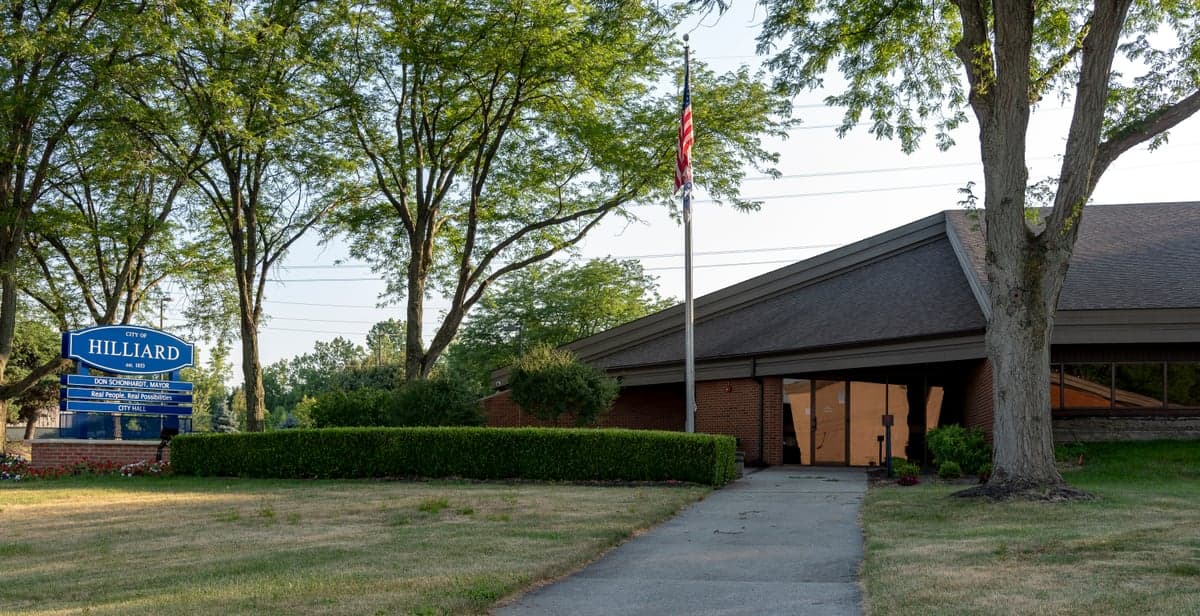
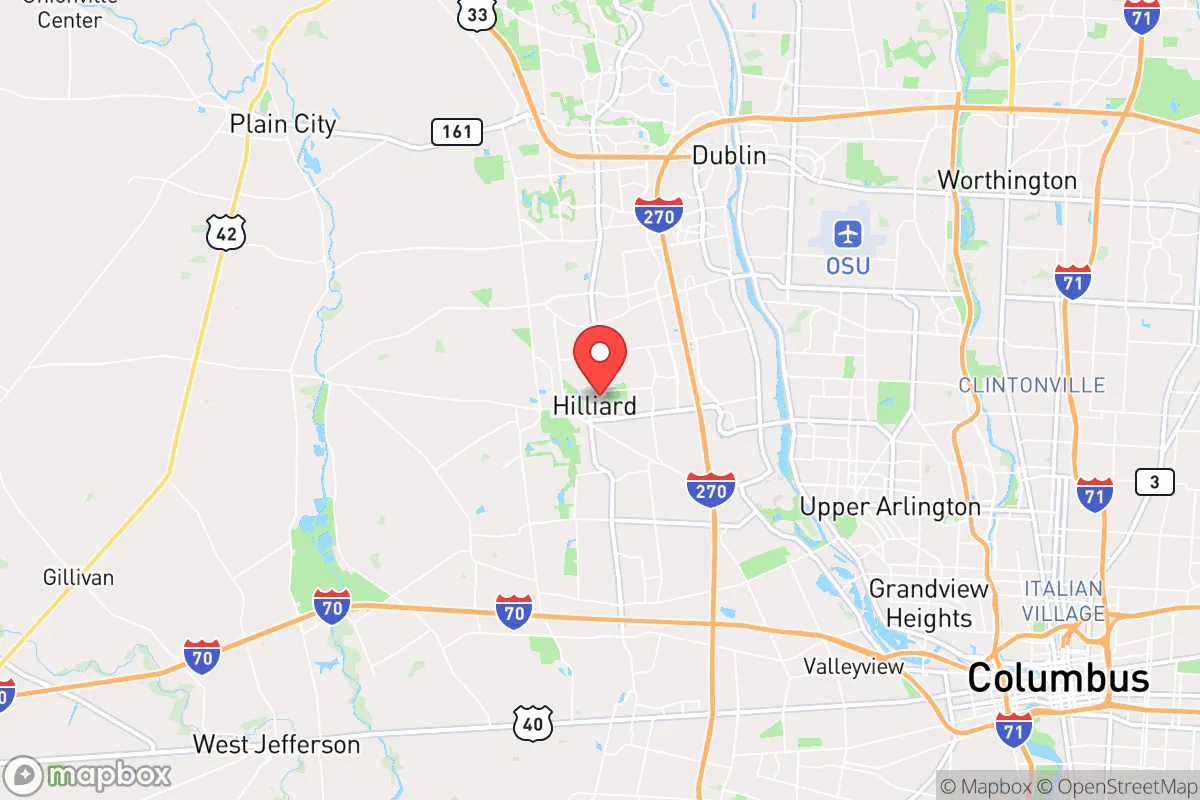
Photo: Wikipedia
Quality of Life in Hilliard, OH
A high quality of life with strong walkability, manageable living costs, healthy neighborhood signals, and solid amenity access.
What does Quality of Life tell us?
Quality of Life blends cost of living, nearby amenities, socioeconomic signals, and neighborhood character. City-level scores represent the whole municipality; individual neighborhoods can differ.
What does this tell us?
Quality of Life blends cost of living, nearby amenities, socioeconomic signals, and neighborhood character. City-level scores represent the whole municipality; individual neighborhoods can differ.
Cost of Living
33% above national average
The Real Cost of Living in Hilliard, OH for 2026
| Tier | Individual | Family (4) |
|---|---|---|
| Survival | $25k | $48k |
| Comfortable | $70k | $103k |
| Luxury | $165k+ | $256k+ |
| Elite (Top 5%) | $194k+ | $301k+ |
120%
The Area Signal
A metric tracking the socioeconomic signals of the area.
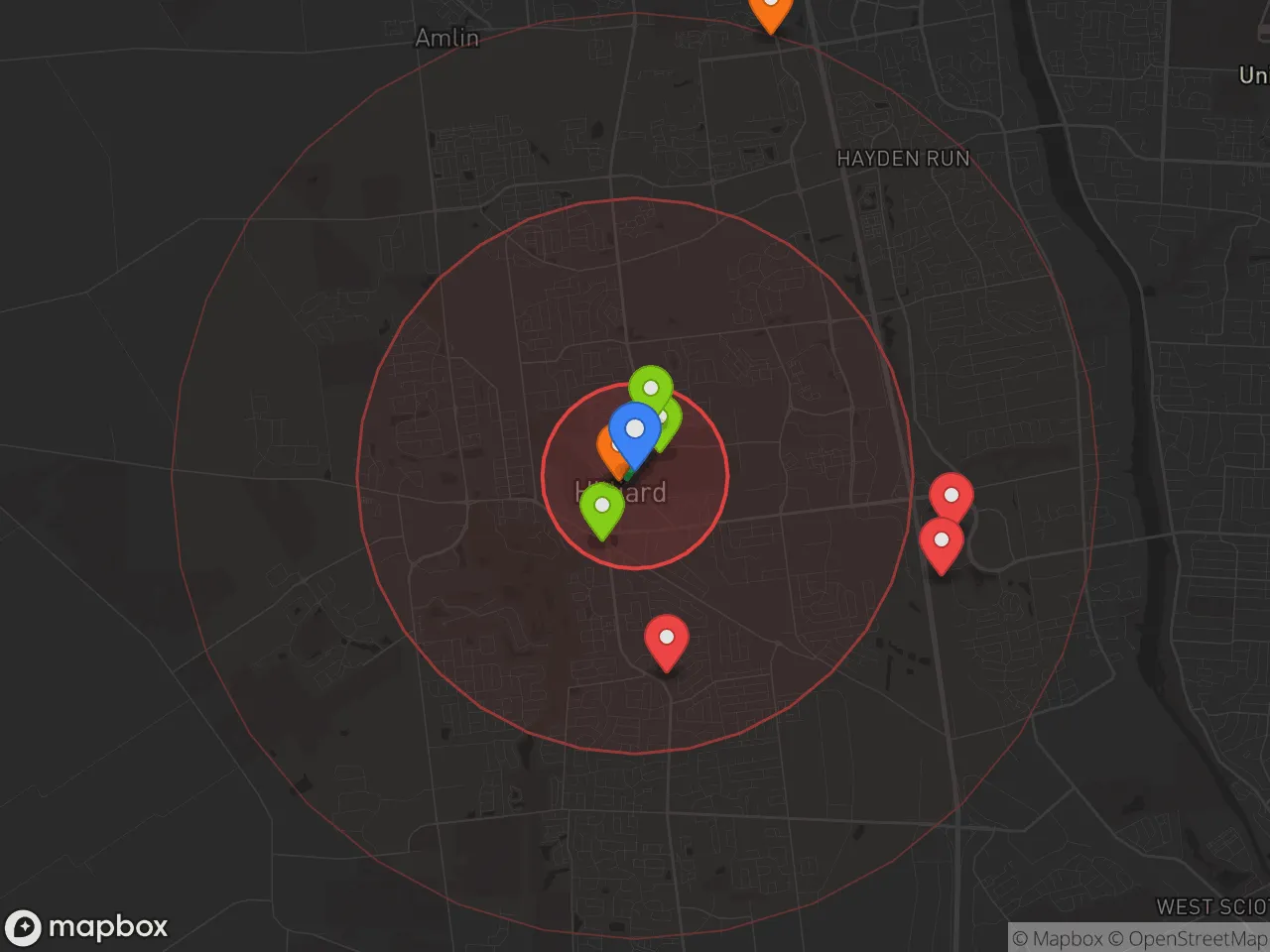
Hobbies
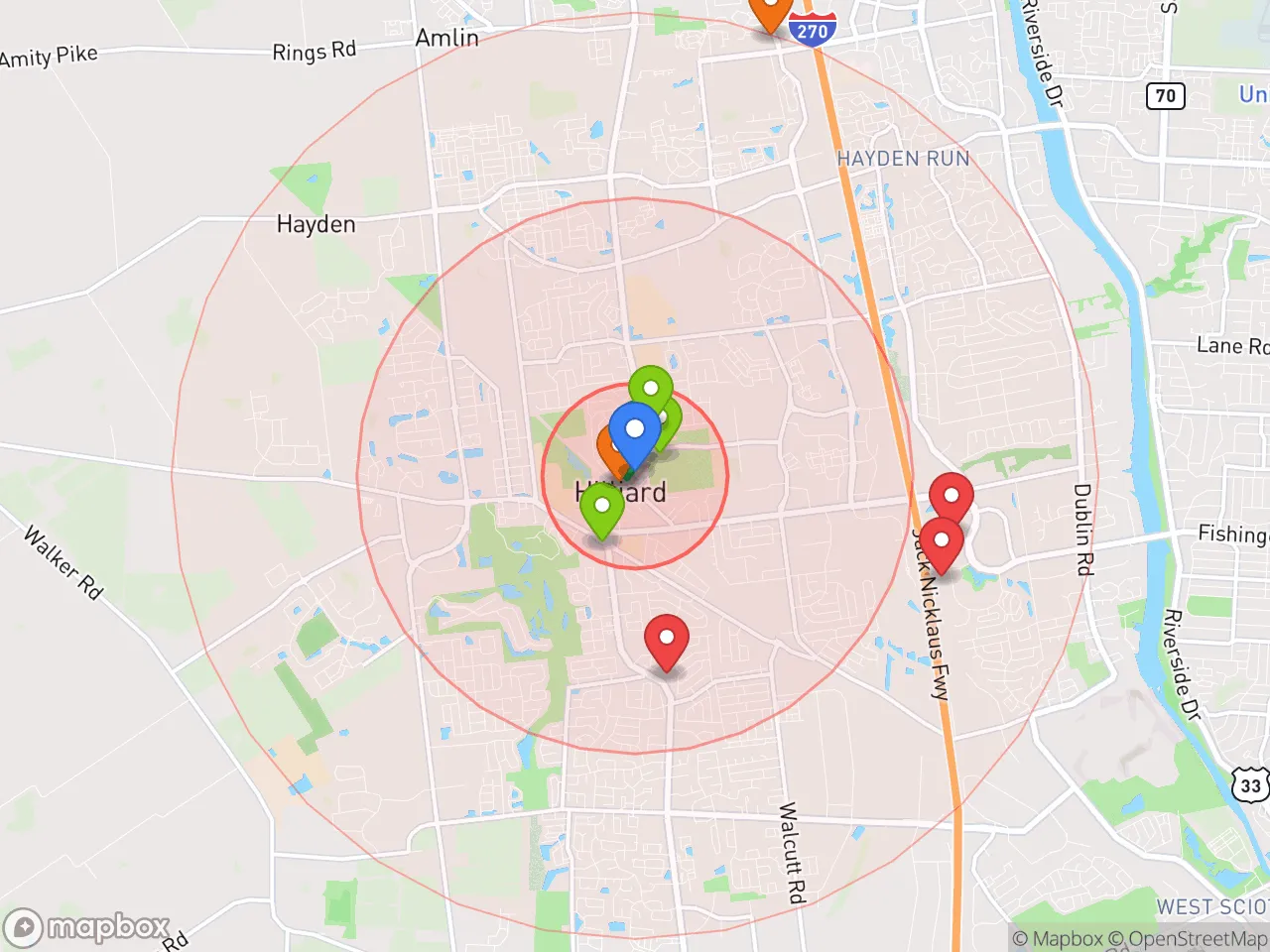
Explore the areaGroceries
6 within 10 miles
Gas
20 within 10 miles
Hospital
20 within 20 miles
Airport
John Glenn Columbus International Airport
Post Office
USPS — Hilliard, OH
Critical Amenities
Quality-of-Life Analysis
Hilliard, Ohio, is an affluent western suburb of Columbus where the cost of living index sits at 133—33 percent above the national average—reflecting a community built around well-compensated professionals, dual-income families, and executives drawn to the area’s top-rated schools and short commutes. With a median home value of $360,000 and a median rent of $1,590, Hilliard attracts households earning well above the state median, particularly those in finance, healthcare, and technology sectors who work in Columbus but want suburban space and safety. The average commute of just over 23 minutes is notably shorter than many comparable Columbus suburbs, making Hilliard a practical choice for workers who value time at home over time in traffic.
How Hilliard’s cost of living compares to Columbus and other suburbs
Hilliard’s cost-of-living index of 133 is significantly higher than the Ohio state average of roughly 90, but it remains competitive when stacked against closer-in suburbs like Dublin (index ~140) or Upper Arlington (~145). The median home value of $360,000 is about $100,000 above the Columbus metro median, yet it buys a newer, larger home on a bigger lot than what the same price would fetch in those pricier neighbors. Renters face a median of $1,590 per month, which is roughly $200–$300 more than in less affluent suburbs like Grove City or Reynoldsburg, but still below the $1,800+ typical in Dublin. Property taxes in Hilliard run about 2.1 percent of assessed value, slightly above the state average, though the quality of public services—especially the Hilliard City School District—is widely cited as justifying the premium. For buyers, the trade-off is clear: pay more for housing than in most of Ohio, but gain a 23-minute commute and access to a district that consistently ranks among the top 10 percent in the state.
What daily life is like for families in Hilliard: schools, parks, and amenities
Daily life in Hilliard revolves around the Hilliard City School District, which serves roughly 16,000 students across three high schools and earns an A rating from Niche for academics and college readiness. The district’s strong performance is a primary driver of home values, with many families moving specifically for schools like Hilliard Davidson High School or Memorial Middle School. Beyond the classroom, the city maintains over 30 parks, including the 80-acre Hilliard Community Park with its splash pad, sports fields, and walking trails, and the Heritage Rail Trail, which connects to the larger Columbus trail network. The commercial spine along Cemetery Road and Hilliard-Rome Road is dense with chain retailers, grocery stores, and casual dining, but the city lacks a true walkable downtown—most errands require a car. The average commute of 23 minutes means most residents can be at a downtown Columbus office or Ohio State University in under 30 minutes, while weekend trips to the Scioto River or Battelle Darby Creek Metro Park are a 15-minute drive. The rhythm is distinctly suburban: school events, youth sports leagues, and neighborhood block parties define social life, with little nightlife beyond a handful of breweries and sports bars.
Hilliard is best suited for families and professionals who prioritize school quality, short commutes, and suburban safety over urban energy or walkability. Single professionals or empty-nesters seeking a vibrant downtown scene may find the city too quiet, as most social activity is family-oriented. However, for a two-income household with school-age children—especially those working in Columbus’s finance, insurance, or healthcare sectors—Hilliard offers a strong return on investment: lower housing costs than Dublin or Upper Arlington, a commute under 25 minutes, and a school system that consistently outperforms state averages. The city’s high cost of living is a barrier for entry-level workers, but for those who can afford it, Hilliard delivers a predictable, high-quality suburban lifestyle with few trade-offs.

Crime in Hilliard, OH
Lower crime rates than 88% of comparable U.S. locations.
Violent CrimeViolent Crime Analysis
Property CrimeProperty Crime Analysis
Crime Analysis
Hilliard, Ohio, is a notably safe suburb of Columbus, with violent crime rates far below both state and national averages. The city's violent crime rate of 122.3 incidents per 100,000 residents is roughly one-third the national average, while property crime sits at 680.1 per 100,000, also well under the U.S. benchmark. However, as a community within a large, liberal-leaning metropolitan area, residents should be aware that progressive judicial policies in Franklin County can undermine public safety by prioritizing offender rehabilitation over incarceration, potentially increasing recidivism and the number of criminals on the street.
Crime in context
Hilliard’s violent crime rate is 75% lower than the national average and significantly below the Ohio state average of roughly 300 per 100,000. Property crime, while higher than violent crime, still sits about 30% below the national rate of 1,954 per 100,000. These figures place Hilliard among the safest suburbs in central Ohio. However, the broader context of Franklin County matters: the county’s progressive district attorney and judges have implemented policies like bail reform and diversion programs that, while sympathetic to offenders, have been linked to higher rates of repeat offenses and a general sense of diminished accountability. This means that even in a low-crime enclave like Hilliard, the risk of encountering a repeat offender from the metro area is higher than in jurisdictions with tougher sentencing.
What residents experience
Most Hilliard residents report feeling safe walking their neighborhoods and using local parks, with the city’s police department maintaining a strong community presence. The most common crimes are theft from vehicles and minor property damage, often concentrated near retail corridors like Hilliard-Rome Road and the Mill Run area. Violent incidents are rare and typically isolated, not random. Yet the city’s proximity to Columbus means that criminals from the metro area, emboldened by a justice system that prioritizes treatment over incarceration, can easily travel into Hilliard to commit property crimes. Residents should take standard precautions—locking cars, securing garages, and using outdoor lighting—to mitigate this spillover effect.
Neighborhood-level variation is modest in Hilliard, with the safest pockets being the newer developments west of I-270, such as the areas around Avery Road and the Scioto Darby Creek corridor. Older neighborhoods closer to the city’s historic downtown and near the Hilliard-Rome Road commercial strip see slightly higher property crime, though still well below metro-area averages. Overall, Hilliard offers a strong safety profile, but the progressive criminal justice policies of Franklin County mean that residents cannot be complacent about the broader regional crime environment.
* Values derived from national, state, county, city and local statistics and may differ in a specific area. Last updated: 2026-04-21T20:05:47.000Z
Narrative content on this page is AI-generated and may contain mistakes. Verify any details that matter before acting on them.
ReloMaps may earn a commission from affiliate links at no extra cost to you.

