Photo: Wikipedia
Find The Best Places To Live
in Hilton Head Island
PRO TIP! You can paste a Zillow or Redfin link to get info on that property.
What It's Like Living in Hilton Head Island, SC
Hilton Head Island feels less like a typical South Carolina town and more like a gated resort community that happens to have 37,805 year-round residents. The median age of 59.9 tells you a lot: this is a place built around retirement, second homes, and a deliberate pace of life where golf carts outnumber pickup trucks in many neighborhoods. The island runs on its own clock, and newcomers either adjust to that rhythm or find themselves frustrated by it.
The Daily Rhythm: Slow Mornings and Early Dinners
A typical weekday on Hilton Head starts with coffee on a screened porch or a walk along the beach before the heat sets in. By 9 a.m., the bike paths are busy with retirees and vacationing families heading to the beach or the grocery store. The island's 60 miles of paved leisure paths are the real transportation network — locals use them to get to the Piggly Wiggly, the Coligny Plaza shops, or the many gated communities. The average commute is just over 18 minutes, which sounds idyllic until you realize that's because most people live and work within a 12-mile strip of land. Traffic on William Hilton Parkway (the main artery) can back up badly during summer months, especially around the Sea Pines Circle and the Crossings Plaza. Winter is a different story — the island's population swells to over 100,000 during peak season, then drops back to a quiet 37,000 after Labor Day. Restaurants like Hudson's Seafood House on the Docks and The Crazy Crab are packed from April through October, then become neighborhood hangouts where you can actually get a table in January.
Who Fits In: Affluent Retirees and Remote Professionals
The median household income of $96,715 and median home value of $652,100 paint a clear picture: this is not a place for young families starting out unless they have significant savings or remote tech salaries. Over 55% of adults hold a college degree, and the cost of living index sits at 171 — meaning everyday expenses run about 71% above the national average. The kind of person who thrives here is someone who values peace, privacy, and outdoor recreation over nightlife or urban energy. You'll find a lot of retired executives, second-home owners from the Northeast and Midwest, and remote workers who traded a Chicago or New York commute for a home near the water. Families with children are present but less common — the island's public schools (Hilton Head Island High School, Hilton Head Island Middle School) are well-regarded but draw from a small, affluent student body. School sports, especially football and soccer, are community events but don't carry the obsessive energy you'd find in mainland towns like Bluffton or Beaufort.
What's There to Do: Golf, Tennis, and the Beach (But Not Much Else)
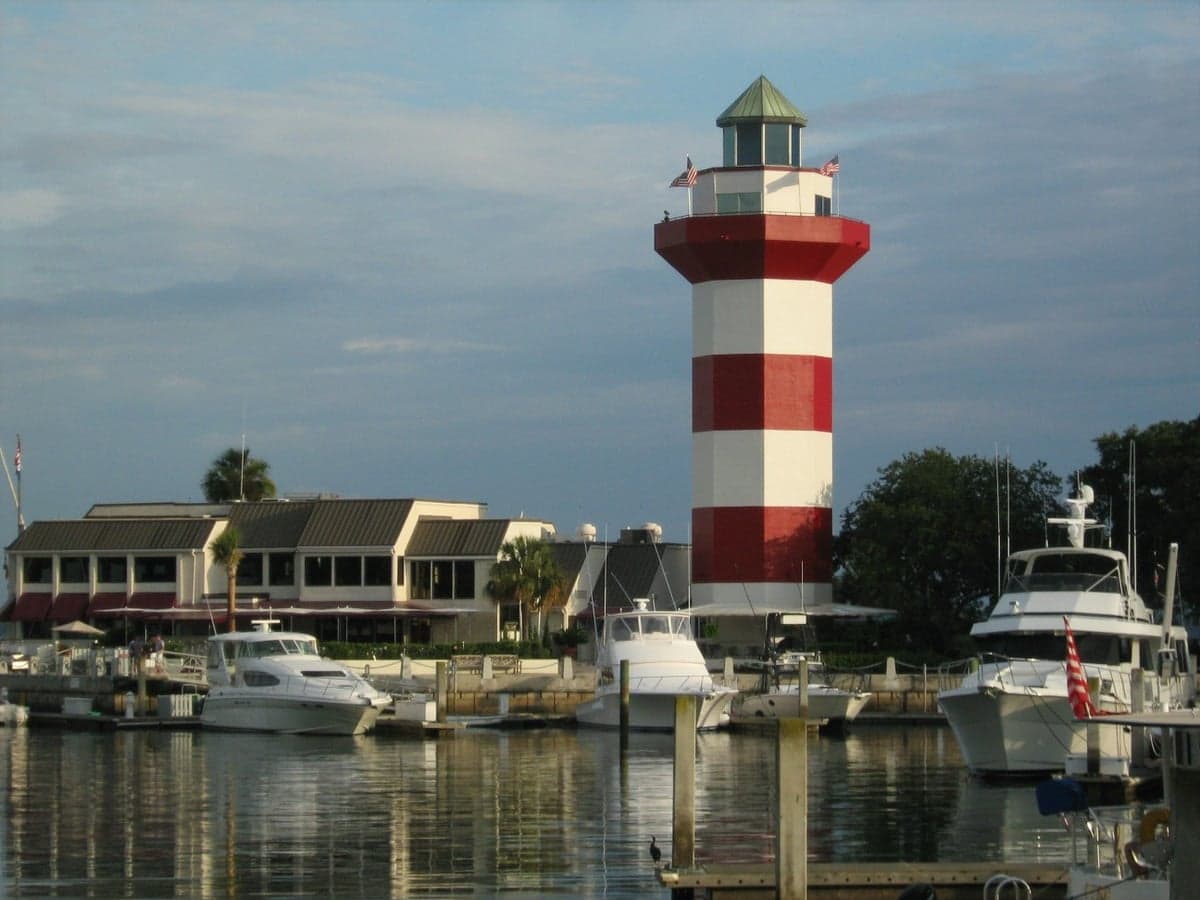
The island's identity is built around its 24 golf courses, dozens of tennis courts, and 12 miles of Atlantic beach. Harbour Town Golf Links, home of the PGA Tour's RBC Heritage each April, is the crown jewel — the week of the Heritage is the island's biggest annual event, drawing 100,000+ visitors and turning the whole Sea Pines area into a party. Beyond golf, the main entertainment options are outdoor-oriented: kayaking through the Broad Creek marshes, biking to the Harbour Town Lighthouse, or watching sunset at Coligny Beach Park. The Arts Center of Coastal Carolina puts on solid theater and concerts, but there's no real music venue bigger than a bar stage. For nightlife, you're looking at places like The Lodge at Sea Pines (a piano bar crowd) or the Tiki Hut at Coligny (a beach bar with live music). The lack of diverse entertainment is a common complaint among younger residents — after a few years, the same restaurants and same beach walks can feel repetitive. The island's cultural quirks include a strict no-high-rise building code (nothing taller than the trees), a ban on chain restaurants in certain areas, and a local obsession with keeping the island "natural" — meaning you'll see more deer than people on some morning bike rides.
Pros and Cons of Living Here
- Pro: Unmatched natural beauty and outdoor access. The beaches are clean, the bike paths are extensive, and the year-round climate (average highs from 60°F in January to 90°F in July) allows for outdoor activity almost every day.
- Con: The cost of living is punishing. A $652,100 median home price puts homeownership out of reach for most working-age people. Rentals are scarce and expensive, especially in summer when many landlords shift to weekly vacation rentals.
- Pro: Low crime in most neighborhoods. The violent crime rate of 370.4 per 100,000 is higher than the national average, but that number is skewed by property crime in tourist-heavy areas like Coligny. Most gated communities have private security and very low incident rates.
- Con: Seasonal tourism dominates everything. From April to October, the island is overrun with visitors. Restaurants have hour-long waits, bike paths are crowded, and the grocery stores run out of stock. Locals either embrace the chaos or leave town on weekends.
- Pro: A strong sense of community among year-round residents. The island has a distinct "old guard" culture — people who've been coming here for decades. There are active clubs, volunteer organizations, and a real small-town feel in the off-season.
- Con: Limited job opportunities and a seasonal economy. Most employment is in hospitality, retail, or healthcare. Professional jobs are scarce, and many residents commute to Savannah (45 minutes south) or Bluffton (20 minutes west) for work.
Living on Hilton Head means accepting a trade-off: you get a beautiful, safe, slow-paced environment with world-class recreation, but you pay a premium for it in both money and convenience. The island works best for people who are financially secure, comfortable with a quiet lifestyle, and willing to work around the tourist calendar. For retirees and remote professionals who value peace over variety, it's hard to beat. For young families or anyone seeking career growth, nightlife, or cultural diversity, the mainland towns of Bluffton or Savannah offer more for less money.

Similar towns to Hilton Head Island
* Values derived from national, state, county, city and local statistics and may differ in a specific area. Last updated: 2026-04-30T01:13:18.000Z
Narrative content on this page is AI-generated and may contain mistakes. Verify any details that matter before acting on them.
ReloMaps may earn a commission from affiliate links at no extra cost to you.

