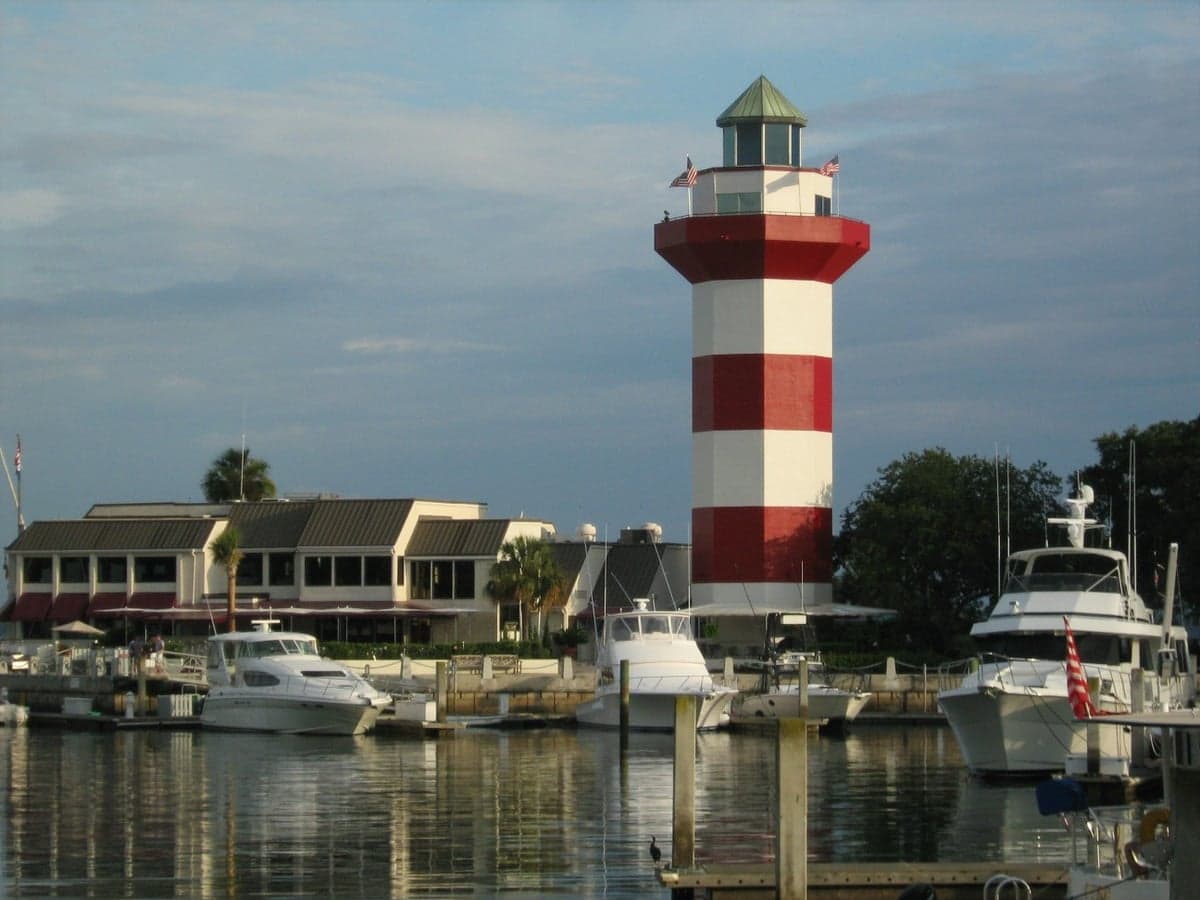
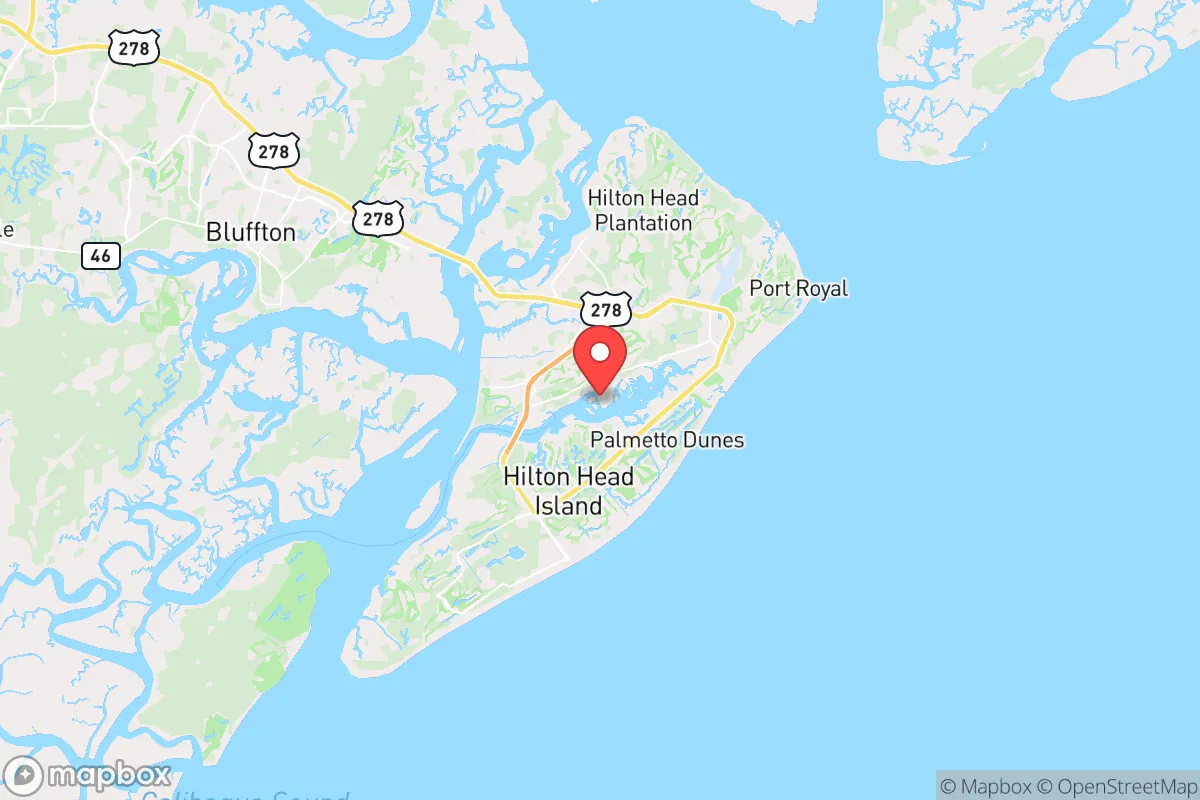
Photo: Wikipedia
Strategic Assessment of Hilton Head Island, SC
Meaningful friction. Expect exposure to either population pressure, blast zones, or natural disaster risk. Consider buying a retreat property.
What does the Strategic Assessment tell us?
Our Strategic Assessment grades tactical survivability of an area. Major population centers, military targets, fallout zones, natural disasters, and border exposure all drive risk — lower exposure means a more defensible position in a crisis.
This is heavily inspired by Joel Skousen's Strategic Relocation book. Highly recommended you checkout the book ($)What does this tell us?
Our Strategic Assessment grades tactical survivability of an area. Major population centers, military targets, fallout zones, natural disasters, and border exposure all drive risk — lower exposure means a more defensible position in a crisis.
This is heavily inspired by Joel Skousen's Strategic Relocation book. Highly recommended you checkout the book ($)Strategic Pillars

Key Distances
Regional Safe Places
Below is our recommended "safe zones" in South Carolina and the surrounding area based on our strategic heuristics. For most people, it's unrealistic to live in a “safe zone” full-time due to work, family or other personal reasons. They tend to be more rural. However, many of these areas are perfect for second homes and retreat properties that double as a vacation home or even a short-term rental.
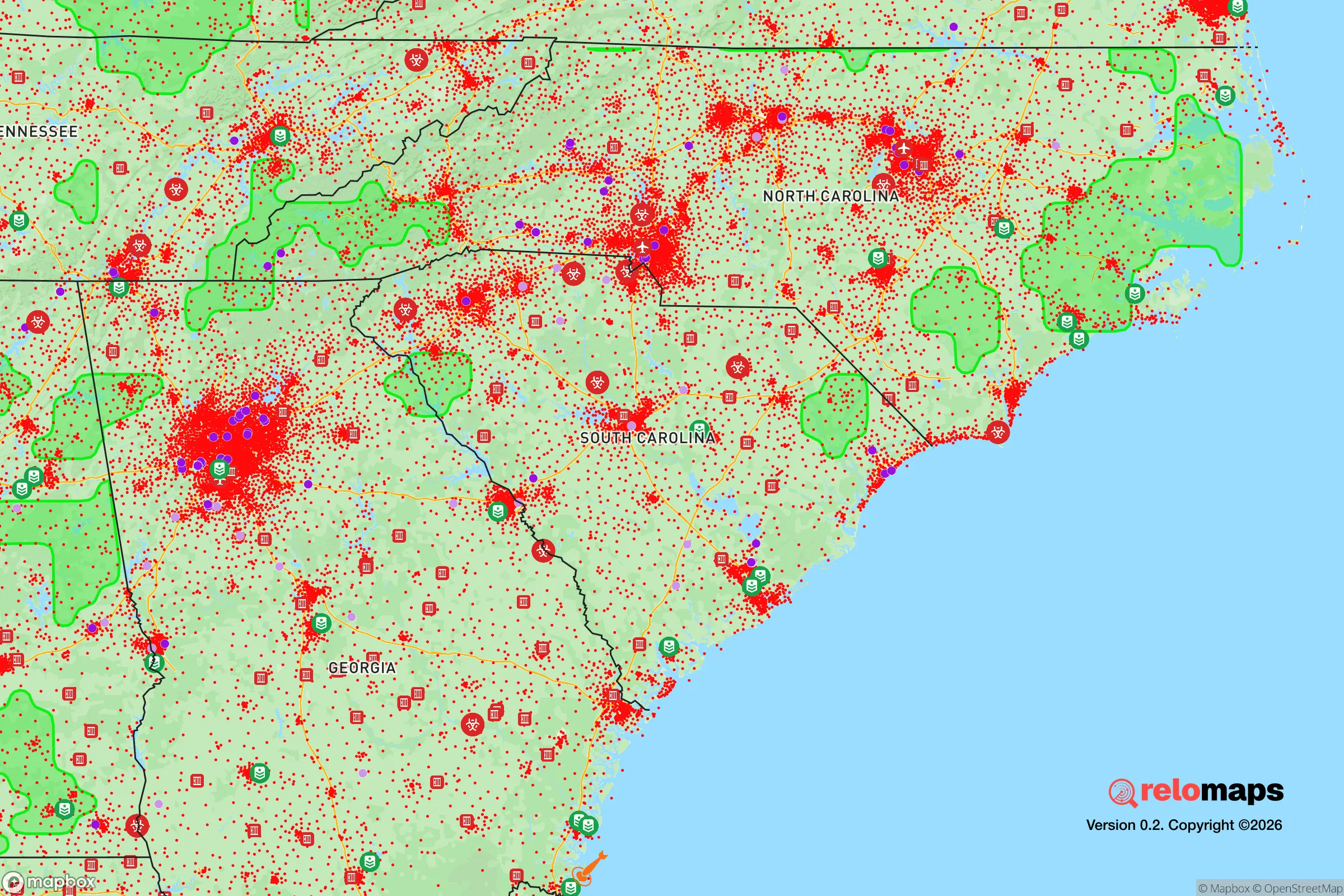
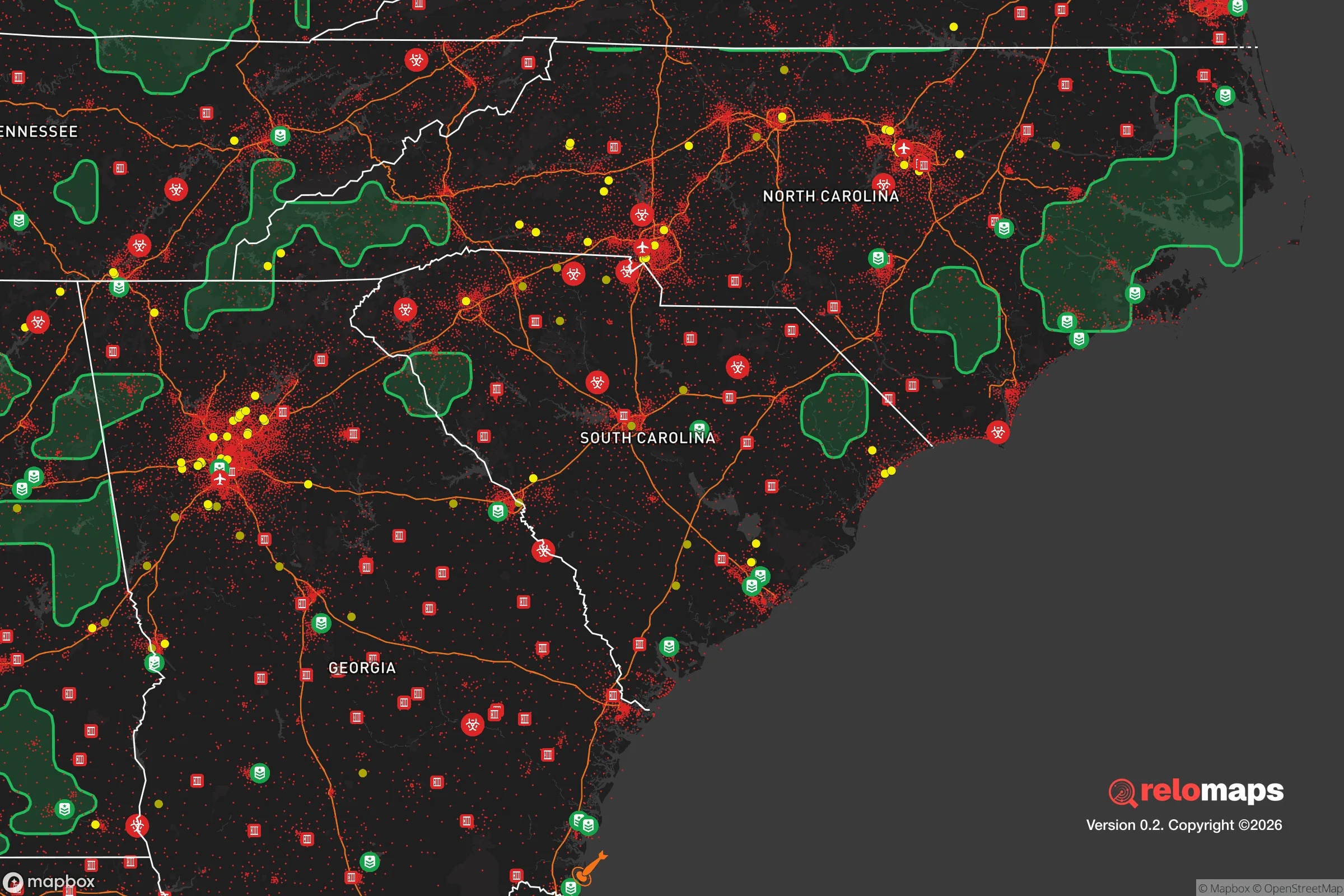


Important Note: For informational purposes only. This does not mean nothing bad ever happens in the green zones. Please use common sense. This is based on public data and modeled with AI. We tried to take a conservative approach but mistakes happen. We update this regularly as new information becomes available.
Solar Generator Recommendations
Backup power matters more here than in safer locations. We've picked three solar generators across budgets and capacity tiers — start with the budget unit if you only need a few essentials, or step up if you want to run a fridge and HVAC for days at a time.

Jackery Portable Power Station Explorer 300
Budget OptionPower on the Go: Weighing only 11 lbs, it's convenient to set up and store with book-sized foldable solar panels

BLUETTI Portable Power Station AC180
Designed for both indoor and outdoor scenarios, AC180 is highly capable as it has a robost capacity and continuous output power.

EF ECOFLOW DELTA Pro Ultra Power Station
Upgraded PickEcoFlow DELTA Pro Ultra is a whole-home energy system designed to grow with your family. Integrated with the Smart Home Panel 2, it scales to meet your evolving energy needs — keeping your home powered, intelligent, and secure through every stage of life.
We earn a commission, at no additional cost to you.
Strategic Assessment Analysis
Hilton Head Island, South Carolina, occupies a unique strategic position for those prioritizing resilience and preparedness, offering a blend of coastal isolation and logistical access that few locations can match. Its geography—a barrier island with limited bridge access—provides a natural buffer against the chaos of urban collapse, while its proximity to Savannah, Georgia (about 30 miles southwest) and Charleston (roughly 95 miles northeast) means you’re not completely cut off from supply chains or medical infrastructure. For a conservative-leaning relocator concerned with civic unrest, mass casualty events, or large-scale disasters, this island presents a compelling case: a defensible redoubt that still allows you to keep a finger on the pulse of the outside world, provided you understand its vulnerabilities.
Geographic position and natural advantages for long-term stability
The island’s primary strategic asset is its insularity. Hilton Head is connected to the mainland by only two bridges—the William Hilton Parkway (U.S. 278) and the Cross Island Parkway—both of which can be monitored and, in a worst-case scenario, controlled. This chokepoint dramatically reduces the risk of uncontrolled population influx during a crisis, a critical factor when considering the potential for civil unrest spilling over from larger metropolitan areas. The surrounding Lowcountry terrain—marshlands, tidal creeks, and dense maritime forests—further complicates any overland approach, making the island naturally defensible against both human threats and the spread of wildfires or industrial accidents. The subtropical climate supports year-round growing seasons, which is a practical advantage for anyone serious about food security. Average temperatures range from the mid-40s in January to the low 90s in July, allowing for extended gardening cycles and reducing the energy burden for heating. The island’s location also places it outside the typical hurricane strike zone’s core—while not immune, Hilton Head’s last direct major hurricane hit was in 1893, and modern building codes (post-Hurricane Hugo in 1989) have hardened structures significantly. For a prepper, this means less frequent catastrophic rebuilds and more time to focus on stockpiling and community building.
Risks, exposures, and proximity to fallout-relevant landmarks
No strategic assessment is honest without acknowledging the downsides, and Hilton Head has several that demand attention. The most glaring is its proximity to Savannah, home to the Port of Savannah—one of the busiest container ports on the East Coast and a prime target for both cyberattacks and physical disruption in a conflict scenario. A major event at the port could trigger supply chain interruptions that ripple directly onto the island, as most goods arrive via U.S. 278. Additionally, the Savannah River Site, a nuclear weapons facility about 50 miles upriver, is a non-negotiable risk. While the site has a strong safety record, any accident or sabotage there could produce a fallout plume that, depending on wind patterns, might affect Hilton Head. The island’s low elevation (average 10 feet above sea level) also makes it vulnerable to storm surge from a Category 3 or higher hurricane, though the barrier island’s dune systems and marsh buffers offer some protection. For the survivalist, the key takeaway is that Hilton Head is not a bunker—it’s a semi-exposed position that requires active monitoring of regional threats. The island’s reliance on tourism (over 2.5 million visitors annually pre-2020) means that during a crisis, you could see a sudden influx of stranded visitors competing for limited resources. This is a double-edged sword: the tourism economy keeps infrastructure robust, but it also creates a transient population that could become a liability in a breakdown.
Practical resilience for a relocator: food, water, energy, and defensibility
For the individual or family serious about self-sufficiency, Hilton Head offers a mixed bag. Water is the first concern: the island draws its municipal supply from the Floridan Aquifer, a deep, high-quality source that is less susceptible to surface contamination than many coastal systems. However, the distribution network relies on electric pumps, so a backup generator and a minimum 30-day water storage plan are non-negotiable. The island’s numerous lagoons and tidal creeks provide secondary water sources, but these require filtration or boiling due to brackishness and runoff. Food resilience is more promising. The Lowcountry’s long growing season supports year-round vegetable production, and the surrounding waters offer abundant seafood—oysters, shrimp, and fish—for those willing to learn basic harvesting. Local farmers’ markets and community-supported agriculture (CSA) programs exist, but they’re geared toward a tourist palate; a serious prepper should plan to establish a private garden and learn preservation techniques like canning and dehydrating. Energy is a bright spot: South Carolina has relatively low electricity rates, and Hilton Head’s solar potential is good (about 5.5 peak sun hours per day). Many homes already have solar panels, and the island’s HOA-friendly culture means you can install them without much pushback, provided you follow architectural guidelines. Defensibility is where the island shines. The limited access points, combined with a tight-knit community of year-round residents (about 40,000 permanent population), create a natural neighborhood watch dynamic. In a prolonged crisis, the island’s small population and geographic isolation make it far easier to secure than a suburban sprawl. However, this also means that anyone without established local connections may be viewed as an outsider—building relationships with neighbors before a crisis is essential.
The overall strategic picture for Hilton Head Island is one of cautious optimism for the prepared relocator. It offers a rare combination of natural defensibility, moderate climate resilience, and access to regional resources without being swallowed by a major urban center. The risks—proximity to Savannah’s port, the Savannah River Site, hurricane exposure, and tourism dependency—are real but manageable with proper planning. For the conservative-leaning individual or family who values self-reliance, community, and a slower pace of life, Hilton Head provides a solid foundation. It is not a bug-out location for the lone wolf; it is a place to build a long-term, resilient lifestyle where you can ride out the storm—literally and figuratively—while still being able to engage with the broader world on your own terms. The key is to treat it as a strategic asset, not a paradise: invest in backup systems, learn the local ecology, and integrate into the permanent community before you need to rely on it. If you do that, Hilton Head can be a strong anchor in an uncertain future.

* Values derived from national, state, county, city and local statistics and may differ in a specific area. Last updated: 2026-04-30T01:13:18.000Z
Narrative content on this page is AI-generated and may contain mistakes. Verify any details that matter before acting on them.
ReloMaps may earn a commission from affiliate links at no extra cost to you.

