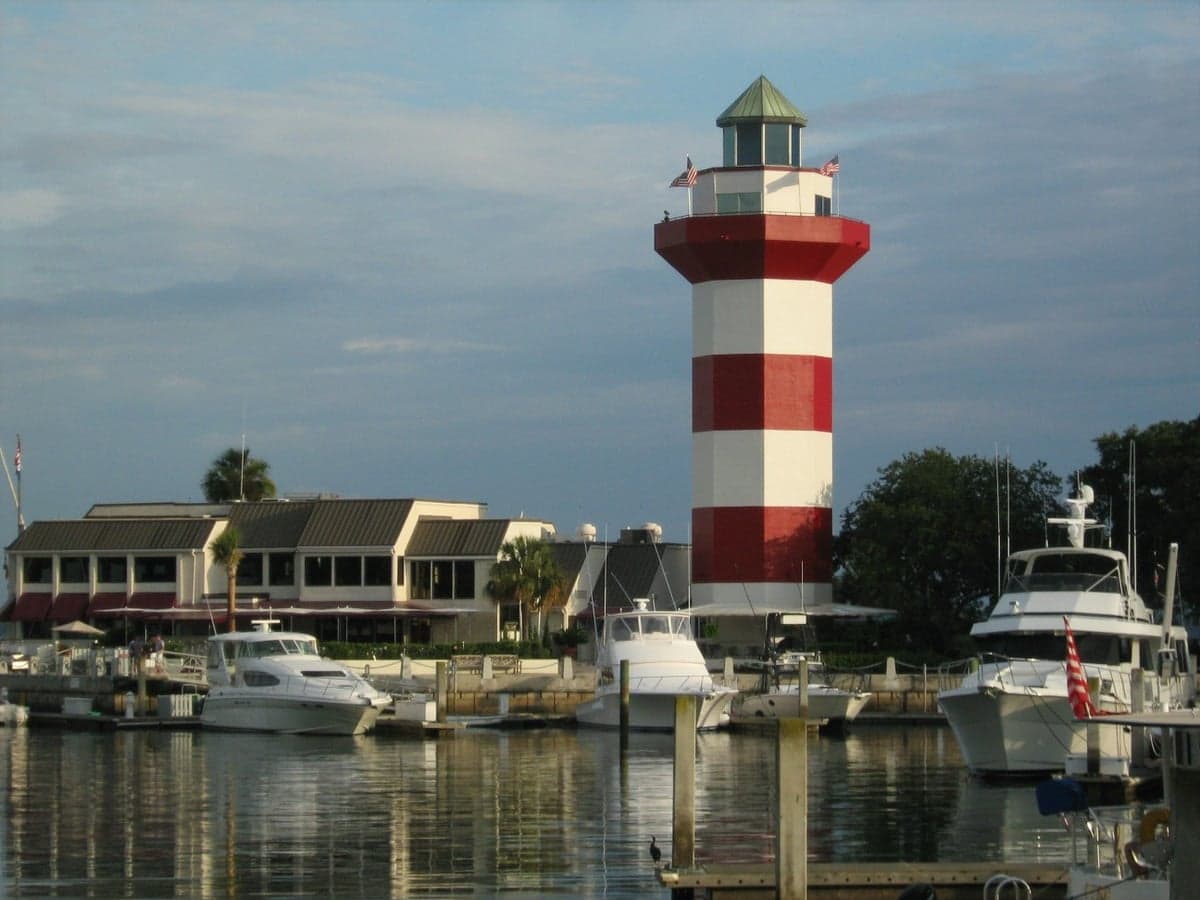
Photo: Wikipedia
Political ClimatePolitical Climate in Hilton Head Island, SC
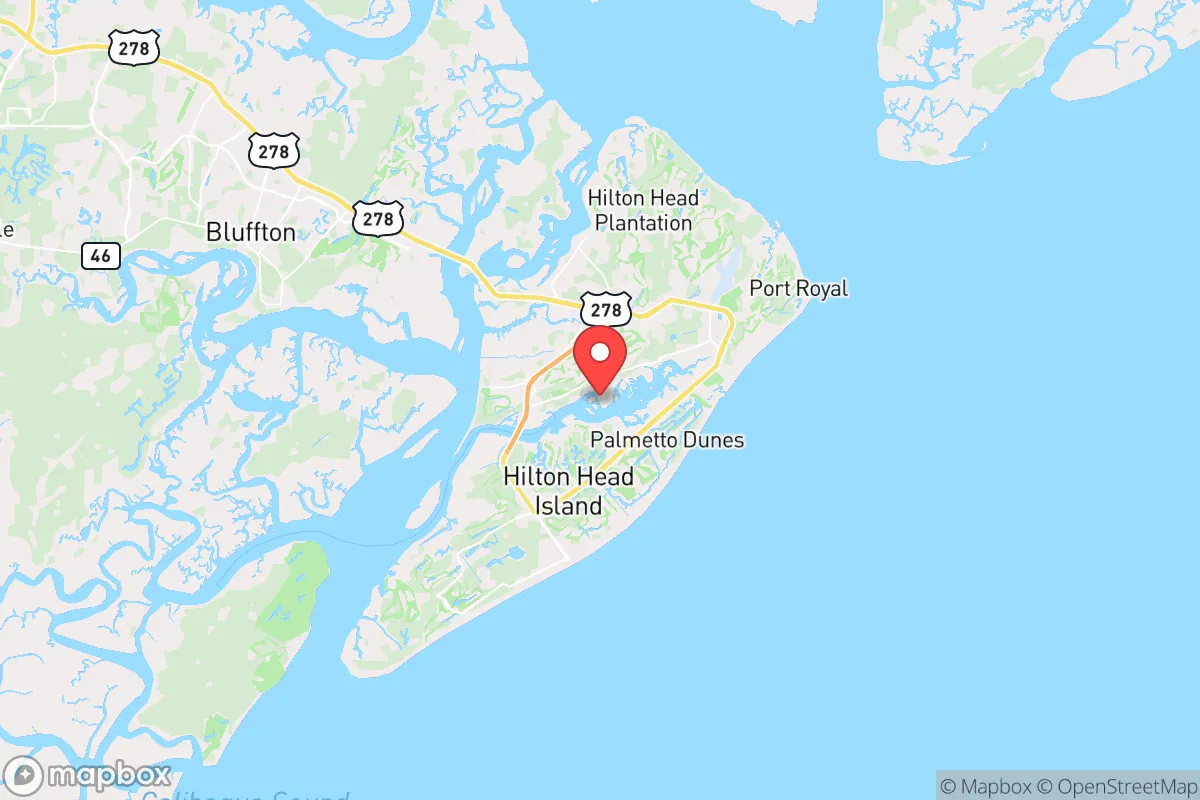
District shown is the primary district for this city’s centroid. Cities may span multiple districts.
Local Political AnalysisPolitical Analysis of Hilton Head Island, SC
Hilton Head Island has long been a reliably conservative community, and that hasn't changed much despite some national trends pulling in the other direction. The area carries a Cook PVI of R+6, meaning it votes about six points more Republican than the country as a whole, and that number feels about right when you look at local elections and the general vibe around town. You'll still see plenty of "Don't Tread on Me" flags flying from golf carts and boats, and most folks here take a pretty dim view of government meddling in their daily lives.
How it compares
If you drive north up Highway 278 toward Bluffton, you'll notice the political temperature shifts a bit. Bluffton has seen an influx of younger families and remote workers from up North, and while it's still conservative overall, you'll spot more Harris-Walz yard signs mixed in with the Trump flags than you would on the island itself. Head further inland to places like Hardeeville or Ridgeland, and you're back in deep-red territory where the R+6 looks almost moderate by comparison. The real contrast, though, is across the bridge in Savannah, Georgia — that city has swung hard left in recent years, with city council pushing progressive zoning and police reform measures that would never fly here. Hilton Head residents tend to see Savannah as a cautionary tale of what happens when local government gets too cozy with big-city ideas about taxing and regulating.
What this means for residents
For people living here, the conservative tilt means fewer headaches from overreaching local ordinances. Property taxes are reasonable, there's no city income tax, and the county commission generally takes a hands-off approach to business regulation. You won't see mask mandates or vaccine passport requirements like you did in some coastal towns during the pandemic — the local leadership trusted residents to make their own choices. That said, there are some worrying signs. The school board has seen a few progressive-leaning candidates win seats in recent cycles, and there's been chatter about adding "equity" language to county planning documents. Longtime residents keep a close eye on these things because once that kind of thinking gets a foothold in local government, it tends to spread like kudzu.
The cultural and policy distinctions here are worth noting if you're thinking about relocating. Hilton Head is still a place where the Second Amendment is respected without much fuss — you can carry openly or concealed with a permit, and most gun shops will tell you business is steady. The island also has a strong homeowners' association culture, which is a double-edged sword: it keeps properties maintained and values stable, but some of those HOA boards can get a little too enthusiastic about telling you what color your mailbox should be. That's a different kind of overreach, but it's local and voluntary, which is a lot easier to stomach than having some bureaucrat in Columbia or Washington tell you how to live. The trajectory here is cautiously optimistic — the old guard is aging out, but the new arrivals tend to be retirees and remote workers who chose Hilton Head specifically because it isn't Charleston or Savannah. As long as that holds, the politics should stay grounded in common sense and personal freedom.

State Political ClimatePolitical Climate in South Carolina
State Political AnalysisPolitical Environment in the State
South Carolina has long been a reliably red state, but the flavor of that conservatism has shifted noticeably over the past 20 years. The old-school, establishment GOP that ran things in Columbia for decades is increasingly being challenged by a more populist, liberty-minded wing, while explosive growth in the coastal Lowcountry and the Upstate is reshaping the political map. The state’s overall partisan lean remains solidly Republican at the presidential level — Trump won it by 11 points in 2024 — but the real story is the internal tension between a fast-growing, transplant-heavy economy and a native population that still values its traditional, small-government roots.
Urban vs. rural divide
The political geography of South Carolina is stark. The rural "Corridor of Shame" counties along I-95 — places like Allendale, Bamberg, and Marlboro — are overwhelmingly Democratic and poor, but they have little population weight. The real power centers are the booming metros. Greenville and the entire Upstate (Spartanburg, Anderson, Pickens) have become a conservative stronghold, driven by manufacturing growth from BMW, Michelin, and Proterra, plus a massive influx of retirees and remote workers from the Northeast. This region is now the engine of the state GOP. Charleston is the wild card: the city itself has trended blue as tech and tourism money pours in, but the surrounding suburbs — Mount Pleasant, Summerville, and James Island — remain reliably red. Columbia is a purple island in a red sea, with the university and state government creating a liberal bubble, but the surrounding Lexington and Richland counties are deeply conservative. The rural Pee Dee and Lowcountry regions are shrinking and aging, which means their political influence is waning relative to the fast-growing suburbs of Greenville and Charleston.
Policy environment
South Carolina’s policy posture is broadly conservative, but with some notable wrinkles. The state has a flat income tax of 6.2% (down from 7% in 2022, with a scheduled phase-down to 6% by 2026), and no estate or inheritance tax. Property taxes are among the lowest in the country, especially for primary residences, thanks to a 2006 constitutional amendment that capped assessment increases. The regulatory environment is business-friendly, with a right-to-work law and a tort reform system that caps noneconomic damages. On education, the state passed a universal school choice program in 2023 — the Education Scholarship Trust Fund — which allows any family to use state funds for private school, homeschooling, or tutoring. This was a major win for parental rights. Healthcare is a mixed bag: the state refused Medicaid expansion under Obamacare, keeping the system lean, but rural hospital closures have been a persistent problem. Election laws are strict: voter ID is required, early voting was expanded to two weeks in 2022, but same-day registration is not allowed. The state also passed a 6-week abortion ban in 2023, with no exceptions for rape or incest, which has become a flashpoint.
Trajectory & freedom
On balance, South Carolina has been moving in a more liberty-friendly direction over the past five years, but the trend is not uniform. The biggest win for personal freedom was the constitutional carry law passed in 2024, allowing any legal gun owner to carry a concealed weapon without a permit. This was a long-sought victory for gun rights advocates. The school choice expansion was another clear gain for parental freedom. However, there are concerning signs. The state’s medical marijuana bill has stalled repeatedly in the Senate, despite broad public support, due to opposition from law enforcement and some religious groups. On property rights, the state has a mixed record: it passed a law in 2023 limiting local governments’ ability to impose short-term rental bans, which helped Airbnb hosts, but it also allowed counties to impose impact fees on new construction, which some see as a hidden tax. The biggest threat to freedom in the near term is the rapid growth itself — as more people move in, there is increasing pressure for more government services, higher taxes, and zoning restrictions, especially in the Charleston and Greenville metros. The state’s Freedom of Information Act remains strong, but there have been quiet efforts to carve out exceptions for economic development deals.
Civil unrest & political movements
South Carolina has not seen the kind of large-scale civil unrest that has hit other states, but there have been notable flashpoints. The Confederate flag removal from the Statehouse grounds in 2015, after the Charleston church shooting, was a watershed moment that split the conservative coalition — many traditionalists saw it as an overreach, while others viewed it as necessary for economic growth. The Black Lives Matter protests in 2020 were relatively small and peaceful compared to Portland or Seattle, but they did lead to some statue removals and a renewed debate about policing. On the right, the Moms for Liberty movement has been very active in school board races, particularly in Lexington and Beaufort counties, pushing for parental oversight of curriculum and library books. Immigration politics are less heated than in border states, but there is a growing concern about the influx of migrants through the southern border and their impact on low-wage labor markets. The state has a sanctuary city ban (2019), and local law enforcement is required to cooperate with ICE. Election integrity remains a live issue: the 2020 and 2022 cycles saw no major scandals, but the state GOP has pushed for stricter voter roll maintenance and ballot security measures. The nullification movement is mostly rhetorical — there was talk of nullifying federal gun laws after the 2024 constitutional carry bill, but it never went anywhere.
Projection
Over the next 5-10 years, South Carolina is likely to become more politically competitive, but not necessarily more liberal. The in-migration from blue states — particularly New York, New Jersey, and California — is bringing a wave of people who are fiscally conservative but socially moderate. They want low taxes and good schools, but they are less enthusiastic about the culture war issues that animate the native GOP base. This will create a tension within the Republican Party between the populist, liberty-minded wing and the more establishment, pro-business wing. The Democratic Party will remain weak in statewide races, but they could become competitive in the Charleston and Columbia metro areas if they can turn out the growing minority and young professional populations. The biggest wild card is the Greenville-Spartanburg corridor, which is growing so fast that it could flip from deep red to light red over the next decade if the transplants don’t assimilate. The state’s political trajectory will ultimately be determined by whether the native conservative culture can absorb the newcomers or whether the newcomers change the culture.
For someone moving to South Carolina today, the bottom line is this: you are coming to a state that is still fundamentally conservative, but it is not the same place it was 20 years ago. The low taxes, gun rights, and school choice are real and likely to stay. But the growth is bringing congestion, higher housing costs, and a more diverse political conversation. If you want a place where your vote counts and your values are respected, South Carolina is still a solid bet — just don’t expect it to stay exactly the same. The best advice is to pick your community carefully: Greenville for a booming, family-friendly conservative hub; Mount Pleasant for a coastal suburb with good schools; or a smaller town like Seneca or Aiken if you want to get away from the growth altogether.
* Values derived from national, state, county, city and local statistics and may differ in a specific area. Last updated: 2026-04-30T01:13:18.000Z
Narrative content on this page is AI-generated and may contain mistakes. Verify any details that matter before acting on them.
ReloMaps may earn a commission from affiliate links at no extra cost to you.

