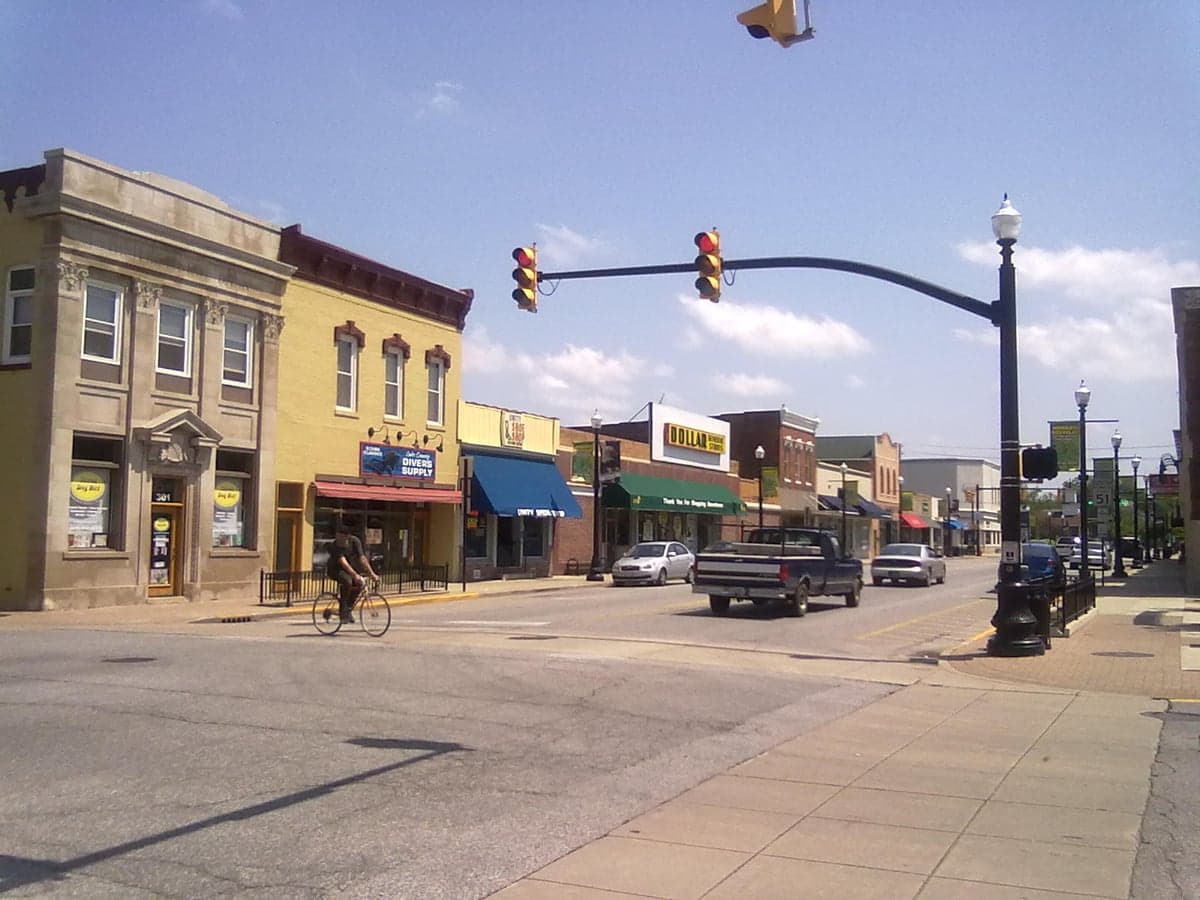
Photo: Wikipedia
Strategic Assessment of Hobart, IN
Meaningful friction. Expect exposure to either population pressure, blast zones, or natural disaster risk. Consider buying a retreat property.
What does the Strategic Assessment tell us?
Our Strategic Assessment grades tactical survivability of an area. Major population centers, military targets, fallout zones, natural disasters, and border exposure all drive risk — lower exposure means a more defensible position in a crisis.
This is heavily inspired by Joel Skousen's Strategic Relocation book. Highly recommended you checkout the book ($)What does this tell us?
Our Strategic Assessment grades tactical survivability of an area. Major population centers, military targets, fallout zones, natural disasters, and border exposure all drive risk — lower exposure means a more defensible position in a crisis.
This is heavily inspired by Joel Skousen's Strategic Relocation book. Highly recommended you checkout the book ($)Strategic Pillars

Key Distances
Regional Safe Places
Below is our recommended "safe zones" in Indiana and the surrounding area based on our strategic heuristics. For most people, it's unrealistic to live in a “safe zone” full-time due to work, family or other personal reasons. They tend to be more rural. However, many of these areas are perfect for second homes and retreat properties that double as a vacation home or even a short-term rental.

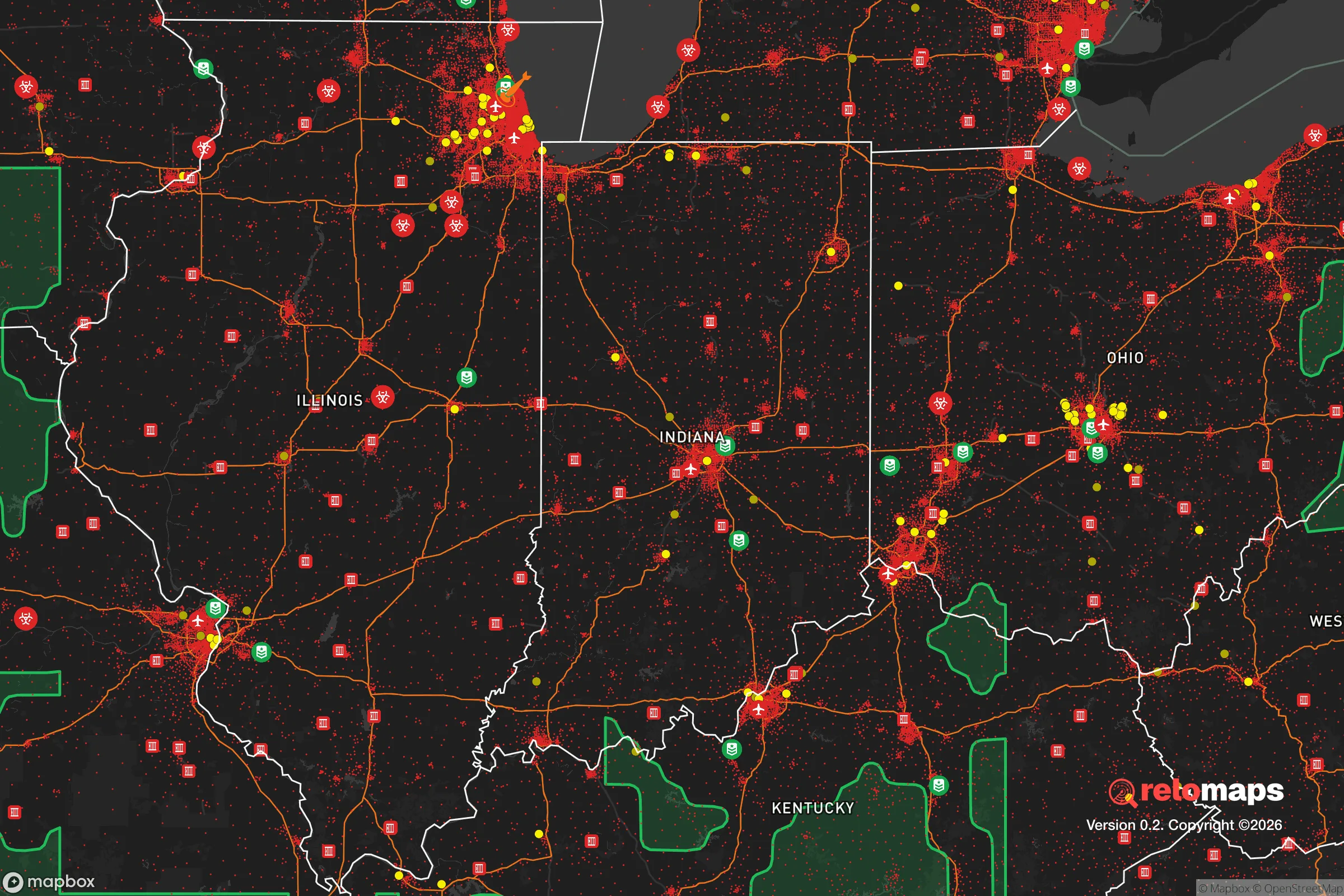


Important Note: For informational purposes only. This does not mean nothing bad ever happens in the green zones. Please use common sense. This is based on public data and modeled with AI. We tried to take a conservative approach but mistakes happen. We update this regularly as new information becomes available.
Solar Generator Recommendations
Backup power matters more here than in safer locations. We've picked three solar generators across budgets and capacity tiers — start with the budget unit if you only need a few essentials, or step up if you want to run a fridge and HVAC for days at a time.

Jackery Portable Power Station Explorer 300
Budget OptionPower on the Go: Weighing only 11 lbs, it's convenient to set up and store with book-sized foldable solar panels

BLUETTI Portable Power Station AC180
Designed for both indoor and outdoor scenarios, AC180 is highly capable as it has a robost capacity and continuous output power.

EF ECOFLOW DELTA Pro Ultra Power Station
Upgraded PickEcoFlow DELTA Pro Ultra is a whole-home energy system designed to grow with your family. Integrated with the Smart Home Panel 2, it scales to meet your evolving energy needs — keeping your home powered, intelligent, and secure through every stage of life.
We earn a commission, at no additional cost to you.
Strategic Assessment Analysis
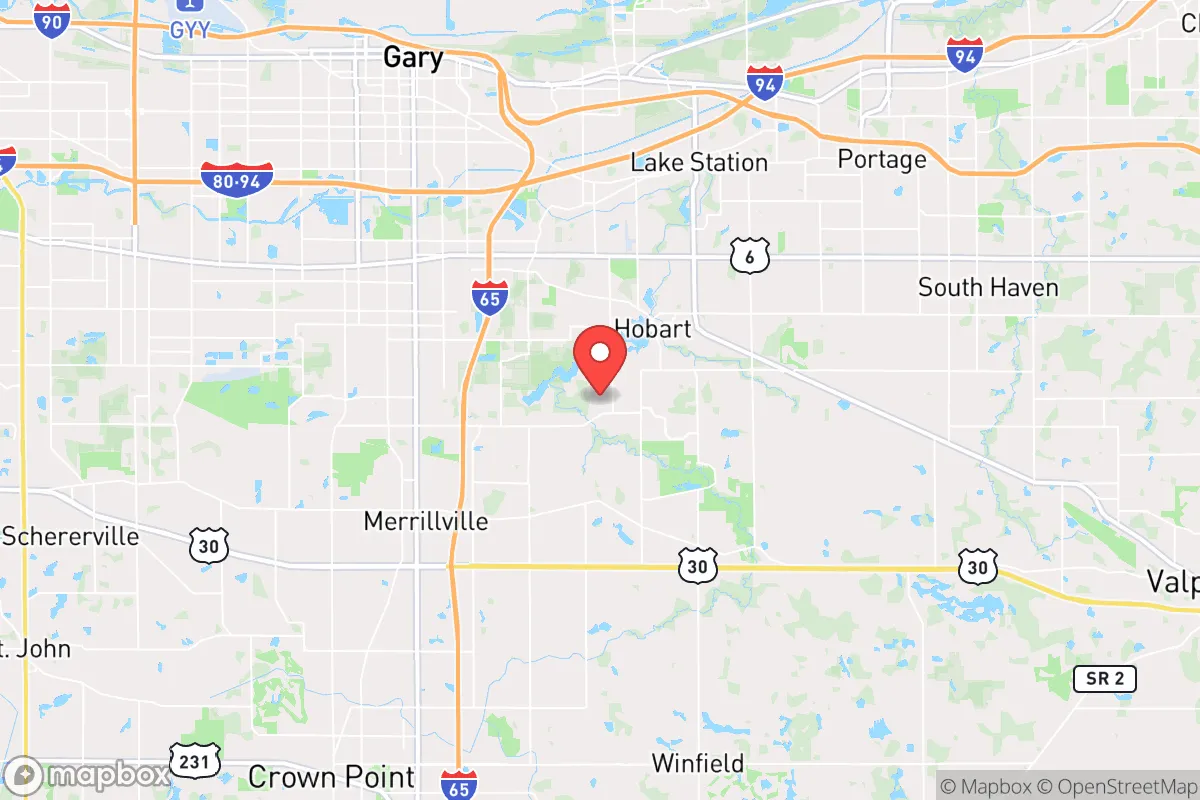
Hobart, Indiana, occupies a strategic position that balances proximity to critical Great Lakes infrastructure with enough distance from the most volatile urban cores to offer a viable relocation option for those prioritizing resilience. Located in Lake County, roughly 30 miles southeast of Chicago and 10 miles south of Lake Michigan, the city sits at a crossroads of major transport corridors—Interstate 65, U.S. Route 30, and the Indiana Toll Road—while maintaining a semi-rural character in its southern and eastern reaches. For a conservative-leaning prepper or survivalist, Hobart’s real value lies not in its amenities but in its geographic buffer: close enough to tap regional resources, far enough to avoid the immediate blast radius of a Chicago-scale event, and positioned near the Lake Michigan watershed, a critical water asset in any long-term disruption scenario.
Geographic position and natural advantages for long-term survival
Hobart’s location on the southern edge of the Lake Michigan basin gives it a natural advantage that few Midwestern towns can match. The city sits within the Calumet River watershed, with access to the Deep River and Lake George—a 700-acre natural lake that provides a freshwater reservoir independent of municipal systems. This is not a trivial detail: in a grid-down scenario, surface water access within walking distance of residential areas is a top-tier survival asset. The surrounding terrain is mostly flat, with scattered woodlots and agricultural land to the south and east, offering defensible retreat zones if urban corridors become contested. The region’s glacial till soils support small-scale farming, and the growing season—roughly 160 days—is long enough for staple crops like corn, beans, and squash. For a relocator thinking in decades, not months, Hobart’s position on the Lake Michigan flyway also means migratory waterfowl are a reliable protein source, and the lake itself provides a cooling effect that moderates extreme temperature swings. The city’s elevation—roughly 620 feet above sea level—keeps it above the floodplains of the Kankakee River to the south, reducing flood risk compared to nearby communities like Gary or Hammond.
Risks, exposures, and proximity to fallout-relevant landmarks
The most significant vulnerability for Hobart is its proximity to Chicago, a major population center that would be a primary target in any large-scale conflict or terrorist event. At 30 miles from the Loop, Hobart sits within the moderate fallout zone for a ground-level nuclear detonation in downtown Chicago—meaning lethal radiation levels could arrive within hours, not days. The prevailing westerly winds would carry fallout directly over Lake County, making Hobart a downwind hazard zone in such a scenario. Additionally, the city lies within 15 miles of the BP Whiting Refinery, one of the largest oil refineries in the Midwest, processing roughly 440,000 barrels per day. This facility is a high-value target for both state actors and domestic saboteurs; a catastrophic release or attack could render large portions of Lake County uninhabitable for weeks. The Indiana Dunes National Park, while scenic, also hosts the NIPSCO Michigan City Generating Station—a coal and gas plant that, if targeted, could cause localized grid collapse. On the civil unrest front, Hobart’s proximity to Gary (10 miles north) and Chicago means that any large-scale urban disorder—riots, supply chain disruptions, or mass migration events—will spill over into the area within hours. Interstate 65 and U.S. 30 are natural chokepoints for refugee flows, and Hobart’s police force, while competent, is not sized to handle a sudden influx of tens of thousands of displaced persons. The city’s population of roughly 50,000 means it lacks the critical mass to maintain order without state or federal assistance in a prolonged crisis.
Practical resilience for a relocator: food, water, energy, and defensibility
For a relocator serious about self-sufficiency, Hobart offers a mixed bag. The city’s water supply comes from Lake Michigan via the Indiana American Water system, which is vulnerable to both cyberattack and physical sabotage. A prudent prepper should assume municipal water will fail within 72 hours of a major event and plan accordingly—wells are rare in the urban core but feasible in the southern rural tracts near the Lake County line. Rainwater catchment is legal in Indiana, and annual precipitation averages 38 inches, enough to support household needs with proper storage. Food resilience is stronger: Lake County has over 200 farms within a 20-mile radius, and the Hobart Farmers Market operates seasonally, but the real value is in the agricultural land to the south and east. Parcels in Ross and Union Townships are still affordable (under $10,000 per acre as of 2025) and offer loam soils suitable for market gardening. Energy is a weak point—the grid is served by NIPSCO, which relies on a mix of coal, natural gas, and renewables, but the region has experienced multiple multi-day outages from winter storms (notably the 2022 Christmas blizzard). Solar is viable, with roughly 4.5 peak sun hours per day, but net metering policies in Indiana are less favorable than in neighboring states. A generator with a 500-gallon propane tank is a baseline recommendation. Defensibility is moderate: Hobart’s layout is a mix of suburban sprawl and older grid-pattern neighborhoods, with limited natural chokepoints. The Deep River and Lake George provide a natural barrier to the north and east, but the flat terrain offers little cover for a perimeter defense. The city’s police department has about 60 sworn officers, and the Lake County Sheriff’s Office provides backup, but response times in the rural fringe can exceed 20 minutes. For a relocator, the best strategy is to buy on the southern edge of town, near the Lake County line, where lot sizes increase and neighbors are fewer.
The overall strategic picture for Hobart is one of calculated trade-offs. It is not a remote redoubt—you will not disappear into the woods here. But it is a defensible staging ground with access to the most critical survival resource in the Midwest: Lake Michigan’s freshwater. The risks from Chicago and the Whiting Refinery are real and must be factored into any relocation decision, but they are not disqualifying if you are willing to invest in fallout sheltering and a 72-hour evacuation plan. For the conservative prepper who wants to stay within a day’s drive of family in the Chicago suburbs while maintaining a viable long-term retreat, Hobart offers a middle path. It is not the end of the world—but it might be a place to wait it out.

* Values derived from national, state, county, city and local statistics and may differ in a specific area. Last updated: 2026-04-22T10:53:03.000Z
Narrative content on this page is AI-generated and may contain mistakes. Verify any details that matter before acting on them.
ReloMaps may earn a commission from affiliate links at no extra cost to you.

