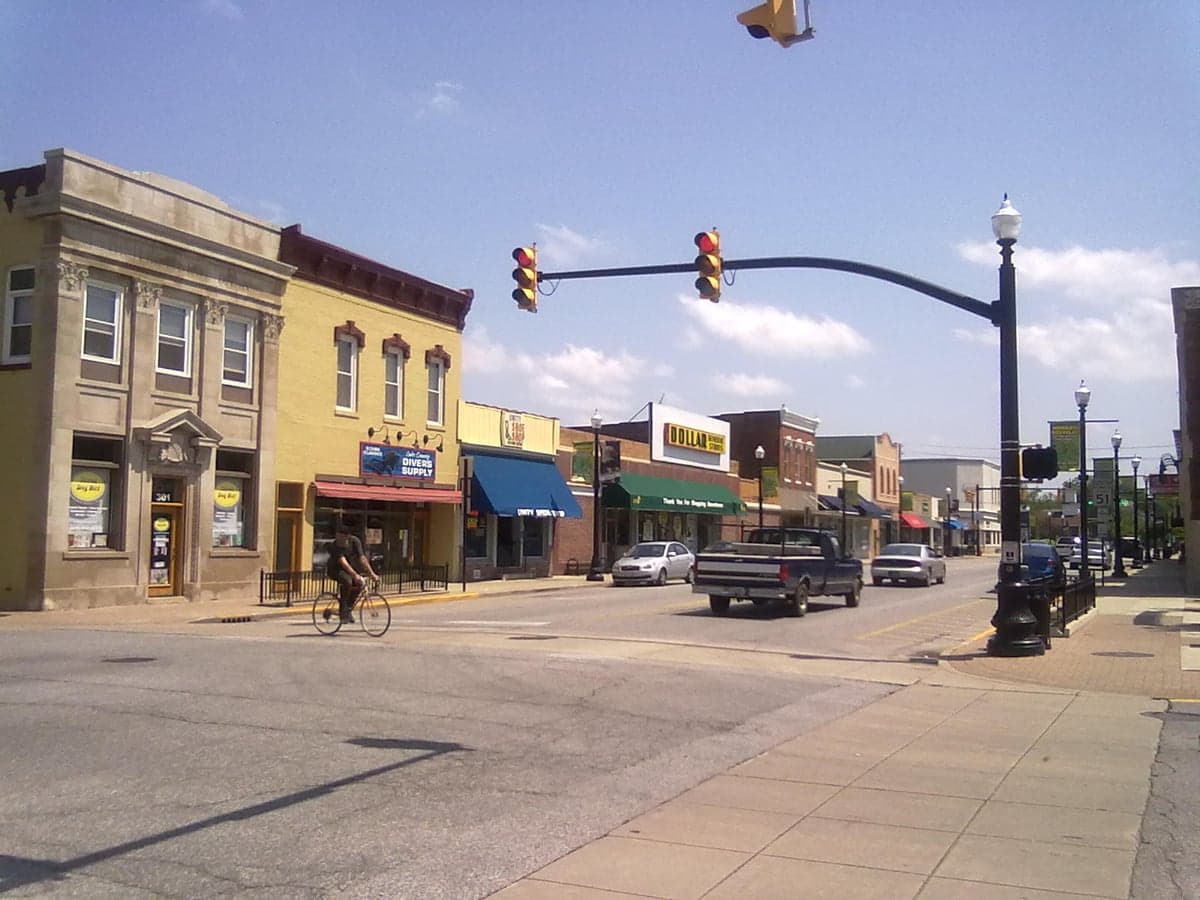
Photo: Wikipedia
Political ClimatePolitical Climate in Hobart, IN
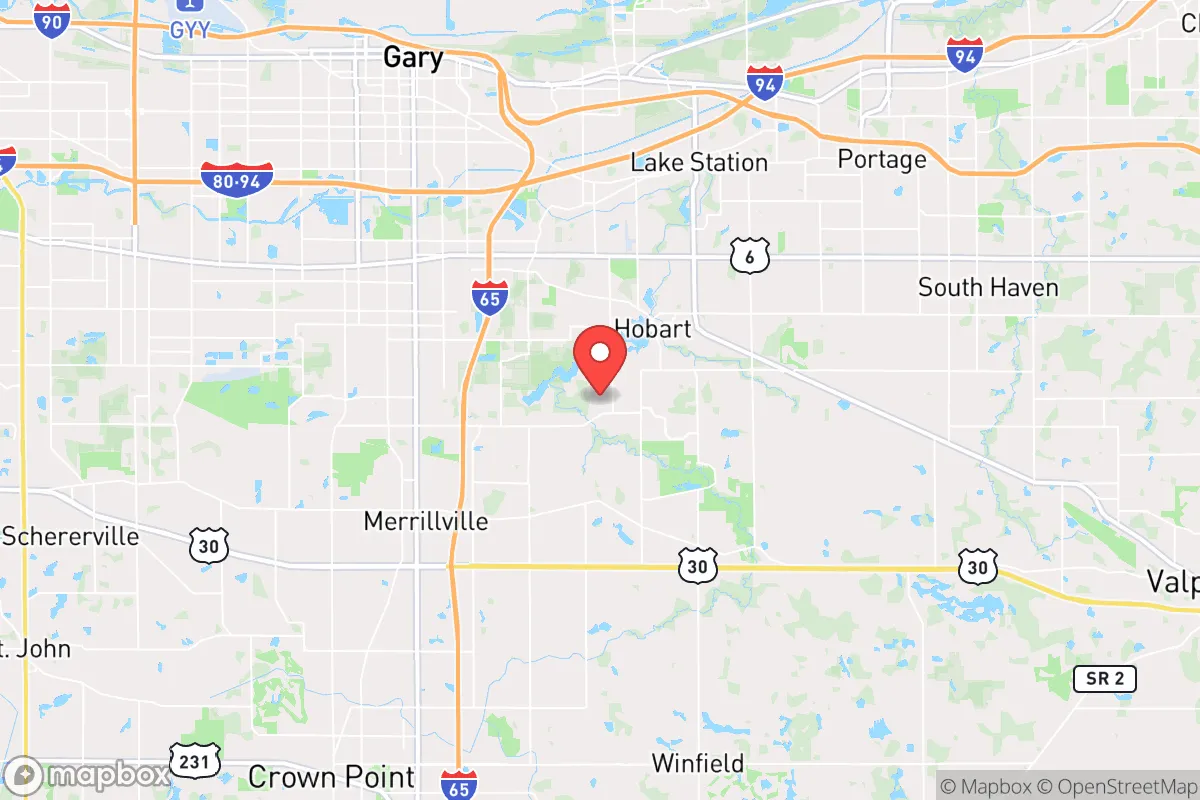
District shown is the primary district for this city’s centroid. Cities may span multiple districts.
Local Political AnalysisPolitical Analysis of Hobart, IN
Hobart, Indiana, sits in a politically interesting spot, leaning slightly Democratic with a Cook PVI of D+1, but don’t let that number fool you—this town has a strong conservative undercurrent that’s been fighting to hold its ground. For decades, Hobart was a solidly blue-collar, union-heavy community where folks valued hard work, low taxes, and being left alone by the government. But over the last ten to fifteen years, you’ve seen a real shift: the old-school Democrats who used to dominate local politics have been replaced by a more progressive crowd, and that’s got a lot of longtime residents worried about government overreach creeping into everyday life. The trajectory here is a slow but steady move leftward, especially in school board decisions and zoning policies, which feels like a departure from the “mind your own business” ethos that built this place.
How it compares
If you look at the surrounding towns, the contrast is stark. Head west to Crown Point or south to St. John, and you’re in deep red territory—those communities vote Republican by wide margins and have kept their local governments focused on low regulation and personal freedom. Even Valparaiso, just a few miles north, leans more conservative than Hobart, especially on fiscal issues. Hobart’s D+1 rating puts it in a weird middle ground: it’s not as liberal as Gary or Hammond, where progressive policies have really taken hold, but it’s definitely more left-leaning than its neighbors. That means you get a mix of old-school values clashing with newer, more intrusive ideas—like stricter building codes and higher property taxes to fund pet projects. For someone who values limited government, it’s a bit of a battleground, and you can feel the tension at city council meetings.
What this means for residents
For the average person living here, the political climate translates into a few real-world headaches. First, there’s the constant push for more regulations—whether it’s on short-term rentals, lawn care, or even how you can use your own backyard. It’s the kind of stuff that makes you feel like the government is getting too cozy with telling you how to live. Second, property taxes have been creeping up, and a lot of that money goes to initiatives that don’t sit well with conservative folks, like diversity programs in schools or environmental mandates that add costs to small businesses. The silver lining is that Hobart still has a vocal group of residents who show up to push back, and local elections are often decided by just a few hundred votes. So if you’re the type who wants to keep government out of your wallet and your personal life, your voice can still matter here—but you’ve got to stay engaged.
Culturally, Hobart has a few distinctions that set it apart from its more liberal neighbors. The town still hosts a popular annual Lake County Fair and a strong tradition of volunteer fire departments and church-based community events, which feel like holdovers from a simpler time. But there’s been a noticeable push in recent years to adopt progressive policies on things like affordable housing mandates and public art projects that some see as unnecessary government spending. The long-term outlook? If the trend continues, Hobart could drift further left, especially as younger families move in from Chicago suburbs seeking cheaper homes. But the conservative backbone here is tough, and many locals are betting that a return to common-sense, limited-government principles will win out in the end—if enough people show up to vote.

State Political ClimatePolitical Climate in Indiana
State Political AnalysisPolitical Environment in the State
Indiana has been a reliably Republican state for decades, but don't let the "red" label fool you — it's a deeply divided place where the conservative majority is concentrated in the suburbs and rural areas, while a few urban strongholds punch well above their weight. Over the last 20 years, the state has shifted from a solid +20-point GOP lean in presidential races to a still-safe but narrower +11-point margin in 2024, driven largely by the explosive growth of the Indianapolis metro and the slow but steady leftward drift of college towns like Bloomington and West Lafayette. If you're looking for a state where conservative values still hold the levers of power but are facing a real demographic headwind, Indiana is a fascinating case study.
Urban vs. rural divide
The political map of Indiana is a classic tale of two Indys — the capital city and its suburbs versus everything else. Marion County (Indianapolis) is the state's Democratic anchor, voting for Biden by 26 points in 2020 and Harris by 23 in 2024, but that blue island is surrounded by a sea of red. The donut counties — Hamilton, Hendricks, Johnson, and Boone — are among the fastest-growing and most Republican in the state. Hamilton County, home to Carmel and Fishers, voted +28 for Trump in 2024, a margin that actually widened from 2020 as more conservative families fled the city proper. Meanwhile, Lake County in the northwest corner (Gary, Hammond) is the other Democratic stronghold, voting +25 for Harris, but its population has been stagnant or declining for decades, limiting its statewide influence. The real story is the rural-urban chasm: counties like Pulaski, Newton, and Switzerland routinely vote 75-80% Republican, while the college towns of Monroe County (Bloomington) and Tippecanoe County (West Lafayette) are reliably blue, with Monroe going +30 for Harris. The suburbs are the battleground — places like Noblesville, Zionsville, and Greenwood are where the GOP's future is being decided, and so far, they're holding firm.
Policy environment
Indiana's policy environment is a mixed bag for conservatives. On the plus side, the state has a flat income tax rate of 3.05% (down from 3.23% in 2023, with a scheduled phase-down to 2.9% by 2027), no estate tax, and a right-to-work law that has made it a regional hub for manufacturing and logistics. Property taxes are capped at 1% of assessed value for owner-occupied homes, which keeps housing costs manageable. On education, Indiana has a robust school choice program — the Choice Scholarship Program is one of the largest in the nation, with over 60,000 students using vouchers in 2024. The state also passed a parental bill of rights (HB 1608) in 2023, requiring schools to notify parents of any changes to a student's health or well-being, including gender identity. However, the state's election laws are a point of contention: Indiana has strict voter ID requirements and a 28-day residency requirement for new voters, which some see as necessary security and others as suppression. The regulatory environment is generally business-friendly, with no state-level minimum wage above the federal $7.25 and a limited government approach to zoning in most counties. The downside? Healthcare is a weak spot — Indiana has some of the highest hospital costs in the Midwest, and the state's refusal to expand Medicaid under the ACA (it uses a waiver program called HIP 2.0) leaves a coverage gap for about 200,000 low-income adults.
Trajectory & freedom
Indiana has been on a clear trajectory of expanding personal freedom in several key areas, but with some worrying caveats. On gun rights, the state passed constitutional carry (HB 1296) in 2022, allowing law-abiding citizens to carry a handgun without a permit — a major win for Second Amendment advocates. On parental rights, the 2023 HB 1608 requires schools to get parental consent before administering any health-related surveys or providing mental health services, and it bans instruction on human sexuality in grades K-3. The state also passed a near-total abortion ban (SB 1) in 2022, with exceptions only for rape, incest, and lethal fetal anomalies, which went into effect in 2023 after a court battle. However, there are signs of backsliding: Indianapolis Mayor Joe Hogsett has pushed for local gun control measures, including a "red flag" law and safe storage requirements, which the state legislature has so far blocked but could resurface. On medical freedom, Indiana was one of the first states to ban COVID-19 vaccine mandates for state employees and contractors (HB 1401 in 2023), but the state's public health emergency powers remain broad, and there's no constitutional amendment limiting them. The biggest freedom concern for conservatives is property rights: Indiana's eminent domain laws are relatively weak, and the state has seen controversial takings for private development, like the I-69 extension project that displaced dozens of landowners in the southern part of the state. Overall, Indiana is trending more free on guns and education, but the fight over local control and property rights is far from over.
Civil unrest & political movements
Indiana has seen its share of political flashpoints, but nothing on the scale of Portland or Seattle. The 2020 George Floyd protests in Indianapolis were significant — several nights of rioting and looting downtown, with damage to the City-County Building and the Indiana Statehouse, leading to a heavy National Guard presence. That event galvanized both the Black Lives Matter movement in the state and a strong law-and-order backlash that helped Republicans sweep the 2020 and 2022 elections. On the right, the Indiana Firearms Coalition is one of the most active grassroots groups, successfully lobbying for constitutional carry and fighting local gun ordinances. The Indiana Family Institute (affiliated with Focus on the Family) has been a major force in education policy, pushing for school choice and parental rights. Immigration politics are less heated than in border states, but Elkhart County (home to a large Amish and Mennonite population) has seen tensions over a growing Hispanic community, with local officials debating sanctuary policies — no Indiana county has declared itself a sanctuary, but the issue flares up periodically. Election integrity was a hot topic after 2020, with Attorney General Todd Rokita launching a "election integrity unit" in 2022 that investigated a handful of cases but found no widespread fraud. The most visible political movement in recent years has been the school board wars, particularly in Hamilton County and Johnson County, where conservative parents have packed meetings over critical race theory and mask mandates. A new resident would notice the ubiquitous "Don't Tread on Me" flags in rural areas and the occasional "Fuck Biden" banners on I-65, but overall, the state is more politically engaged than volatile.
Projection
Over the next 5-10 years, Indiana is likely to remain Republican but with a narrowing margin. The Indianapolis metro is growing fast — Hamilton County alone added 50,000 people between 2020 and 2025 — and while those new residents are mostly conservative families, a significant chunk are younger professionals from blue states who bring more moderate views on social issues. The suburbs of Indianapolis are the key battleground: if places like Carmel, Fishers, and Zionsville start trending left, the state could become competitive in a decade. Conversely, the rural counties are emptying out — 60 of Indiana's 92 counties lost population between 2020 and 2024 — which means the GOP's base is shrinking even as its margins in those areas grow. The state's in-migration is overwhelmingly from Illinois, and those transplants tend to be more conservative than the average Hoosier, but they also bring a "live and let live" attitude that could soften the state's social conservatism. On policy, expect continued fights over school choice expansion (the voucher program is likely to be uncapped), property tax reform (rural homeowners are feeling the pinch from rising assessments), and local preemption (the state will likely continue to block Indianapolis from enacting its own gun and housing ordinances). The biggest wildcard is healthcare — if the state's hospital monopoly problem isn't addressed, it could become a drag on economic growth. A new resident moving in now should expect a state that is solidly red but not static, where conservative values still dominate the legislature but the culture is slowly shifting in the suburbs.
For a conservative individual or family considering a move, Indiana offers a strong policy foundation — low taxes, school choice, gun rights, and parental control over education — but it's not a libertarian paradise. The state government is active in preempting local control, which cuts both ways (good for blocking Indianapolis gun laws, bad for rural communities wanting to opt out of state mandates). The biggest practical takeaway is to choose your county carefully: Hamilton County (Carmel, Fishers, Noblesville) is the gold standard for conservative suburban living, with top-rated schools and a booming economy, while Lake County (Gary, Hammond) is best avoided if you want a red environment. The rural counties offer the most freedom from government overreach, but they come with fewer services and longer drives to hospitals and grocery stores. Indiana is a state where your vote still matters at the local level — school board and county commissioner races are where the real action is — and where the political trajectory is still in your favor, but you'll need to stay engaged to keep it that way.
* Values derived from national, state, county, city and local statistics and may differ in a specific area. Last updated: 2026-04-22T10:53:03.000Z
Narrative content on this page is AI-generated and may contain mistakes. Verify any details that matter before acting on them.
ReloMaps may earn a commission from affiliate links at no extra cost to you.

