Photo: Wikipedia
Demographics of Holdrege, NE
Affluence Level in Holdrege, NE
A below-average socioeconomic profile. Incomes, home values, and educational attainment trail the U.S., with higher poverty and unemployment.
People of Holdrege, NE
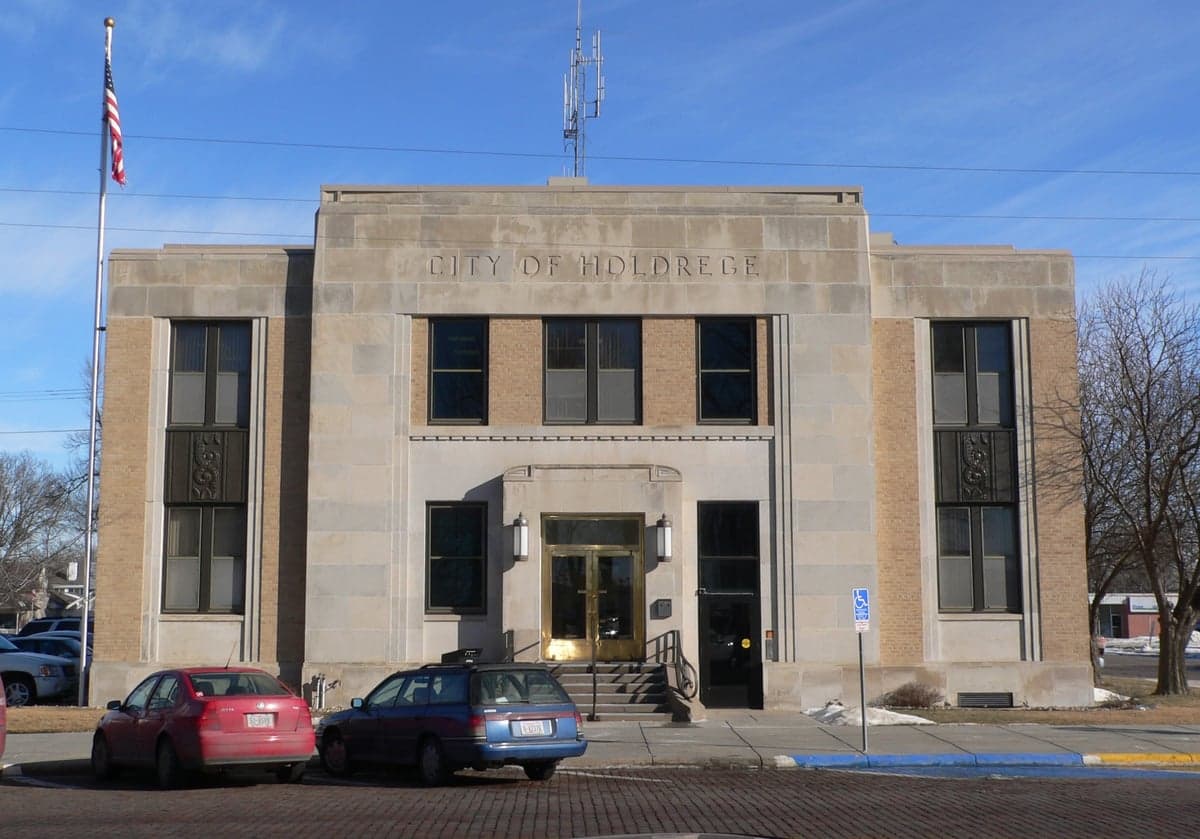
Holdrege, Nebraska, is a predominantly white, family-oriented community of 5,503 residents, characterized by a strong agricultural and manufacturing heritage and a notably low foreign-born population of 2.8%. The city’s identity is rooted in its role as a regional trade and railroad hub, with a population that is 86.4% white and 9.0% Hispanic, reflecting a modest but growing diversity. Its residents are concentrated in established neighborhoods like the historic downtown district and newer subdivisions such as Westside Addition, where a sense of stability and civic pride is palpable. For conservative-leaning families and individuals, Holdrege represents a place where traditional values, community involvement, and a slower pace of life remain central.
How the city was settled and grew
Holdrege was founded in 1883 as a railroad town on the Burlington and Missouri River Railroad line, a development that immediately drew a wave of settlers. The original population was overwhelmingly of Northern European descent, primarily German, Swedish, and Irish immigrants, who were attracted by the promise of fertile farmland and employment with the railroad. The city’s early growth was anchored by the construction of the Phelps County Courthouse in 1885, which solidified its role as the county seat. The first major wave of settlement concentrated in the Original Townsite, the area around the railroad depot and along East Avenue, where workers and merchants built modest homes and storefronts. A second wave, driven by the expansion of agriculture and the establishment of the Holdrege Creamery and the Nebraska State Fairgrounds (briefly located here), saw the development of the South Side neighborhood, where many German and Swedish families built larger homes on spacious lots. By the early 20th century, the city’s population had grown to over 2,000, with a distinct ethnic enclave of Swedish immigrants forming in the Swede Hollow area, a low-lying section near the railroad tracks where many first-generation families lived.
Modern era (post-1965)
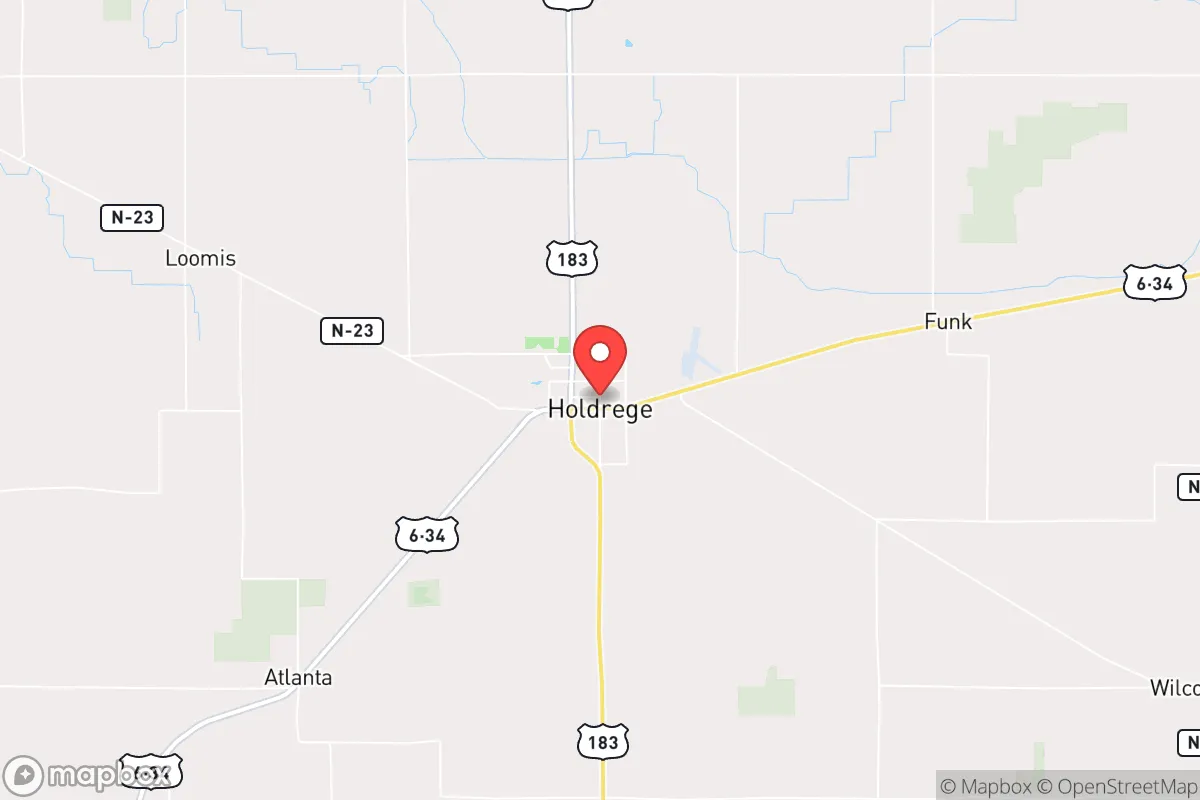
Following the 1965 Immigration and Nationality Act, Holdrege did not experience the large-scale demographic shifts seen in larger cities. The post-1965 period was instead defined by domestic in-migration from rural Nebraska and the Great Plains, as families moved to Holdrege for jobs in manufacturing and agribusiness. The opening of the Becton Dickinson medical device plant in the 1970s brought a small influx of skilled workers, many of whom settled in the Westside Addition, a planned subdivision developed in the 1980s with larger, newer homes. The Hispanic population, now 9.0%, began to grow noticeably in the 1990s, driven by employment in meatpacking and agricultural processing plants in the broader region, though most Hispanic families in Holdrege live in the East Side neighborhood, near the industrial corridor along Highway 183. The Black population remains very small at 1.2%, and East/Southeast Asian residents account for just 0.1%, with no significant Indian subcontinent population. The city’s foreign-born share of 2.8% is well below the national average, and the population has remained remarkably stable, with only a slight decline from a peak of 5,636 in 2000.
The future
Holdrege’s population is projected to remain stable or experience a slight decline over the next 10-20 years, mirroring trends across rural Nebraska. The city is not homogenizing into a single identity but is instead seeing a gradual, modest increase in its Hispanic population, which is likely to continue as younger families move in for affordable housing and jobs in manufacturing and healthcare. The white population, while still the overwhelming majority, is aging, and the city’s college-educated share of 25.2% is below the state average, suggesting limited in-migration of highly skilled workers. Newer subdivisions like Prairie View Estates, developed in the 2010s, are attracting a mix of young families and retirees, but the city is not experiencing the tribalization into distinct ethnic enclaves seen in larger metros. Instead, the Hispanic community is slowly integrating into existing neighborhoods, particularly on the East Side, while the historic Swedish and German enclaves have largely assimilated. The next decade will likely see Holdrege remain a predominantly white, conservative-leaning community with a slowly diversifying population, driven by Hispanic growth and a stable but aging white base.
For someone moving in now, Holdrege is becoming a place where traditional community values and a low cost of living are preserved, but with a slowly diversifying population that is still overwhelmingly white and native-born. The city offers a stable, family-friendly environment with a strong sense of local identity, but limited demographic change means that newcomers from outside the region may find a relatively homogeneous social landscape. The future points to a gradual, modest increase in Hispanic residents, but no major shifts in the city’s fundamental character as a quiet, agricultural and manufacturing hub.

* Values derived from national, state, county, city and local statistics and may differ in a specific area. Last updated: 2026-05-03T20:28:44.000Z
Narrative content on this page is AI-generated and may contain mistakes. Verify any details that matter before acting on them.
ReloMaps may earn a commission from affiliate links at no extra cost to you.

