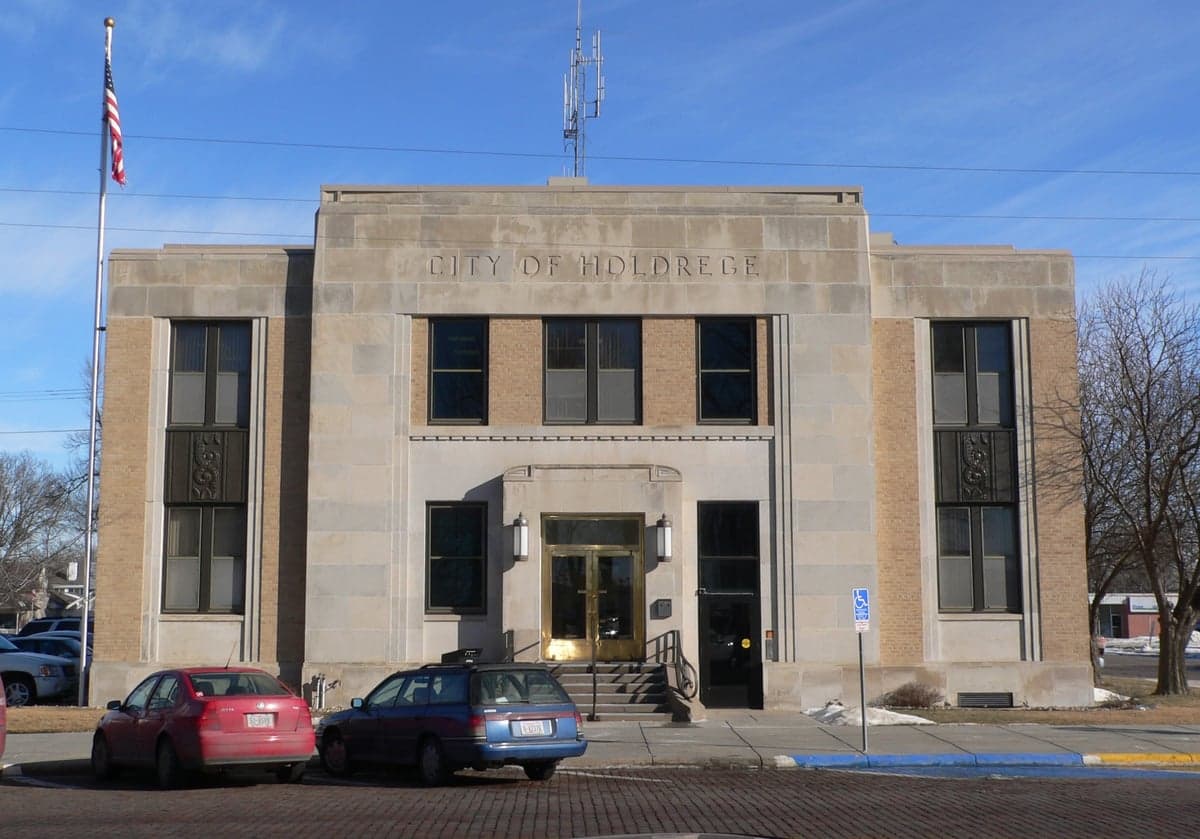
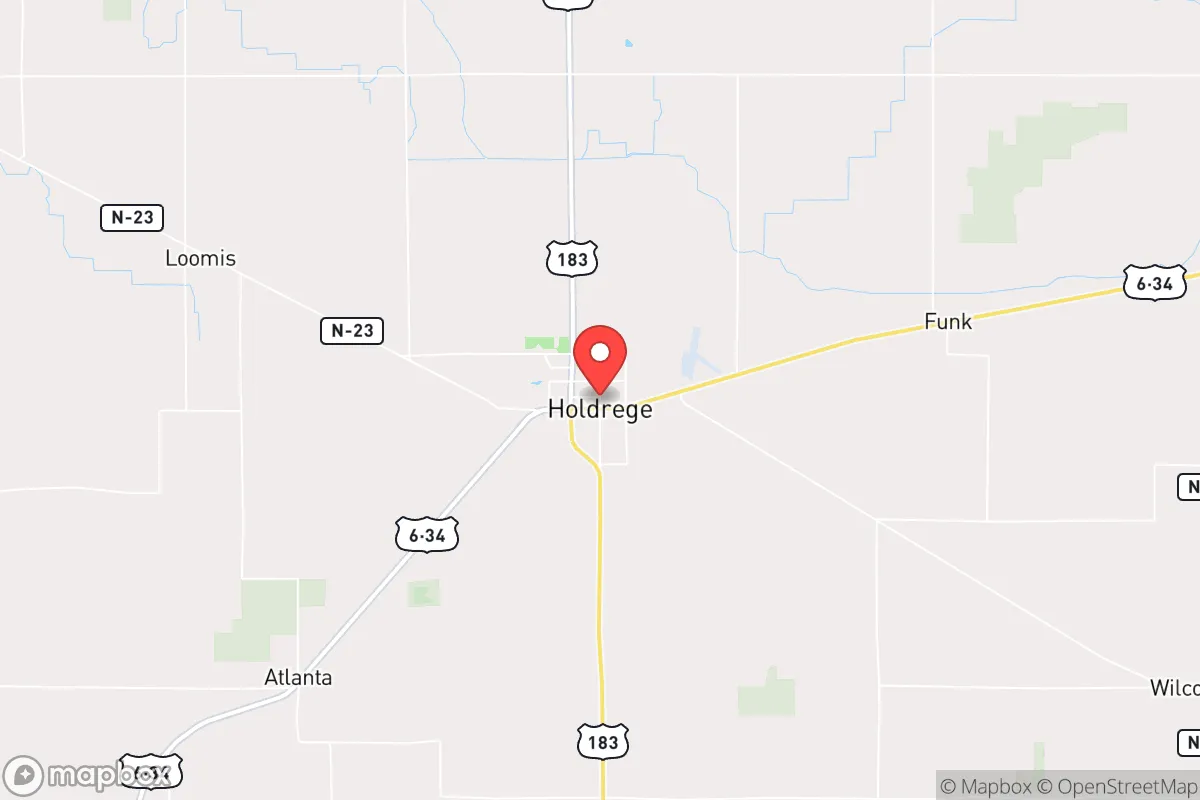
Photo: Wikipedia
Political ClimatePolitical Climate in Holdrege, NE
District shown is the primary district for this city’s centroid. Cities may span multiple districts.
Local Political AnalysisPolitical Analysis of Holdrege, NE
Holdrege, Nebraska, is about as solidly conservative as small-town America gets, and that’s been the case for as long as anyone around here can remember. The Cook PVI sits at R+27, which puts it deep in the red, and you see that in every local election and school board race. The political lean here isn’t just Republican—it’s a deep-seated belief in limited government, personal responsibility, and keeping Washington and Lincoln out of our day-to-day lives. That’s the foundation, and it hasn’t budged much, even as the coasts have gone off the rails.
How it compares
If you drive 30 miles east to Kearney, you’ll find a slightly more moderate vibe—still conservative, but with a bigger university presence (UNK) that brings in some younger, more progressive-leaning folks. Holdrege doesn’t have that. We’re a farming and manufacturing town, and the values here are straight out of the heartland. Compare us to Lincoln or Omaha, and it’s night and day. Those cities have seen a real shift toward progressive policies—higher taxes, more regulations, and a general attitude that government knows best. Here in Phelps County, we’ve mostly avoided that. The county commission and city council are full of folks who believe in low taxes, Second Amendment rights, and letting people live their lives without a bunch of red tape. That’s not changing anytime soon.
What this means for residents
For someone moving here, the biggest takeaway is that your personal freedoms are respected. You won’t see mask mandates, business shutdowns, or heavy-handed zoning rules like you might in bigger cities. The local government’s philosophy is basically: “If it’s not broken, don’t fix it, and definitely don’t regulate it.” That’s a breath of fresh air if you’re coming from a state where every little thing requires a permit or a fee. The downside? If you’re hoping for a more progressive, diverse political scene, you’ll be disappointed. There’s not much of a push for change here, and frankly, most folks see that as a good thing. The school board, for example, has kept curriculum focused on basics and hasn’t bought into the critical race theory or gender ideology stuff you hear about elsewhere. That’s a big reason families move here.
That said, there are some subtle shifts that raise an eyebrow. The younger generation, especially those who go off to college and come back, sometimes bring back ideas about “sustainability” or “equity” that sound an awful lot like government overreach in disguise. A few years back, there was a push to add more bike lanes and “green” initiatives downtown—nothing major, but it felt like a foot in the door for more regulation. Most of that got shot down, but you have to stay vigilant. The long-term outlook is still solidly conservative, but it’s not automatic. If you value a place where your rights aren’t up for debate and the government stays out of your business, Holdrege is one of the last strongholds. Just keep an eye on the school board meetings and city council agendas—that’s where the real fights happen, and they’re worth showing up for.

State Political ClimatePolitical Climate in Nebraska
State Political AnalysisPolitical Environment in the State
Nebraska is a reliably conservative state, but it’s not the monolith many outsiders assume. The state has voted Republican in every presidential election since 1968, and Donald Trump carried it by 19 points in 2024. However, the real story is the growing tension between the deep-red rural expanse and the increasingly blue urban islands of Omaha and Lincoln. Over the last 20 years, the state has shifted from a solid, quiet conservative stronghold to a place where the cultural and political battles are fought county by county, with the rural areas digging in as the cities drift left.
Urban vs. rural divide
The political map of Nebraska is a textbook case of the urban-rural split. The state’s Second Congressional District, which covers most of Omaha and its suburbs, is the only competitive district in the state—it flipped to Joe Biden in 2020 and then back to Trump in 2024, but only by a razor-thin margin. Lincoln, home to the University of Nebraska, is a blue dot in a red sea, consistently voting Democratic in statewide races. Meanwhile, the rest of the state is deeply Republican. Scottsbluff in the Panhandle, Norfolk in the northeast, and Kearney in central Nebraska all vote Republican by 30 points or more. The rural counties along the Platte River and the Sandhills are among the most conservative in the nation, with voter turnout driven by agriculture, gun rights, and opposition to federal overreach. The divide isn’t just about party—it’s about worldview. In Omaha, you’ll find tech workers and young professionals who lean left on social issues; in the small towns, the focus is on local control, low taxes, and traditional values.
Policy environment
Nebraska’s policy environment is broadly conservative, but with some notable wrinkles. The state has a unicameral, nonpartisan legislature, which sounds good on paper but can lead to unpredictable outcomes. On taxes, Nebraska is a mixed bag: there is no state tax on Social Security benefits, which is a win for retirees, but the state income tax rate tops out at 6.84%, and property taxes are among the highest in the region—a constant source of frustration for homeowners in Grand Island and Fremont. The state has no sales tax on groceries or prescription drugs, which helps. On education, Nebraska has a robust school choice movement, with a new law in 2025 expanding tax-credit scholarships for private and religious schools, a big win for parents in Bellevue and Papillion who want alternatives to the public system. Healthcare policy is more moderate: the state expanded Medicaid under the Affordable Care Act in 2020, a move that rankled some conservatives but has kept rural hospitals afloat. Election laws are solid—voter ID is required, and the state has clean, secure elections with no widespread fraud issues. However, the nonpartisan legislature means that sometimes a moderate Republican or a conservative Democrat can hold the balance of power, which keeps things from swinging too far in either direction.
Trajectory & freedom
On the freedom front, Nebraska has been a mixed bag over the last five years, but the trend is cautiously positive. The biggest win for personal liberty was the passage of LB 77 in 2023, which eliminated the requirement for a permit to carry a concealed handgun—constitutional carry is now the law of the land. This was a major victory for gun rights advocates in places like Columbus and North Platte. On parental rights, the legislature passed LB 1089 in 2024, which requires schools to notify parents of any changes to a student’s health or well-being, including gender identity discussions—a direct response to the overreach seen in other states. However, there have been setbacks. In 2020, the state’s governor, Pete Ricketts, imposed strict lockdowns that many conservatives felt were excessive, and the state’s emergency powers remain a concern. On medical autonomy, Nebraska has not gone as far as some states in restricting vaccine mandates, but it did pass a law in 2023 banning COVID-19 vaccine mandates for state employees. Property rights are generally strong, but the state’s high property taxes remain a quiet erosion of freedom for landowners. Overall, the trajectory is toward more freedom on guns and parental rights, but the tax burden and lingering government overreach from the pandemic era are still issues.
Civil unrest & political movements
Nebraska is not a hotbed of civil unrest, but it has seen its share of political flashpoints. The most visible was the 2020 George Floyd protests in Omaha, which turned violent with looting and fires in the downtown area—a shock to a state that prides itself on being polite and orderly. Since then, the activist left has been more organized in Omaha and Lincoln, pushing for defunding the police and racial equity policies, but they have little influence outside those cities. On the right, the Nebraska Republican Party has been energized by the fight over the state’s electoral college system—specifically, the push to switch from the current district-based system to a winner-take-all model. This has been a major grassroots issue, with activists in Hastings and Beatrice arguing that the current system dilutes rural votes. Immigration politics are also a flashpoint: in 2023, the legislature passed LB 535, which requires local law enforcement to cooperate with federal immigration authorities, a direct response to sanctuary city movements elsewhere. There have been no major election integrity controversies in Nebraska, but the state’s nonpartisan legislature means that some bills on voter access have been fought over in committee. A new resident would notice that political activism is more subdued than in coastal states, but the passion is real in the small towns and rural areas.
Projection
Over the next 5-10 years, Nebraska is likely to remain a red state, but the urban-rural divide will deepen. The Omaha metro area is growing fast, driven by tech and insurance jobs, and that growth is bringing in younger, more diverse voters who lean left. The Second District will remain competitive, and if the state ever switches to winner-take-all electoral votes, that could shift national attention. Meanwhile, the rural areas are aging and losing population, which could erode the Republican base over time. However, the state’s conservative cultural and policy foundations are strong. The parental rights movement and school choice expansion will likely continue, and the gun rights gains are probably locked in. The biggest wildcard is taxes: if property taxes continue to rise, it could spark a backlash that leads to a more aggressive tax-cutting agenda. For someone moving in now, expect a state that is still fundamentally conservative, but where the political battles are increasingly fought over local control and cultural issues rather than economics. The cities will get bluer, the countryside will stay red, and the legislature will continue to be a fascinating, unpredictable arena.
Bottom line for a new resident: If you’re moving to Nebraska for the conservative values and low cost of living, you’ll find a state that largely delivers—especially if you settle in the suburbs of Omaha like Elkhorn or Gretna, or in a smaller city like Fremont. You’ll have constitutional carry, strong parental rights, and a government that mostly stays out of your business. But keep an eye on property taxes and the slow creep of urban progressive politics into the state’s largest cities. Nebraska is still a good bet for freedom, but it’s not immune to the national trends. Choose your county wisely, and you’ll be fine.
* Values derived from national, state, county, city and local statistics and may differ in a specific area. Last updated: 2026-05-03T20:28:44.000Z
Narrative content on this page is AI-generated and may contain mistakes. Verify any details that matter before acting on them.
ReloMaps may earn a commission from affiliate links at no extra cost to you.

