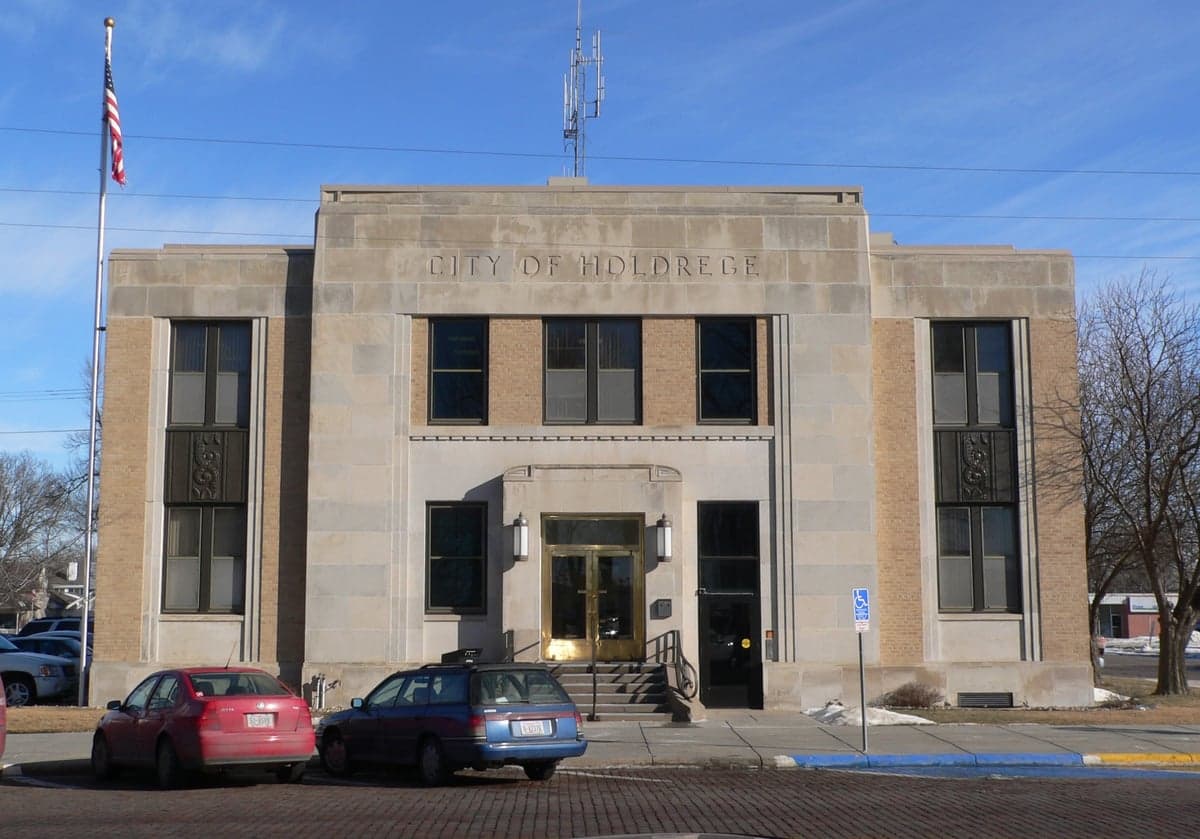
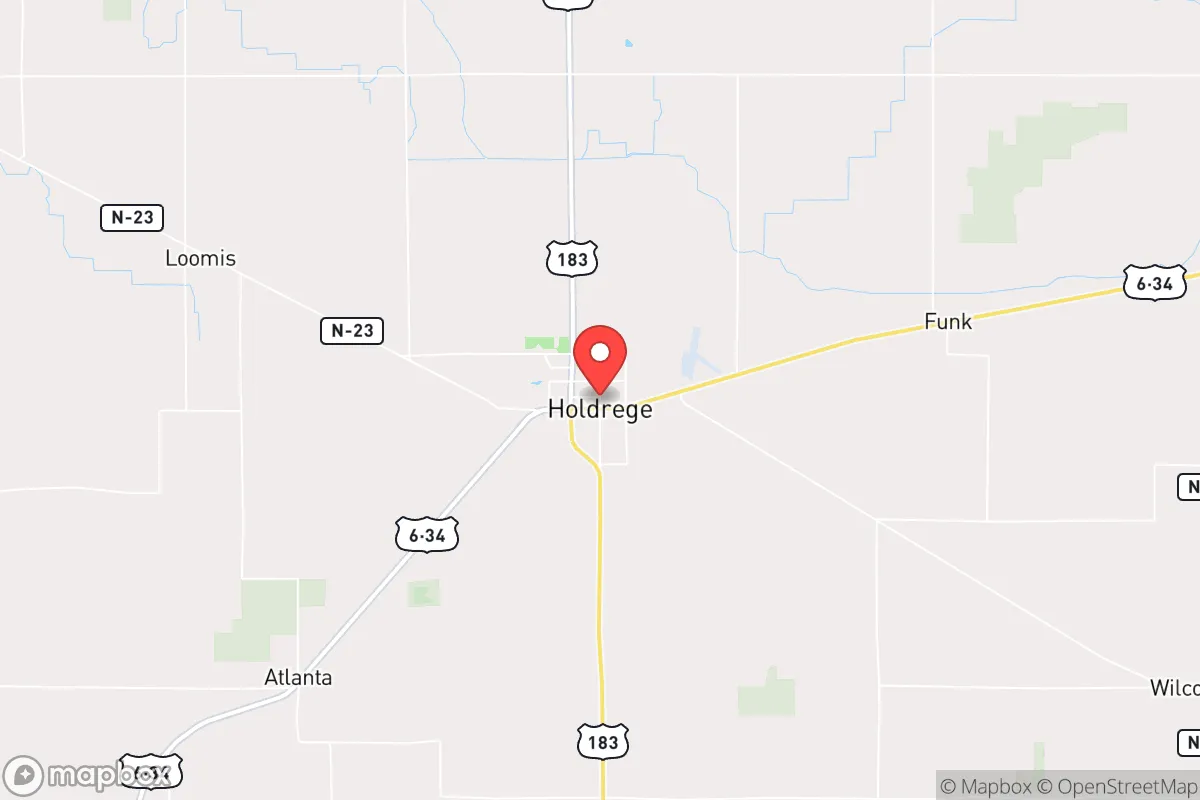
Photo: Wikipedia
Personal Sovereignty in Holdrege, NE
Moderate friction. Expect trade-offs in some aspect of personal liberty and independence.
What does Personal Sovereignty tell us?
Personal Sovereignty measures your capacity for self-reliance and independence with minimal government friction. Higher scores mean fewer barriers between you and the way you want to live... but it assumes you have the space you need and good neighbors.
What does this tell us?
Personal Sovereignty measures your capacity for self-reliance and independence with minimal government friction. Higher scores mean fewer barriers between you and the way you want to live... but it assumes you have the space you need and good neighbors.
State Policy
Energy independence: Importer (35% of energy produced in-state)
Personal Liberty
Homesteading

Personal Liberty Analysis
Holdrege, Nebraska, offers a personal sovereignty environment that stands apart from the coastal and urban centers where government overreach has become the norm. In this Phelps County seat of roughly 5,500 people, the practical reality is that you can live your life with minimal interference from state or federal authorities, provided you stay within the bounds of common-sense law. For those approaching relocation from a survivalist or prepper mindset, Holdrege represents a strategic balance: it is far enough from the chaos of metropolitan areas to afford genuine autonomy, yet close enough to Kearney and Grand Island to access supplies and medical care when needed. The town’s culture is rooted in self-reliance, where neighbors help neighbors and the expectation is that you handle your own affairs without expecting a government safety net.
Tax burden and regulatory posture in Holdrege
Nebraska’s state-level tax burden is moderate, but Holdrege’s local posture is what matters for personal sovereignty. The state income tax rate is a flat bracket system topping out at 6.84%, and property taxes in Phelps County run around 1.8% of assessed value—higher than some neighboring states but still manageable for those who own land outright. The real advantage is regulatory: Phelps County has no county-level zoning for agricultural land, and the city of Holdrege’s zoning code is straightforward, with no overlay districts or special use permits that invite bureaucratic meddling. Building permits are required for new construction, but the process is typically a one-page form and a $50 fee, not the months-long ordeal found in blue states. For preppers, this means you can erect a pole barn, install a backup generator, or dig a root cellar without needing to hire a lawyer or fight a planning board. The state’s right-to-farm law further protects agricultural operations from nuisance lawsuits, which is critical if you plan to keep livestock or run a small farm as part of your self-sufficiency strategy.
Self-defense and gun law specifics in Nebraska
Nebraska is a constitutional carry state as of 2023, meaning you can carry a concealed firearm without a permit if you are at least 21 and legally allowed to possess a firearm. Holdrege’s local law enforcement is supportive of the Second Amendment; the Phelps County Sheriff’s Office has a reputation for not harassing lawful gun owners. There is no state-level magazine capacity ban, no assault weapon registry, and no red flag law on the books as of 2026. The state does require a background check for all firearm purchases from licensed dealers, but private sales between individuals are unrestricted. For preppers, this is a solid legal foundation: you can stockpile ammunition, build a personal armory, and train on your own property without fear of confiscation or registration. The nearest indoor shooting range is in Kearney, about 25 miles north, but many locals simply shoot on their own land if they own acreage. Stand-your-ground laws apply in Nebraska, and there is no duty to retreat before using deadly force in self-defense. This legal environment is a major factor in Holdrege’s appeal for those who view personal security as a non-negotiable right.
Self-reliance and homesteading viability in Holdrege
Holdrege’s location in the Platte River Valley offers fertile soil and a growing season of about 150 days, which is enough for most vegetables, grains, and hay. Lot sizes within city limits are typically one-quarter to one-half acre, but the real opportunity lies just outside town. Unincorporated Phelps County land sells for $3,000 to $6,000 per acre, and many parcels come with no zoning restrictions at all. You can build a home, install a septic system, and drill a well without county approval as long as you meet state health department standards for water and waste. Off-grid feasibility is high: solar panels are permitted without special permits, and the Nebraska Public Power District offers net metering for grid-tied systems. Rainwater collection is legal and unregulated, and you can keep chickens, goats, or even a few head of cattle on a five-acre parcel without a special permit. The city of Holdrege does have ordinances against livestock within city limits, but the rural areas surrounding the town are wide open. For those serious about homesteading, the local extension office at the University of Nebraska–Lincoln offers soil testing and crop advice, but the government presence is advisory, not coercive. The biggest practical challenge is the winter: January lows average 14°F, so a wood stove or propane backup is essential for true self-reliance.
Personal liberties in Holdrege: parental rights, medical autonomy, speech, and property
Nebraska has a strong track record on parental rights. The state does not have a universal vaccine mandate for schoolchildren, and parents can opt out of any required immunizations for medical, religious, or philosophical reasons. Holdrege Public Schools, which serves about 1,200 students, has a conservative school board that has resisted curriculum overreach from the state level. There are no critical race theory or gender ideology programs in the district, and parents have the right to review all instructional materials. Medical autonomy is similarly robust: Nebraska does not have a state-level vaccine passport system, and there are no mandates for COVID-19 or other adult vaccines. The state’s health department does not track or restrict alternative medical treatments, and you can see a naturopath or chiropractor without a referral. Speech protections are strong under the Nebraska Constitution, which explicitly protects the right to assemble and petition the government. Property rights are protected by the state’s strict eminent domain laws, which require a public purpose and full compensation before any taking. For preppers, this means you can store food, water, and medical supplies on your property without fear of a “public nuisance” declaration, and you can post no-trespassing signs that are legally enforceable. The local culture reinforces these liberties: people mind their own business, and the expectation is that you will do the same.
In the broader context of personal sovereignty in the United States, Holdrege ranks among the more favorable locations for those seeking to minimize government intrusion while maintaining access to modern infrastructure. Compared to rural areas in the Pacific Northwest or New England, where zoning and environmental regulations can strangle self-sufficiency, Holdrege offers a regulatory environment that is genuinely permissive. The trade-off is that you are in a small, conservative community where everyone knows everyone, and the social pressure to conform is real—but that pressure comes from neighbors, not from bureaucrats. For the survivalist or prepper who values autonomy over anonymity, Holdrege provides a legal and cultural foundation that allows you to build the life you want, on your own terms, without looking over your shoulder for the next government mandate. It is not a libertarian utopia, but it is a place where the default assumption is that you are free to live as you see fit, as long as you do not harm others or their property. That is a rare and valuable thing in 2026.

* Values derived from national, state, county, city and local statistics and may differ in a specific area. Last updated: 2026-05-03T20:28:44.000Z
Narrative content on this page is AI-generated and may contain mistakes. Verify any details that matter before acting on them.
ReloMaps may earn a commission from affiliate links at no extra cost to you.

