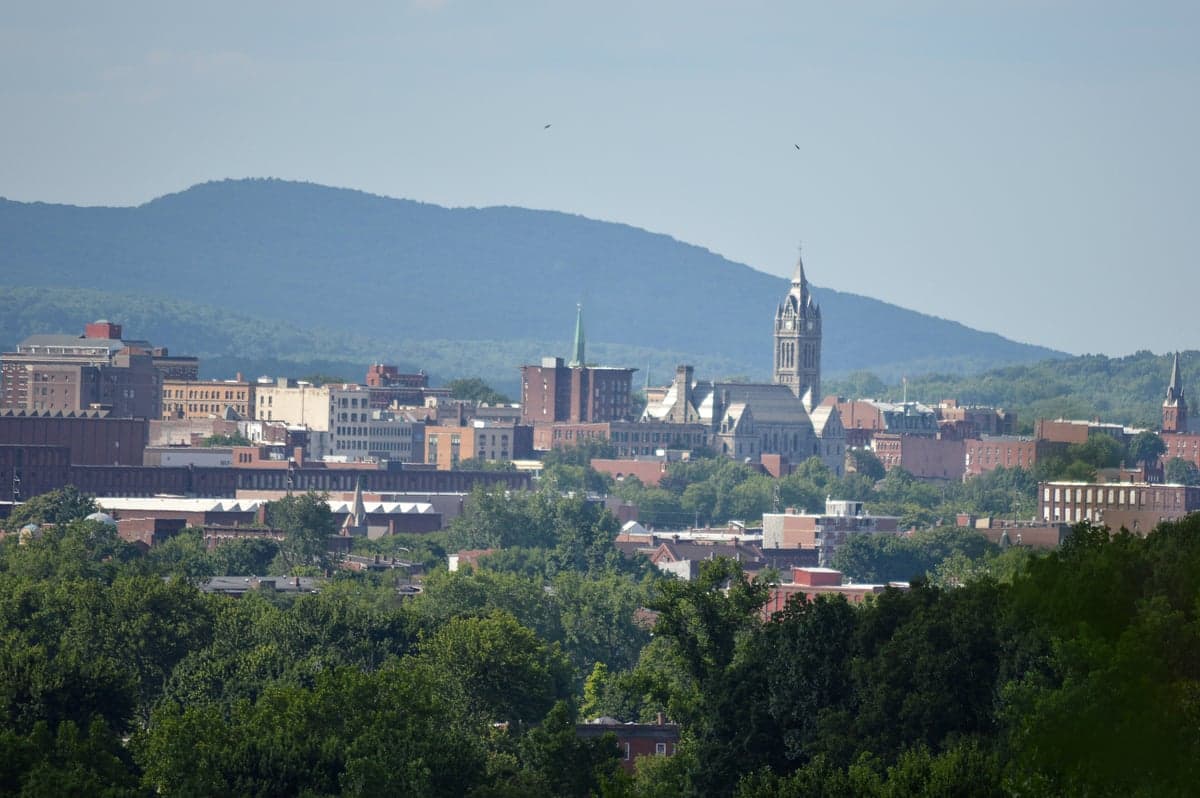
Photo: Wikipedia
Quality of Life in Holyoke, MA
A high quality of life with strong walkability, manageable living costs, healthy neighborhood signals, and solid amenity access.
What does Quality of Life tell us?
Quality of Life blends cost of living, nearby amenities, socioeconomic signals, and neighborhood character. City-level scores represent the whole municipality; individual neighborhoods can differ.
What does this tell us?
Quality of Life blends cost of living, nearby amenities, socioeconomic signals, and neighborhood character. City-level scores represent the whole municipality; individual neighborhoods can differ.
Cost of Living
11% below national average
The Real Cost of Living in Holyoke, MA for 2026
| Tier | Individual | Family (4) |
|---|---|---|
| Survival | $16k | $30k |
| Comfortable | $50k | $73k |
| Luxury | $94k+ | $145k+ |
| Elite (Top 5%) | $122k+ | $190k+ |
71%
The Area Signal
A metric tracking the socioeconomic signals of the area.
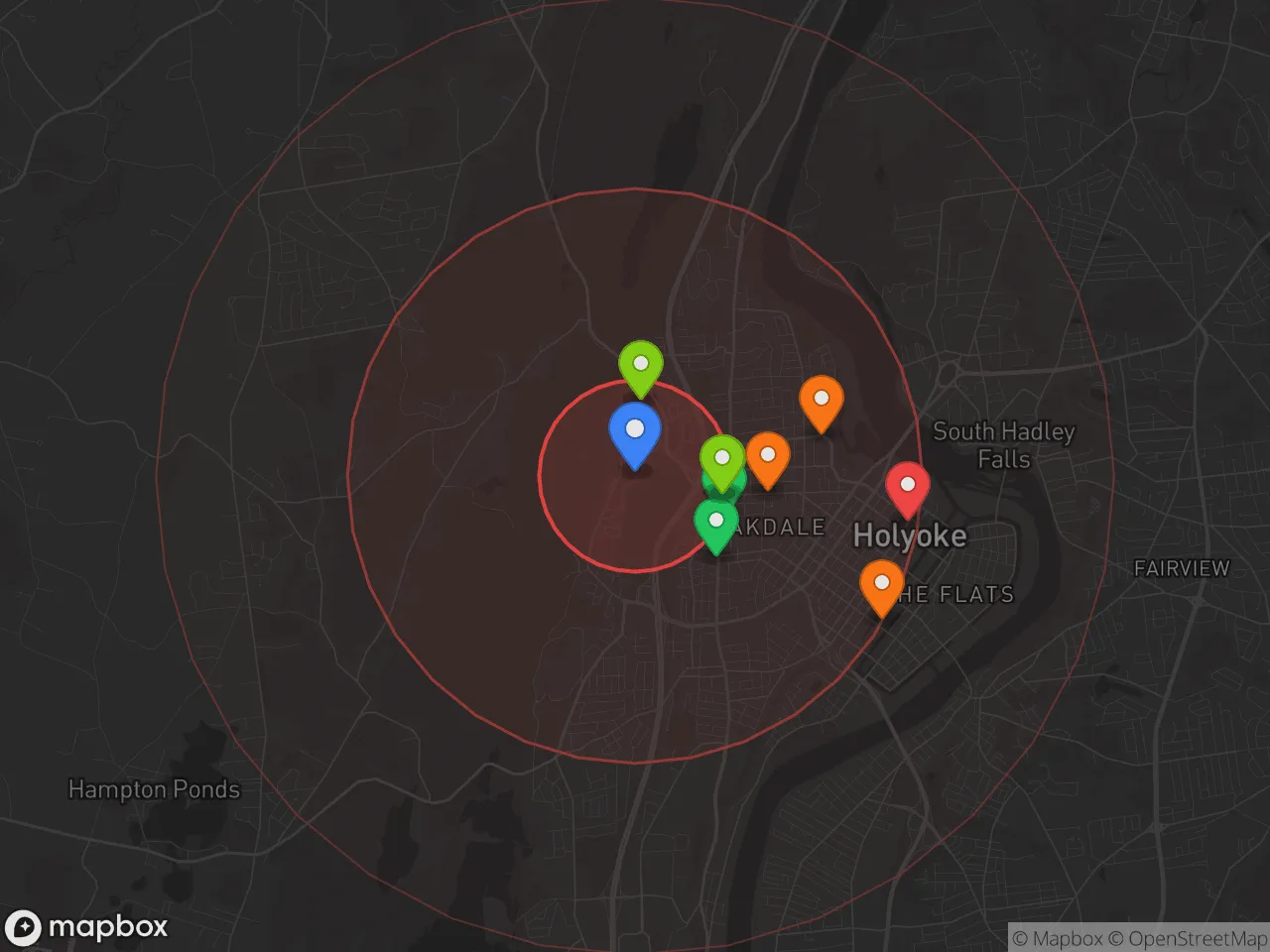
Hobbies
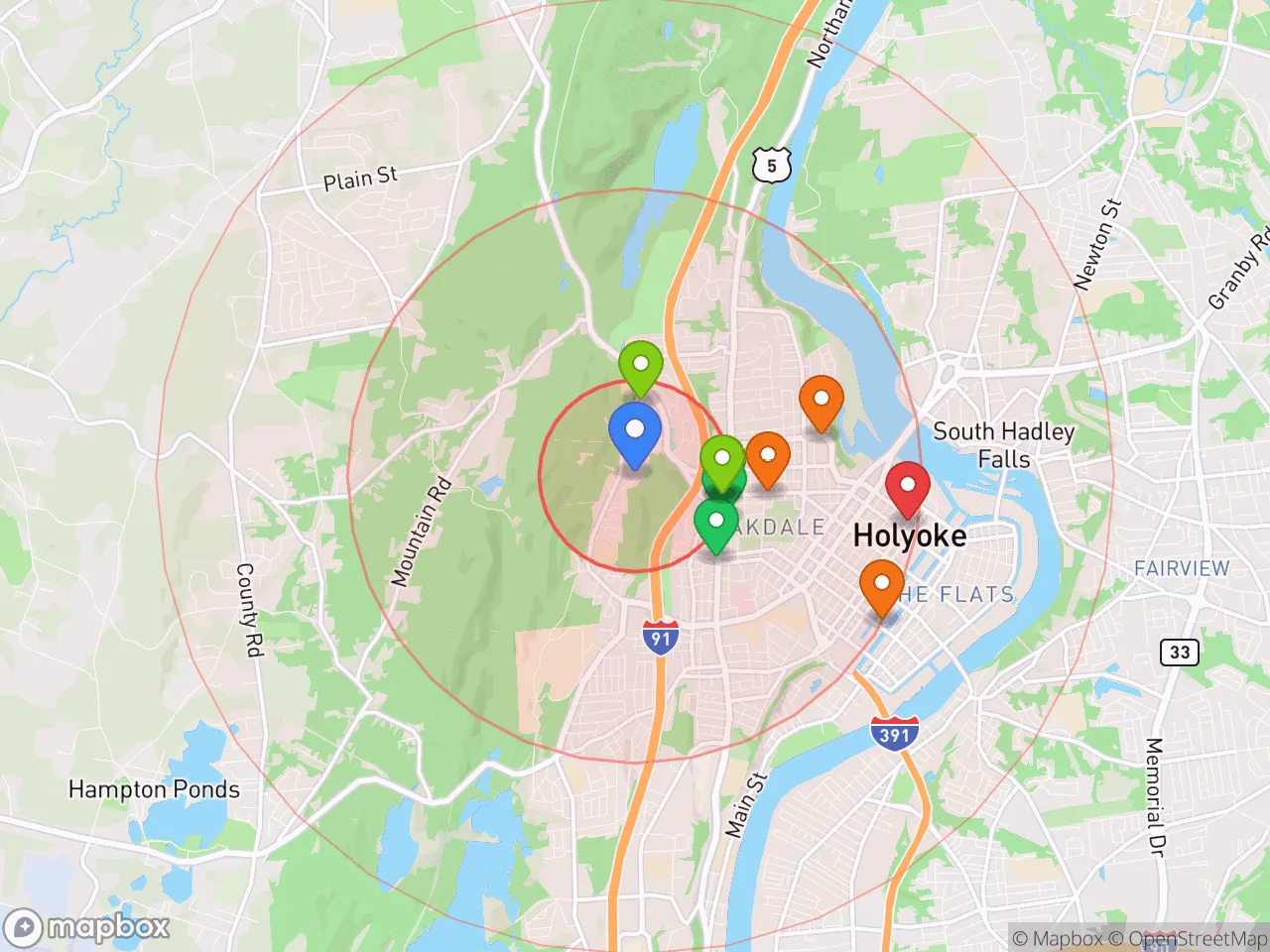
Explore the areaGroceries
7 within 10 miles
Gas
20 within 10 miles
Hospital
15 within 20 miles
Airport
JFK — John F. Kennedy International
Post Office
USPS — Holyoke, MA
Critical Amenities
Quality-of-Life Analysis
Holyoke, Massachusetts, presents a distinctive quality-of-life profile that blends working-class resilience with emerging creative energy, offering a more affordable alternative to the costly Pioneer Valley corridor. With a cost-of-living index of 89—11 points below the national average—the city attracts a mix of long-term residents, first-time homebuyers priced out of Northampton or Amherst, and artists drawn to its historic mill spaces. The population skews younger and more diverse than surrounding suburbs, with a median age of 38 and a significant Puerto Rican community that shapes the city’s cultural identity.
How Holyoke’s cost of living compares to Northampton and Springfield
Holyoke’s affordability is its strongest draw, with a median home value of $255,300—roughly half the median in neighboring Northampton ($520,000) and well below the Massachusetts state median of $530,000. Median rent sits at $1,016, compared to $1,450 in Northampton and $1,200 in Springfield, making Holyoke one of the most accessible rental markets in western Massachusetts. The average commute of 19.4 minutes is notably short, reflecting the city’s compact layout and proximity to major employers like Holyoke Medical Center, the Holyoke Mall, and the growing cluster of tech and manufacturing firms in the former paper mills. Property taxes in Holyoke run about $24 per $1,000 of assessed value, higher than the state average but offset by lower home prices. Utility costs are typical for New England, though older housing stock—much of it pre-1940—can mean higher heating bills in winter.
What daily life is like for families and professionals
Holyoke’s amenity landscape is defined by contrasts. The city boasts the Holyoke Public Schools system, which includes the highly regarded Holyoke High School’s Dean Campus and the STEM-focused Peck School, though overall district performance lags behind suburban peers like South Hadley or Longmeadow. For families, the Holyoke Merry-Go-Round, the Children’s Museum at Holyoke, and the extensive network of parks along the Connecticut River—including the 1,500-acre Mount Tom State Reservation—provide low-cost recreation. Daily-life rhythm centers on the downtown area, where the Holyoke Farmers Market and the Gateway City Arts venue host community events, while the Holyoke Mall anchors retail activity. Dining leans toward family-owned Puerto Rican and Dominican restaurants, with a growing number of farm-to-table spots near the canal district. Healthcare access is solid, with Holyoke Medical Center and Baystate Medical Center in Springfield within 15 minutes. The city’s walkability is moderate—downtown is pedestrian-friendly, but most errands require a car.
Holyoke is best suited for budget-conscious buyers, artists, and young professionals who value affordability and community character over suburban polish. The city’s ongoing revitalization—including the $30 million Holyoke High School renovation and the Canal District redevelopment—signals upward momentum, but challenges like higher crime rates in certain neighborhoods and underfunded schools remain. Those who thrive here are typically tolerant of grit, eager to participate in grassroots culture, and willing to trade pristine amenities for a lower cost of entry into the Pioneer Valley. For remote workers or commuters to Springfield, Northampton, or even Hartford (45 minutes south), Holyoke offers a pragmatic base with a distinct sense of place.

Crime in Holyoke, MA
Higher crime rates than 59% of comparable U.S. locations.
Violent CrimeViolent Crime Analysis
Property CrimeProperty Crime Analysis
Crime Analysis
Holyoke, Massachusetts, reports a violent crime rate of 977 incidents per 100,000 residents and a property crime rate of 2,633.7 per 100,000, placing it among the higher-risk communities in the state. These figures reflect a city facing significant public safety challenges, particularly when compared to national averages and the broader context of a liberal-leaning judicial environment in western Massachusetts. The combination of elevated crime statistics and a justice system often perceived as prioritizing offender rehabilitation over punitive measures creates a situation where residents and visitors should exercise heightened caution.
Crime in context
Holyoke's violent crime rate is more than 2.5 times the national average of roughly 380 per 100,000, while its property crime rate exceeds the U.S. average of approximately 1,950 per 100,000. Compared to the rest of Massachusetts, which has a statewide violent crime rate near 300 per 100,000, Holyoke stands out as a clear outlier. The city's proximity to the larger Springfield metro area, combined with the progressive policies of Hampden County District Attorney Anthony Gulluni and local judges, contributes to a criminal justice environment where repeat offenders often receive lenient sentences. This pattern, common in many liberal jurisdictions, results in higher recidivism rates and a greater number of criminals remaining on the streets, directly undermining public safety.
What residents experience
Daily life in Holyoke involves navigating a landscape where property crimes like burglary, larceny, and motor vehicle theft are common occurrences. The property crime rate of 2,633.7 per 100,000 means residents face a roughly 1 in 38 chance of experiencing a property crime annually. Violent offenses, including aggravated assault, robbery, and homicide, occur with troubling frequency, particularly in the city's downtown and lower-income neighborhoods. The progressive approach to prosecution in the region means that even when arrests are made, cases are often resolved through diversion programs or reduced charges, sending a message that criminal behavior carries limited consequences. This dynamic creates a sense of insecurity among law-abiding residents, who report feeling that the system is tilted against victims and in favor of offenders.
Neighborhood-level variation
Safety conditions vary considerably across Holyoke's neighborhoods. The Highlands and Springdale areas generally experience lower crime rates, while the Flats, Churchill, and downtown sections see the highest concentrations of violent and property offenses. The city's South Holyoke neighborhood, with its high poverty rate and dense housing, consistently reports the most incidents. Residents in safer areas still face spillover effects from nearby high-crime zones, as property crime and drug-related offenses do not respect neighborhood boundaries. For those considering relocation, a thorough review of block-level crime data and direct conversations with local police precincts are essential before choosing a specific address.
* Values derived from national, state, county, city and local statistics and may differ in a specific area. Last updated: 2026-05-01T09:07:15.000Z
Narrative content on this page is AI-generated and may contain mistakes. Verify any details that matter before acting on them.
ReloMaps may earn a commission from affiliate links at no extra cost to you.

