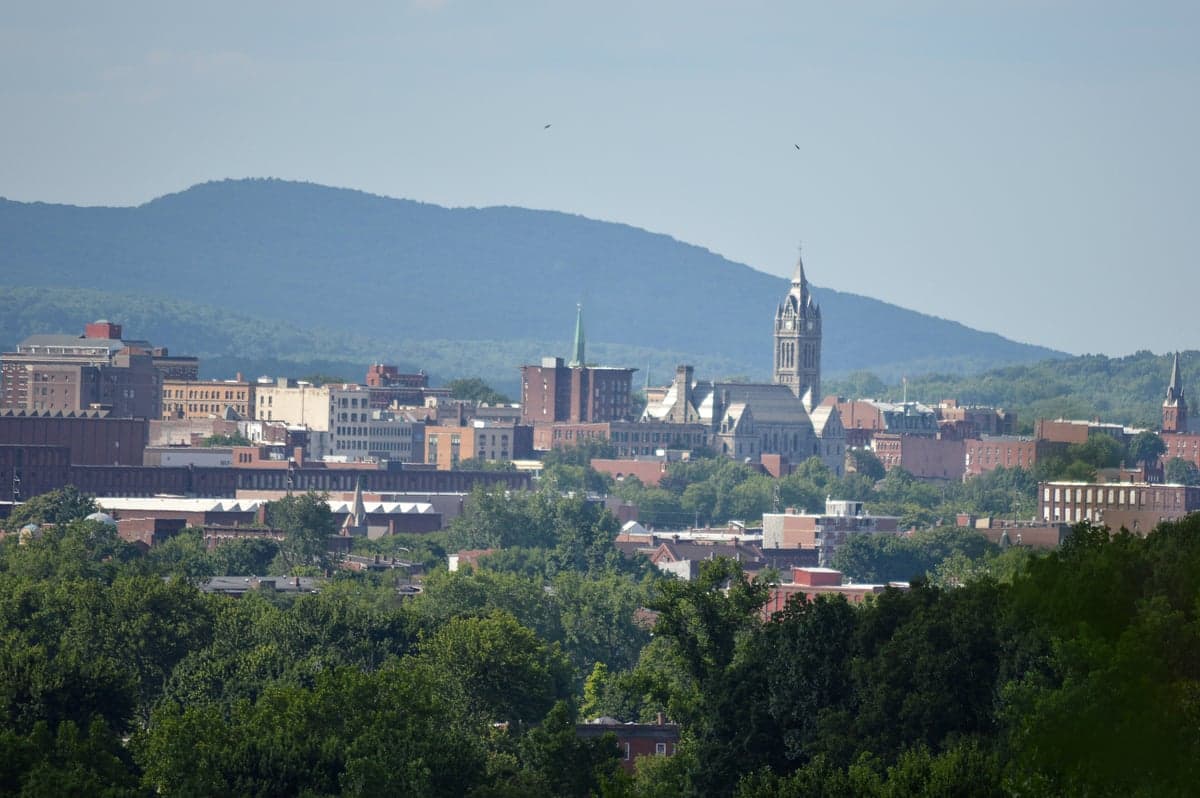
Photo: Wikipedia
Political ClimatePolitical Climate in Holyoke, MA
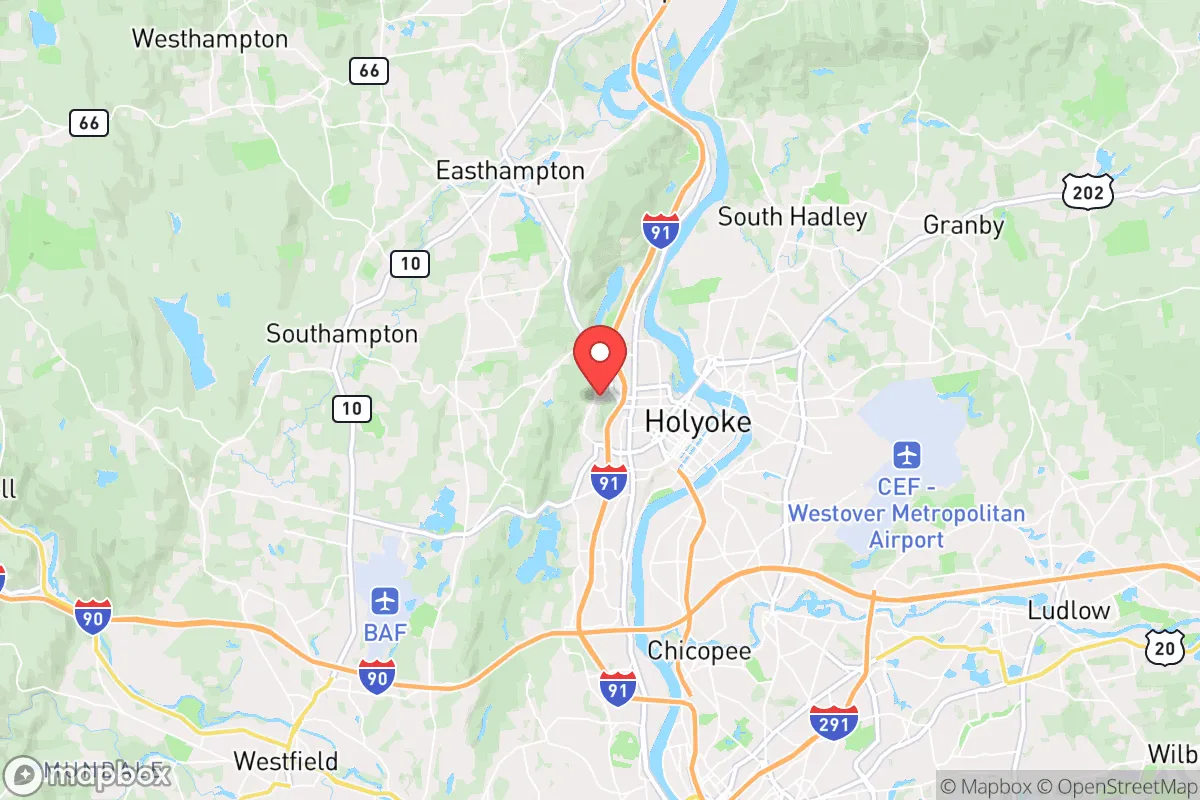
District shown is the primary district for this city’s centroid. Cities may span multiple districts.
Local Political AnalysisPolitical Analysis of Holyoke, MA
Holyoke’s political climate has shifted hard to the left over the past decade, and it’s not a subtle change. The city now carries a Cook PVI of D+8, meaning it votes about eight points more Democratic than the national average, and that number has been creeping up steadily. If you’ve lived here as long as I have, you remember when Holyoke was a working-class, union Democrat town—still blue, but with a lot of conservative-leaning Irish and Polish families who kept things grounded. Today, the local machine is fully progressive, and the old guard has been pushed out. The trajectory is clear: each election cycle brings more focus on identity politics, higher taxes, and a city council that’s less interested in property rights or fiscal restraint than in social engineering.
How it compares
Drive ten miles north to South Hadley or twenty miles east to Belchertown, and you’re in a different world politically. Those towns still vote reliably Republican in local races and have kept their school boards and select boards focused on low taxes and local control. Even Springfield, just south of here, is more moderate in its voting patterns than Holyoke—Springfield’s Cook PVI is D+7, but its city council has a stronger independent and conservative bloc. The real contrast is with the hilltowns to the west, like Chesterfield or Worthington, where you’ll see Trump signs every other house and the town meetings run on common sense, not progressive mandates. Holyoke, by contrast, has become a regional outlier—a deep-blue island surrounded by purple and red communities that are watching our experiments with rent control, sanctuary city policies, and DEI training mandates with a wary eye.
What this means for residents
For the average homeowner or small business owner, the political tilt translates into real headaches. Property taxes have climbed faster than in neighboring towns, partly because the city keeps adding new programs and staff positions tied to equity initiatives rather than core services. If you run a construction company or a landscaping business, you’ve probably dealt with new permitting fees and zoning restrictions that didn’t exist five years ago—all sold as “inclusionary” policies but really just making it harder to operate. The school system has shifted curriculum toward social-emotional learning and critical race theory frameworks, which has pushed some families to private schools or to move to South Hadley or Granby entirely. On the plus side, if you’re a renter or rely on social services, Holyoke’s progressive tilt does mean more funding for housing vouchers and food assistance, but that money comes with strings attached—and it’s the taxpayers footing the bill.
What’s distinct about Holyoke’s culture and policy
One thing that sets Holyoke apart from other D+8 cities is its strong Puerto Rican community, which has become the dominant voting bloc in local elections. That’s not a bad thing in itself, but the political leadership has leaned hard into ethnic identity politics, which has created a sense of division rather than unity. You’ll see city council meetings where every vote is framed through a racial lens, and any dissent gets labeled as bigotry. The city also passed a “right to shelter” ordinance a few years back, which sounded noble but has strained the police and public works departments. Looking ahead, I’d expect more of the same: higher taxes, more regulations on landlords and small businesses, and a continued drift away from the practical, neighborly politics that made Holyoke a decent place to raise a family. If you’re thinking of moving here, I’d recommend spending a weekend at a city council meeting and a town hall in a neighboring town—the difference will tell you everything you need to know.

State Political ClimatePolitical Climate in Massachusetts
State Political AnalysisPolitical Environment in the State
Massachusetts has been a one-party Democratic stronghold for decades, with the state voting for the Democratic presidential candidate by an average margin of over 30 points in the last four cycles. The dominant coalition is a mix of coastal progressives, union labor, and academic elites centered in Boston and its inner suburbs, while the western and central parts of the state have drifted rightward but lack the population to shift the statewide balance. Over the past 20 years, the state has moved from a moderate-liberal baseline to a aggressively progressive policy machine, with the 2022 election of Governor Maura Healey cementing a trifecta that has accelerated left-wing legislation on everything from energy to education.
Urban vs. rural divide
The political map of Massachusetts is a tale of two extremes. The Boston metro area—including Cambridge, Somerville, and Brookline—votes like a Nordic social democracy, routinely delivering 80-90% margins for Democrats. These cities drive the state's overall lean, as they contain roughly half the state's population. In contrast, the western and central regions—places like Pittsfield, Worcester, and the Berkshires—are more mixed, with rural towns like Sturbridge and Charlemont voting Republican by double digits. The Cape and Islands (Barnstable, Nantucket) are swing areas, often voting for moderate Republicans but flipping blue in presidential years. The real outlier is Springfield, a struggling post-industrial city that votes heavily Democratic but is culturally distinct from the Boston elite, with a large Puerto Rican and African American population that aligns with the party on economic issues but is less engaged with social progressivism.
Policy environment
Massachusetts has one of the highest tax burdens in the nation, with a flat 5% income tax, a 6.25% sales tax, and property taxes that average 1.1% of home value—though in Boston proper, that can exceed 1.5%. In 2022, voters passed the "Millionaire's Tax" (Question 1), a 4% surcharge on income over $1 million, which has driven some high-earners to consider New Hampshire or Florida. The regulatory environment is dense: the state has strict rent control in Boston, a statewide ban on plastic bags, and some of the nation's toughest emissions standards. Education policy is dominated by the state's powerful teachers' unions, which successfully blocked charter school expansion in 2016 and have pushed for progressive curriculum mandates, including LGBTQ+ inclusive history requirements passed in 2022. Healthcare is near-universal, with the state's 2006 reform serving as the model for the ACA, but costs remain high. Election laws are among the most liberal: no-excuse mail-in voting was made permanent in 2022, same-day registration is allowed, and felons can vote from prison. Gun laws are among the strictest in the country, with a 2014 law requiring licenses for all firearm purchases, a ban on "assault weapons," and a 10-round magazine limit.
Trajectory & freedom
Over the past five years, Massachusetts has become less free by nearly any measure. The 2022 "Work and Family Mobility Act" allows undocumented immigrants to obtain driver's licenses, a move supporters say improves road safety but critics argue incentivizes illegal immigration. The 2023 "Parental Rights in Education" bill was defeated, meaning schools can still withhold information about a child's gender identity from parents. The state's emergency powers during COVID were among the longest-lasting in the nation, with Governor Charlie Baker's mask mandates and business closures extending into 2022. On property rights, the state's "Chapter 40B" law allows developers to bypass local zoning if they include affordable housing, which has led to dense construction in suburban towns like Lexington and Newton over local objections. The 2024 "Right to Repair" law was expanded, but the state also passed a data privacy law that requires opt-in consent for certain data collection—a rare win for personal autonomy. Gun rights have been steadily eroded: the 2023 "H. 4420" bill expanded the "red flag" law to allow family members to petition for gun removal without a criminal conviction, and the state now bans carrying firearms in "sensitive places" like parks and government buildings.
Civil unrest & political movements
Massachusetts has a long history of protest, but recent years have seen a shift from labor activism to identity-based movements. The 2020 Black Lives Matter protests in Boston were large but largely peaceful, while the 2024 pro-Palestinian encampments at Harvard and MIT drew national attention and resulted in over 100 arrests. The state's sanctuary policy, codified in 2017's "Safe Communities Act," limits local police cooperation with ICE, and has led to flashpoints in Lawrence and Lowell, where immigrant populations are large. On the right, the "Massachusetts Fiscal Alliance" and "MassGOP" have struggled to gain traction, though the 2022 "Parents' Rights" movement saw thousands rally at the State House against critical race theory and LGBTQ+ curriculum. Election integrity has been a minor issue: the 2020 audit in Worcester County found no irregularities, but the state's permanent mail-in voting remains a concern for conservatives who worry about ballot harvesting. The most visible flashpoint for a new resident would be the constant presence of political signage: in Cambridge, you'll see "Defund the Police" and "Trans Rights Are Human Rights" signs; in Sturbridge, it's "Don't Tread on Me" and "Trump 2024."
Projection
Over the next 5-10 years, Massachusetts will likely become more progressive, driven by three trends. First, the Boston metro area is growing faster than the rest of the state, with young professionals and international immigrants moving in while families with children flee to New Hampshire or Rhode Island for lower costs and more conservative schools. Second, the state's Democratic Party is moving left: the 2024 primary saw progressive challengers defeat moderate incumbents in Somerville and Cambridge, and the party platform now includes "Medicare for All" and "Green New Deal" language. Third, the state's tax burden and regulatory climate will continue to push out small businesses and middle-class families, leaving a population that is either wealthy enough to absorb the costs or poor enough to depend on state services. A new resident moving in now should expect higher taxes, more restrictions on property use, and a political culture that increasingly views personal freedom as secondary to collective goals. The one wildcard is the housing crisis: if the state fails to build enough housing, the exodus of families could accelerate, potentially flipping some suburban districts to Republican by 2030.
For a conservative-leaning individual or family, Massachusetts presents a clear trade-off. You get world-class schools, top-tier healthcare, and a vibrant economy—but you pay for it with high taxes, heavy regulation, and a political climate that is actively hostile to gun rights, parental control, and traditional values. If you're moving here, expect to be in the minority politically, and plan to either engage in local activism or find your community in the western towns or the Cape. The bottom line: Massachusetts is a great place to make money and get an education, but it's a tough place to raise a family if you value personal freedom over government-provided security.
* Values derived from national, state, county, city and local statistics and may differ in a specific area. Last updated: 2026-05-01T09:07:15.000Z
Narrative content on this page is AI-generated and may contain mistakes. Verify any details that matter before acting on them.
ReloMaps may earn a commission from affiliate links at no extra cost to you.

