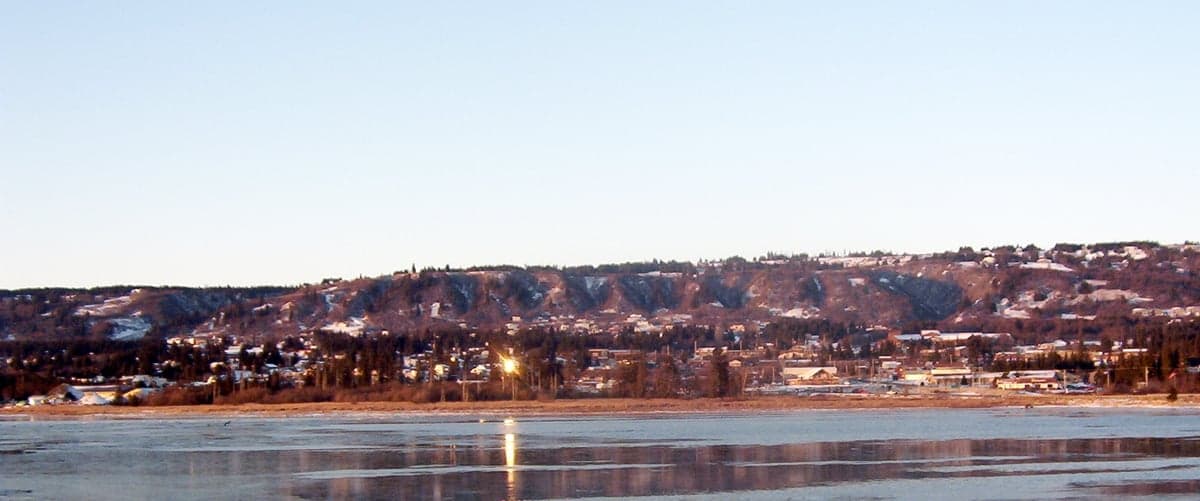
Photo: Wikipedia
Political ClimatePolitical Climate in Homer, AK
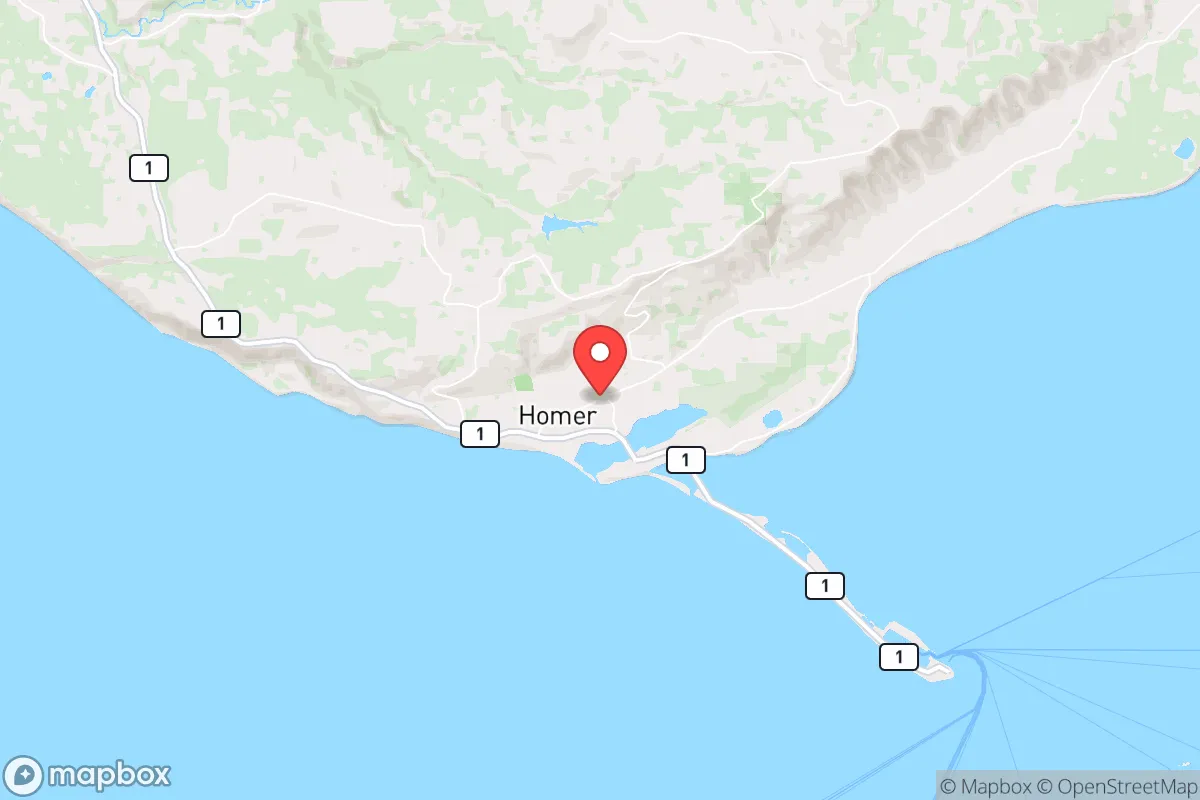
District shown is the primary district for this city’s centroid. Cities may span multiple districts.
Inherited from parent state — no local data available.
Local Political AnalysisPolitical Analysis of Homer, AK
Homer, Alaska, has long been a place where the independent, live-and-let-live spirit of the Kenai Peninsula meets a growing tide of progressive influence, but the area's political lean is still more conservative than its reputation suggests. The Cook Partisan Voting Index (PVI) of R+6 for the surrounding district tells you the real story: this isn't a deep-blue enclave, but a community where traditional Alaskan values of self-reliance and limited government are constantly butting heads with an influx of outsiders pushing a more collectivist agenda. If you look at the voting patterns, Homer itself often swings left, but the broader region—including towns like Anchor Point and Ninilchik—keeps the overall balance firmly in the red. That R+6 number is a solid reminder that the core of the population still values personal freedom over government handouts, even if the local coffee shops and art galleries might suggest otherwise.
How it compares
Drive 20 minutes north to Anchor Point, and you'll find a place that feels like a different world—more pickup trucks, fewer Priuses, and a political culture that hasn't been as heavily influenced by the seasonal tourism and remote-worker crowd. Homer's political climate is a stark contrast to the more uniformly conservative towns like Soldotna or Kenai, where the PVI leans even further right, often R+10 or more. In Homer, you get a weird mix: a strong libertarian streak among the fishing fleet and the old-timers, but also a vocal progressive faction that's been pushing for stricter land-use regulations, higher local taxes, and more government involvement in daily life. It's not as extreme as Anchorage or Juneau, but the shift is real. The local school board and city council races have become battlegrounds, with the progressive side often winning by narrow margins, which is concerning for anyone who believes in keeping government out of your backyard and your wallet.
What this means for residents
For a long-time resident, the biggest change is the slow creep of government overreach into things that used to be left to common sense. You're seeing more zoning restrictions that make it harder to build a cabin on your own land without jumping through hoops, and there's a constant push for new ordinances on everything from short-term rentals to what you can burn in your wood stove. The property tax base is still relatively low compared to the Lower 48, but the pressure is on to raise it to fund programs that a lot of folks here never asked for. The good news is that the R+6 district means state-level representation still leans conservative, so you're not getting the worst of the progressive agenda from Juneau. But locally, you have to stay engaged—if you don't show up to the city council meetings, you might wake up to a new rule about how many chickens you can keep or what time you can run your generator. It's not a crisis yet, but the trajectory is something to watch.
Culturally, Homer still holds onto its frontier identity in many ways—the fishing industry, the hunting culture, and the general "mind your own business" attitude are alive and well. But there's a growing divide between the year-round residents who work the water or the trades and the seasonal crowd that brings a more urban, progressive mindset. The local paper and the community radio station have definitely tilted left, which can be grating if you value straight talk over activism. The long-term outlook depends on whether the next wave of newcomers respects the local way of life or tries to remake Homer in the image of Portland or Seattle. For now, it's still a great place to live if you keep your head down and your eyes open, but the fight to keep government out of your personal freedoms is getting a little harder every year.

State Political ClimatePolitical Climate in Alaska
State Political AnalysisPolitical Environment in the State
Alaska has long been a politically unique state, with a strong libertarian streak and a deep-seated distrust of federal overreach, but the last decade has seen a noticeable shift. While the state still leans Republican in presidential elections—voting +10 for Trump in 2024—its independent streak means it’s not a lock for either party, and the real action is in the growing urban vs. rural divide. Over the past 20 years, Anchorage and Juneau have drifted left, while the Mat-Su Valley and most of the Bush have solidified as conservative strongholds, creating a political landscape that’s increasingly tense but still far freer than the Lower 48.
Urban vs. rural divide
The political map of Alaska is stark. Anchorage, home to 40% of the state’s population, is the battleground—its Assembly has flipped between moderate Republican and progressive control, with the 2024 election seeing a push for ranked-choice voting repeal that failed. The city’s core, like the neighborhoods around Spenard and downtown, votes reliably blue, while the Hillside and Eagle River suburbs lean red. Juneau, the capital, is a Democratic stronghold, driven by state government workers and a growing progressive activist class. Fairbanks is more mixed, with the university area voting left but the surrounding North Pole and Eielson AFB areas voting right. The real conservative engine is the Matanuska-Susitna Borough (Wasilla, Palmer, Houston), which votes +30 Republican and is the fastest-growing region in the state. The Bush—Nome, Bethel, Utqiaġvik—votes heavily Democratic due to tribal and subsistence issues, but that’s a cultural, not ideological, alignment. The divide isn’t just red vs. blue; it’s about who controls the resource wealth and who gets to live free from Seattle-style governance.
Policy environment
Alaska’s policy environment is a mixed bag for conservatives. The good news: no state income tax, no state sales tax (though local sales taxes exist in places like Anchorage and Juneau), and the Permanent Fund Dividend (PFD) puts cash in your pocket every year—$1,312 in 2024. The bad news: the state has a bloated budget, and the oil revenue rollercoaster means fiscal fights every year. Education policy is relatively local, with no statewide curriculum mandates, but the Anchorage School District has pushed DEI initiatives that worry parents. Healthcare is a mess—rural hospitals are subsidized, and the state expanded Medicaid under the ACA, which conservatives see as a federal trap. Election laws are a flashpoint: Alaska adopted ranked-choice voting in 2020 via ballot initiative, and it’s been a disaster for conservatives, splitting the vote and letting a Democrat win the at-large House seat in 2022. There’s a strong repeal movement, but the progressive coalition is dug in. Property rights are strong—no zoning in most rural areas—but the federal government owns 60% of the land, creating constant tension over access and development.
Trajectory & freedom
Alaska is becoming less free in measurable ways, and that’s a concern for anyone moving here. The ranked-choice voting system is the biggest threat, as it dilutes conservative votes and empowers the Anchorage progressive machine. On the plus side, gun rights are still rock-solid—constitutional carry, no permit needed, and no red flag law, despite repeated attempts by Juneau Democrats. Parental rights are strong, with no critical race theory mandates in schools, but the Anchorage School Board has tried to sneak in LGBTQ+ curriculum without parental consent. Medical autonomy is a bright spot: Alaska has no vaccine mandates for adults, and the state fought federal vaccine mandates for oil workers. But the biggest freedom issue is the state’s dependence on federal dollars—Alaska gets more per capita than almost any state, which gives the feds leverage. The 2023 fight over the Ambler Road project showed how federal agencies can block resource development, and the Biden administration’s restrictions on ANWR drilling are a direct attack on state sovereignty. The trajectory is toward more federal control unless the state diversifies its economy and pushes back.
Civil unrest & political movements
Alaska has a history of civil unrest that’s more about resource battles than culture wars. The 2020 protests in Anchorage were small compared to Portland, but the city saw property damage and a police reform push that led to a new oversight board. The real flashpoint is the PFD fight—every year, progressives try to cut the dividend to fund government, and conservatives rally to protect it. The 2023 “PFD protest” in Wasilla drew thousands, and it’s a unifying issue for the right. The Alaska Independence Party, which advocates for secession, still exists but is fringe. Immigration politics are minimal—Alaska has a small foreign-born population—but the state has a sanctuary policy for undocumented immigrants in Anchorage, which rankles conservatives. Election integrity is a hot topic: the 2022 ranked-choice election saw a Democrat win the House seat with 48% of the vote in a state that voted +10 for Trump, and the Alaska Republican Party has sued to overturn the system. The most visible movement is the “Repeal Ranked Choice” campaign, which is gaining steam and could be on the 2026 ballot.
Projection
Over the next 5-10 years, Alaska is likely to become more polarized, but the conservative base is growing in the Mat-Su Valley and the Kenai Peninsula, while Anchorage continues to drift left. The key demographic shift is the influx of remote workers and retirees from California and Washington—they bring money but also progressive voting habits. The ranked-choice voting system will likely be repealed by 2028, which would restore a more traditional conservative advantage. The bigger threat is the federal government’s control over land and resources—if the next administration continues to block drilling and mining, the state’s economy will stagnate, and the progressive push for a state income tax will grow. A new resident moving in now should expect a state that’s still freer than Texas or Florida in many ways, but with a political fight every year over the PFD, resource development, and voting rights. The rural areas will stay red, the cities will get bluer, and the state’s future depends on whether the conservative coalition can hold the line on taxes and federal overreach.
For a new resident, the bottom line is this: Alaska offers unmatched personal freedom in terms of gun rights, property rights, and no income tax, but you have to be willing to fight for it. The political climate is a constant battle between the independent, libertarian spirit of the state and the progressive machine in Anchorage and Juneau. If you’re moving here, get involved in the PFD fight, vote to repeal ranked-choice voting, and support local candidates who will push back against federal control. The state is still a refuge for conservatives, but it’s not a passive one—you have to be engaged to keep it that way.
* Values derived from national, state, county, city and local statistics and may differ in a specific area. Last updated: 2026-04-19T19:20:39.000Z
Narrative content on this page is AI-generated and may contain mistakes. Verify any details that matter before acting on them.
ReloMaps may earn a commission from affiliate links at no extra cost to you.

