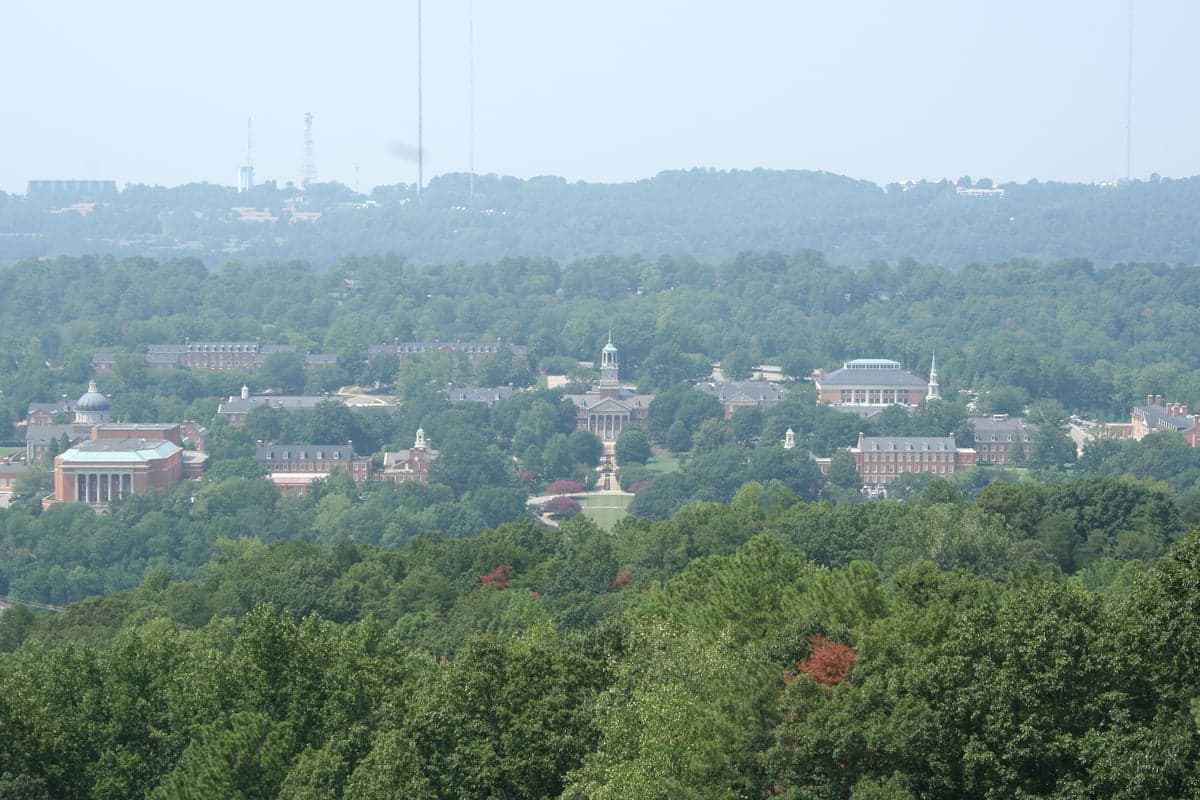
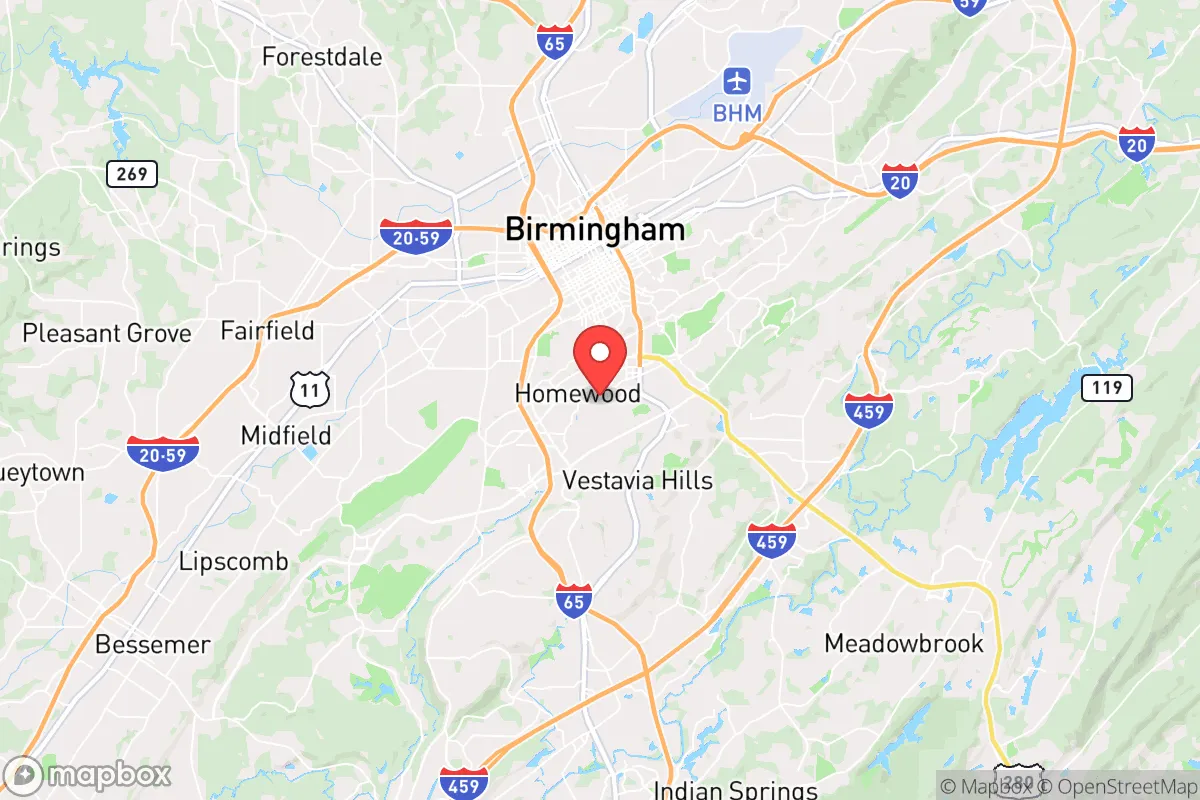
Photo: Wikipedia
Quality of Life in Homewood, AL
A high quality of life with strong walkability, manageable living costs, healthy neighborhood signals, and solid amenity access.
What does Quality of Life tell us?
Quality of Life blends cost of living, nearby amenities, socioeconomic signals, and neighborhood character. City-level scores represent the whole municipality; individual neighborhoods can differ.
What does this tell us?
Quality of Life blends cost of living, nearby amenities, socioeconomic signals, and neighborhood character. City-level scores represent the whole municipality; individual neighborhoods can differ.
Cost of Living
46% above national average
The Real Cost of Living in Homewood, AL for 2026
| Tier | Individual | Family (4) |
|---|---|---|
| Survival | $23k | $44k |
| Comfortable | $98k | $143k |
| Luxury | $196k+ | $303k+ |
| Elite (Top 5%) | $238k+ | $369k+ |
76%
The Area Signal
A metric tracking the socioeconomic signals of the area.


Hobbies
Explore the areaGroceries
5 within 10 miles
Gas
0 within 10 miles
Hospital
3 within 20 miles
Airport
ATL — Hartsfield–Jackson Atlanta International
Post Office
USPS — Birmingham, AL
Critical Amenities
Quality-of-Life Analysis
Homewood, Alabama, is an affluent inner-ring suburb of Birmingham where the cost of living index sits at 146—well above the national baseline of 100—reflecting a community that attracts professionals, academics, and families seeking top-tier schools and a walkable, amenity-rich environment without the sprawl of farther suburbs. With a median home value of $502,300 and a median rent of $1,457, the housing market here is significantly more expensive than in neighboring cities like Birmingham proper or Bessemer, yet it remains competitive with other high-end Birmingham suburbs such as Mountain Brook and Vestavia Hills. The average commute of roughly 17 minutes—one of the shortest in the metro area—underscores the convenience of living close to major employment centers, including UAB, the downtown medical district, and the burgeoning Lakeshore Parkway corridor.
Cost of living, housing affordability, and how Homewood compares to nearby suburbs
Homewood’s cost of living index of 146 is driven primarily by housing, where the median home value of $502,300 is roughly 2.5 times the national median and about 40% higher than the Birmingham metro average. Renters face a median monthly rent of $1,457, which is notably higher than in Birmingham proper (where the median is around $1,100) but slightly below the $1,600+ median in Mountain Brook. Property taxes in Jefferson County are moderate—around 0.6% of assessed value—but Homewood’s higher home prices mean annual tax bills often exceed $3,000. For buyers, the market is competitive: homes in desirable neighborhoods like Edgewood and Hollywood typically sell within 30 days, often above asking price. Compared to Vestavia Hills, where median home values approach $550,000, Homewood offers slightly more affordable entry points, especially for condos and townhomes near the downtown commercial district. The short 17-minute average commute—versus 25-30 minutes from suburbs like Hoover or Alabaster—adds a tangible financial benefit in reduced transportation costs.
What daily life is like for families: schools, parks, and local amenities
Daily life in Homewood centers on its highly rated public school system—Homewood City Schools consistently rank among Alabama’s top 5, with Homewood High School boasting a 95% graduation rate and strong Advanced Placement participation. The city’s compact, walkable downtown along 18th Street and Oxmoor Road is lined with independent coffee shops, restaurants like the popular Saw’s Juke Joint, and boutique retail, creating a pedestrian-friendly hub that contrasts with the car-dependent feel of many Birmingham suburbs. Parks are abundant: Homewood Central Park hosts a weekly farmers market and community events, while the 40-acre Homewood Forest Preserve offers hiking trails and a dog park. For families, the city’s recreation department runs youth sports leagues and after-school programs, and the Homewood Public Library is a regional standout with a dedicated children’s wing. The rhythm of life here is notably slower than in larger metros—evening traffic is light, and the 17-minute commute means most residents are home well before 6 p.m., leaving ample time for outdoor activities or dining out.
Homewood is best suited for professionals and families who prioritize school quality, walkability, and a tight-knit community feel over lower housing costs or a more urban, high-energy environment. Empty-nesters and young couples also thrive here, drawn by the low crime rates (violent crime is roughly half the national average) and the proximity to Birmingham’s cultural amenities—the Birmingham Museum of Art and the Alabama Theatre are just a 10-minute drive away. Those on a tighter budget may find the cost of living prohibitive, but for buyers and renters who can afford the premium, Homewood delivers a rare combination of suburban safety, urban convenience, and top-tier public education in the Deep South.

Crime in Homewood, AL
Lower crime rates than 75% of comparable U.S. locations.
Violent CrimeViolent Crime Analysis
Property CrimeProperty Crime Analysis
Crime Analysis
Homewood, Alabama, presents a mixed safety profile for prospective residents. While its violent crime rate of 160.4 incidents per 100,000 residents is notably lower than the national average, its property crime rate of 1,746.8 per 100,000 is significantly higher, placing it above both state and national benchmarks. This divergence means that while the risk of a violent encounter is relatively low, the likelihood of experiencing theft, burglary, or vehicle break-ins is a tangible concern for those living in or moving to this Birmingham suburb.
Crime in context
To understand Homewood's safety, it's essential to compare its numbers to broader trends. The city's violent crime rate is roughly 55% lower than the U.S. average, a figure that aligns with many affluent suburbs that benefit from higher household incomes and robust local policing. However, the property crime rate tells a different story. At nearly 1,747 per 100,000, it is roughly 20% higher than the national average and well above Alabama's statewide rate. This elevated property crime is often driven by auto thefts and larcenies, common issues in dense, walkable suburbs with easy interstate access (I-65 and U.S. 31) that provides quick escape routes for offenders.
What residents experience
Daily life in Homewood is shaped by this crime dichotomy. Residents frequently report that violent incidents—such as aggravated assault or robbery—are rare and often isolated to specific late-night hours near commercial corridors like Lakeshore Parkway or the Edgewood business district. The far more common experience is property crime: package thefts from front porches, unlocked car break-ins, and occasional home burglaries during work hours. Homewood's proximity to Birmingham's urban core means it is not immune to spillover crime, and the city's progressive judicial philosophy in Jefferson County is a factor residents should weigh. District attorneys and judges in the metro area have increasingly adopted diversion programs and reduced sentencing for non-violent property offenders, a policy that, while intended to reduce incarceration, can result in repeat offenders cycling back into neighborhoods quickly. For families and homeowners, this translates to a heightened need for vigilance—installing security systems, joining neighborhood watch programs, and never leaving valuables in vehicles.
Neighborhood-level variation is significant. The areas west of Central Avenue, closer to the city's older housing stock and commercial strips, tend to report higher property crime volumes. In contrast, the neighborhoods east of I-65, including the more affluent Edgewood and Wildwood sections, see lower incident rates due to greater lot sizes, private security patrols, and less foot traffic. Homewood's overall safety is best described as "good but requiring caution"—the violent crime risk is low, but the property crime reality demands proactive measures, especially given the metro area's lenient judicial environment that can undermine deterrence.
* Values derived from national, state, county, city and local statistics and may differ in a specific area. Last updated: 2026-04-19T18:53:28.000Z
Narrative content on this page is AI-generated and may contain mistakes. Verify any details that matter before acting on them.
ReloMaps may earn a commission from affiliate links at no extra cost to you.

