Photo: Wikipedia
Political ClimatePolitical Climate in Homewood, AL
District shown is the primary district for this city’s centroid. Cities may span multiple districts.
Local Political AnalysisPolitical Analysis of Homewood, AL
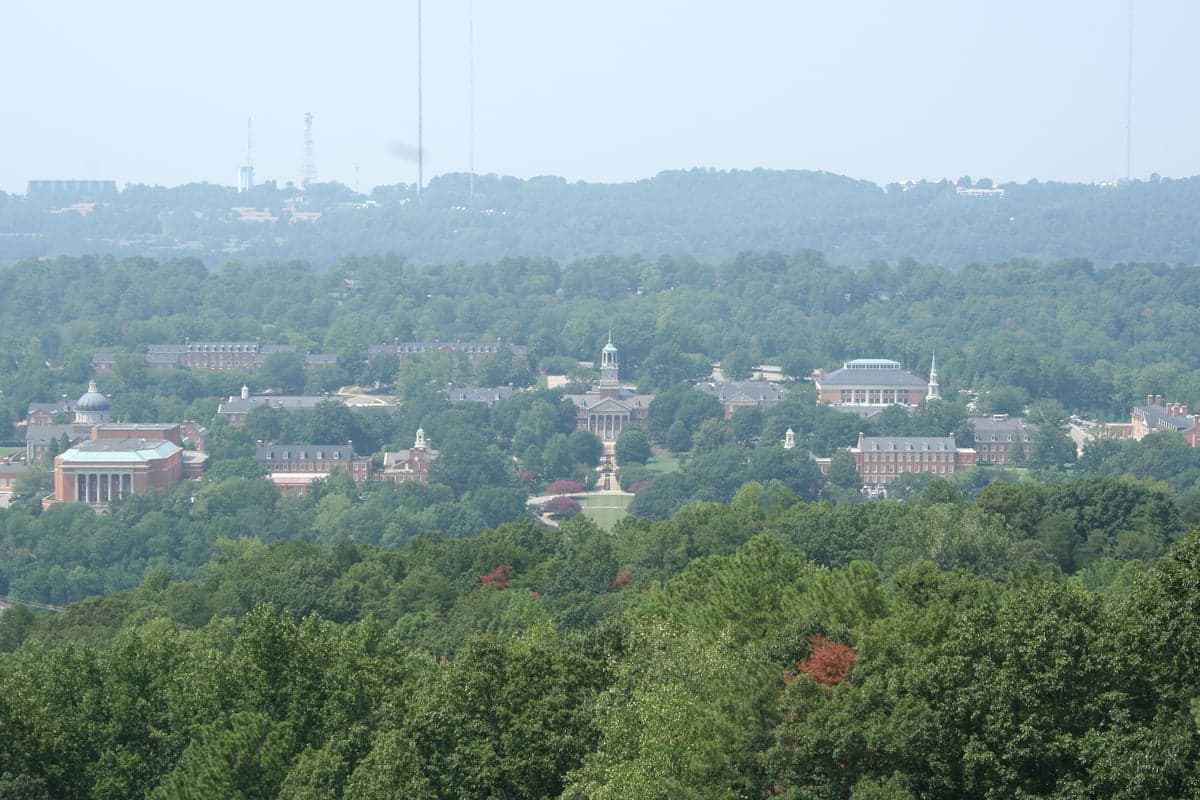
Homewood, Alabama, has long been a solidly conservative community, and that hasn’t changed much despite some national trends. The Cook PVI rating of R+20 tells you the real story—this area leans heavily Republican, and it’s been that way for decades. You’ll see it in local elections, in the way folks talk about taxes and schools, and in the general skepticism toward any kind of government overreach. That said, there’s been a subtle shift in the last five or six years, especially among younger families moving in from Birmingham proper. They bring a more progressive vibe, but it hasn’t flipped the needle yet. Most of the old guard still runs things, and they’re not shy about pushing back on anything that smells like big government telling you how to live your life.
How it compares
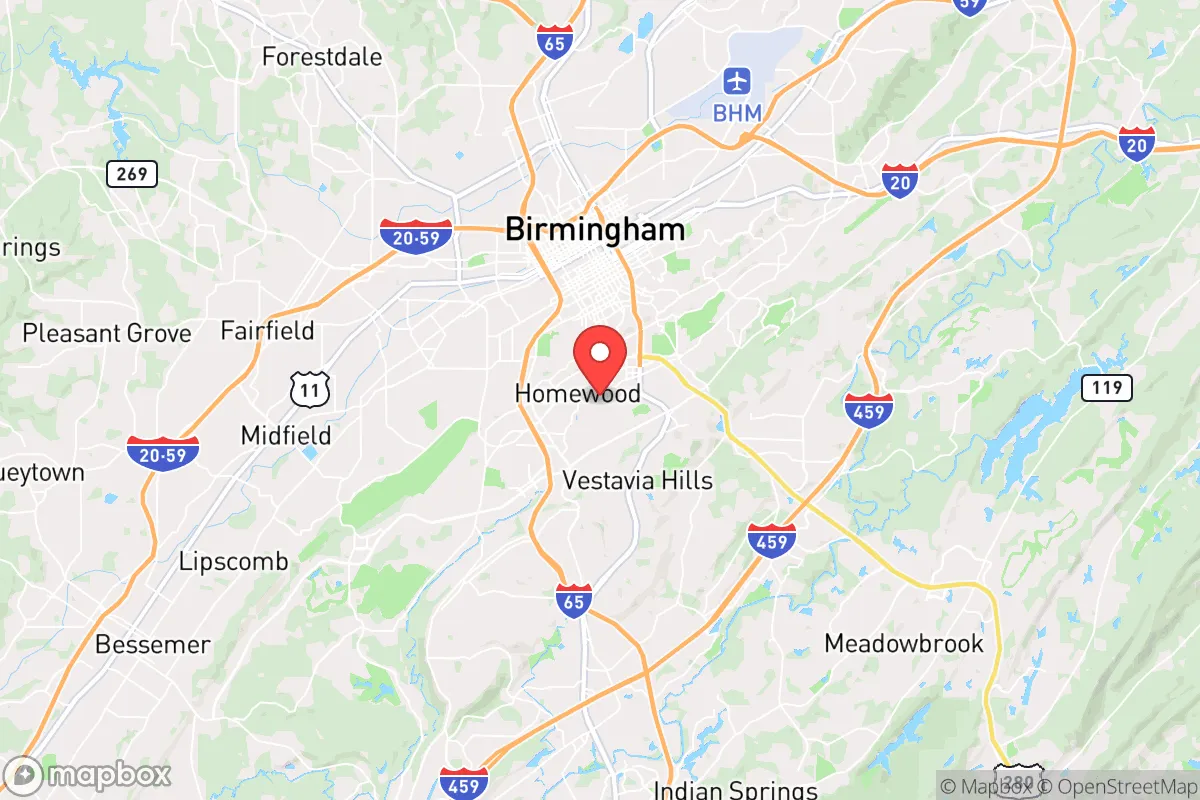
If you drive ten minutes north into downtown Birmingham, you’re in a completely different world politically. Birmingham leans heavily Democratic, with a Cook PVI around D+25 or so, and you can feel the difference in everything from city ordinances to how police are funded. Homewood, by contrast, feels like a holdout of common sense. Neighboring Mountain Brook is even more conservative, with a similar R+20 vibe, but it’s a bit more buttoned-up and wealthy. Hoover, just south of Homewood, is a mixed bag—still conservative overall, but you see more purple patches as the city grows. What sets Homewood apart is its small-town feel inside a metro area. People here know each other, and they’re not afraid to speak up at city council meetings when they think the government is overstepping. That’s a tradition that’s held strong, even as some nearby towns have started to drift toward more progressive policies on things like zoning and public spending.
What this means for residents
For the average person living here, the political climate means you’re left alone to run your life. Property taxes are reasonable, there’s no city income tax, and the local government generally stays out of your business unless you give them a reason. That’s a big deal if you’ve lived in places where the city wants a say in everything from your lawn height to what kind of fence you can put up. Homewood’s school system is strong and locally controlled, which is a direct result of the community pushing back against state or federal mandates. The downside is that if you’re hoping for big progressive changes—like rent control or heavy environmental regulations—you’re going to be disappointed. That’s not what this place is about. Most folks here see that as a feature, not a bug. The long-term concern is whether the influx of younger, more left-leaning residents from Birmingham will start to shift local elections. It hasn’t happened yet, but it’s something to keep an eye on.
Culturally, Homewood still holds onto a few distinctions that set it apart from the more progressive pockets of the metro area. You won’t find a lot of talk about defunding the police or radical zoning changes here. The city has a strong sense of personal responsibility, and that shows up in how people handle things like neighborhood watch programs and local charity work. There’s a real distrust of any policy that looks like it’s coming from a think tank rather than from the people who actually live here. If you’re looking for a place where the government respects your rights and doesn’t try to micromanage your life, Homewood is still that kind of town. Just don’t expect it to stay that way forever if the trends from Birmingham keep creeping south.

State Political ClimatePolitical Climate in Alabama
State Political AnalysisPolitical Environment in the State
Alabama is a deeply conservative state, with Republicans holding every statewide elected office and supermajorities in both legislative chambers, a dominance that has only solidified over the past two decades. The state voted for Donald Trump by a 25-point margin in 2024, and the GOP’s grip extends from the governor’s mansion down to county commissions. This wasn’t always the case—Alabama was a Democratic stronghold for most of the 20th century, but a realignment began in the 1990s and accelerated after 2010, when the GOP took full control of state government. Today, the political climate is defined by a stark urban-rural divide, a policy environment that prioritizes low taxes and limited regulation, and a trajectory that continues to push toward greater personal freedom, though not without some concerning trends in the state’s growing metro areas.
Urban vs. rural divide
The political map of Alabama is a study in contrasts. The state’s rural and suburban areas—places like Auburn, Opelika, Mobile, and Huntsville—are overwhelmingly Republican, with many counties routinely voting 70-80% for GOP candidates. Huntsville, in particular, has become a conservative stronghold, driven by a high concentration of defense contractors and engineers who favor limited government. Meanwhile, the state’s two largest cities, Birmingham and Montgomery, are Democratic bastions, with Jefferson County (Birmingham) and Montgomery County consistently voting blue by double digits. The divide is sharpest in the Black Belt, a rural region stretching across central Alabama where majority-Black counties like Greene and Sumter vote heavily Democratic, often 80% or more. This urban-rural split means that while the state legislature is deeply conservative, the cities are increasingly progressive, creating a cultural and political tension that plays out in debates over education, policing, and land use. For a new resident, the key takeaway is that your experience will vary dramatically depending on whether you settle in a rural county like Elmore or a city like Birmingham.
Policy environment
Alabama’s policy environment is a model of conservative governance. The state has no income tax on retirement income, a flat 5% corporate income tax, and a state sales tax of 4% (though local taxes can push it higher). Property taxes are among the lowest in the nation, averaging about 0.4% of home value, which is a major draw for families and retirees. The regulatory posture is business-friendly, with right-to-work laws and minimal zoning restrictions outside major cities. Education policy is a mixed bag: the state has a robust school choice program, including the Alabama Accountability Act, which provides tax credits for private school tuition, and the new CHOOSE Act, which expands Education Savings Accounts for families. However, public school performance remains below national averages, and the state has been embroiled in debates over critical race theory and LGBTQ curriculum, with the legislature passing the “Don’t Say Gay” bill in 2022. Healthcare is a sore spot—Alabama did not expand Medicaid under the Affordable Care Act, leaving many rural hospitals struggling. Election laws are strict: voter ID is required, and the state has closed most satellite absentee voting offices, a move that critics say suppresses turnout but supporters argue ensures integrity. For a conservative, the policy environment is largely favorable, though the education and healthcare gaps are worth monitoring.
Trajectory & freedom
Alabama is trending toward greater personal freedom in several key areas, but there are warning signs. On gun rights, the state passed constitutional carry in 2022, allowing permitless carry of handguns, and has a strong preemption law that prevents local governments from enacting their own restrictions. Parental rights were bolstered by the 2022 law banning transgender surgeries for minors and the 2023 law requiring schools to notify parents of any changes in a child’s mental or emotional health. Medical autonomy is protected by a 2019 law that prohibits mandatory vaccinations, and the state has resisted federal vaccine mandates. Property rights are strong, with no state-level income tax and a homestead exemption that shields up to $4,000 of assessed value from property taxes. However, there are concerning trends. The state’s growing metro areas, particularly Birmingham and Huntsville, are seeing local governments push for more zoning and land-use regulations, which could erode property rights over time. Additionally, the state’s reliance on federal funding—about 40% of the budget—creates a vulnerability to federal overreach. The biggest red flag is the slow creep of progressive ideology in the cities, where school boards and city councils are increasingly influenced by national trends. For now, Alabama remains one of the freest states in the South, but vigilance is needed to keep it that way.
Civil unrest & political movements
Alabama has a history of civil unrest, but recent years have been relatively quiet compared to other states. The most visible flashpoint is the ongoing debate over Confederate monuments, which led to the removal of a statue in Birmingham in 2020 and subsequent legal battles. The state’s immigration politics are conservative, with a 2011 law (HB 56) that was one of the toughest in the nation, though parts were struck down by courts. There is no sanctuary city movement to speak of; in fact, the legislature passed a law in 2024 banning sanctuary policies outright. Election integrity has been a hot topic, with the state’s secretary of state, Wes Allen, pushing for stricter voter roll maintenance and a ban on ballot drop boxes. The most organized activist movements are on the right, with groups like the Alabama Citizens for Life and the Alabama Rifle Association wielding significant influence. On the left, the Alabama Poor People’s Campaign and the NAACP have been active, but they have little impact on state policy. A new resident would notice the strong presence of churches and religious organizations in political life, with pastors often endorsing candidates from the pulpit. The overall atmosphere is stable, but the cultural divide between the cities and rural areas can feel like two different states.
Projection
Over the next 5-10 years, Alabama is likely to remain solidly conservative, but demographic shifts could introduce new dynamics. In-migration is concentrated in the Huntsville area, which is growing rapidly due to the defense and aerospace industries, and this influx is bringing a mix of out-of-state conservatives and a smaller number of progressives. The Black Belt is losing population, which will reduce the Democratic vote share in rural areas, but the growth of Birmingham and Montgomery could offset that. The state’s Republican supermajority is unlikely to be threatened, but internal divisions may emerge between the more libertarian wing (focused on tax cuts and deregulation) and the social conservative wing (focused on cultural issues). The biggest wild card is the federal government—if the Supreme Court overturns Roe v. Wade, Alabama’s near-total abortion ban will remain in place, but if federal funding is cut, the state’s budget could face strain. For someone moving in now, expect the state to become more conservative on cultural issues but potentially more pragmatic on economic ones. The cities will continue to blue, but the legislature will keep them in check with preemption laws. The bottom line: Alabama is a safe bet for conservatives who want a low-tax, high-freedom environment, but you’ll need to pick your county carefully to avoid the progressive drift in the metros.
For a new resident, the practical takeaways are clear: you’ll enjoy low taxes, strong gun rights, and a government that largely stays out of your personal life. But you’ll also need to navigate a state with weak public schools and limited healthcare access, especially if you’re outside the major cities. The political climate is stable and predictable, but the urban-rural divide means your day-to-day experience will depend heavily on where you land. If you’re looking for a place where your values are reflected in state law and your freedoms are protected, Alabama is a solid choice—just keep an eye on the cities.
* Values derived from national, state, county, city and local statistics and may differ in a specific area. Last updated: 2026-04-19T18:53:28.000Z
Narrative content on this page is AI-generated and may contain mistakes. Verify any details that matter before acting on them.
ReloMaps may earn a commission from affiliate links at no extra cost to you.

