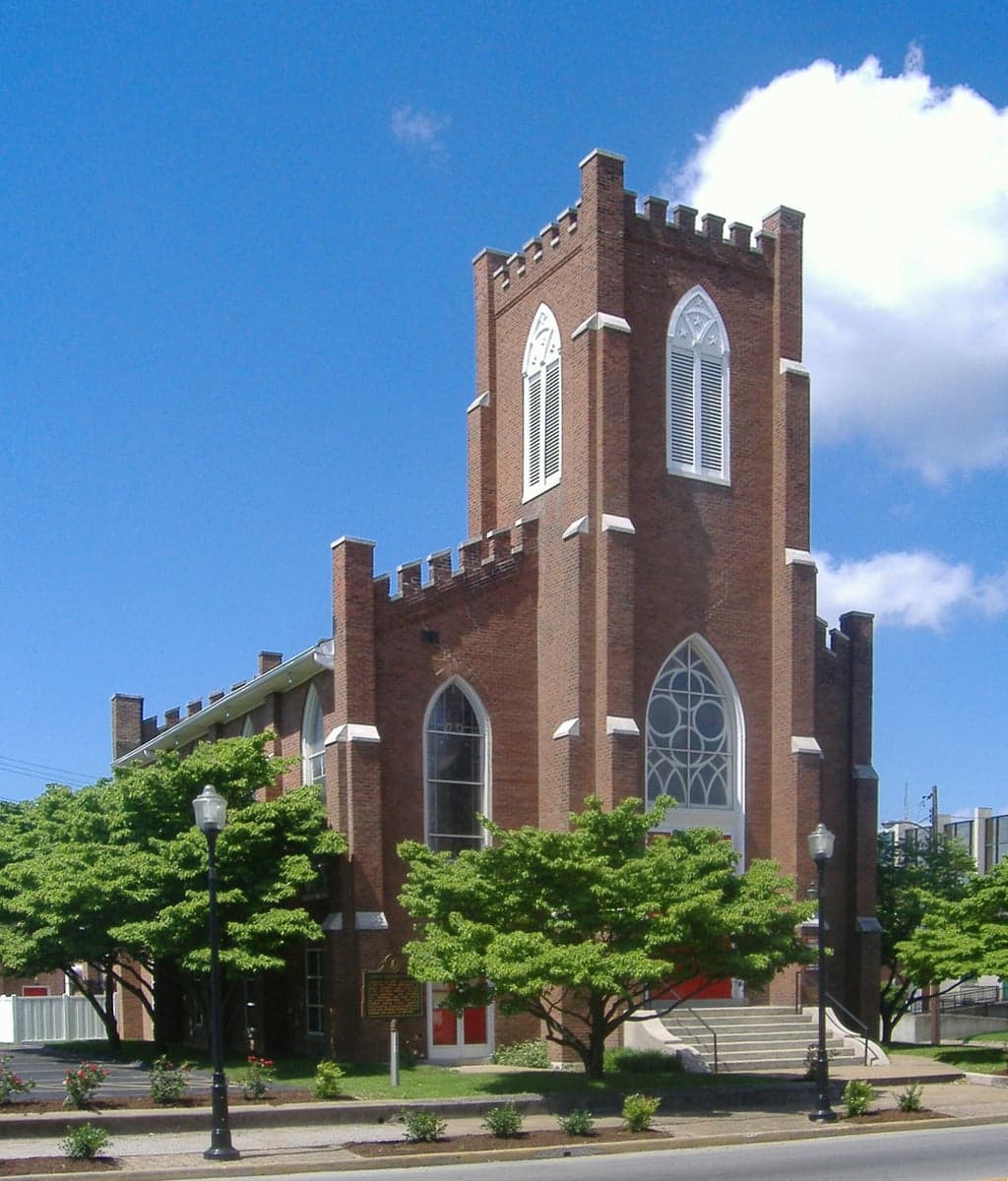
Photo: Wikipedia
Strategic Assessment of Hopkinsville, KY
Workable tactical position. Some exposure to population density or targets, but generally defensible in a crisis.
What does the Strategic Assessment tell us?
Our Strategic Assessment grades tactical survivability of an area. Major population centers, military targets, fallout zones, natural disasters, and border exposure all drive risk — lower exposure means a more defensible position in a crisis.
This is heavily inspired by Joel Skousen's Strategic Relocation book. Highly recommended you checkout the book ($)What does this tell us?
Our Strategic Assessment grades tactical survivability of an area. Major population centers, military targets, fallout zones, natural disasters, and border exposure all drive risk — lower exposure means a more defensible position in a crisis.
This is heavily inspired by Joel Skousen's Strategic Relocation book. Highly recommended you checkout the book ($)Strategic Pillars

Key Distances
Regional Safe Places
Below is our recommended "safe zones" in Kentucky and the surrounding area based on our strategic heuristics. For most people, it's unrealistic to live in a “safe zone” full-time due to work, family or other personal reasons. They tend to be more rural. However, many of these areas are perfect for second homes and retreat properties that double as a vacation home or even a short-term rental.
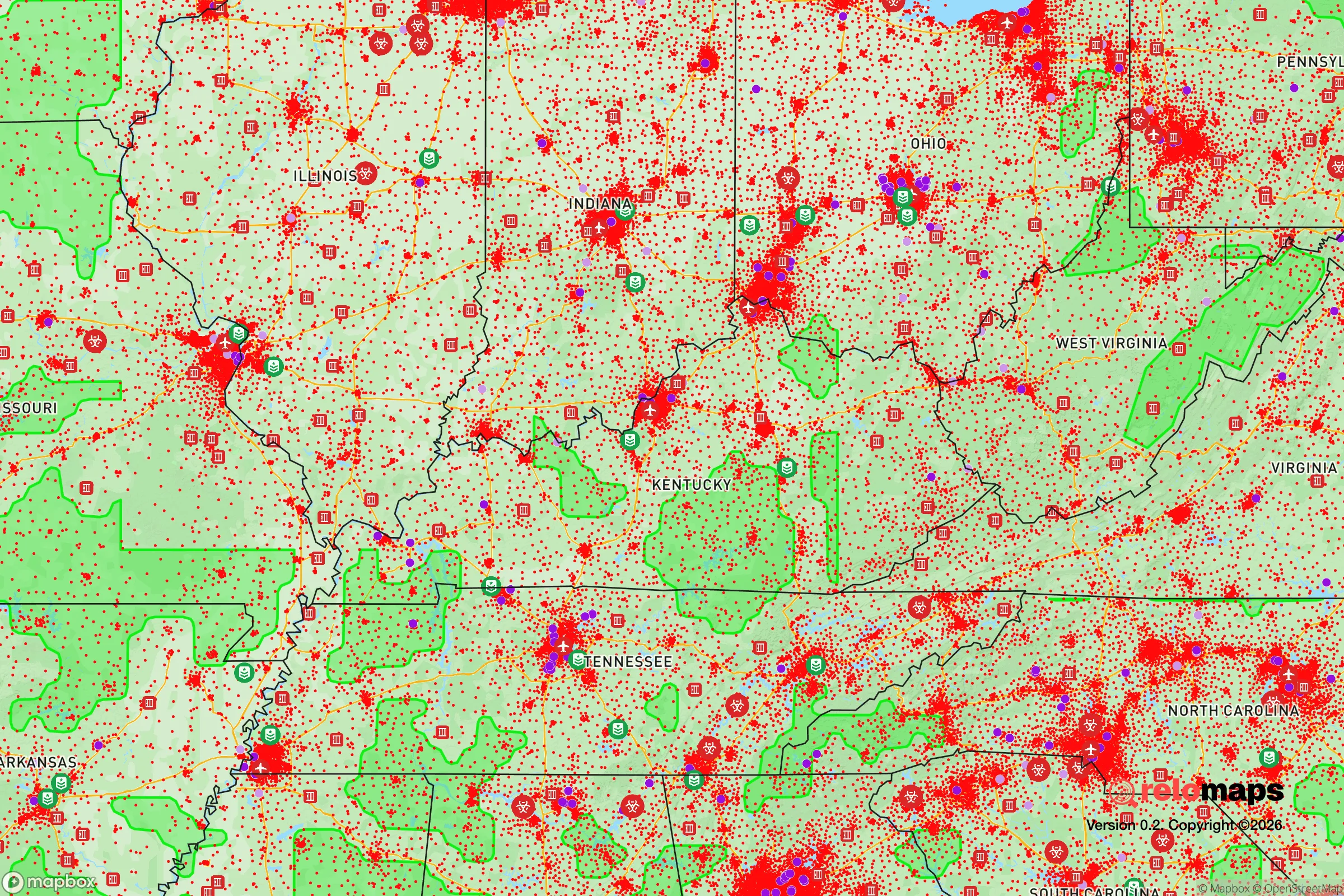
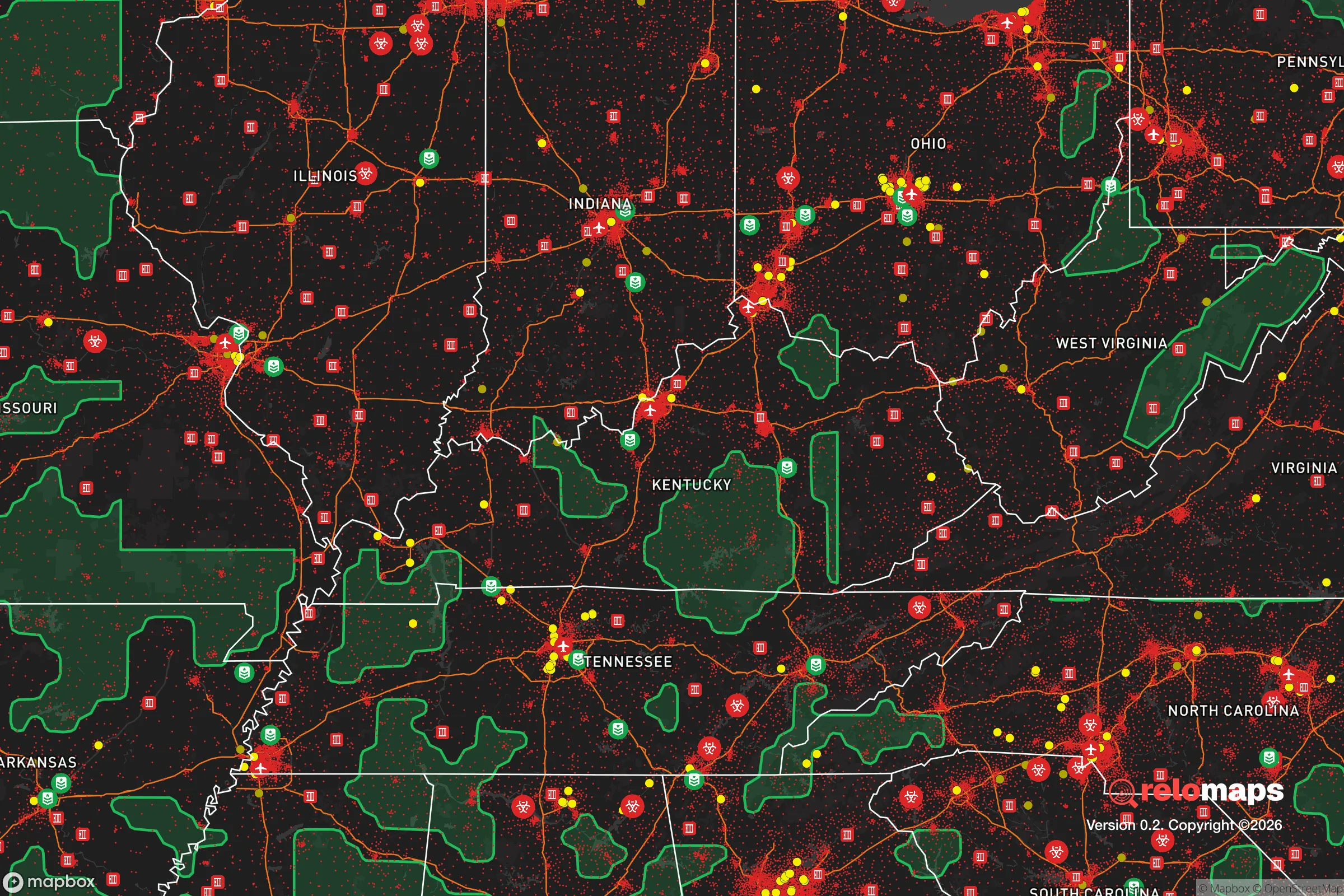


Important Note: For informational purposes only. This does not mean nothing bad ever happens in the green zones. Please use common sense. This is based on public data and modeled with AI. We tried to take a conservative approach but mistakes happen. We update this regularly as new information becomes available.
Solar Generator Recommendations
Backup power matters more here than in safer locations. We've picked three solar generators across budgets and capacity tiers — start with the budget unit if you only need a few essentials, or step up if you want to run a fridge and HVAC for days at a time.

Jackery Portable Power Station Explorer 300
Budget OptionPower on the Go: Weighing only 11 lbs, it's convenient to set up and store with book-sized foldable solar panels

BLUETTI Portable Power Station AC180
Designed for both indoor and outdoor scenarios, AC180 is highly capable as it has a robost capacity and continuous output power.

EF ECOFLOW DELTA Pro Ultra Power Station
Upgraded PickEcoFlow DELTA Pro Ultra is a whole-home energy system designed to grow with your family. Integrated with the Smart Home Panel 2, it scales to meet your evolving energy needs — keeping your home powered, intelligent, and secure through every stage of life.
We earn a commission, at no additional cost to you.
Strategic Assessment Analysis
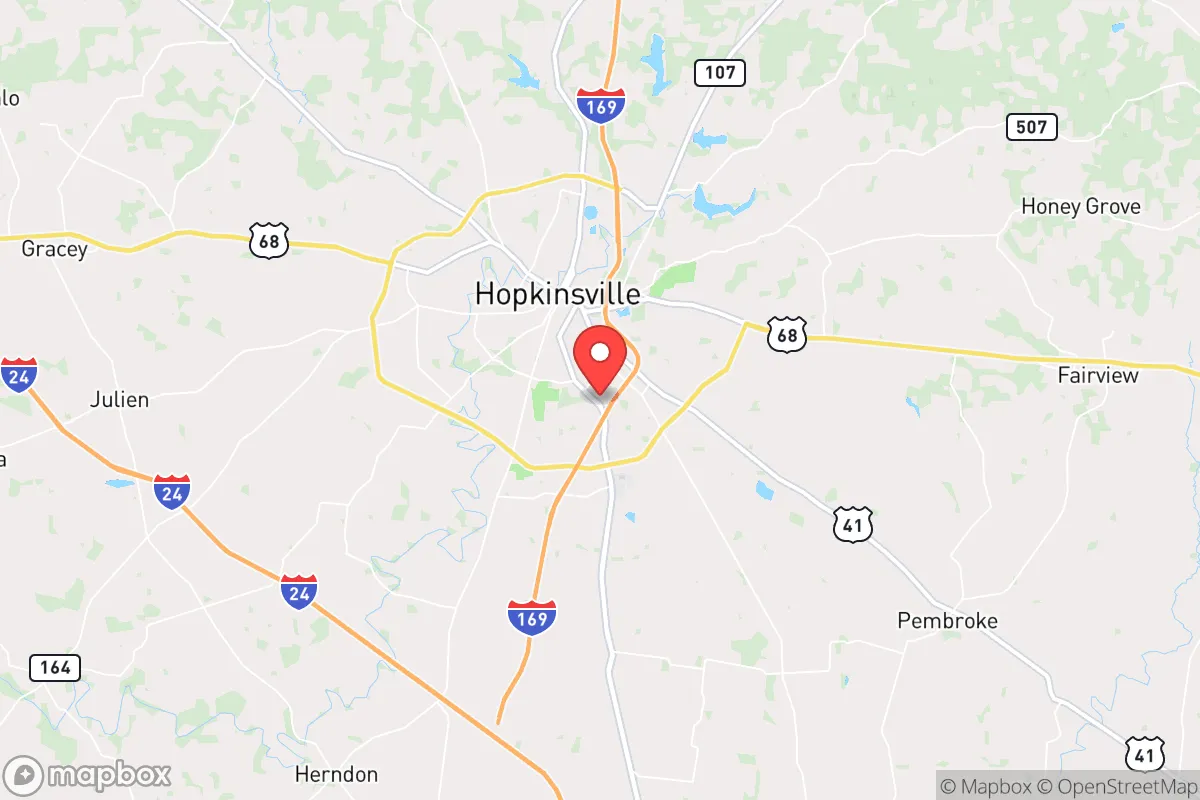
Hopkinsville, Kentucky, offers a compelling strategic position for those prioritizing resilience and self-sufficiency in an uncertain future. Located roughly 60 miles northwest of Nashville and 150 miles southwest of Louisville, this city of roughly 31,000 sits in a sweet spot—close enough to access major medical and supply hubs, yet far enough to avoid the immediate fallout of urban collapse, mass casualty events, or civil unrest. The area’s agricultural base, relatively low population density, and distance from primary nuclear targets make it a viable relocation option for conservative-minded individuals and families seeking a buffer zone between the chaos of metropolitan centers and the isolation of deep rural living.
Geographic position and natural advantages for long-term survival
Hopkinsville’s location in Christian County places it within the Western Kentucky Pennyroyal region, a landscape of rolling hills, limestone bedrock, and abundant freshwater sources. The area sits atop the Mississippian Plateau, which provides natural drainage and fertile soil—critical for sustainable food production. The nearby Land Between the Lakes National Recreation Area, a 170,000-acre peninsula between Kentucky Lake and Lake Barkley, offers a massive buffer zone of forested terrain, wildlife, and water access. This region is a de facto survival corridor, with minimal industrial pollution and low seismic risk. The climate is temperate, with four distinct seasons that support year-round gardening and livestock management, though summer humidity and occasional tornadoes require planning. For a relocator, the key advantage is access to multiple water sources: the Cumberland and Tennessee Rivers, plus numerous creeks and springs, reduce dependence on municipal systems. The area’s karst topography also means natural caves and sinkholes that can be adapted for storage or shelter—a feature preppers should note.
Risks, exposures, and proximity to fallout-relevant landmarks
No strategic assessment is honest without addressing vulnerabilities. Hopkinsville’s primary risk is its proximity to Fort Campbell, the U.S. Army installation straddling the Kentucky-Tennessee line about 15 miles south. While the base provides economic stability and a military presence that could deter localized unrest, it also makes the area a potential secondary target in a major conflict. A strike on Fort Campbell’s airfield or ammunition depots could generate fallout patterns affecting Hopkinsville, depending on wind direction. Additionally, the city lies within 100 miles of the Tennessee Valley Authority’s nuclear plants—Sequoyah and Watts Bar—and within 200 miles of the Paducah Gaseous Diffusion Plant (a former uranium enrichment site). In a worst-case scenario, these are contamination risks. On the civil unrest front, Nashville’s population of 1.9 million is close enough that a mass evacuation or riot could spill westward along I-24, potentially overwhelming local resources. Hopkinsville itself has a modest crime rate, but the city’s demographics include a significant low-income population (poverty rate around 22%), which could strain social services during a prolonged crisis. The lack of major interstate highways through the city center (I-24 bypasses to the south) is actually a defensive advantage—choke points on US 41 and US 68 can be monitored or blocked more easily than a multi-lane freeway.
Practical resilience for a relocator: food, water, energy, and defensibility
For a family or individual serious about self-reliance, Hopkinsville offers a strong baseline. Food production is viable: Christian County has over 1,200 farms, with corn, soybeans, and tobacco as cash crops, but small-scale vegetable farming and livestock (cattle, poultry, goats) are common. Local farmers’ markets and co-ops exist, but a prepper should plan to secure private land with well water and septic—many rural parcels under 10 acres are available for $5,000–$15,000 per acre, far cheaper than comparable land near Nashville. Water security is excellent: the average annual rainfall is 50 inches, and groundwater is accessible via shallow wells in most areas. The Pennyroyal aquifer is one of the most productive in the region, though testing for agricultural runoff is wise. Energy independence is achievable: solar irradiance is moderate (4.5 peak sun hours per day), but the area’s frequent cloud cover means battery storage and backup generators (propane or diesel) are necessary. Wood heating is practical given the forest cover, and local ordinances on burning are lenient in unincorporated areas. Defensibility is mixed: Hopkinsville’s grid layout and older neighborhoods offer limited tactical advantages, but the surrounding countryside—with its winding roads, creek crossings, and hilltops—provides natural observation points and chokepoints. The local sheriff’s office is well-funded (Christian County is a conservative stronghold, voting +35 R in recent elections), and gun ownership is culturally normalized, meaning a prepared relocator will find like-minded neighbors rather than hostile bureaucracy. However, the city itself has a police force of about 60 officers, which could be stretched thin during a regional emergency.
The overall strategic picture for Hopkinsville is one of moderate-to-high resilience with manageable trade-offs. It is not a remote bunker location—it is a working-class town with a military base next door and a major city within an hour’s drive. That proximity is a double-edged sword: it offers supply access and community support in normal times, but it also introduces exposure to urban contagion and targeted infrastructure risks. For a conservative relocator who values community, affordability, and a head start on self-sufficiency without going full off-grid, Hopkinsville is a solid choice. The key is to buy land outside the city limits, secure a well and solar array, and build relationships with local farmers and veterans before a crisis hits. The area’s biggest weakness—its dependence on the Fort Campbell economy—is also its greatest strength in a collapse scenario: a disciplined, armed population with logistical skills. If you’re looking for a place that balances access with buffer, and where your prepping won’t make you a pariah, Hopkinsville deserves a hard look.

* Values derived from national, state, county, city and local statistics and may differ in a specific area. Last updated: 2026-04-21T09:53:58.000Z
Narrative content on this page is AI-generated and may contain mistakes. Verify any details that matter before acting on them.
ReloMaps may earn a commission from affiliate links at no extra cost to you.

