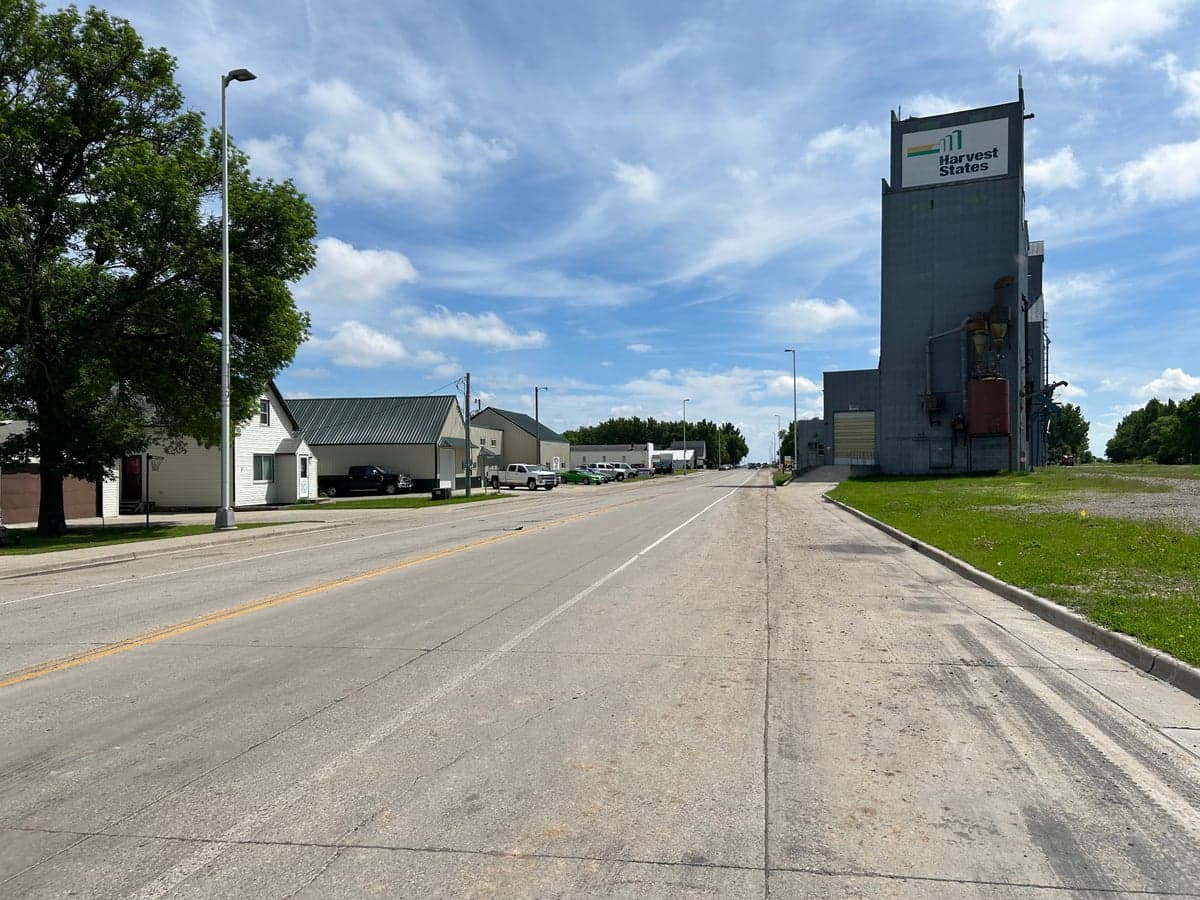
Photo: Wikipedia
Political ClimatePolitical Climate in Horace, ND
District shown is the primary district for this city’s centroid. Cities may span multiple districts.
Inherited from parent state — no local data available.
Local Political AnalysisPolitical Analysis of Horace, ND
Horace, North Dakota, is about as solidly conservative as it gets, and that's not changing anytime soon. The Cook PVI of R+18 tells you the math, but living here tells you the story: this is a place where people still believe in minding their own business and keeping the government out of your wallet and your personal life. We've watched Fargo and West Fargo get a little more purple over the years, but Horace has stayed true to its roots, and frankly, most of us like it that way.
How it compares
Drive ten minutes north into Fargo, and you'll feel the difference. Fargo's been trending bluer, especially in the last couple of cycles, with more progressive city council members and a louder activist crowd pushing things like diversity, equity, and inclusion mandates and stricter zoning rules that tell you what you can do with your own property. Horace, by contrast, is still the kind of town where the county commission meetings are short, the tax levies are low, and nobody's trying to pass a resolution on a national issue that has nothing to do with our potholes. Surrounding Cass County as a whole leans red, but Horace is the deep red pocket—the place where folks moved specifically to get away from the creeping overreach they saw in the bigger towns. West Fargo is a bit more moderate, but even there, you can see the pressure building for more regulations on short-term rentals, more fees on new construction, and more "community input" that ends up slowing everything down. Horace isn't immune to growth, but the political culture here still pushes back hard against any hint of progressive policy creep.
What this means for residents
For the people who live here, the conservative tilt means a few concrete things. First, your property rights are still respected—you can build a shop on your lot, keep a few chickens, or run a small business out of your garage without needing a zoning variance and a public hearing. Second, your tax dollars aren't being funneled into pet projects or DEI training for city staff; the budget stays lean and focused on roads, water, and emergency services. Third, and maybe most important, there's a general sense that the school board and city council are accountable to local families, not to state or national party agendas. We've seen what happens when school boards get taken over by activists pushing critical race theory or gender ideology curricula—that's not happening here. The community watches closely, and any candidate who starts talking about "equity" or "systemic change" gets a very short leash. The downside, if you can call it that, is that Horace can feel insular. If you're looking for a place with a lot of political diversity or a lively progressive scene, you'll be disappointed. But for folks who value freedom from government meddling, that's a feature, not a bug.
One thing that sets Horace apart culturally is the strong sense of self-reliance that runs through everything. You don't see a lot of hand-wringing about national politics here; people are more concerned with whether the gravel road is graded properly and whether the new subdivision is going to strain the well water. That said, there's a growing wariness about the direction of the state as a whole. Bismarck has been reliably red for years, but we've seen some bills slip through that feel like they're testing the limits—like expanded health mandates or new reporting requirements for small businesses. The long-term worry is that as Fargo's influence grows, the state legislature might start catering more to urban concerns and less to rural common sense. For now, though, Horace remains a quiet stronghold where the old-school values of personal responsibility and limited government still hold the day. If that ever changes, you'll know it—because a lot of us will be the first ones raising hell about it.

State Political ClimatePolitical Climate in North Dakota
State Political AnalysisPolitical Environment in the State
North Dakota is a deeply Republican state, but it’s not the uniform red you might expect from a flyover map. The dominant coalition is a mix of rural agricultural conservatives, energy-sector libertarians, and a small but vocal progressive urban base in Fargo and Grand Forks. Over the past 10-20 years, the state has shifted rightward on cultural issues—especially guns and abortion—while maintaining a pragmatic, low-tax posture that keeps the state competitive. However, the 2020 and 2024 cycles showed a subtle but real erosion of the GOP’s rural firewall, with Fargo’s Cass County flipping from +18 R in 2016 to +12 R in 2024, and Grand Forks County now a genuine swing county. The state’s political trajectory is stable but not static, and the real tension is between the old-school, live-and-let-live conservatism of the oil patch and the newer, more activist conservative movement centered on parental rights and school choice.
Urban vs. rural divide
The political map of North Dakota is a classic urban-rural split, but the urban areas are smaller and less dominant than in most states. Fargo (Cass County) is the blue-ish anchor, driven by North Dakota State University, Sanford Health, and a growing tech sector. It’s not a progressive stronghold—it still votes Republican—but it’s the only place where Democrats can reliably win local races. Grand Forks (Grand Forks County) is a true swing area, with the University of North Dakota and a large Air Force base creating a transient, younger population that leans slightly left. Bismarck (Burleigh County) is the conservative capital, reliably +30 R, thanks to state government workers and a strong Catholic influence. The real red is in the oil patch: Williston, Watford City, and Dickinson in the Bakken region vote +50 to +60 R, driven by energy workers who want low regulation and high pay. The rural counties along the Missouri River and the Red River Valley are deep red, but they’re losing population fast—some counties have shrunk by 20% since 2010. That demographic hollowing is slowly concentrating political power in Fargo and Grand Forks, which is the only reason the state isn’t getting redder.
Policy environment
North Dakota’s policy environment is conservative but pragmatic. There is no state income tax—a major draw for relocators—and property taxes are moderate, though they vary wildly by county. The state has a strong right-to-work law and is a “shall issue” concealed carry state with no permit required for open or concealed carry since 2021. Education policy is a mixed bag: the state has a robust school choice program through the North Dakota Opportunity Scholarship (a tax-credit scholarship for private school tuition), but the public school system is still dominant, especially in rural areas where the local school is the community center. Healthcare is a bright spot—Sanford Health and Essentia Health provide good coverage, but the state has not expanded Medicaid under the ACA, which keeps premiums higher for individuals. Election laws are solid: voter ID is required, same-day registration is allowed, and there is no widespread mail-in voting (absentee only with an excuse). The state legislature is overwhelmingly Republican, but it’s not a rubber stamp—there’s a genuine libertarian streak that kills bills that look like federal overreach, even from the right.
Trajectory & freedom
North Dakota is becoming more free in several key areas, but there are warning signs. On guns, the 2021 law eliminating the permit requirement for concealed carry was a major win, and the state has preempted local gun ordinances, so Fargo can’t go its own way. On parental rights, the 2023 HB 1205 (the “Parents’ Bill of Rights”) gives parents explicit authority over their child’s education, medical decisions, and school records—a strong piece of legislation that other states have copied. On medical autonomy, the state has banned nearly all abortions (with narrow exceptions) and has a strong conscience clause for healthcare workers. However, the state has also expanded government power in ways that should concern liberty-minded people. The 2023 SB 2247 created a state-level “disinformation” task force that, while ostensibly aimed at foreign interference, has the potential to chill speech. Property rights are generally strong, but the state’s use of eminent domain for the Dakota Access Pipeline was controversial and left a bad taste. Taxation is trending in the right direction—the legislature has cut income taxes repeatedly and is considering eliminating the corporate income tax entirely. But the state’s reliance on oil and gas revenue means that a price crash could force tax hikes, which is a real risk for anyone moving here long-term.
Civil unrest & political movements
North Dakota has seen its share of political flashpoints, but they’re not the kind you see in Portland or Seattle. The Dakota Access Pipeline protests (2016-2017) near the Standing Rock Reservation were the biggest civil unrest event in the state’s modern history, drawing thousands of activists from across the country. The protests were largely peaceful but included clashes with law enforcement, and the state’s response—using the National Guard and passing laws to criminalize protest—was controversial. Since then, the state has seen a rise in organized conservative activism, particularly around school boards and library content. Groups like the North Dakota Family Alliance and Moms for Liberty have been active in pushing for book bans and curriculum transparency, especially in Fargo and Bismarck. On the left, the North Dakota Democratic-NPL Party is a shell of its former self, but there is a growing progressive activist base in Fargo focused on climate change and racial justice. Immigration politics are relatively quiet—the state has a small but growing immigrant population (mostly from East Africa and Southeast Asia) concentrated in Fargo, and there have been no serious sanctuary city movements. Election integrity is a live issue: the 2020 election saw no major fraud, but the legislature passed HB 1380 in 2021 to ban ballot harvesting and require stricter voter ID, which was a response to national concerns rather than local problems.
Projection
Over the next 5-10 years, North Dakota will likely remain a solidly Republican state, but the margins will tighten. The key demographic shift is the continued urbanization of Fargo and the decline of rural counties. Fargo is growing at about 2% per year, and it’s attracting younger, more diverse residents who are less reliably Republican. The oil patch is volatile—if energy prices stay high, the Bakken will boom and keep the state red; if they crash, the state will face a budget crisis that could force tax increases. The wild card is in-migration: North Dakota is seeing a slow but steady influx of conservatives from blue states (especially California and Minnesota) who are drawn by the low taxes and gun-friendly laws. These newcomers tend to be more activist and less willing to compromise, which could push the state further right on cultural issues but create friction with the old-school, “don’t tread on me” libertarians. The biggest risk is that the state’s reliance on oil revenue leads to a fiscal reckoning that forces the legislature to raise taxes or cut services, which would erode the very freedom that attracts people here. For now, the trajectory is positive, but it’s not guaranteed.
For a new resident, the bottom line is this: North Dakota is a place where you can live with a high degree of personal freedom—low taxes, strong gun rights, and a government that mostly stays out of your life. But it’s not a libertarian paradise. The state has a real government footprint, especially in education and healthcare, and the political culture is more “practical conservative” than “ideological conservative.” If you’re moving here, expect to find a state that values independence but also expects you to be a good neighbor. The politics are stable, but they’re not static—and the next decade will test whether the state can maintain its freedom while adapting to a changing population and economy.
* Values derived from national, state, county, city and local statistics and may differ in a specific area. Last updated: 2026-04-19T05:14:30.000Z
Narrative content on this page is AI-generated and may contain mistakes. Verify any details that matter before acting on them.
ReloMaps may earn a commission from affiliate links at no extra cost to you.

