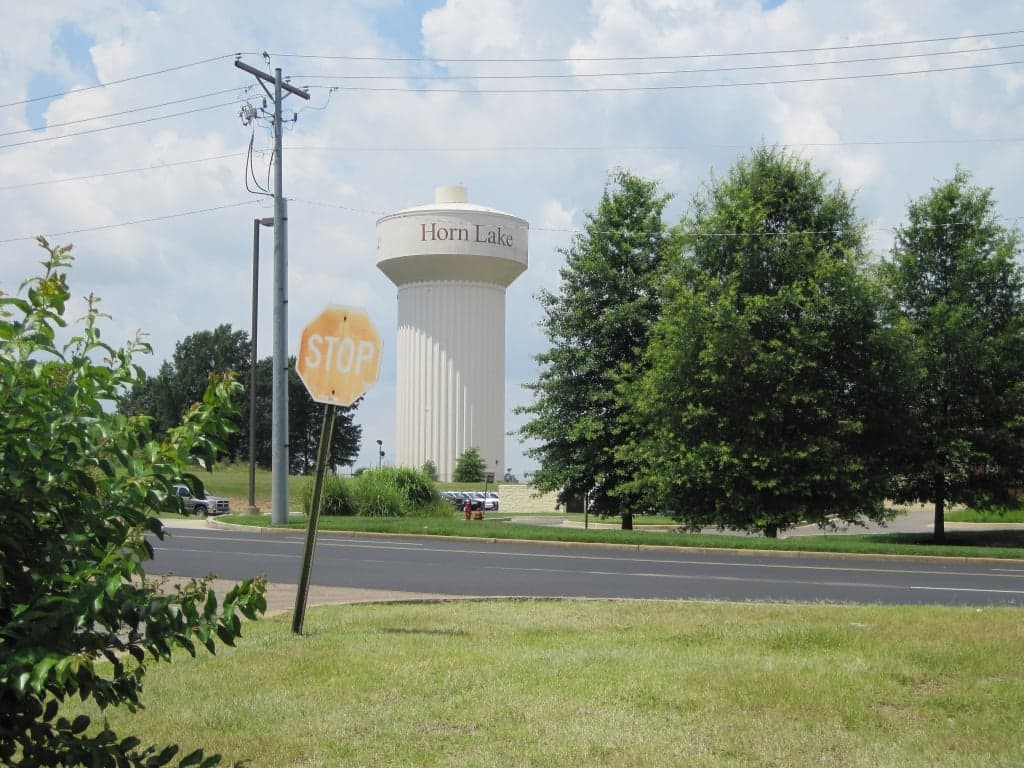
Photo: Wikipedia
Political ClimatePolitical Climate in Horn Lake, MS
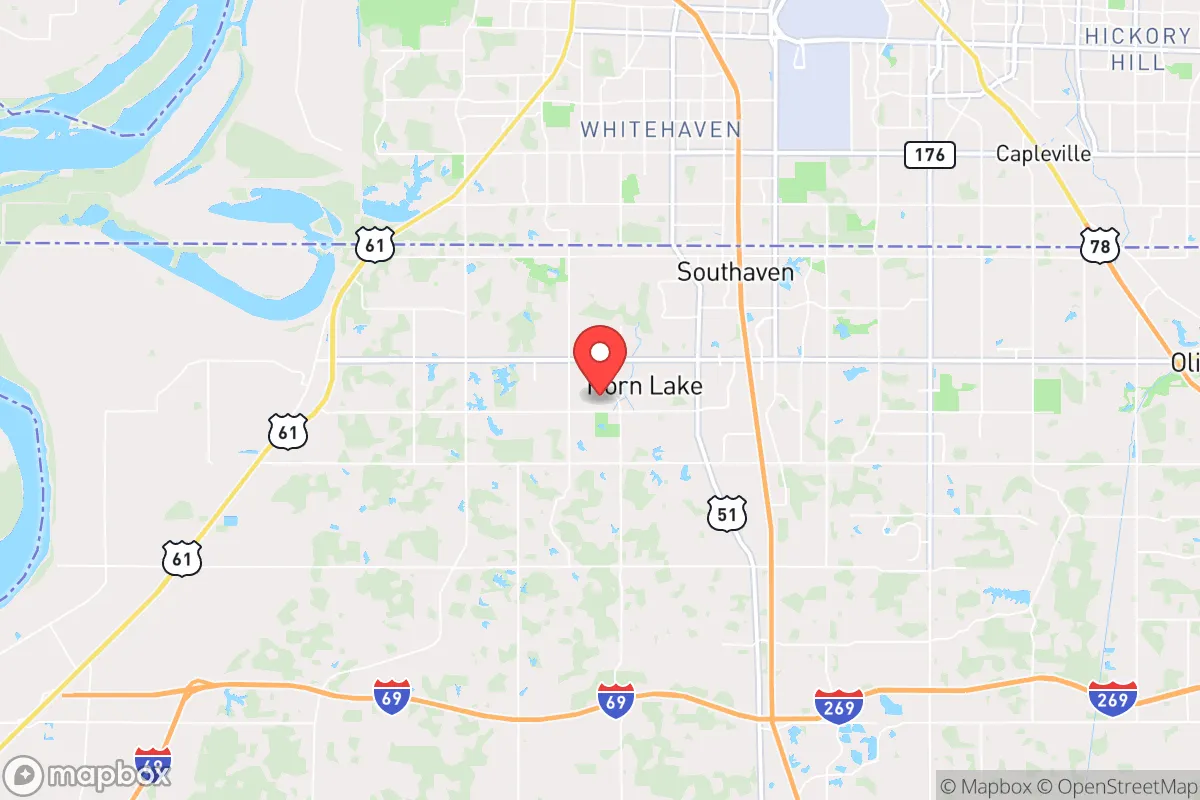
District shown is the primary district for this city’s centroid. Cities may span multiple districts.
Local Political AnalysisPolitical Analysis of Horn Lake, MS
Horn Lake, Mississippi, sits firmly in the red, with a Cook PVI of R+18 that reflects a deeply rooted conservative tradition. For as long as most of us can remember, this town has leaned Republican by a wide margin, and that hasn’t changed much even as the Memphis suburbs have grown. The 2024 presidential election saw DeSoto County vote over 65% for the GOP candidate, and Horn Lake’s precincts were right in line with that. If anything, the political trajectory here is holding steady—no major shifts toward the left, which is a relief to those of us who value limited government and personal responsibility.
How it compares
When you look at the broader DeSoto County area, Horn Lake is actually one of the more conservative spots. Neighboring Southaven and Olive Branch lean Republican too, but they’ve seen a bit more of that suburban drift—some younger families moving in from Memphis who bring along more progressive ideas about taxes and zoning. Drive just a few miles north into Memphis proper, and you’re in a completely different world: a deep-blue city where local government has a habit of meddling in everything from business hours to property rights. Horn Lake, by contrast, has kept its distance from that kind of overreach. The contrast is stark, and it’s one reason folks here feel like they’re holding the line against a tide of government expansion that’s creeping outward from the city.
What this means for residents
For the people who live here, the conservative climate translates into a few concrete things. First, there’s a general trust that local officials won’t get too creative with regulations—no surprise business mandates or heavy-handed housing rules that would jack up your cost of living. Property taxes in Horn Lake are among the lowest in DeSoto County, and there’s no city income tax, which is a big deal when you’re budgeting. Second, the school board and city council tend to focus on basics like roads and public safety rather than pushing social experiments. That said, there’s always a risk that as the area grows—and it is growing, with new subdivisions popping up along Goodman Road—some of that hands-off attitude could get diluted. A few new residents from out of state have tried to bring in ideas like higher impact fees or more zoning restrictions, but so far, the local electorate has pushed back hard.
One cultural distinction worth noting: Horn Lake has a strong sense of local identity that resists outside pressure. You don’t see the kind of performative activism you’d find in college towns or big cities. Instead, the community rallies around things like the annual Horn Lake Christmas Parade and the local sports leagues. On policy, the city has kept its distance from state-level debates about mask mandates or vaccine passports—there’s a general sentiment that those decisions belong to individuals, not bureaucrats. Looking ahead, the biggest concern among long-time residents is whether the steady influx of people from blue states will eventually shift the local balance. For now, though, Horn Lake remains a place where you can still expect the government to stay out of your business, and that’s exactly how most folks here want it.

State Political ClimatePolitical Climate in Mississippi
State Political AnalysisPolitical Environment in the State
Mississippi is one of the most reliably conservative states in the country, with a Republican lean that has only deepened over the past two decades. The state has not voted for a Democratic presidential candidate since 1976, and in 2024, Donald Trump carried it by roughly 17 points. The dominant coalition is a mix of rural and suburban voters, evangelical Christians, and a growing number of conservative-leaning transplants from other states. Over the last 10-20 years, the shift has been dramatic: Democrats once held most statewide offices and legislative seats, but Republicans now control every statewide executive office, both chambers of the legislature, and both U.S. Senate seats. The state’s political identity is now firmly rooted in limited government, traditional values, and a skepticism of federal overreach.
Urban vs. rural divide
The political map of Mississippi is starkly divided between its few urban centers and the vast rural countryside. The Jackson metro area, including Hinds, Madison, and Rankin counties, is the state’s most politically diverse region. Hinds County (Jackson proper) is reliably Democratic, often voting 70%+ for Democratic candidates, driven by a large African American population and a concentration of government workers and academics. However, the suburbs tell a different story: Madison County (Madison, Ridgeland) is one of the most Republican-leaning counties in the state, often voting 70%+ Republican, thanks to its affluent, family-oriented population. Rankin County (Brandon, Pearl) is similarly deep red. The Gulf Coast, anchored by Biloxi and Gulfport, leans conservative but is more moderate on some economic issues due to the tourism and casino industries. The Mississippi Delta, including towns like Greenville and Clarksdale, is heavily Democratic due to its majority-Black population, but these areas have shrinking populations and declining political influence. The northeastern corner, around Tupelo and Oxford, is reliably Republican, though Oxford’s university population (Ole Miss) introduces a small but noticeable liberal enclave. The Pine Belt, including Hattiesburg, is a mixed bag: the city itself leans slightly Democratic, but the surrounding counties are deeply red. The key takeaway: Mississippi’s political power is concentrated in its rural and suburban areas, which are overwhelmingly conservative, while the urban centers are isolated blue islands with diminishing electoral weight.
Policy environment
Mississippi’s policy environment is a model of conservative governance. The state has no personal income tax on most earned income (the 3% bracket was eliminated in 2022, and the 4% bracket is being phased out), and the corporate income tax rate is a flat 4%. Sales tax is 7% on most goods, but groceries are exempt. The regulatory posture is business-friendly, with a right-to-work law and minimal zoning restrictions in most areas. Education policy is a mixed bag: the state has a school choice program (the Mississippi Educational Scholarship Account for students with disabilities) and a charter school law, but traditional public schools remain dominant. In 2024, the legislature passed a universal school choice bill that allows any student to use state funds for private school or homeschooling, a major win for parental rights. Healthcare is a flashpoint: Mississippi has not expanded Medicaid under the Affordable Care Act, and the state has some of the strictest abortion laws in the nation (a near-total ban with no exceptions for rape or incest, only to save the mother’s life). Election laws are secure: voter ID is required, and the state has no no-excuse absentee voting (you need a valid reason to vote by mail). The legislature has also passed laws restricting ballot harvesting and requiring paper ballots. For a conservative, Mississippi’s policy environment is about as friendly as it gets — low taxes, limited regulation, strong protections for the unborn, and secure elections.
Trajectory & freedom
Mississippi is trending toward more freedom in several key areas, though there are some concerning countercurrents. On the positive side, the state has aggressively expanded gun rights: in 2023, the legislature passed a permitless carry law (HB 1029), allowing any law-abiding adult to carry a concealed firearm without a permit. This was a major win for Second Amendment advocates. Parental rights have also been strengthened: the 2024 universal school choice bill (SB 2334) gives parents direct control over their children’s education funding, and a 2023 law (HB 1310) requires schools to notify parents of any changes to a student’s “emotional or psychological well-being” — a direct response to transgender policies in other states. Medical freedom is a mixed bag: the state has no vaccine mandate for public employees, but it also has not passed any broad medical autonomy laws like those in Idaho or Oklahoma. Property rights are strong, with no statewide zoning mandates and a low property tax rate (average effective rate is about 0.8%). On the negative side, the state’s tax burden is still higher than some neighbors (Tennessee has no income tax at all), and the phase-out of the income tax is slow. There is also growing concern about federal overreach: Mississippi has joined multi-state lawsuits against the Biden administration on issues like environmental regulations and immigration enforcement. The overall trajectory is toward greater personal liberty, especially in education and gun rights, but the state remains cautious on medical freedom and tax reform.
Civil unrest & political movements
Mississippi has a relatively low level of visible civil unrest compared to other states, but there are active political movements on both sides. The most visible flashpoint in recent years has been the debate over the state flag: in 2020, the legislature voted to remove the Confederate battle emblem from the state flag, a move that was supported by business interests and some conservatives but opposed by many rural voters. This issue has largely faded, but it still simmers in some circles. Immigration politics are less heated than in border states, but there is a growing concern about illegal immigration in the agricultural sector, particularly in the Delta. The state has no sanctuary cities, and local law enforcement cooperates with federal immigration authorities. Election integrity has been a major focus: after the 2020 election, the legislature passed a law (SB 2588) that tightened absentee ballot rules and prohibited private funding of election administration. There have been no major protests or riots in Mississippi in recent years, though there were small Black Lives Matter demonstrations in Jackson and Oxford in 2020. For a new resident, the political climate is stable and low-drama — you won’t see the kind of street-level conflict common in Portland or Seattle. The main political movements are grassroots conservative groups focused on school choice, gun rights, and anti-abortion activism, along with a smaller but vocal progressive movement centered in Jackson and Oxford.
Projection
Over the next 5-10 years, Mississippi is likely to become even more conservative, driven by demographic trends and in-migration. The state’s population is aging and slowly declining overall, but the growth areas are in the conservative suburbs of Madison, Rankin, and DeSoto counties (near Memphis). The Delta and Jackson are losing population, which will further reduce the Democratic vote share. In-migration is modest but growing, with retirees and remote workers from California, Illinois, and New York moving to places like Ocean Springs and Oxford for the low cost of living and conservative culture. These newcomers tend to be more conservative than the national average, though they may bring some moderate views on environmental issues. The state’s political leadership is likely to remain firmly Republican, with no serious challenge to GOP dominance. The biggest wild card is the potential for federal intervention on issues like Medicaid expansion or voting rights, but the state’s political class is united in resisting such pressure. Someone moving to Mississippi now should expect to find a state that is stable, predictable, and increasingly aligned with traditional conservative values — low taxes, strong gun rights, school choice, and a culture that values personal responsibility over government solutions.
For a new resident, the bottom line is this: Mississippi offers a political environment where your rights are respected, your taxes are low, and your children’s education is under your control. The state is not perfect — the tax phase-out is slow, and there are still some bureaucratic hurdles — but it is moving in the right direction. If you value freedom from government overreach, a strong Second Amendment, and a culture that prioritizes family and faith, Mississippi is one of the best places in the country to put down roots. Just be prepared for the heat and the mosquitoes — the politics are the easy part.
* Values derived from national, state, county, city and local statistics and may differ in a specific area. Last updated: 2026-05-01T05:12:39.000Z
Narrative content on this page is AI-generated and may contain mistakes. Verify any details that matter before acting on them.
ReloMaps may earn a commission from affiliate links at no extra cost to you.

