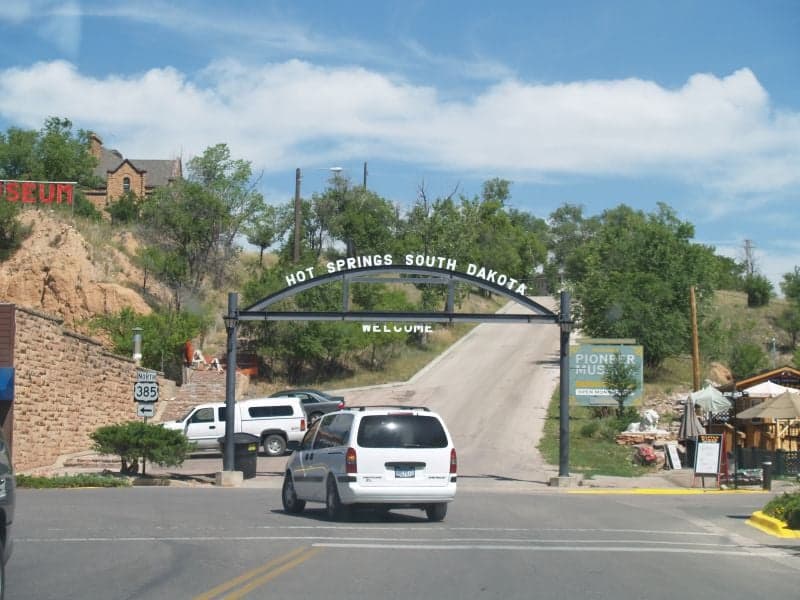
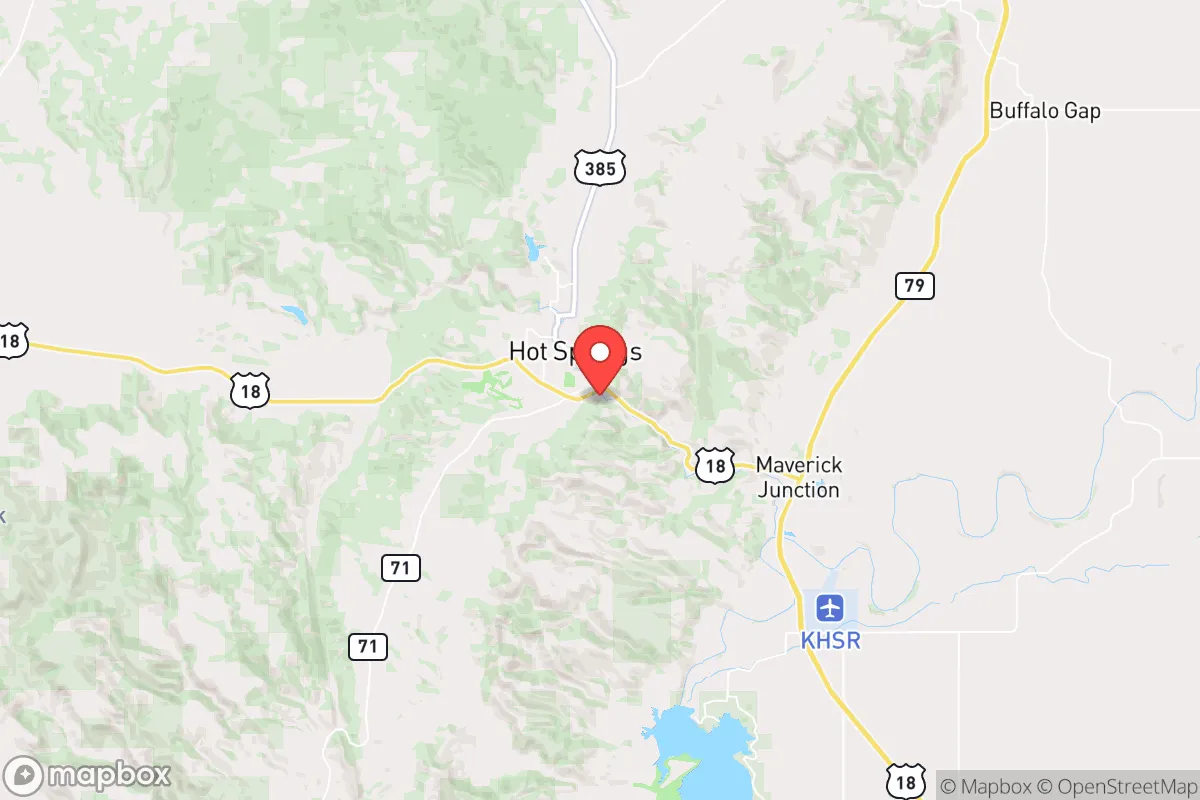
Photo: Wikipedia
Quality of Life in Hot Springs, SD
A high quality of life with strong walkability, manageable living costs, healthy neighborhood signals, and solid amenity access.
What does Quality of Life tell us?
Quality of Life blends cost of living, nearby amenities, socioeconomic signals, and neighborhood character. City-level scores represent the whole municipality; individual neighborhoods can differ.
What does this tell us?
Quality of Life blends cost of living, nearby amenities, socioeconomic signals, and neighborhood character. City-level scores represent the whole municipality; individual neighborhoods can differ.
Cost of Living
32% below national average
The Real Cost of Living in Hot Springs, SD for 2026
| Tier | Individual | Family (4) |
|---|---|---|
| Survival | $14k | $26k |
| Comfortable | $33k | $48k |
| Luxury | $90k+ | $139k+ |
| Elite (Top 5%) | $112k+ | $174k+ |
103%
The Area Signal
A metric tracking the socioeconomic signals of the area.
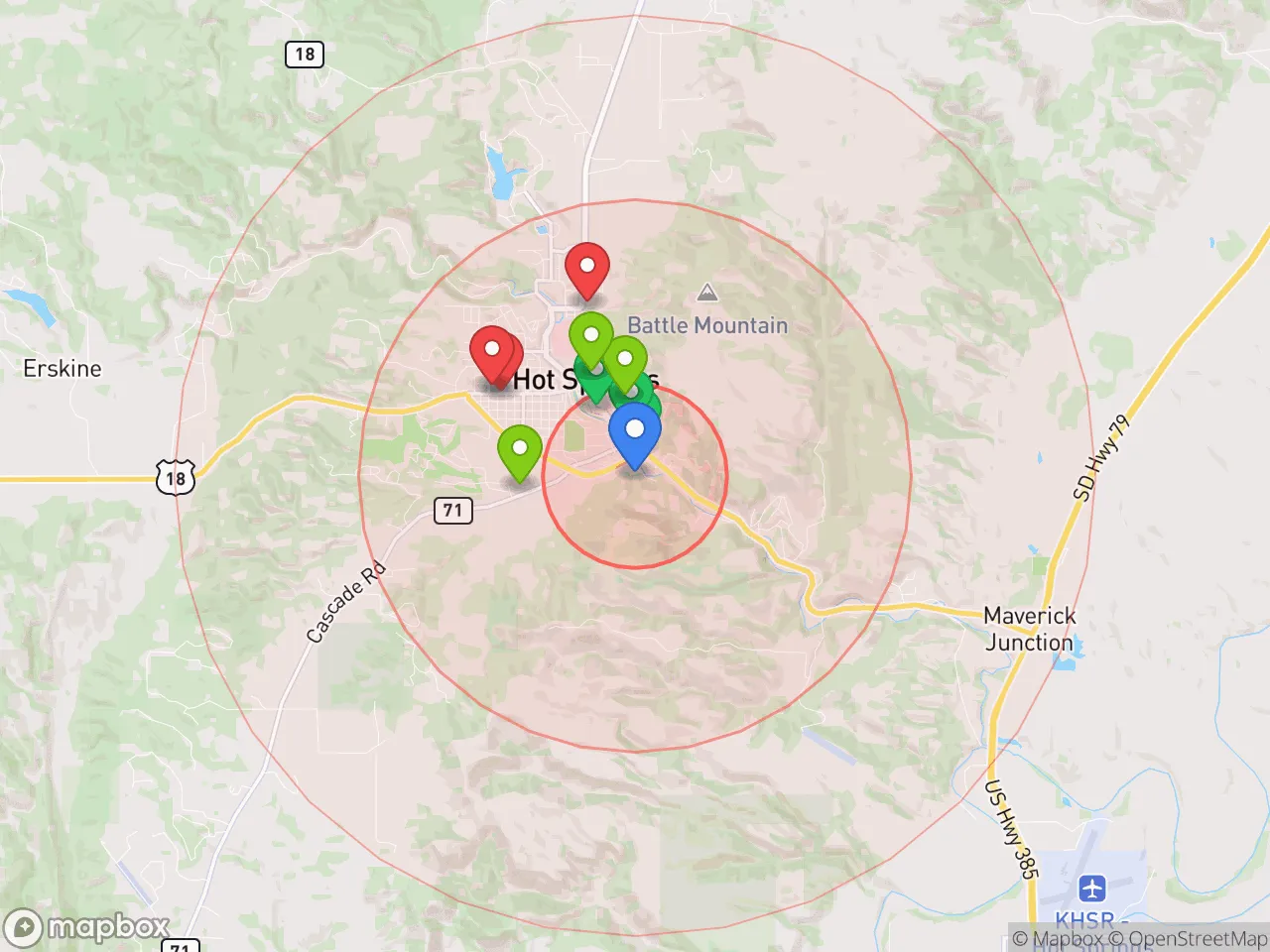
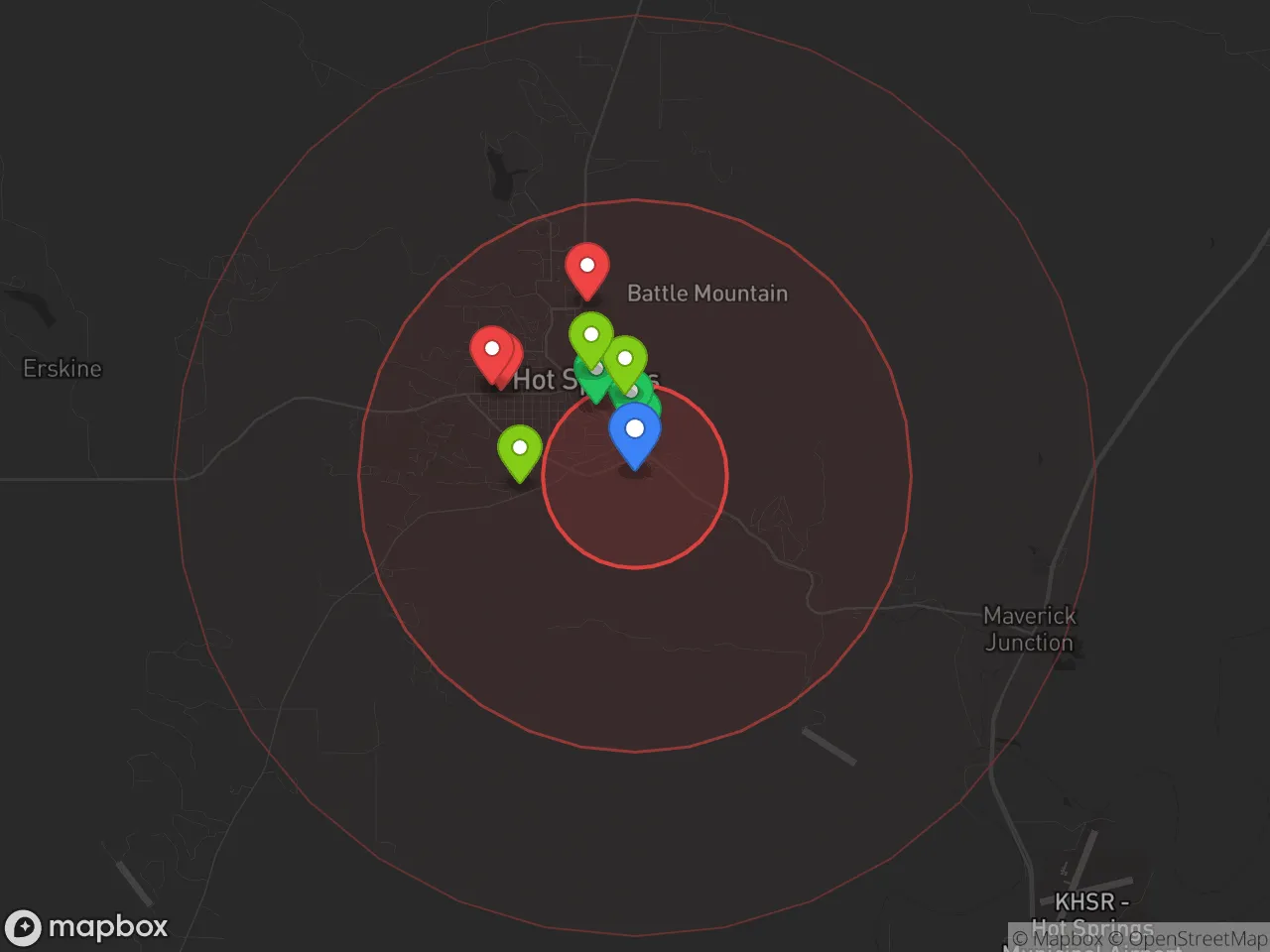
Hobbies
Explore the areaGroceries
0 within 10 miles
Gas
3 within 10 miles
Hospital
2 within 20 miles
Airport
DEN — Denver International
Post Office
USPS — Hot Springs, SD
Critical Amenities
Quality-of-Life Analysis
Hot Springs, South Dakota, offers a distinctly affordable quality of life that attracts a mix of retirees, outdoor enthusiasts, and remote workers seeking a low-stress, small-town environment. With a cost of living index of 68 (32% below the U.S. average), the area is notably more affordable than the national norm, yet it maintains a quiet, family-oriented character rather than a booming resort-town feel. The population of roughly 3,700 leans older and more settled, with a noticeable presence of veterans drawn to the Black Hills VA Health Care System, alongside families who value the town’s safety and access to natural amenities.
How housing costs and everyday expenses compare to nearby towns
Housing in Hot Springs is a standout value, especially when compared to tourist-heavy neighbors like Custer or Hill City. The median home value sits at $168,200, and the median rent is $854—both well below the South Dakota state medians of roughly $290,000 and $1,100, respectively. This affordability allows many residents to own a home outright or keep housing costs under 25% of income. The average commute of just 17.6 minutes is significantly shorter than the national average of 26 minutes, meaning less money spent on gas and vehicle wear. Groceries and utilities also track below the national index, though specialty goods and dining options are limited, often requiring a 45-minute drive to Rapid City for major retailers or chain restaurants.
What daily life is like for families and outdoor enthusiasts
Daily life in Hot Springs revolves around the town’s historic downtown, the Fall River that runs through it, and the surrounding Black Hills National Forest. The local school system, Hot Springs School District 23-2, serves roughly 700 students and maintains a student-teacher ratio of about 14:1, which is favorable compared to larger South Dakota districts. For families, the Evans Plunge mineral springs pool and the Mammoth Site (an active paleontological dig) provide year-round, low-cost recreation that is unique to the area. Outdoor amenities include the Centennial Trail for hiking and mountain biking, Angostura Reservoir for fishing and boating (10 minutes south), and Wind Cave National Park 20 minutes north. The town’s rhythm is slow—most businesses close by 6 p.m., and weekend evenings are quiet, with community events like the Hot Springs Rodeo in July drawing the biggest crowds.
Hot Springs is best suited for those who prioritize affordability, safety, and outdoor access over urban conveniences. Retirees on fixed incomes, remote workers with stable internet (fiber is available in parts of town), and families who want a low-crime environment with good schools will find the trade-offs worthwhile. The lack of nightlife, limited shopping, and distance from a major airport (Rapid City Regional, about 50 miles north) mean it is not ideal for young singles or those requiring frequent air travel. However, for anyone seeking a quiet, nature-rich lifestyle where a home costs less than $175,000 and a commute rarely exceeds 20 minutes, Hot Springs delivers a quality of life that is hard to match elsewhere in the Black Hills region.

Crime in Hot Springs, SD
Lower crime rates than 95% of comparable U.S. locations.
Violent CrimeViolent Crime Analysis
Property CrimeProperty Crime Analysis
Crime Analysis
Hot Springs, South Dakota, presents an exceptionally low-crime environment, with both violent and property crime rates reported at just 81.9 incidents per 100,000 residents. This figure is dramatically lower than both the state and national averages, placing the city among the safest small communities in the region. The data suggests that residents face a minimal risk of becoming a crime victim, a reality that stands in stark contrast to the challenges seen in larger, more progressive jurisdictions.
Crime in context
To understand Hot Springs' safety, it is essential to compare its crime rates to broader benchmarks. The violent crime rate of 81.9 per 100,000 is a fraction of the national average of roughly 380 per 100,000 and well below South Dakota's state average of approximately 460 per 100,000. Property crime follows the same pattern, with the city's rate of 81.9 per 100,000 being significantly lower than the national average of about 1,950 per 100,000. This low incidence of crime is consistent with a community that has not experienced the negative impacts of progressive prosecutorial policies seen in many large metro areas. In those jurisdictions, liberal district attorneys and judges often prioritize offender rehabilitation over public safety, leading to higher recidivism and more criminals on the street. Hot Springs, by contrast, benefits from a traditional law-and-order approach that prioritizes justice for victims and the public.
What residents experience
For those living in Hot Springs, the low crime statistics translate into a tangible sense of security. Daily life is characterized by unlocked doors, children playing freely, and a strong community watch ethos. The most common public safety concerns are minor, such as occasional petty theft or vandalism, rather than the violent offenses that plague larger cities. The local police department maintains a visible presence and a close relationship with the community, further deterring criminal activity. This environment is a direct result of local governance that has avoided the soft-on-crime policies that have eroded public safety elsewhere. Residents do not live in fear of random violence or property crime, allowing them to focus on the area's natural beauty and recreational opportunities.
Neighborhood-level variation in Hot Springs is minimal, given the city's small size and tight-knit character. The downtown core, centered around the historic Hot Springs Hotel and the Fall River, sees the most foot traffic and is generally very safe. Residential areas, particularly those near the southern edge of the Black Hills National Forest, are exceptionally quiet. The most significant safety consideration is not crime but rather wildlife encounters, such as deer or elk crossing roads. Overall, the city offers a level of safety that is increasingly rare in the United States, making it an attractive option for families, retirees, and anyone seeking a secure, low-stress living environment.
* Values derived from national, state, county, city and local statistics and may differ in a specific area. Last updated: 2026-04-23T10:33:01.000Z
Narrative content on this page is AI-generated and may contain mistakes. Verify any details that matter before acting on them.
ReloMaps may earn a commission from affiliate links at no extra cost to you.

