
Photo by Joshua J. Cotten on Unsplash
Demographics of Houma, LA
Affluence Level in Houma, LA
A below-average socioeconomic profile. Incomes, home values, and educational attainment trail the U.S., with higher poverty and unemployment.
People of Houma, LA
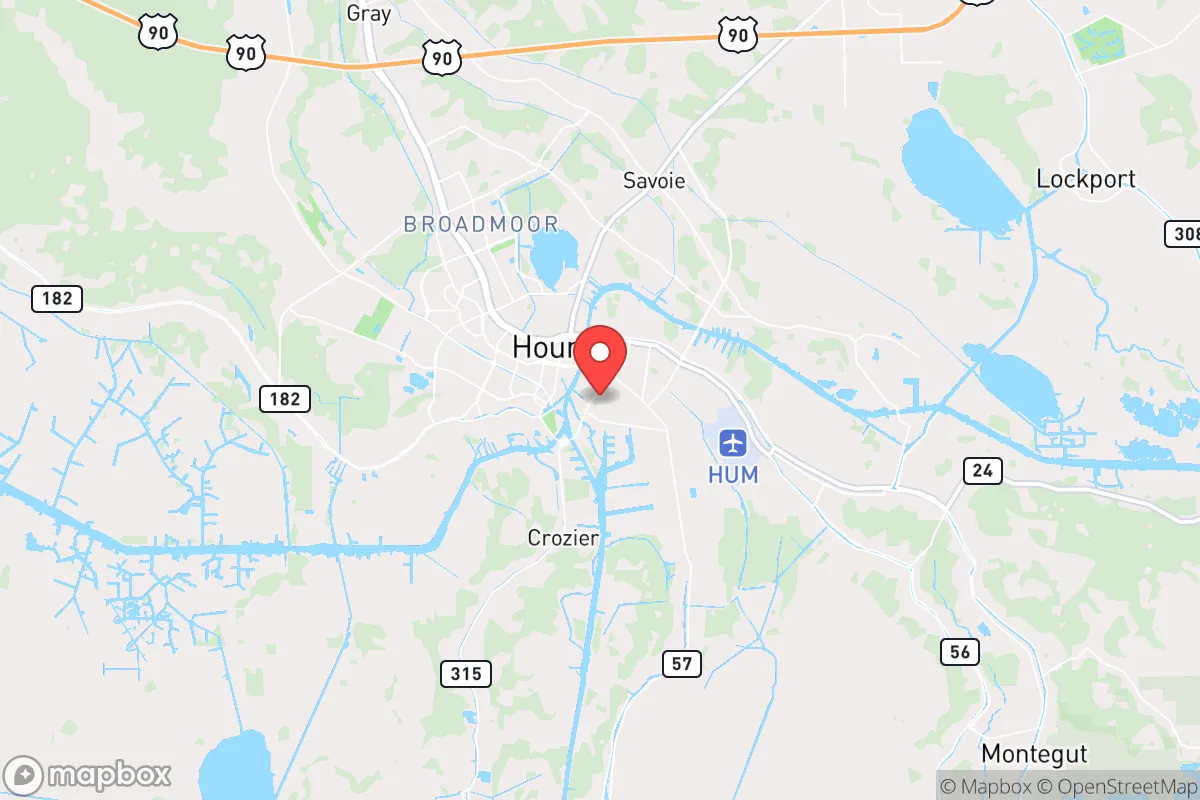
The people of Houma, Louisiana today form a community of roughly 32,760 residents, characterized by a strong working-class identity rooted in the region's maritime and oilfield industries. The city is notably less diverse than the national average, with a population that is 64.2% White, 20.3% Black, and 8.5% Hispanic, while the foreign-born share stands at just 2.9%. A distinctive marker of Houma's identity is its deep Cajun and Creole heritage, which remains visible in the local French-influenced dialect, cuisine, and annual festivals like the Houma Cajun Festival. The city's population density is moderate, and its layout reflects a blend of historic bayou-side settlements and post-war suburban development.
How the city was settled and grew
Houma's human history begins with the indigenous Houma people, who inhabited the region along Bayou Terrebonne long before European contact. By the early 19th century, French-speaking Acadian exiles—the Cajuns—began settling the bayous after being expelled from Nova Scotia, drawn by the region's remote, swampy terrain that allowed them to maintain their language and culture largely undisturbed. These early settlers established the core of what is now downtown Houma along the bayou, building a network of small farms, trapping routes, and fishing camps. A second major wave arrived after the Civil War, when freed Black families established communities like Mechanicville and Dumestre, often working as laborers on sugar plantations or as independent fishermen. The discovery of oil in the 1920s and 1930s transformed Houma from a quiet bayou trading post into a boomtown, drawing White workers from rural Louisiana and Texas into neighborhoods like Broadmoor and Grand Caillou, where many oilfield service companies set up shop.
Modern era (post-1965)
The post-1965 period brought modest demographic shifts to Houma, though the city remained far less affected by immigration than most U.S. metros. The 1965 Hart-Cellar Act did not trigger a significant influx of foreign-born residents; Houma's foreign-born share today is only 2.9%, well below the national average. Instead, the major population change was domestic: the expansion of the oil and gas industry in the 1970s and 1980s attracted White and Black workers from across Louisiana and neighboring states, settling into newer subdivisions like Mulberry and Bayou Gardens. The Hispanic population, now 8.5%, began growing noticeably in the 1990s and 2000s, driven by labor demand in construction, seafood processing, and oilfield support. These newer Hispanic residents concentrated in parts of East Houma and along the Martin Luther King Boulevard corridor. The Black population, at 20.3%, remains largely concentrated in historic neighborhoods like Mechanicville and Dumestre, with some movement into suburban subdivisions over the past two decades. East/Southeast Asian communities (0.9%) are a very small presence, primarily Vietnamese and Filipino families working in the seafood and healthcare sectors, with no distinct ethnic enclave. The Indian subcontinent population is effectively zero.
The future
Houma's population trajectory points toward slow, gradual diversification rather than rapid change. The White share (64.2%) is declining slowly as older Cajun families age and younger residents move to larger metros for employment, while the Hispanic share (8.5%) is the fastest-growing segment, projected to reach 12-14% by 2040 if current trends hold. The Black population is expected to remain stable or grow slightly, as the local economy offers steady blue-collar employment. The foreign-born share will likely remain low, as Houma lacks the large employers or university anchors that drive immigration in other Southern cities. The city is not tribalizing into distinct ethnic enclaves in the manner of larger metros; instead, neighborhoods like Broadmoor and Mulberry are becoming more mixed, while Mechanicville and East Houma retain their historic character. The biggest demographic risk is out-migration of young adults, which could accelerate if the oil and gas sector faces prolonged downturns.
For someone moving to Houma today, the city offers a stable, culturally cohesive community with a strong sense of place, but limited demographic diversity and a slowly aging population. The city is becoming slightly more Hispanic and slightly less White, but the pace of change is slow enough that the Cajun and Creole cultural foundations will remain dominant for at least another generation. New residents should expect a place where family networks, local traditions, and bayou geography shape daily life more than any rapid demographic transformation.

* Values derived from national, state, county, city and local statistics and may differ in a specific area. Last updated: 2026-05-01T09:22:37.000Z
Narrative content on this page is AI-generated and may contain mistakes. Verify any details that matter before acting on them.
ReloMaps may earn a commission from affiliate links at no extra cost to you.

