
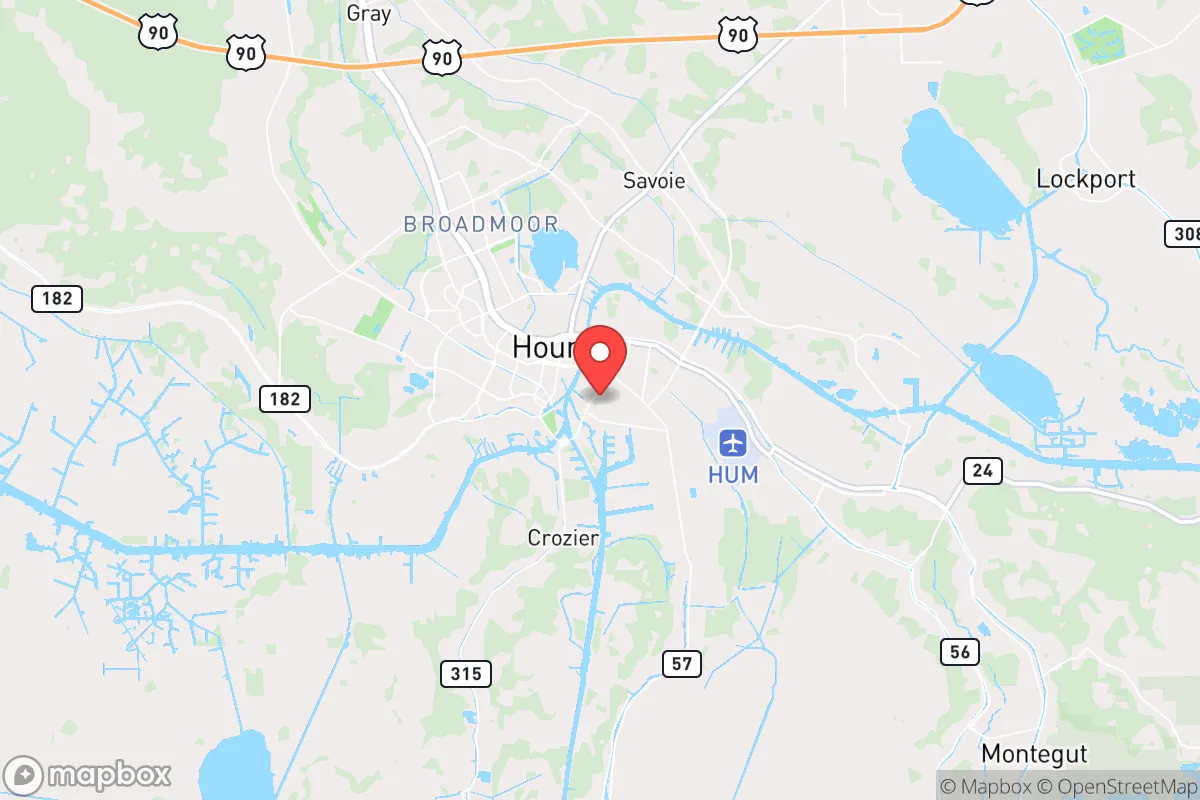
Photo by Joshua J. Cotten on Unsplash
Political ClimatePolitical Climate in Houma, LA
District shown is the primary district for this city’s centroid. Cities may span multiple districts.
Local Political AnalysisPolitical Analysis of Houma, LA
Houma is about as reliably conservative as it gets in Louisiana, and that’s not changing anytime soon. The area’s Cook PVI of R+22 tells you everything you need to know: this is deep-red country where Republican candidates routinely win by double digits, and the local culture reflects that. If you’re looking for a place where traditional values, personal responsibility, and limited government are still the norm rather than the exception, Houma fits the bill. The political trajectory here has been steady for decades, with no real signs of the kind of leftward shift you see in places like Baton Rouge or New Orleans, which are just an hour or two away but feel like a different world politically.
How it compares
Drive thirty minutes north to Thibodaux, and you’ll find a similar conservative bent, though it’s a bit more mixed thanks to Nicholls State University’s influence. Head east toward New Orleans, and the contrast is stark—Orleans Parish votes overwhelmingly Democratic, with a Cook PVI of D+26. That’s a 48-point swing from Houma. Even Lafayette, about an hour west, leans more moderate, with a noticeable progressive undercurrent in its arts and university scenes. Houma, by contrast, remains a stronghold for the kind of old-school, bayou conservatism that prioritizes gun rights, local control, and skepticism of federal overreach. The surrounding Terrebonne Parish consistently votes Republican by wide margins, and local offices—sheriff, school board, parish council—are held by folks who generally keep government out of your business.
What this means for residents
For someone moving here, the political climate means a few practical things. You won’t see the kind of heavy-handed government mandates that have become common in blue cities—Houma largely resisted the strictest COVID lockdowns, for instance, and local leaders tend to push back against state or federal overreach into things like energy regulations or property rights. The oil-and-gas industry is the backbone of the local economy, so talk of “green new deals” or phasing out fossil fuels doesn’t fly here. That said, there’s a growing concern among longtime residents about creeping progressive influence, especially through state-level policies coming out of Baton Rouge. Some worry that as Louisiana’s urban centers grow more liberal, they’ll try to impose their values on places like Houma through state mandates on education, taxes, or environmental rules. So far, local pushback has been effective, but it’s something to keep an eye on.
Culturally, Houma stands out for its strong Cajun and Creole heritage, which comes with a fierce independence and a distrust of distant authority. You’ll find that reflected in everything from the local gun culture—hunting and fishing are huge here—to the general attitude toward government: help yourself first, and don’t expect the state to solve your problems. There’s also a notable resistance to the kind of social engineering you see in more progressive areas; school curriculum debates, for example, tend to favor parental control over state standards. If you value personal freedoms and a community that largely shares those values, Houma is a solid bet. Just don’t expect it to change much—the people here like things the way they are, and they’re not shy about keeping it that way.

State Political ClimatePolitical Climate in Louisiana
State Political AnalysisPolitical Environment in the State
Louisiana has long been a reliably red state in federal elections, but its political climate is far more complex than a simple partisan label suggests. The state leans Republican at the presidential level, with Donald Trump winning it by 19 points in 2024, but Democrats still hold significant power in local and state offices, particularly in New Orleans and Baton Rouge. Over the last 20 years, the state has shifted from a Democratic stronghold to a solidly Republican one, driven by the realignment of white, rural, and suburban voters, while the urban core has become increasingly Democratic. This trajectory has accelerated since 2010, with the GOP now holding supermajorities in both chambers of the state legislature and every statewide elected office.
Urban vs. rural divide
The political map of Louisiana is a textbook example of the urban-rural divide. The Democratic strongholds are concentrated in the state's two major cities: New Orleans (Orleans Parish) and Baton Rouge (East Baton Rouge Parish). In 2024, Kamala Harris won Orleans Parish by a staggering 68 points, while East Baton Rouge went for her by 12 points. These cities are home to large African American populations, unionized labor, and academic institutions like LSU and Tulane, which drive progressive politics. In contrast, the rural and suburban parishes are overwhelmingly Republican. Lafayette, in the heart of Acadiana, is a conservative stronghold, with Trump winning Lafayette Parish by 32 points in 2024. The state's northern region, including Shreveport (Caddo Parish) and Monroe (Ouachita Parish), is more mixed: Caddo is a Democratic hold due to its sizable Black population, while Ouachita is reliably red. The Northshore suburbs of New Orleans, particularly St. Tammany Parish, are among the most conservative areas in the state, with Trump winning there by 40 points. The Bayou parishes like Terrebonne and Lafourche, which were once Democratic, have flipped hard to the GOP as the national party moved left on cultural issues.
Policy environment
Louisiana's policy environment is a mixed bag for conservatives. On the plus side, the state has no personal property tax, and its corporate tax rate was cut from 8% to 4% in 2021 under Governor John Bel Edwards, a Democrat. However, the state's sales tax is among the highest in the nation, averaging over 9.5% when local taxes are included. The state has a right-to-work law, which limits union power, and it is a "shall-issue" state for concealed carry permits. On education, Louisiana has a robust school choice program, including the Louisiana Scholarship Program, which allows low-income students in failing schools to attend private or parochial schools. However, the state's public schools rank near the bottom nationally, and the teachers' union remains a powerful force in Baton Rouge. On healthcare, the state expanded Medicaid under the Affordable Care Act in 2016, a decision that has been controversial among conservatives who view it as government overreach. Election laws are relatively strict: Louisiana requires a photo ID to vote, and early voting is limited to 7 days. The state does not have no-excuse absentee voting, which conservatives see as a safeguard against fraud.
Trajectory & freedom
Louisiana has been on a trajectory of expanding personal freedom in several key areas, but there are worrying signs of government overreach. In 2024, the state passed a near-total abortion ban with no exceptions for rape or incest, which aligns with conservative values. The same year, the legislature passed a law requiring the Ten Commandments to be displayed in every public school classroom, a move that is being challenged in court but reflects the state's cultural conservatism. On gun rights, Louisiana is a "constitutional carry" state, meaning no permit is needed to carry a concealed firearm. However, in 2023, the state passed a law raising the age to purchase a firearm from 18 to 21, which many gun rights advocates see as an infringement. On parental rights, the state has a strong "Parents' Bill of Rights" that gives parents control over their children's education and medical decisions. But there are concerns about the state's high incarceration rate and the expansion of surveillance powers under the guise of crime fighting. The biggest red flag for freedom-minded residents is the state's reliance on federal funding, which makes up nearly 40% of the state budget, giving the federal government leverage over state policy.
Civil unrest & political movements
Louisiana has a history of political activism, but it has been relatively quiet compared to other states in recent years. The most visible flashpoint was the 2016 "Alton Sterling" protests in Baton Rouge, which led to the shooting of three police officers. Since then, the Black Lives Matter movement has been active in New Orleans and Baton Rouge, but it has not gained the same traction as in cities like Portland or Seattle. On the right, the "Cajun Navy" is a grassroots volunteer group that has become a symbol of community self-reliance, particularly during hurricane relief efforts. Immigration politics are less heated here than in border states, but there is growing concern about the influx of migrants from Central America, with some parishes passing resolutions declaring themselves "sanctuary cities for the unborn" rather than for illegal immigrants. Election integrity has been a hot topic since 2020, with the state legislature passing a law in 2022 that banned ballot drop boxes and tightened signature verification. There is a small but vocal secessionist movement in the state, particularly in the Acadiana region, where some advocate for the creation of a separate "State of Acadiana" based on Cajun cultural identity.
Projection
Over the next 5-10 years, Louisiana is likely to become even more Republican, but the nature of that conservatism may shift. The state is experiencing a slow but steady out-migration of young, educated professionals from New Orleans and Baton Rouge, who are moving to Texas or Florida for better job opportunities. At the same time, the state is seeing an influx of retirees from the Midwest and Northeast, who are drawn to the low cost of living and warm climate. These new residents tend to be more culturally conservative than the native population, which could push the state further to the right on social issues. However, the state's fiscal challenges remain severe: the budget is heavily dependent on oil and gas revenue, which is volatile, and the state's infrastructure is crumbling. There is a real risk that the state will be forced to raise taxes or cut services, which could lead to a backlash against the Republican supermajority. The biggest wild card is climate change: as sea levels rise and hurricanes become more intense, the state's coastal parishes are losing population, which could shift the political balance inland. For a conservative moving in now, expect a state that is culturally safe and politically red, but with a government that is often inefficient and prone to corruption.
For a new resident, the bottom line is this: Louisiana offers a low-cost, culturally conservative environment where your Second Amendment rights are respected and your children are unlikely to be exposed to radical gender ideology in schools. But you will pay high sales taxes, deal with poor infrastructure, and live in a state that is heavily dependent on the federal government. If you can handle the humidity and the hurricanes, it's a place where you can live freely, but you'll need to be vigilant about the state's tendency toward cronyism and government overreach. Stick to the suburbs of Lafayette or the Northshore for the best combination of safety and freedom, and avoid the urban centers unless you're prepared for the progressive politics and crime that come with them.
* Values derived from national, state, county, city and local statistics and may differ in a specific area. Last updated: 2026-05-01T09:22:37.000Z
Narrative content on this page is AI-generated and may contain mistakes. Verify any details that matter before acting on them.
ReloMaps may earn a commission from affiliate links at no extra cost to you.

