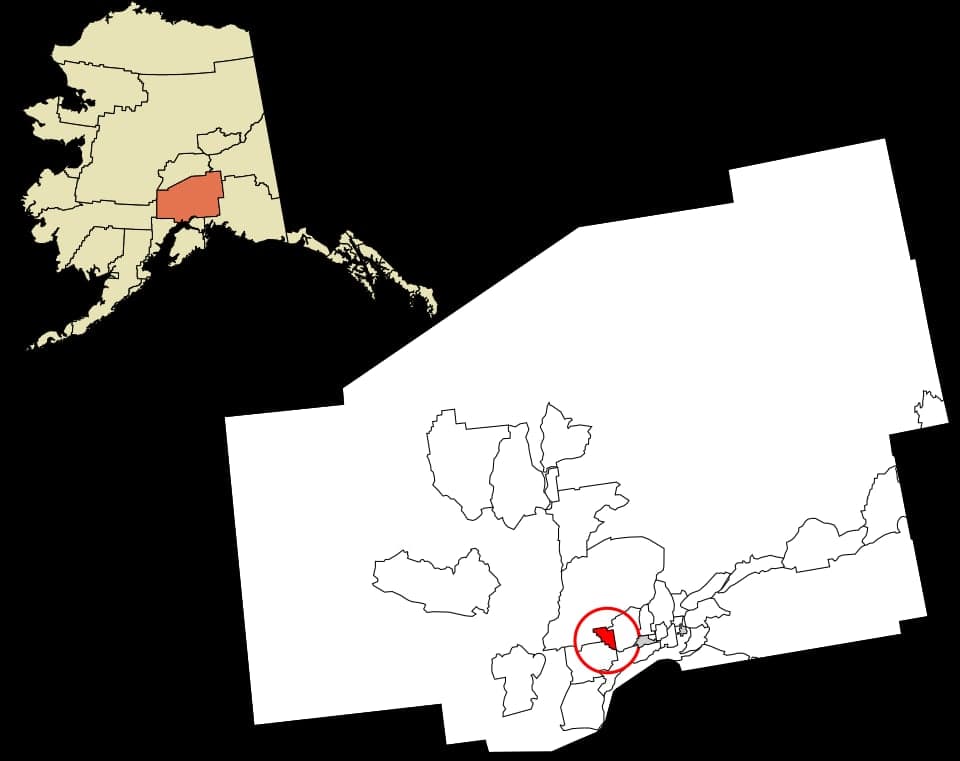
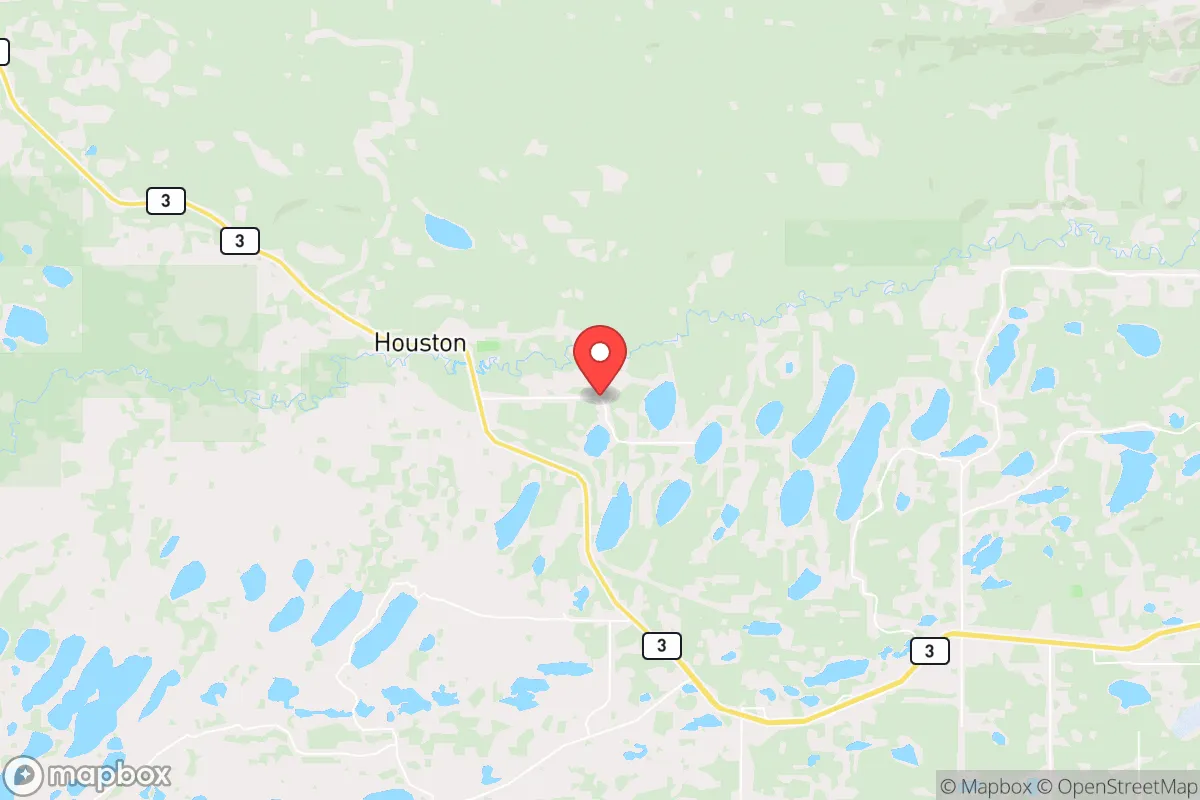
Photo: Wikipedia
Personal Sovereignty in Houston, AK
Strong independent fundamentals that actively favor personal liberty and low regulation.
What does Personal Sovereignty tell us?
Personal Sovereignty measures your capacity for self-reliance and independence with minimal government friction. Higher scores mean fewer barriers between you and the way you want to live... but it assumes you have the space you need and good neighbors.
What does this tell us?
Personal Sovereignty measures your capacity for self-reliance and independence with minimal government friction. Higher scores mean fewer barriers between you and the way you want to live... but it assumes you have the space you need and good neighbors.
State Policy
Energy independence: Net exporter (350% of energy produced in-state)
Personal Liberty
Homesteading

Personal Liberty Analysis
Houston, Alaska, offers a rare environment for personal sovereignty that stands in stark contrast to the Lower 48, where regulatory creep and federal overreach have become the norm. In this remote Mat-Su Borough community, the state’s constitutional protections for individual rights, combined with minimal local government presence, create a baseline of autonomy that is increasingly hard to find elsewhere. For the survivalist or prepper, Houston represents a strategic outpost where the default posture is self-reliance, not government dependency, though the trade-offs in infrastructure and access require serious consideration.
Tax burden and regulatory posture: How Alaska’s lack of income tax and local zoning affect your autonomy
Alaska’s state-level tax structure is a major draw for those seeking to minimize government extraction. There is no state income tax and no statewide sales tax, though the Mat-Su Borough imposes a modest 3% sales tax on most goods. Property taxes in the Houston area average around 1.2% of assessed value, which is reasonable compared to many Lower 48 states, but the borough does not levy a separate property tax on vehicles or boats. The regulatory posture here is notably light: the borough has limited zoning, and Houston itself operates with a relatively hands-off approach to land use. This means fewer permits and less bureaucratic friction for building a home, setting up a workshop, or establishing a small-scale agricultural operation. However, the lack of zoning also means you could end up next to a gravel pit or a commercial operation, so due diligence on adjacent parcels is critical. For the prepper, this regulatory environment allows for rapid adaptation—erecting a greenhouse, installing a backup generator, or building a root cellar without needing to navigate a thicket of local ordinances. The state’s Permanent Fund Dividend, while not a tax break per se, provides an annual cash payment to residents that can offset some costs, effectively functioning as a small sovereignty dividend.
Self-defense and gun law specifics: What Alaska’s constitutional carry and castle doctrine mean for your security
Alaska is one of the most firearm-friendly states in the nation, and Houston sits squarely within that legal framework. The state has constitutional carry for both open and concealed carry without a permit, meaning no government permission slip is required to exercise your Second Amendment rights. The castle doctrine is codified in Alaska Statute 11.81.335, which presumes that a person using deadly force against an unlawful intruder in their home, vehicle, or workplace has a reasonable fear of death or serious injury—no duty to retreat. This extends to occupied vehicles, a critical detail for those who may travel remote roads. There are no state-level magazine capacity restrictions, no assault weapon bans, and no waiting periods for firearm purchases. The only significant limitation is that you must be 21 to carry concealed without a permit, though open carry is legal at 18. For the prepper, this means you can maintain a full spectrum of defensive capability—from sidearms to long guns—without worrying about state-level confiscation schemes. The local sheriff’s office in the Mat-Su Borough is generally supportive of gun rights, and there are no local ordinances that further restrict firearms. However, federal restrictions still apply, including the NICS background check system for purchases from licensed dealers. Private sales between individuals are legal without a background check, which is a practical advantage for building a network of like-minded residents.
Self-reliance and homesteading viability: Lot sizes, zoning, and off-grid feasibility in Houston
Houston’s land-use patterns make it a viable location for serious self-reliance. The borough’s minimum lot size in the area is typically 1 to 5 acres, depending on the specific subdivision and whether it’s served by public water and sewer. Many parcels are larger, with 10- to 40-acre tracts still available at prices far below what you’d find in the Lower 48. Off-grid living is not only feasible but common—many residents rely on well water, septic systems, and alternative energy sources like solar panels or small wind turbines. The borough does not require connection to the electrical grid, and there are no building codes that mandate specific energy systems, giving you full control over your power generation. Wood stoves are a primary heat source for many, and the surrounding forests provide ample fuel. Zoning is minimal: the borough has a general land-use code that restricts certain commercial activities in residential zones, but there are no prohibitions on keeping livestock, raising poultry, or operating a home-based business like a welding shop or a small farm. The growing season is short—about 90 to 110 days—but with a greenhouse and cold frames, you can extend it significantly. For the prepper, this means you can establish a defensible, self-sufficient homestead without fighting a zoning board or dealing with homeowners’ association restrictions. The main challenge is the cost of bringing in utilities: drilling a well can run $10,000 to $20,000, and a septic system adds another $5,000 to $15,000. But once those are in place, your monthly overhead drops to near zero, and your vulnerability to grid failure or supply chain disruptions is minimized.
Personal liberties: Parental rights, medical autonomy, speech, and property protections
Alaska’s legal framework provides strong protections for personal liberties that resonate with a conservative, survivalist mindset. Parental rights are robust: the state has no universal vaccine mandate for schoolchildren, and parents can opt out of any required vaccinations for medical, religious, or personal reasons. The state’s education system allows for homeschooling with minimal oversight—you simply file an intent to homeschool annually and are not required to follow a state-approved curriculum or submit to standardized testing. This gives you full control over what your children learn, including practical skills like firearms safety, wilderness survival, and self-defense. Medical autonomy is similarly protected: Alaska does not have a state-level vaccine passport system, and there are no restrictions on purchasing or using dietary supplements, herbal remedies, or alternative treatments. The state’s Health Insurance Portability and Accountability Act (HIPAA) protections are enforced, and there is no state-level mandate for electronic medical records that could compromise privacy. Free speech is protected under the Alaska Constitution, which has its own strong free-expression clause that has been interpreted by state courts to be even broader than the First Amendment in some cases. This means you can discuss, write, or broadcast your views on government overreach, pandemic policies, or any other topic without fear of state censorship. Property rights are also well-defended: Alaska’s eminent domain laws require just compensation and a public purpose, and the state has a strong tradition of protecting private property from regulatory takings. The borough’s minimal zoning means you can use your land as you see fit, within broad health and safety limits. For the prepper, this legal environment means you can build a life that is largely outside the reach of government interference—stockpile supplies, train with firearms, educate your children as you see fit, and speak your mind without looking over your shoulder.
Overall, Houston, Alaska, offers a level of personal sovereignty that is increasingly rare in the United States. The combination of no income tax, constitutional carry, minimal zoning, strong parental rights, and a culture of self-reliance creates an environment where the individual—not the state—is the primary unit of security and provision. Compared to the Lower 48, where many states have moved toward vaccine mandates, magazine bans, and expanded surveillance, Houston represents a strategic retreat into a jurisdiction that still respects the foundational principles of liberty. The trade-offs are real: harsh winters, limited medical access, and a long supply chain for goods. But for those willing to accept those challenges, the autonomy gained is unmatched. This is not a place for those who want the government to solve their problems—it is a place for those who want the government to stay out of their way.

* Values derived from national, state, county, city and local statistics and may differ in a specific area. Last updated: 2026-04-19T08:23:37.000Z
Narrative content on this page is AI-generated and may contain mistakes. Verify any details that matter before acting on them.
ReloMaps may earn a commission from affiliate links at no extra cost to you.

