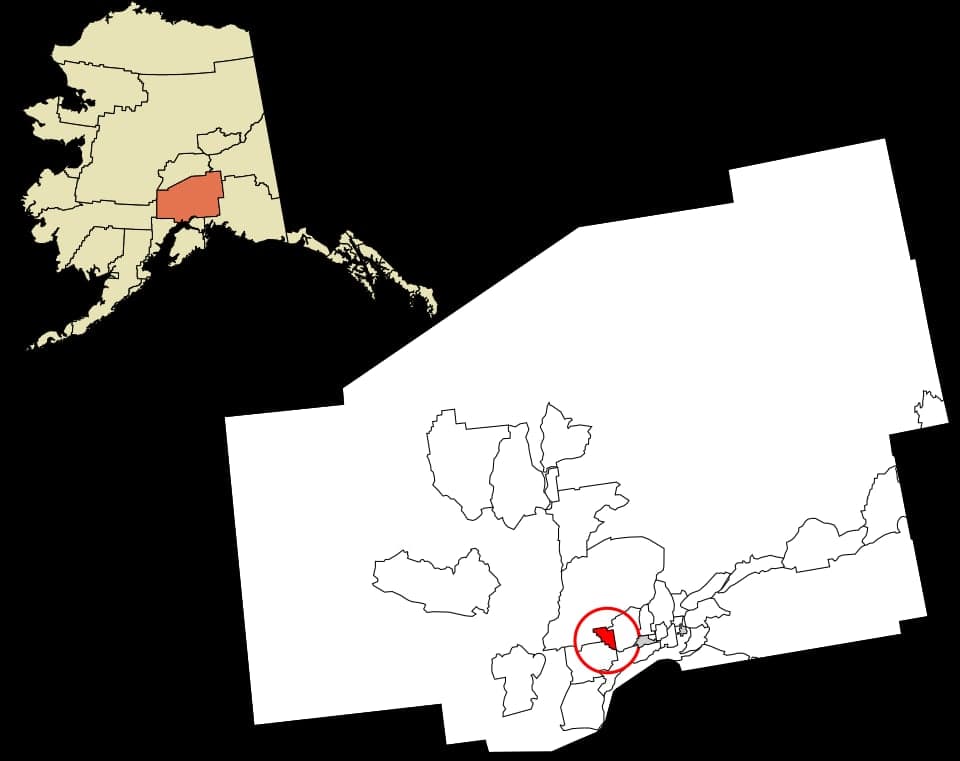
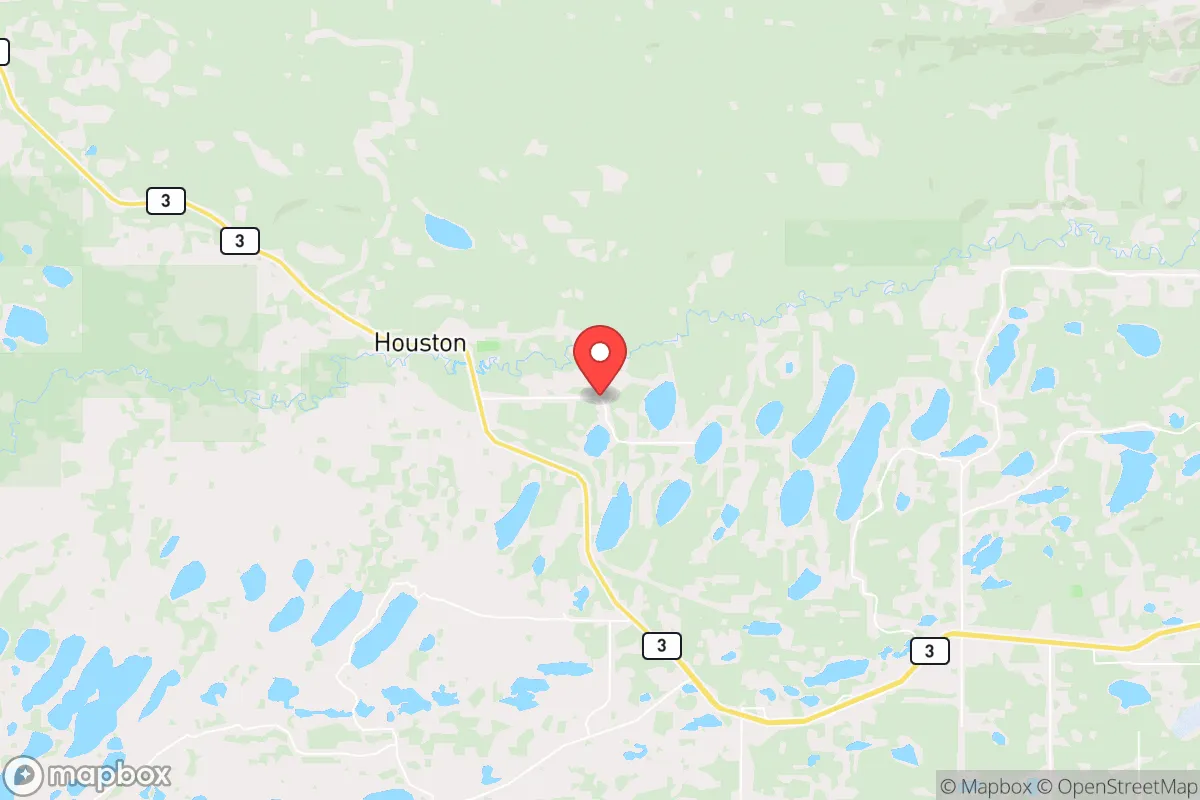
Photo: Wikipedia
Strategic Assessment of Houston, AK
Workable tactical position. Some exposure to population density or targets, but generally defensible in a crisis.
What does the Strategic Assessment tell us?
Our Strategic Assessment grades tactical survivability of an area. Major population centers, military targets, fallout zones, natural disasters, and border exposure all drive risk — lower exposure means a more defensible position in a crisis.
This is heavily inspired by Joel Skousen's Strategic Relocation book. Highly recommended you checkout the book ($)What does this tell us?
Our Strategic Assessment grades tactical survivability of an area. Major population centers, military targets, fallout zones, natural disasters, and border exposure all drive risk — lower exposure means a more defensible position in a crisis.
This is heavily inspired by Joel Skousen's Strategic Relocation book. Highly recommended you checkout the book ($)Strategic Pillars

Key Distances
Regional Safe Places
Below is our recommended "safe zones" in Alaska and the surrounding area based on our strategic heuristics. For most people, it's unrealistic to live in a “safe zone” full-time due to work, family or other personal reasons. They tend to be more rural. However, many of these areas are perfect for second homes and retreat properties that double as a vacation home or even a short-term rental.
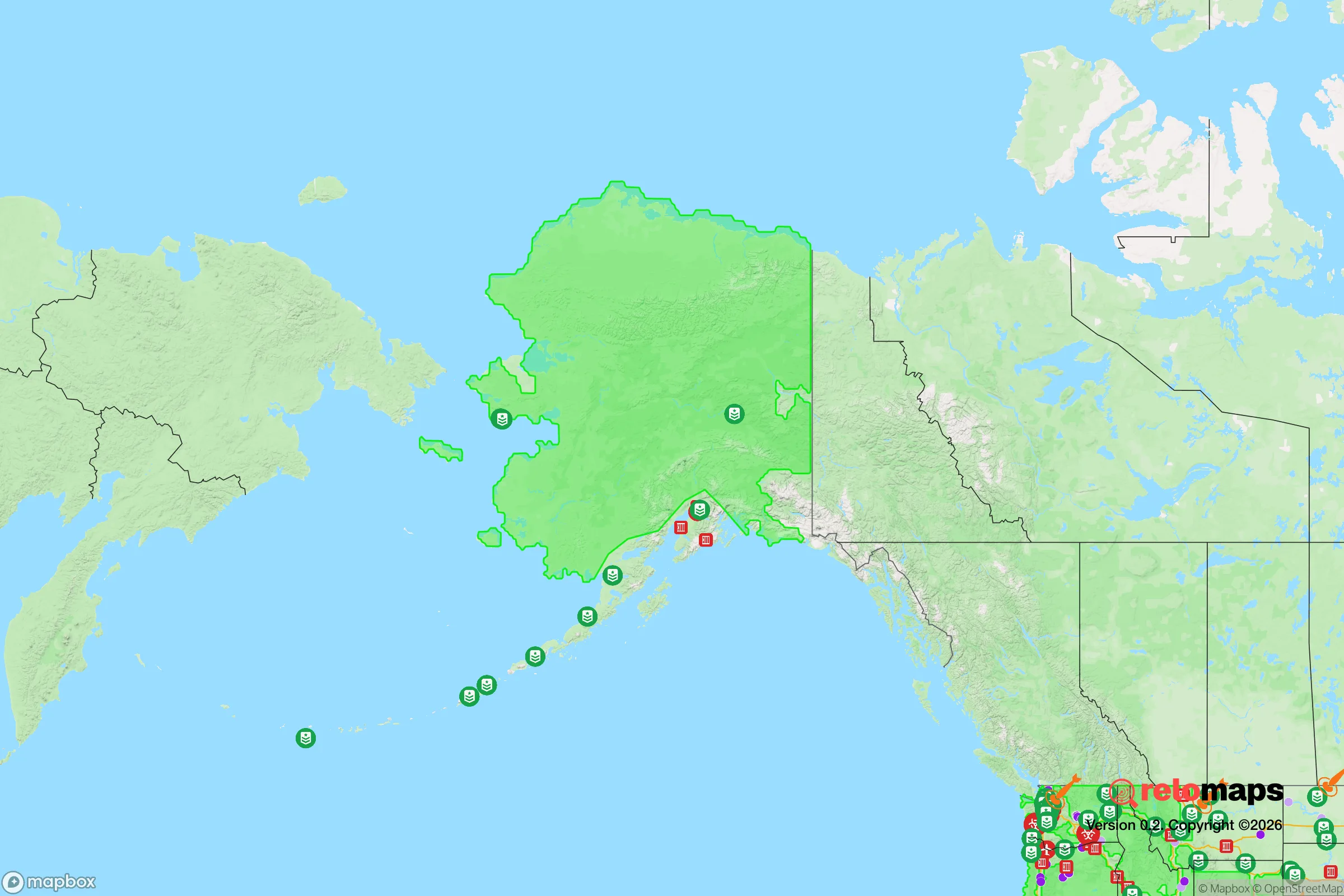
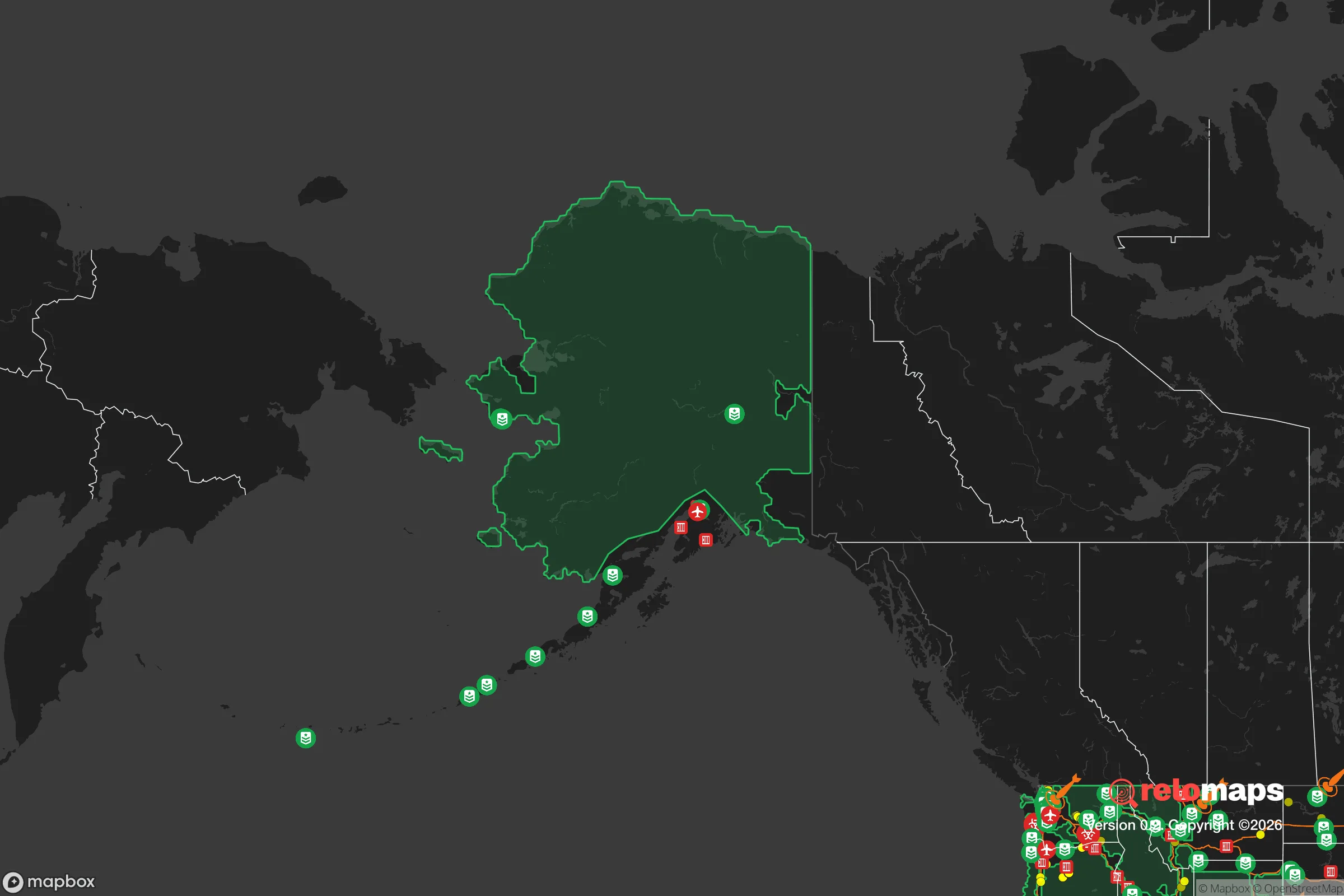


Important Note: For informational purposes only. This does not mean nothing bad ever happens in the green zones. Please use common sense. This is based on public data and modeled with AI. We tried to take a conservative approach but mistakes happen. We update this regularly as new information becomes available.
Solar Generator Recommendations
Backup power matters more here than in safer locations. We've picked three solar generators across budgets and capacity tiers — start with the budget unit if you only need a few essentials, or step up if you want to run a fridge and HVAC for days at a time.

Jackery Portable Power Station Explorer 300
Budget OptionPower on the Go: Weighing only 11 lbs, it's convenient to set up and store with book-sized foldable solar panels

BLUETTI Portable Power Station AC180
Designed for both indoor and outdoor scenarios, AC180 is highly capable as it has a robost capacity and continuous output power.

EF ECOFLOW DELTA Pro Ultra Power Station
Upgraded PickEcoFlow DELTA Pro Ultra is a whole-home energy system designed to grow with your family. Integrated with the Smart Home Panel 2, it scales to meet your evolving energy needs — keeping your home powered, intelligent, and secure through every stage of life.
We earn a commission, at no additional cost to you.
Strategic Assessment Analysis
Houston, Alaska, is a remote community that offers a unique blend of strategic isolation and resource access, but its viability as a long-term survival retreat depends heavily on understanding its specific risks and logistical realities. Located roughly 50 miles north of Anchorage, this unincorporated area along the Parks Highway sits at a critical junction between the urban infrastructure of the state’s largest city and the vast, undeveloped interior. For a relocator with a prepper mindset, Houston’s primary advantage is its position as a buffer zone—close enough to tap into Anchorage’s supply chains and medical facilities during normal times, but far enough to avoid the immediate chaos of a major urban collapse. However, the same proximity that provides convenience also introduces significant vulnerabilities, particularly regarding fallout from Anchorage’s strategic targets and the area’s own dependence on fragile supply lines.
Geographic position and natural advantages for long-term survival
Houston’s location in the Matanuska-Susitna Borough places it within one of Alaska’s most agriculturally productive regions, a rare asset in a state where most communities rely entirely on imported food. The surrounding Mat-Su Valley benefits from long summer daylight hours and fertile glacial soils, making it feasible for residents to establish substantial gardens, greenhouses, and even small livestock operations. The area is also crisscrossed by numerous rivers and lakes, including the nearby Little Susitna River, providing reliable freshwater sources that are less likely to be contaminated than urban water systems. For a survivalist, this means the potential for semi-self-sufficiency in food and water is genuinely achievable, unlike in most Lower 48 suburbs. The terrain is a mix of boreal forest and low hills, offering ample cover and defensible positions for a homestead, while the sparse population density—roughly 2,000 residents spread over a large area—reduces the risk of unwanted attention during a breakdown of civil order. Winters are harsh, with temperatures often dropping below -20°F, but this natural barrier also discourages casual migration from urban centers, effectively acting as a climate-based security filter.
Risks, exposures, and proximity to fallout-relevant landmarks
The most critical drawback of Houston is its proximity to Anchorage, which is a high-value target in any major conflict scenario. Joint Base Elmendorf-Richardson, the Port of Anchorage, and the Ted Stevens Anchorage International Airport are all within a 50-mile radius, making them prime targets for a nuclear or conventional strike. Fallout patterns in Alaska are highly unpredictable due to the region’s volatile weather systems, but prevailing winds often carry contamination northward into the Mat-Su Valley. A relocator must plan for the possibility of significant radioactive fallout reaching Houston within hours of a strike on Anchorage, requiring a well-stocked shelter with adequate filtration and at least two weeks of supplies. Additionally, the Parks Highway, while a vital lifeline, is also a funnel for refugees fleeing Anchorage during a crisis. In a mass evacuation scenario, this road could become a chokepoint for desperate populations, bringing crime, disease, and resource competition directly to Houston’s doorstep. The area’s lack of a centralized law enforcement presence—the Alaska State Troopers are the primary authority, with response times often exceeding an hour—means that self-defense and community security arrangements are essential, not optional.
Practical resilience for a relocator: food, water, energy, and defensibility
Establishing a resilient homestead in Houston requires upfront investment in off-grid infrastructure, as the area’s utility grid is vulnerable to both natural disasters and intentional disruption. Power outages are common during winter storms, and the grid’s reliance on natural gas from the Cook Inlet region creates a single point of failure. A robust solar array with battery storage, supplemented by a wood-burning stove or a diesel generator, is a baseline necessity. Water is abundant but must be treated; well drilling is standard, but hand pumps or gravity-fed systems provide redundancy when electric pumps fail. For food security, the short growing season (roughly 90 frost-free days) demands cold-hardy crops, season extension techniques like hoop houses, and a focus on preservation through canning, dehydrating, and root cellaring. Hunting and fishing are viable year-round options, with moose, caribou, and salmon available within a short drive, but these require skill, licenses, and the ability to process meat quickly in cold conditions. Defensibility is mixed: the flat, open sections of the valley offer limited cover, while the forested hillsides provide better concealment. A property with a clear view of approach routes, natural barriers like creeks or steep slopes, and a structure built with fire-resistant materials will significantly improve security. Community relationships are a double-edged sword—trusted neighbors can form a mutual aid network, but outsiders drawn by the area’s reputation for independence may bring unwanted scrutiny.
Overall, Houston, Alaska, presents a viable but high-risk option for the strategic relocator. Its agricultural potential and relative isolation from Anchorage’s immediate blast zones are genuine advantages, but the fallout threat, refugee flow risk, and harsh climate demand a level of preparation that goes beyond casual prepping. This is not a location for someone seeking a simple escape; it is a place for those willing to invest years in building a hardened, self-sufficient compound with a trusted community network. For the conservative-minded individual or family who values self-reliance and is prepared for the worst, Houston offers a realistic foundation—but only if the risks are fully acknowledged and mitigated before the move. The bottom line: if you can handle the cold, the isolation, and the constant need for redundancy, this area can work. If you are looking for a turnkey retreat, look elsewhere.

* Values derived from national, state, county, city and local statistics and may differ in a specific area. Last updated: 2026-04-19T08:23:37.000Z
Narrative content on this page is AI-generated and may contain mistakes. Verify any details that matter before acting on them.
ReloMaps may earn a commission from affiliate links at no extra cost to you.

