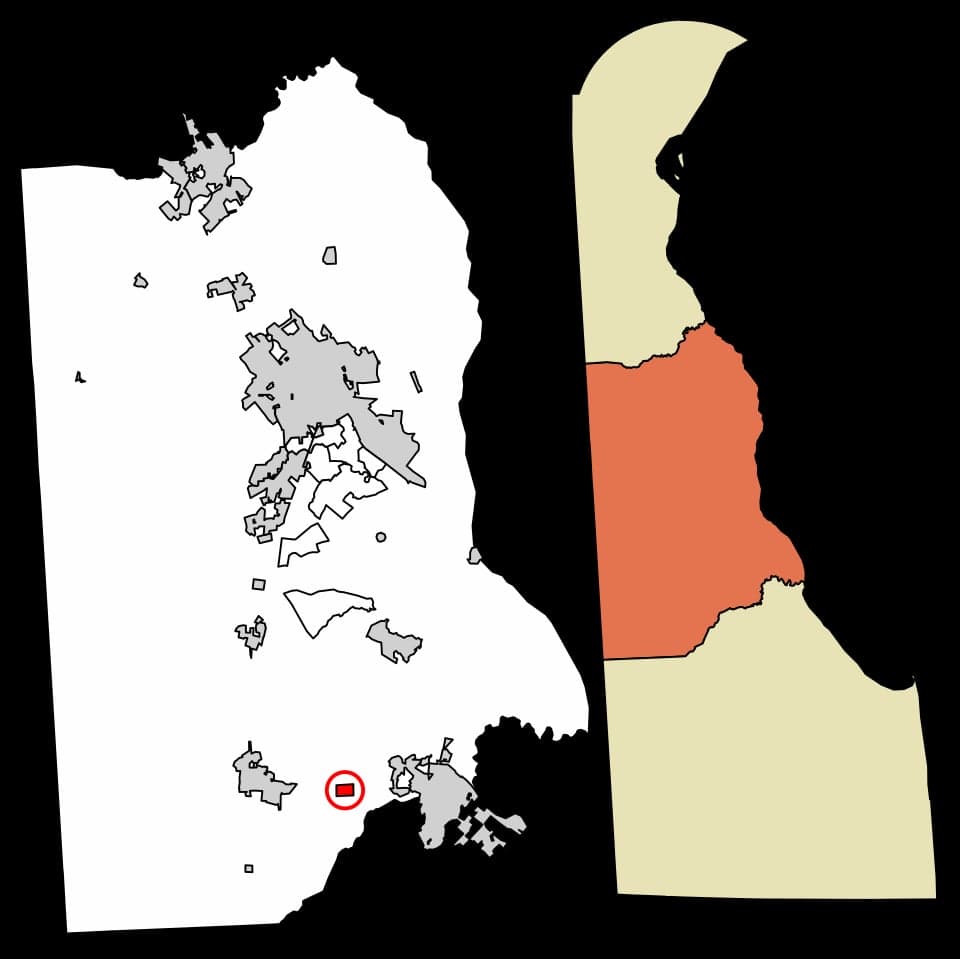
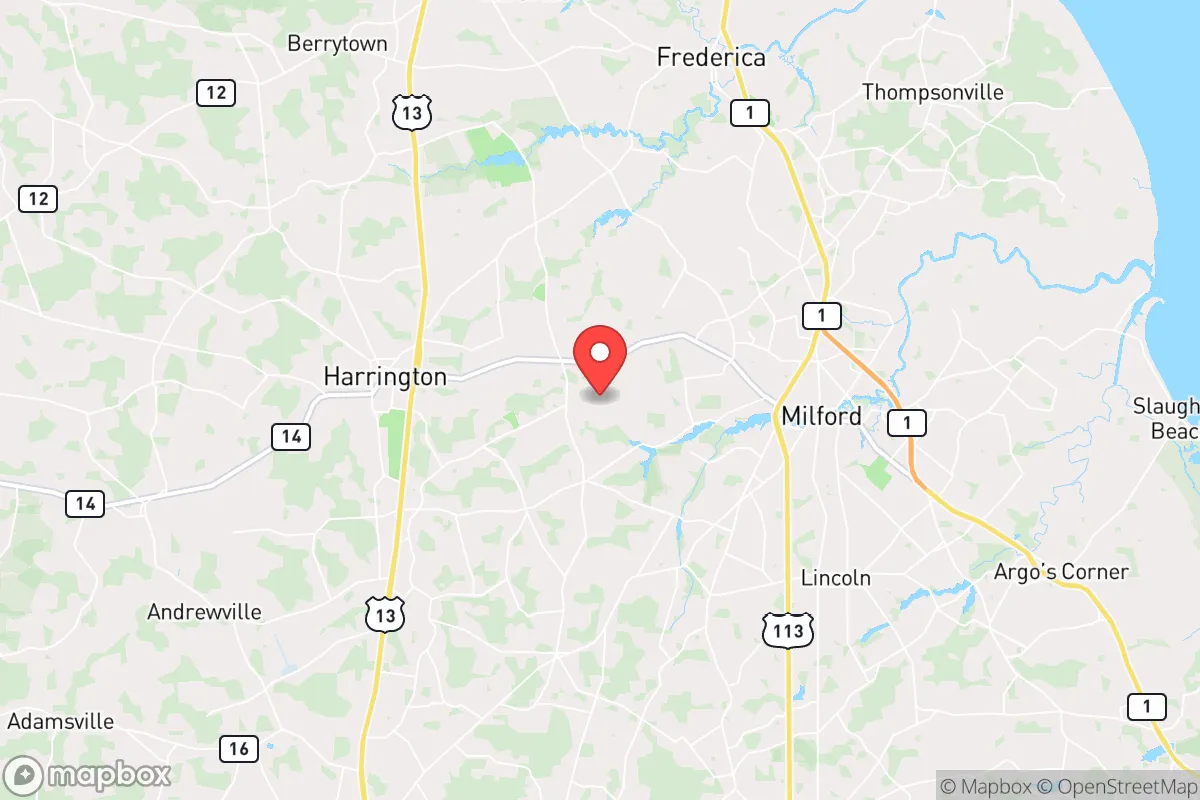
Photo: Wikipedia
Political ClimatePolitical Climate in Houston, DE
District shown is the primary district for this city’s centroid. Cities may span multiple districts.
Inherited from parent state — no local data available.
Local Political AnalysisPolitical Analysis of Houston, DE
Houston, DE, leans solidly Democratic, with a Cook PVI of D+8 that puts it well to the left of the rest of Kent County and most of Delaware. That number tells you the political lean here is pretty baked in, but it doesn't tell you how much things have shifted in the last decade. I've lived here long enough to remember when this area was more of a purple patch, where a conservative voice could get a fair hearing at a town council meeting or over the fence. Now, the local politics feel increasingly one-sided, with a lot of the energy going into state-level progressive priorities that don't always match what folks on the ground are worried about. The trajectory is concerning if you value limited government and local control, because the pressure is clearly toward more centralized, top-down decision-making.
How it compares
Drive ten miles west to Dover and you'll find a similar D+ lean, but the political culture there is a bit more tempered by the state government presence and a larger military community. Head north toward Smyrna or Clayton, and the landscape changes fast—those areas are much more competitive, with a strong conservative base that fights back on taxes and property rights. The real contrast is south and west of Houston, into Milford and Harrington, where you'll find a more rural, independent-minded electorate that votes more like the rest of Kent County's agricultural belt. Houston itself feels like an island of progressive policy in a sea of more traditional values, and that disconnect is growing. The surrounding towns haven't gone along with the same level of government expansion, and you can see it in everything from school board decisions to zoning laws.
What this means for residents
For a conservative-leaning resident, the practical effect of Houston's D+8 tilt is a steady creep of policies that feel like government overreach. Property taxes have climbed to fund state-mandated education and social programs, and there's a growing push for stricter land-use regulations that make it harder to do anything with your own property without a permit and a public hearing. The local school board has adopted curriculum changes that prioritize social-emotional learning and diversity initiatives over core academics, which has driven some families to look at private or charter options. On the plus side, the area still has a strong sense of community, and many of the old-timers—including some Democrats—are skeptical of the more aggressive progressive agenda coming out of Wilmington and Dover. But the political momentum is clearly with the party in power, and individual freedoms like school choice, gun rights, and property autonomy are getting squeezed a little more each year.
Culturally, Houston still has a small-town feel where neighbors look out for each other, but the policy distinctions are becoming harder to ignore. The local government has embraced sanctuary city-style policies that limit cooperation with federal immigration enforcement, and there's a vocal push for environmental regulations that go beyond state requirements, which could hit small businesses and farmers hard. The long-term outlook, if the trend holds, is a place where the cost of living rises faster than wages, and where the government's hand in daily life gets heavier. For someone who values personal liberty and fiscal restraint, it's worth keeping a close eye on the next few election cycles—because the direction Houston is heading isn't the one a lot of us signed up for.

State Political ClimatePolitical Climate in Delaware
State Political AnalysisPolitical Environment in the State
Delaware has historically been a swing state, but over the past 20 years it has shifted decisively blue, with Democrats now holding a structural advantage in statewide races. The state voted for Joe Biden (a native son) by 19 points in 2020 and Kamala Harris by roughly 11 points in 2024, though down-ballot races remain more competitive than the presidential margin suggests. The real story is the urban-rural chasm: New Castle County, home to Wilmington and the corporate suburbs, drives the Democratic majority, while Sussex and Kent Counties have trended redder, creating a political landscape that feels like two different states.
Urban vs. rural divide
The political map of Delaware is a tale of three counties. New Castle County, which contains roughly 55% of the state’s population, is the Democratic engine. Wilmington, Newark, and the I-95 corridor suburbs like Greenville and Hockessin vote reliably blue, powered by a mix of corporate professionals, university faculty from the University of Delaware, and a significant African American population in Wilmington. In contrast, Sussex County — the beach and farming region — has become the GOP stronghold. Towns like Lewes, Rehoboth Beach, and Georgetown have seen an influx of conservative retirees and second-home owners from the Mid-Atlantic, flipping the county from purple to red. Kent County, anchored by Dover, is the true battleground: it voted for Trump in 2020 and 2024, but by narrow margins, and its state legislative seats are hotly contested. The divide isn’t just partisan — it’s cultural. New Castle residents tend to favor transit-oriented development and progressive social policies, while Sussex and Kent residents prioritize property rights, lower taxes, and gun access.
Policy environment
Delaware’s policy environment leans left, especially on fiscal and regulatory matters. The state has no sales tax, which sounds great, but it makes up for it with high property taxes in New Castle County and a progressive income tax that tops out at 6.6% on income over $60,000 — a rate that hits middle-class families hard. The corporate tax climate is friendly to large corporations (Delaware is the legal home for over 60% of Fortune 500 companies due to its Court of Chancery), but small businesses face a thicket of regulations. On education, the state has a strong teachers’ union and has resisted school choice expansion; charter schools exist but are capped, and there is no voucher program. Healthcare policy is dominated by the state’s Medicaid expansion and a push for a public option, which has raised premiums for private plans. Election laws are among the most liberal in the nation: no-excuse absentee voting, same-day registration, and automatic voter registration are all in place. For a conservative, the policy environment feels like a slow but steady expansion of government reach into daily life.
Trajectory & freedom
Delaware is becoming less free by most measures, especially for gun owners and parents. In 2022, the legislature passed a sweeping gun control package that included a ban on “assault weapons” (defined broadly to include many common semi-automatic rifles), a 10-round magazine limit, and a permit-to-purchase requirement. The law also raised the minimum age to buy a rifle to 21. This was followed in 2024 by a law requiring safe storage of firearms, which critics argue is an invitation to warrantless searches. On parental rights, the state has moved in the opposite direction of Florida and Texas: in 2023, it passed a law prohibiting schools from notifying parents if a child changes their gender identity or pronouns, effectively creating a secrecy mandate. Medical freedom took a hit with the 2021 expansion of vaccine mandates for healthcare workers and schoolchildren, though some of those mandates have since been relaxed. On the positive side for liberty, Delaware has no personal income tax on Social Security benefits, which is a draw for retirees. But the overall trajectory is one of expanding state control over personal choices.
Civil unrest & political movements
Delaware has not seen the kind of large-scale civil unrest seen in bigger states, but there are visible flashpoints. Wilmington experienced protests in 2020 after the death of George Floyd, with some property damage and a heavy police response, but the city has since settled into a tense calm. The most organized political movement on the right is the Delaware Republican Assembly, a grassroots group that has pushed for election integrity reforms and school board takeovers. On the left, the Delaware Working Families Party has been active in pushing for rent control and police reform. Immigration politics are relatively quiet — Delaware is not a border state, and its sanctuary policies are limited to a 2019 executive order by Governor John Carney that limits state cooperation with ICE detainers. Election integrity has been a hot-button issue: the 2020 election saw a surge in mail-in ballots, and the GOP has pushed for stricter ID requirements, but Democratic majorities have blocked those efforts. A new resident would notice that political signs and bumper stickers are common in Sussex County but rare in New Castle, reflecting the cultural divide.
Projection
Over the next 5-10 years, Delaware will likely continue its leftward drift, driven by in-migration from the Northeast and the growing political influence of the University of Delaware and the healthcare sector. The state’s population is aging, but the younger cohort moving into New Castle County tends to be progressive. Sussex County will remain a red island, but its growth is slowing as housing prices rise and zoning restrictions tighten. The most likely scenario is that Delaware becomes a solidly blue state, similar to Maryland or New Jersey, with the GOP confined to a few rural districts and the occasional statewide upset. For a conservative moving in now, the expectation should be that taxes will rise, gun rights will continue to erode, and parental rights will remain under pressure. The state’s small size means that one-party control can change policy quickly — there is no large rural bloc to slow things down.
Bottom line for a new resident: If you value low taxes, gun rights, and school choice, Delaware is a tough sell — especially in New Castle County. Sussex County offers a more conservative lifestyle, but you’ll still be subject to state-level policies that are increasingly progressive. The state’s best feature for conservatives is its lack of sales tax and its retiree-friendly tax treatment of Social Security, but those benefits are likely to be eroded as the state’s budget pressures grow. If you’re moving here, pick your county carefully, and be prepared to engage in local politics if you want to preserve your freedoms.
* Values derived from national, state, county, city and local statistics and may differ in a specific area. Last updated: 2026-04-30T01:14:32.000Z
Narrative content on this page is AI-generated and may contain mistakes. Verify any details that matter before acting on them.
ReloMaps may earn a commission from affiliate links at no extra cost to you.

