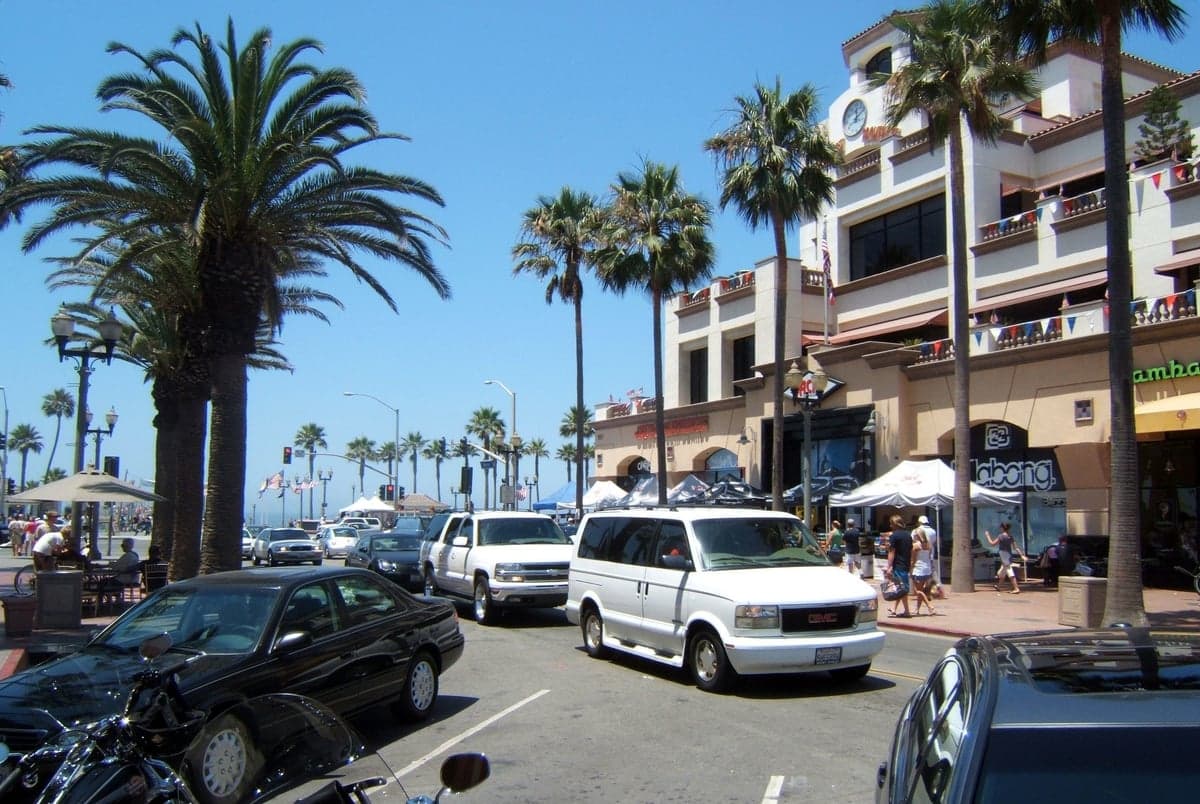
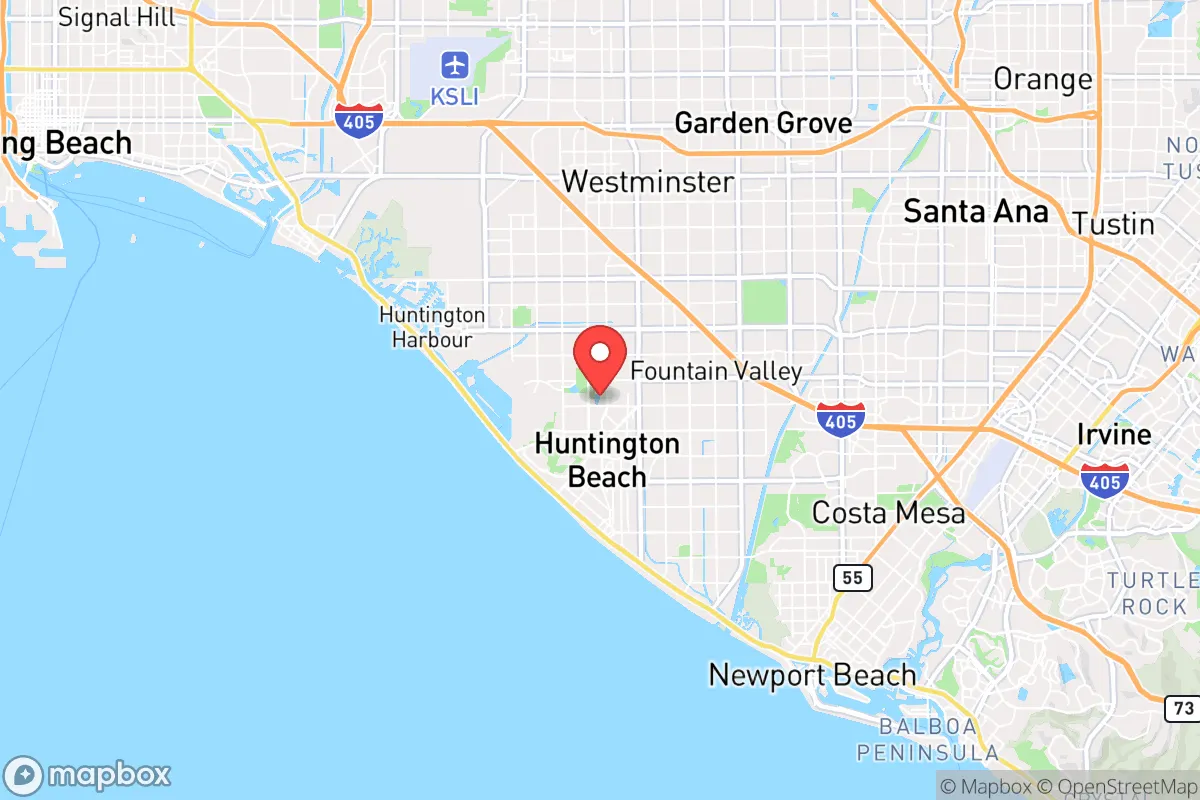
Photo: Wikipedia
Personal Sovereignty in Huntington Beach, CA
Moderate friction. Expect trade-offs in some aspect of personal liberty and independence.
What does Personal Sovereignty tell us?
Personal Sovereignty measures your capacity for self-reliance and independence with minimal government friction. Higher scores mean fewer barriers between you and the way you want to live... but it assumes you have the space you need and good neighbors.
What does this tell us?
Personal Sovereignty measures your capacity for self-reliance and independence with minimal government friction. Higher scores mean fewer barriers between you and the way you want to live... but it assumes you have the space you need and good neighbors.
State Policy
Energy independence: Importer (33% of energy produced in-state)
Personal Liberty
Homesteading

Personal Liberty Analysis
For the strategic-minded individual or family prioritizing personal sovereignty, Huntington Beach presents a complex picture: it is a city where local political will has fiercely resisted state-level overreach, yet it remains firmly under the thumb of California’s expansive regulatory and tax apparatus. While the "Surf City" brand evokes a laid-back coastal lifestyle, the reality for a survivalist or prepper is a constant tension between a defiant local government and a state capital that views personal autonomy as a threat. The net result is a location that offers a stronger-than-average local bulwark against certain mandates, but one where true self-reliance is constrained by high costs, dense zoning, and a state-level legal framework that actively limits your ability to fully opt out of the system.
Tax burden and regulatory posture: the cost of resisting the state
Huntington Beach’s tax burden is a textbook example of California’s high-cost, high-service model, but with a local twist. Property taxes are capped by Proposition 13 at roughly 1% of assessed value, plus voter-approved local bonds, but the median home price hovering around $1.2 million means your annual property tax bill will likely exceed $12,000. State income tax peaks at 13.3%, and sales tax in Orange County is 7.75%. The real sovereignty issue, however, is regulatory. The Huntington Beach City Council has actively sued the state over housing mandates (the "builder's remedy") and fought to maintain local control over short-term rentals and oil drilling. For a prepper, this local defiance is a double-edged sword: it signals a community willing to fight state overreach, but it also means you are paying a premium to live in a jurisdiction that is constantly under legal siege from Sacramento. The regulatory posture here is one of active resistance, but the cost of that resistance is baked into your housing and tax bill.
Self-defense and gun law specifics: navigating California’s restrictions in a pro-2A city
On self-defense, Huntington Beach is a bright spot in a dark state, but the darkness is real. California has some of the strictest gun laws in the nation: a 10-day waiting period, a roster of approved handguns, an assault weapons ban, a 10-round magazine limit, and a "may-issue" concealed carry regime that, post-Bruen, has become "shall-issue" but still requires a 16-hour training course, a "good cause" statement (now largely a formality), and a background check that can take months. Huntington Beach itself is a declared "Second Amendment City," and the local police department has historically been more cooperative with lawful gun owners than in neighboring jurisdictions like Los Angeles or Santa Ana. However, you cannot legally carry a firearm openly in California, and the state’s red flag laws (Gun Violence Restraining Orders) allow for temporary seizure of firearms without a criminal conviction. For a prepper, the bottom line is that you can own and carry a handgun for self-defense, but you will be navigating a bureaucratic maze, and your ability to stockpile ammunition or own standard-capacity magazines is illegal. The local culture is supportive, but the state law is the ceiling.
Self-reliance and homesteading viability: lot sizes, zoning, and off-grid feasibility
For those seeking true self-reliance—gardening, rainwater catchment, solar independence, or small livestock—Huntington Beach is a poor fit. The typical single-family lot is a 5,000 to 7,000 square foot postage stamp, with most homes built in the 1950s-1970s. Zoning is strictly residential, and the city’s municipal code is hostile to anything resembling homesteading: chickens are allowed only with a permit and limited to four hens (no roosters), beekeeping is restricted, and front-yard vegetable gardens are technically allowed but subject to HOA covenants in many neighborhoods. Rainwater harvesting is legal but limited to 200 gallons per property without a permit, and solar panels are common but grid-tied—going fully off-grid is effectively impossible due to building codes and utility easements. The coastal climate is mild enough for year-round gardening, but the soil is sandy and requires heavy amendment. For a prepper, this is a location for stockpiling supplies and building community networks, not for achieving any meaningful degree of food or energy independence. The density and regulatory environment simply do not support it.
Personal liberties: parental rights, medical autonomy, speech, and property
This is where Huntington Beach shines brightest relative to the rest of California. The city has been a national flashpoint for parental rights, passing a "Parents’ Bill of Rights" in 2023 that requires schools to notify parents of curriculum changes and students' mental health status, and banning the teaching of critical race theory in schools. The city council has also voted to ban mask mandates in public schools and opposed vaccine mandates for city employees. On medical autonomy, California state law is heavily restrictive—vaccine mandates for schoolchildren remain, and the state has a single-payer healthcare framework that limits private options—but Huntington Beach has used its local authority to push back on enforcement. Free speech is robust in public forums; the city’s pier and beach are traditional protest sites, and the council has defended the right to display political signage on private property. Property rights are the weakest link: California’s coastal commission and state housing laws can override local zoning, and the city is currently fighting a state order to rezone single-family neighborhoods for multi-unit housing. For a parent or individual who values the right to make medical decisions for their family and speak freely without government censorship, Huntington Beach offers a local government that actively champions those principles—even if the state constantly undermines them.
In the final analysis, Huntington Beach offers a unique sovereignty proposition: it is a high-cost, high-regulation environment where the local government is aggressively fighting to preserve your personal liberties, but where the state’s long arm still reaches into your gun safe, your property rights, and your tax bill. Compared to a place like Texas or Florida, where the state itself is the ally of personal sovereignty, Huntington Beach is a defensive outpost—a place where you pay a premium to live in a community that pushes back against overreach, but where you will never achieve the level of autonomy that a rural or red-state location provides. For the strategic relocator who is tied to California for family or career reasons but values personal freedom, this is arguably the best urban option in the state. For anyone seeking true self-reliance, it is a comfortable cage with a view of the ocean.

* Values derived from national, state, county, city and local statistics and may differ in a specific area. Last updated: 2026-04-24T11:47:44.000Z
Narrative content on this page is AI-generated and may contain mistakes. Verify any details that matter before acting on them.
ReloMaps may earn a commission from affiliate links at no extra cost to you.

