 Popular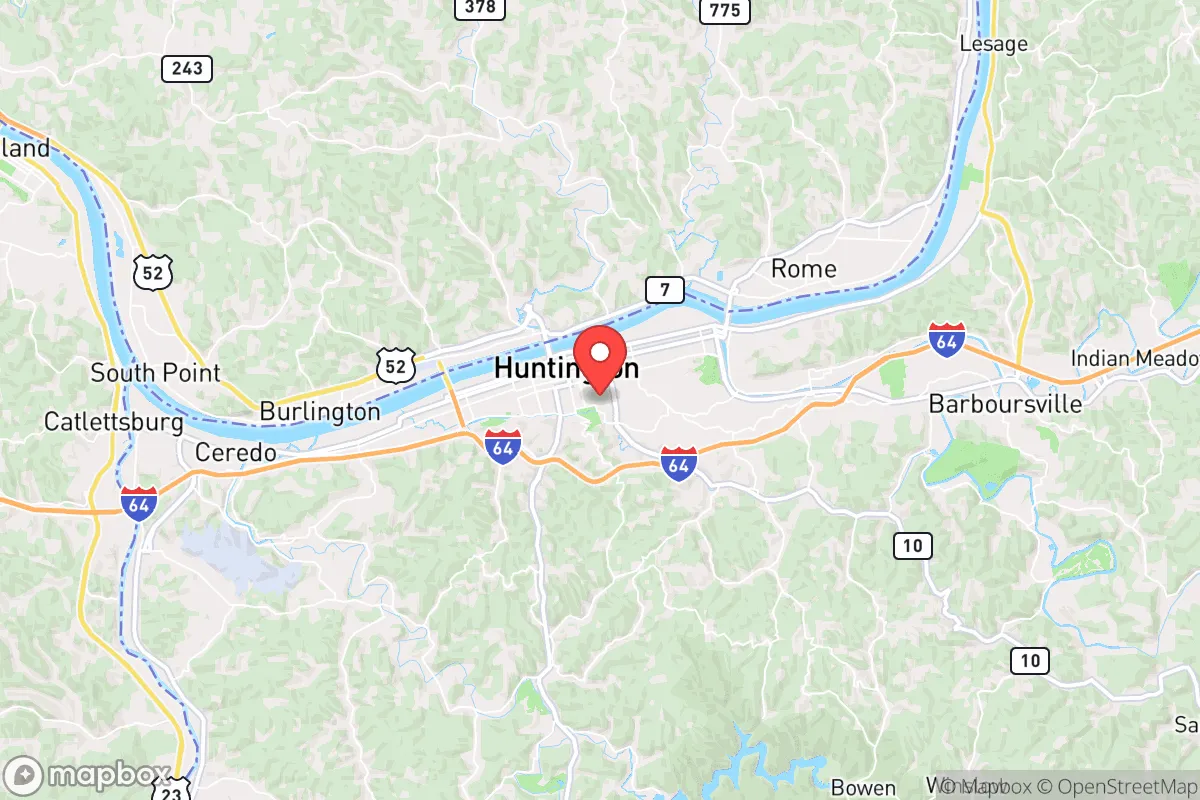
Photo: Wikipedia
Personal Sovereignty in Huntington, WV
Strong independent fundamentals that actively favor personal liberty and low regulation.
What does Personal Sovereignty tell us?
Personal Sovereignty measures your capacity for self-reliance and independence with minimal government friction. Higher scores mean fewer barriers between you and the way you want to live... but it assumes you have the space you need and good neighbors.
What does this tell us?
Personal Sovereignty measures your capacity for self-reliance and independence with minimal government friction. Higher scores mean fewer barriers between you and the way you want to live... but it assumes you have the space you need and good neighbors.
State Policy
Energy independence: Net exporter (200% of energy produced in-state)
Personal Liberty
Homesteading

Personal Liberty Analysis
Huntington, West Virginia, offers a notably high degree of personal sovereignty compared to much of the eastern United States, largely due to the state’s deeply ingrained culture of self-reliance and a legal framework that generally resists federal overreach. For those prioritizing autonomy—whether as a single individual or a parent—this small city in the Appalachian foothills provides a tangible environment where the state government is less inclined to dictate daily life. The combination of a low tax burden, permissive gun laws, and a regulatory climate that favors individual action over bureaucratic control makes Huntington a serious consideration for anyone seeking to minimize government entanglement in their personal affairs.
Tax burden and regulatory posture: How West Virginia’s fiscal climate supports personal autonomy
West Virginia’s tax structure is a significant draw for those focused on financial sovereignty. The state imposes a flat personal income tax rate of 4.12% as of 2025, with ongoing legislative efforts to reduce it further, signaling a trajectory toward lower taxation. Property taxes are among the lowest in the nation, with effective rates averaging around 0.55% of assessed home value—a fraction of what you’d find in neighboring Ohio or Pennsylvania. For a single individual or family, this means keeping more of what you earn, directly reducing the financial leverage the government holds over your household. Sales tax is a modest 6%, with no local add-ons in Huntington itself. On the regulatory front, West Virginia is a right-to-work state, which limits union influence and gives individuals more freedom in employment choices. The state’s regulatory environment is generally business-friendly, with fewer licensing requirements and permitting delays than in more heavily governed regions. This translates to greater ease in starting a side business, operating a home-based enterprise, or engaging in trades without navigating a maze of red tape. For the prepper or survivalist mindset, this lower tax and regulatory burden means more resources and time available for self-directed priorities—whether that’s stockpiling supplies, investing in land, or building resilience outside the system.
Self-defense and gun law specifics: What Huntington offers for the armed citizen
West Virginia is a constitutional carry state, meaning that as of 2016, any law-abiding adult 21 or older can carry a concealed firearm without a permit. This is a foundational element of personal sovereignty—the right to defend oneself without seeking government permission. Huntington, like the rest of the state, has no additional local restrictions that override this state preemption, so you won’t face the patchwork of municipal gun bans common in places like Colorado or California. Open carry is also legal without a permit. The state has a strong “Stand Your Ground” law, codified in West Virginia Code §55-7-22, which removes any duty to retreat before using deadly force in self-defense if you are in a place you have a legal right to be. This is a critical protection for anyone who takes personal security seriously. Additionally, West Virginia does not maintain a firearm registry, and there are no magazine capacity restrictions or “assault weapon” bans. For parents, this means the legal environment supports teaching children about firearm safety and responsible ownership without the state inserting itself into your household decisions. The local sheriff’s office in Cabell County is generally supportive of Second Amendment rights, and gun-friendly businesses and ranges are common in the area. If self-defense is a priority, Huntington provides a legal framework that respects individual judgment over government mandates.
Self-reliance and homesteading viability: Lot sizes, zoning, and off-grid feasibility in Huntington
For those looking to reduce dependence on centralized systems, Huntington and its surrounding Cabell County offer realistic opportunities for homesteading and off-grid living. Within the city limits, residential lot sizes vary, but many older neighborhoods feature quarter-acre to half-acre lots, providing space for substantial gardens, small livestock like chickens, and rainwater collection systems. Zoning in Huntington is relatively permissive compared to larger metropolitan areas; while there are standard residential codes, the city does not aggressively enforce restrictions on front-yard gardens, clotheslines, or small-scale animal husbandry. Outside the city, in areas like Ceredo or rural parts of Cabell County, lot sizes expand to one to five acres or more, with minimal zoning oversight. Off-grid feasibility is high: West Virginia has no state-level ban on rainwater harvesting, and many rural properties rely on well water and septic systems, bypassing municipal utilities entirely. Solar panel installation is straightforward, with no state-level permitting hurdles, and net metering policies allow you to sell excess power back to the grid if you choose to stay connected. For the prepper, the region’s abundant natural resources—forests for firewood, streams for water, and fertile soil for crops—mean that a self-sufficient lifestyle is not just a dream but a practical reality. The local culture respects self-reliance, and neighbors are more likely to help you build a root cellar than to report you for an unpermitted structure.
Personal liberties: Parental rights, medical autonomy, speech, and property in Huntington
West Virginia has a strong track record on parental rights, with state law affirming that parents have the fundamental right to direct the upbringing, education, and healthcare of their children. This means you can homeschool without excessive state interference—the requirements are minimal, with no mandatory curriculum approval or standardized testing for homeschoolers. Medical autonomy is another area where Huntington offers breathing room. While the state does have vaccine mandates for school attendance, exemptions are available for medical and religious reasons, and the political climate is generally skeptical of federal health overreach. During the COVID-19 pandemic, West Virginia was one of the few states that did not impose broad mask mandates or lockdowns on individuals, reflecting a cultural preference for personal choice over government decree. Free speech is robustly protected under the state constitution, and there are no local hate speech ordinances or social media censorship laws that would chill political expression. Property rights are also strong: West Virginia has no statewide rent control, and eminent domain is rarely abused for private development. For the conservative-leaning individual, this means you can speak your mind, raise your children according to your values, and use your property as you see fit, without constant fear of government intrusion. The local community in Huntington is largely composed of people who share these values, creating a social environment that reinforces personal sovereignty rather than undermining it.
In the broader context of the United States, Huntington, West Virginia, stands out as a location where personal sovereignty is not just tolerated but actively supported by the legal and cultural framework. Compared to the heavily regulated environments of the Northeast or West Coast, this region offers a tangible alternative for those who feel the state has overstepped its bounds. The combination of low taxes, constitutional carry, permissive zoning, strong parental rights, and a culture of self-reliance creates a foundation for individuals and families to live with minimal government interference. For the strategic relocation researcher with a survivalist or prepper mindset, Huntington represents a viable base of operations—a place where you can build resilience, defend your family, and live according to your own principles without the state constantly looking over your shoulder.

* Values derived from national, state, county, city and local statistics and may differ in a specific area. Last updated: 2026-05-01T19:31:08.000Z
Narrative content on this page is AI-generated and may contain mistakes. Verify any details that matter before acting on them.
ReloMaps may earn a commission from affiliate links at no extra cost to you.

