Political ClimatePolitical Climate in Hurricane, WV
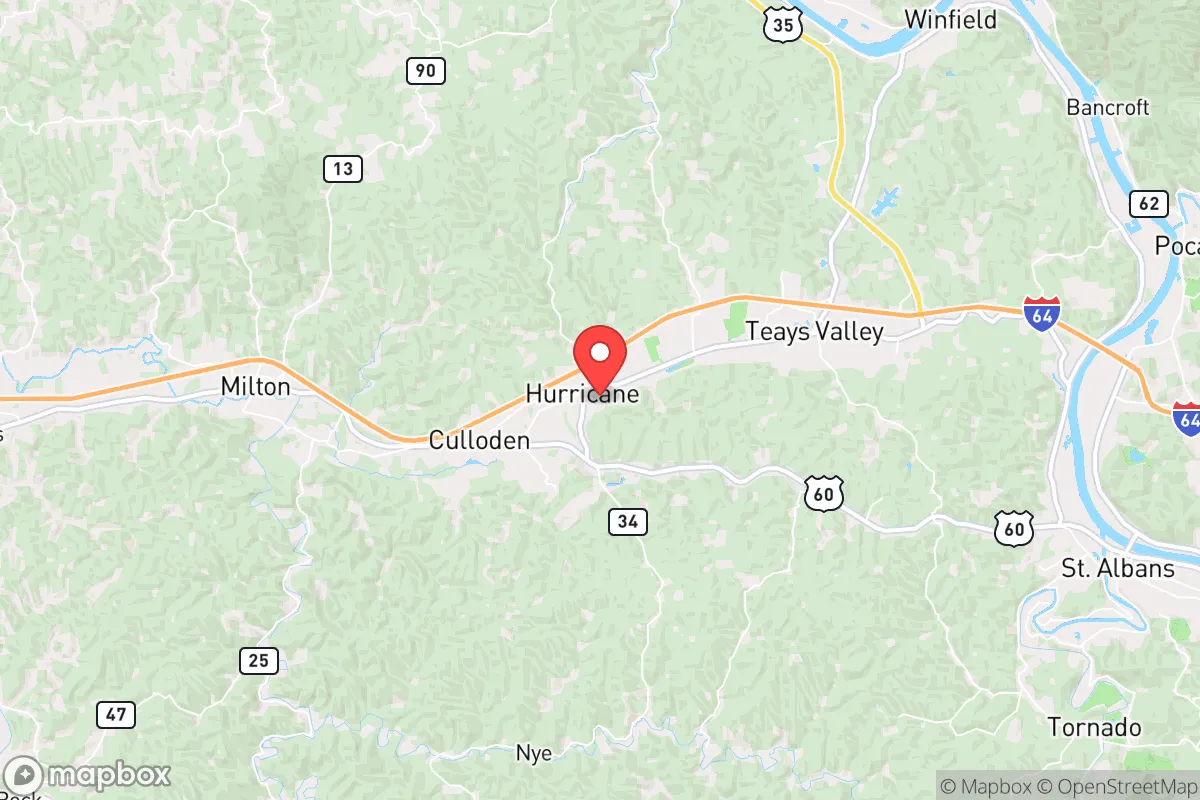
District shown is the primary district for this city’s centroid. Cities may span multiple districts.
Local Political AnalysisPolitical Analysis of Hurricane, WV
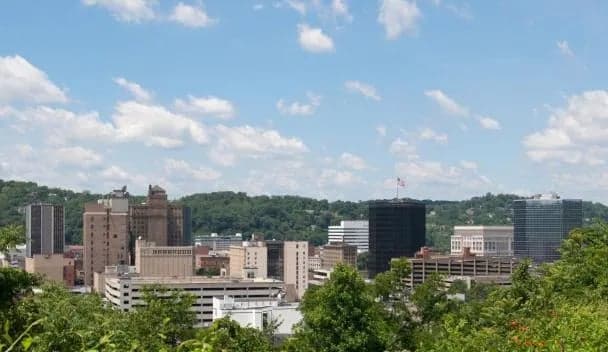
Hurricane, West Virginia, sits deep in solidly red territory, with a Cook PVI of R+22 that reflects a community where conservative values aren't just a preference—they're the baseline. For as long as anyone around here can remember, this area has leaned heavily Republican, and that hasn't changed much even as the rest of the country has gotten more divided. If anything, the political climate here has hardened a bit over the last decade, as folks have watched the federal government and state capitals elsewhere push policies that feel out of step with how we live. The local sentiment is pretty straightforward: people want to be left alone to run their lives, their businesses, and their families without a bunch of red tape or social experiments being forced down from above.
How it compares
Drive just 20 minutes north to Charleston, and you'll feel the shift immediately. The state capital is a Democratic stronghold in an otherwise red state, with a much more progressive city council and a vocal activist scene that's been pushing for things like stricter gun laws and expanded social programs. Meanwhile, Hurricane and the surrounding Putnam County have consistently voted against those trends. In the 2024 presidential primary, Putnam County gave Donald Trump over 75% of the vote, while Charleston's Kanawha County was closer to 55%. The contrast is stark: Charleston feels like a different world, with its bike lanes, public art projects, and city-funded diversity initiatives, while Hurricane still operates on the old-school idea that the best government is the one that stays out of your way. Even smaller towns like Teays Valley and Winfield, just a few miles down the road, share Hurricane's conservative lean, but they don't have the same sense of being a bulwark against the creeping influence from the capital.
What this means for residents
For the people who live here, the political climate translates into a daily reality that's pretty free from the kind of government overreach you see in blue areas. There's no city-wide mask mandate or vaccine passport drama here—those fights were mostly avoided because local leaders didn't buy into the panic. Property taxes are low, zoning is minimal, and you can still build a shed on your own land without needing three permits and a public hearing. The downside is that this hands-off approach means fewer public services: the roads aren't always perfect, and the school system relies heavily on local levies that sometimes fail. But most residents would tell you that's a trade-off they're willing to make. The real concern now is whether the progressive wave that's washing over places like Morgantown and Shepherdstown will eventually reach Hurricane. There's a growing unease about state-level pushes for things like mandatory diversity training in schools or stricter environmental regulations that could hurt the local economy, which is still tied to small businesses, construction, and the chemical plants along the river.
Culturally, Hurricane is a place where the Second Amendment isn't debated—it's just assumed. You'll see gun racks in pickup trucks at the grocery store, and nobody blinks. The local churches are still full on Sundays, and the biggest community events are the county fair and high school football games. There's a quiet but firm resistance to anything that feels like social engineering from the outside. The long-term outlook here is cautious: as long as the state legislature stays conservative and the federal government doesn't get too heavy-handed, Hurricane will likely remain a pocket of traditional values. But if the national trend toward centralization and progressive mandates keeps accelerating, you can bet this community will be one of the last to go along with it.

State Political ClimatePolitical Climate in West Virginia
State Political AnalysisPolitical Environment in the State
West Virginia has long been one of the most reliably Republican states in the nation, with a partisan lean that has shifted dramatically over the past two decades. As of 2024, the state voted for Donald Trump by a margin of nearly 40 points, a stark contrast to its history as a Democratic stronghold as recently as the 1990s. The dominant coalition today is a blend of rural conservatives, working-class voters who abandoned the national Democratic Party over cultural and energy issues, and a growing number of out-of-state transplants seeking lower taxes and fewer regulations. The trajectory has been a steady march rightward since 2000, accelerating after the 2016 election, and shows no signs of reversing.
Urban vs. rural divide
The political map of West Virginia is defined by a sharp urban-rural split, but even the "urban" areas are small by national standards. The state's largest city, Charleston, and its surrounding Kanawha County are a microcosm of the broader trend: Charleston itself leans slightly Democratic, but the county as a whole voted +22 for Trump in 2024. Huntington and Morgantown are the other notable population centers. Morgantown, home to West Virginia University, is the most liberal pocket in the state, with Monongalia County voting just +12 for Trump in 2024—still red, but the closest thing to a blue dot you'll find. The rural counties, like Mingo, Logan, and McDowell in the southern coalfields, routinely deliver 70-80% of their votes to Republicans. The divide is less about ideology and more about density: the few places with universities or state government jobs are less conservative, while everywhere else is deeply red. The Eastern Panhandle, including Martinsburg and Charles Town, has seen an influx of Washington D.C. exurbs, but even those areas are trending redder as newcomers seek the state's lower cost of living and conservative culture.
Policy environment
West Virginia's policy environment is aggressively conservative, with a focus on low taxes, minimal regulation, and cultural traditionalism. The state has no personal income tax on Social Security benefits and a flat 6.5% corporate income tax, though efforts to eliminate the personal income tax entirely have stalled. Property taxes are among the lowest in the nation, capped by the state constitution at a fraction of market value. The regulatory posture is business-friendly, especially for energy extraction—coal, natural gas, and timber—with streamlined permitting and minimal environmental oversight. Education policy has been a battleground: the state passed a school choice law in 2021, creating education savings accounts (ESAs) for families, though implementation has been slow. Healthcare is a mixed bag; the state expanded Medicaid under the Affordable Care Act, but the legislature has resisted further federal entanglement. Election laws are strict: voter ID is required, early voting is limited to 10 days, and absentee voting requires an excuse. The state has also passed a near-total abortion ban, with no exceptions for rape or incest, and a law protecting religious freedom in healthcare settings. For a conservative family, the policy environment is largely aligned with traditional values, though the state's heavy reliance on federal funding (over 40% of the budget) creates a tension between ideological purity and practical necessity.
Trajectory & freedom
West Virginia is becoming more free in several key areas, particularly gun rights, parental rights, and tax policy. In 2023, the legislature passed constitutional carry, allowing any law-abiding adult to carry a concealed firearm without a permit. The same year, the state enacted a "Parental Bill of Rights" that requires schools to notify parents of any curriculum involving sexuality or gender identity and to obtain parental consent before counseling students on such matters. Medical autonomy has been expanded for alternative treatments: the state legalized medical cannabis in 2017, though the program remains limited and slow to roll out. On property rights, West Virginia has a strong tradition of mineral rights protection, but surface owners often clash with energy companies over access. The state has also resisted federal overreach on environmental regulations, with the attorney general frequently suing the EPA over coal and methane rules. However, freedom is not absolute. The state's heavy reliance on federal dollars means that Medicaid expansion and other programs create a dependency that some conservatives find troubling. Additionally, the state's occupational licensing requirements are still burdensome for many trades, though reform efforts are underway. The overall trajectory is toward greater personal liberty, especially in cultural and Second Amendment areas, but economic freedom is constrained by the state's struggling economy and aging infrastructure.
Civil unrest & political movements
West Virginia has a history of labor unrest, particularly in the coal fields, but modern political movements are largely peaceful and organized around conservative causes. The most visible flashpoint in recent years was the 2018 teachers' strike, which shut down schools across the state for nine days and resulted in a 5% pay raise. While the strike was led by union activists, it was notable for its broad support from conservative parents who were frustrated with low teacher pay and underfunded schools. Since then, the political energy has shifted to cultural issues. The "Moms for Liberty" chapter in Berkeley County has been active in school board meetings, pushing for book bans and parental notification policies. Immigration politics are less prominent here than in border states, but the legislature passed a law in 2024 requiring local law enforcement to cooperate with ICE, and there are no sanctuary cities. Election integrity has been a hot topic: the state conducted a full audit of the 2020 election, finding no widespread fraud, but the legislature still tightened voting laws in 2021. There is no serious secession or nullification movement, though some rural counties have floated the idea of joining neighboring states like Virginia or Kentucky in response to perceived neglect from Charleston. The overall atmosphere is one of political engagement but not unrest—most West Virginians are content with the direction of the state, and protests are rare and small.
Projection
Over the next 5-10 years, West Virginia is likely to become even more conservative, driven by two forces: out-migration of younger, more liberal residents and in-migration of conservatives from high-tax states like New York and California. The state's population has been declining for decades, but the COVID-19 pandemic sparked a small influx of remote workers and retirees seeking space and lower costs. These newcomers tend to be politically conservative, reinforcing the state's red tilt. The Democratic Party in West Virginia is nearly extinct at the state level; the last Democrat to hold a statewide office was Senator Joe Manchin, who retired in 2024. The state's congressional delegation is entirely Republican, and the legislature has a supermajority. Expect further tax cuts, expanded school choice, and continued resistance to federal environmental regulations. The biggest wildcard is the energy transition: as coal declines, the state will need to diversify its economy, and the political response to that challenge will shape the next decade. If the state can attract manufacturing or tech jobs, it might see a modest influx of younger workers, but they will likely be conservative-leaning. For someone moving in now, expect to find a state that is deeply red, culturally traditional, and increasingly assertive in protecting its way of life from federal overreach.
For a new resident, the bottom line is this: West Virginia offers a high degree of personal freedom, especially in areas like gun rights, parental control over education, and low taxes. The political climate is stable and predictable, with no major civil unrest or rapid policy shifts. The trade-offs are a struggling economy, limited job opportunities outside of energy and healthcare, and a population that is aging and shrinking. If you value cultural conservatism, outdoor recreation, and a low cost of living, West Virginia is a solid choice. Just be prepared for a state that is proud of its independence but heavily reliant on federal support—a tension that will define its politics for years to come.
* Values derived from national, state, county, city and local statistics and may differ in a specific area. Last updated: 2026-04-23T05:41:14.000Z
Narrative content on this page is AI-generated and may contain mistakes. Verify any details that matter before acting on them.
ReloMaps may earn a commission from affiliate links at no extra cost to you.

