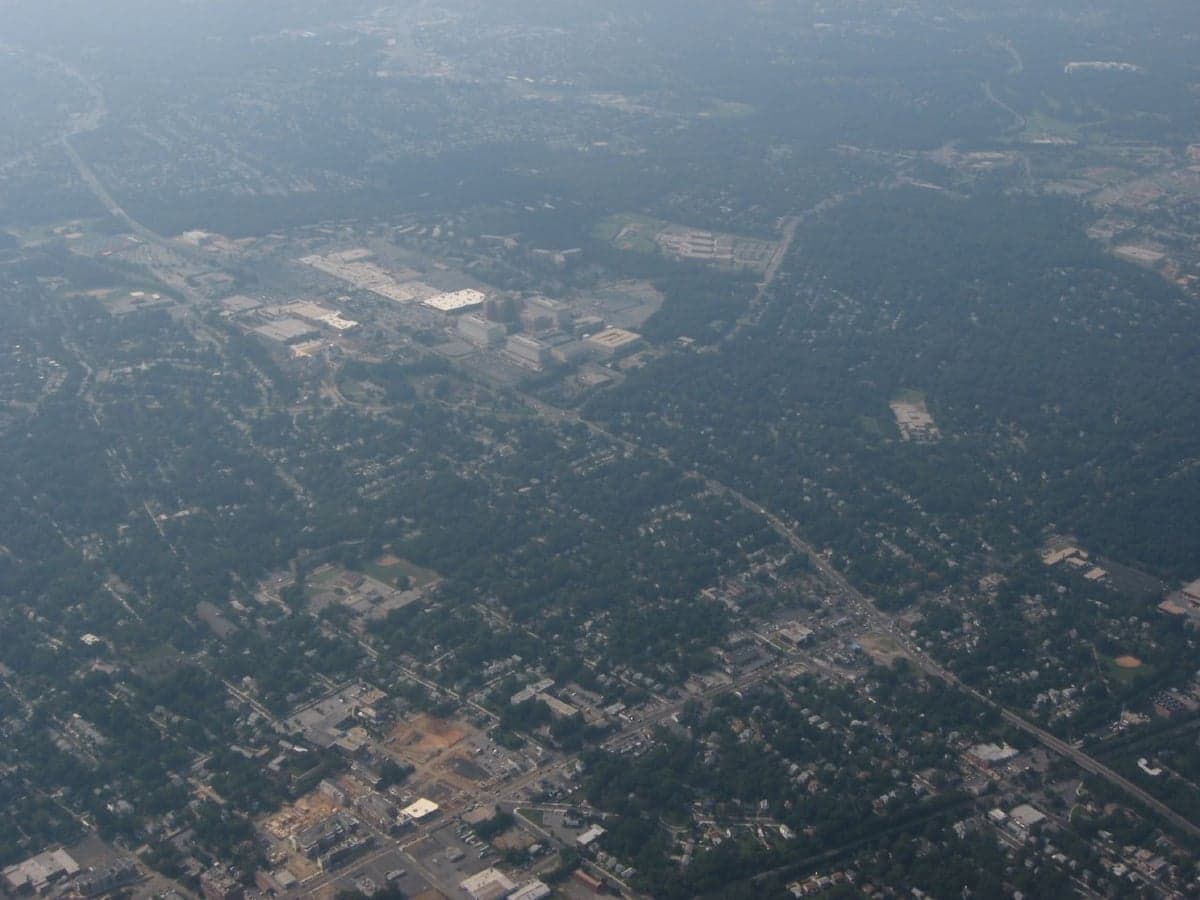
Photo: Wikipedia
Demographics of Hyattsville, MD
Affluence Level in Hyattsville, MD
A middle-class area roughly in line with national averages across income, home values, education, and employment.
People of Hyattsville, MD
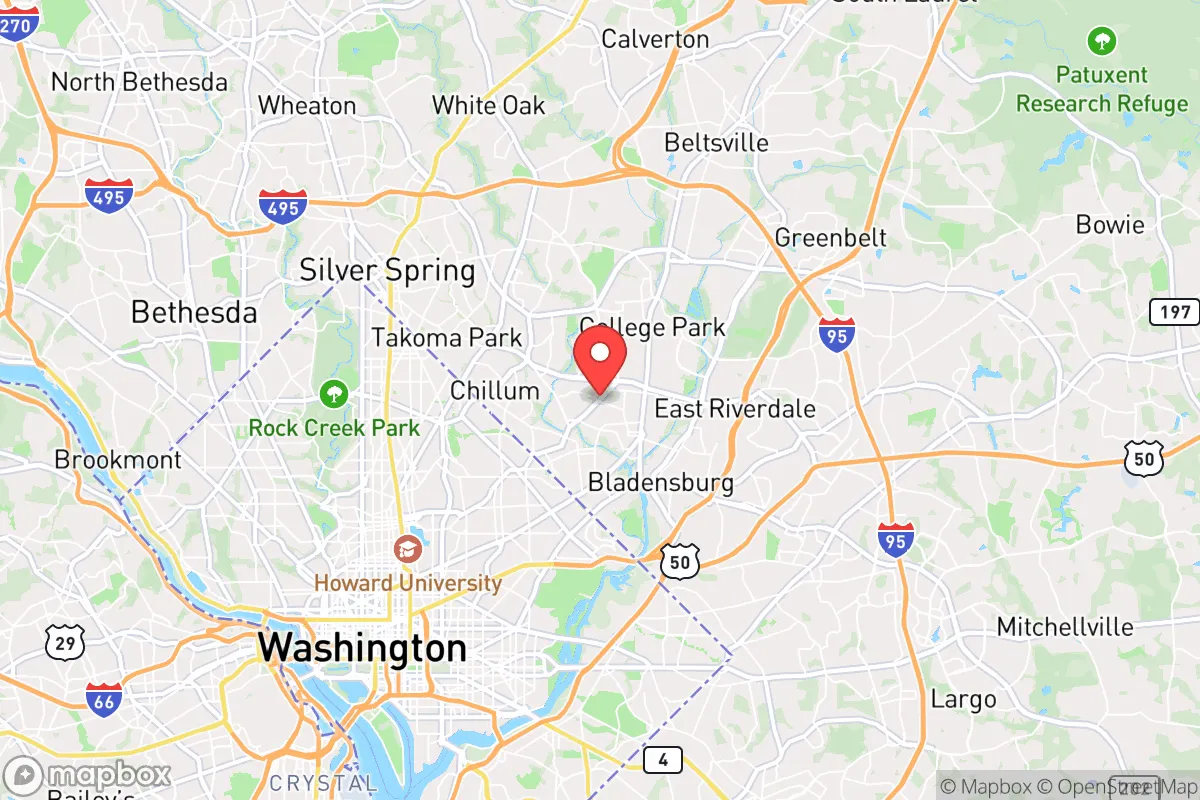
Today, Hyattsville, Maryland is a densely settled, majority-minority city of 20,861 residents where no single racial or ethnic group holds a majority. The city is defined by its high foreign-born share (25.2%) and a distinctive three-way demographic balance: Hispanic residents make up 40.0% of the population, Black residents 24.3%, and non-Hispanic White residents 25.3%. With 48.6% of adults holding a college degree, Hyattsville is an educated, diverse, and increasingly professional suburb that sits just northeast of Washington, D.C., blending historic rowhouse neighborhoods with newer immigrant enclaves.
How the city was settled and grew
Hyattsville was founded in the 1840s as a railroad suburb, named after the Hyatt family who owned the land. The Baltimore and Ohio Railroad arrived in 1835, and the town was formally incorporated in 1886. Its early population was overwhelmingly White and middle-class, drawn by commuter access to Washington, D.C. and the development of streetcar lines along what is now U.S. Route 1. The historic Hyattsville Historic District, centered around Baltimore Avenue and Hamilton Street, contains the late-19th-century Victorian and Craftsman homes built by the city's original White, Protestant, and German Catholic families. A second wave arrived in the 1920s and 1930s as the automobile made the area more accessible, filling neighborhoods like University Hills (developed in the 1920s) and West Hyattsville with White middle-class families employed in federal government and local retail. By 1950, Hyattsville was nearly all White, with a population of roughly 12,000.
Modern era (post-1965)
The 1965 Hart-Cellar Immigration Act and the broader suburbanization of the Washington, D.C. region transformed Hyattsville's population. White flight accelerated in the 1970s and 1980s as Black families moved into neighborhoods like North Brentwood (a historically Black enclave incorporated in 1924) and Heurich Park. By 1990, the city had become majority-Black. The 1990s and 2000s brought a new wave of Hispanic immigrants, primarily from Central America (El Salvador, Guatemala, Honduras), who settled in the Queens Chapel and East Hyattsville areas near the Prince George's County border. Today, Hispanic residents form the largest single group at 40.0%, concentrated in the southern and eastern parts of the city. The Black population, now 24.3%, is more dispersed but remains anchored in North Brentwood and central Hyattsville. The White population, at 25.3%, has rebounded slightly since 2000 as young professionals and families have been drawn to the historic district's walkability and proximity to D.C. The Asian population is small (1.6% East/Southeast Asian, 3.7% Indian subcontinent), with Indian families concentrated in the University Hills area near the University of Maryland.
The future
Hyattsville's population is trending toward greater diversity but also toward economic stratification. The Hispanic share has grown steadily since 2000 and is likely to continue rising, driven by family reunification and the area's relatively affordable housing stock compared to D.C. and inner-ring Montgomery County. The Black population has declined slightly from its 1990s peak, as some families have moved to farther suburbs in Prince George's County. The White population is stabilizing, buoyed by gentrification in the historic district and near the West Hyattsville Metro station (Green Line). The Indian subcontinent community, while small, is growing as professionals employed in tech and academia settle near the University of Maryland. The city is not homogenizing; instead, distinct enclaves are solidifying: Hispanic families in Queens Chapel and East Hyattsville, Black families in North Brentwood and central Hyattsville, and White professionals in the historic district and West Hyattsville. Over the next 10-20 years, Hyattsville will likely become more Hispanic and more college-educated, with rising home prices pushing lower-income residents to neighboring communities like Langley Park and Mount Rainier.
For someone moving in now, Hyattsville is a genuinely diverse, transit-connected suburb where the population is becoming more Hispanic and more professional, but where economic divides are sharpening. The city offers walkable historic neighborhoods and strong schools, but newcomers should expect a place where ethnic and class enclaves remain distinct, not fully integrated.

* Values derived from national, state, county, city and local statistics and may differ in a specific area. Last updated: 2026-04-22T03:51:18.000Z
Narrative content on this page is AI-generated and may contain mistakes. Verify any details that matter before acting on them.
ReloMaps may earn a commission from affiliate links at no extra cost to you.

