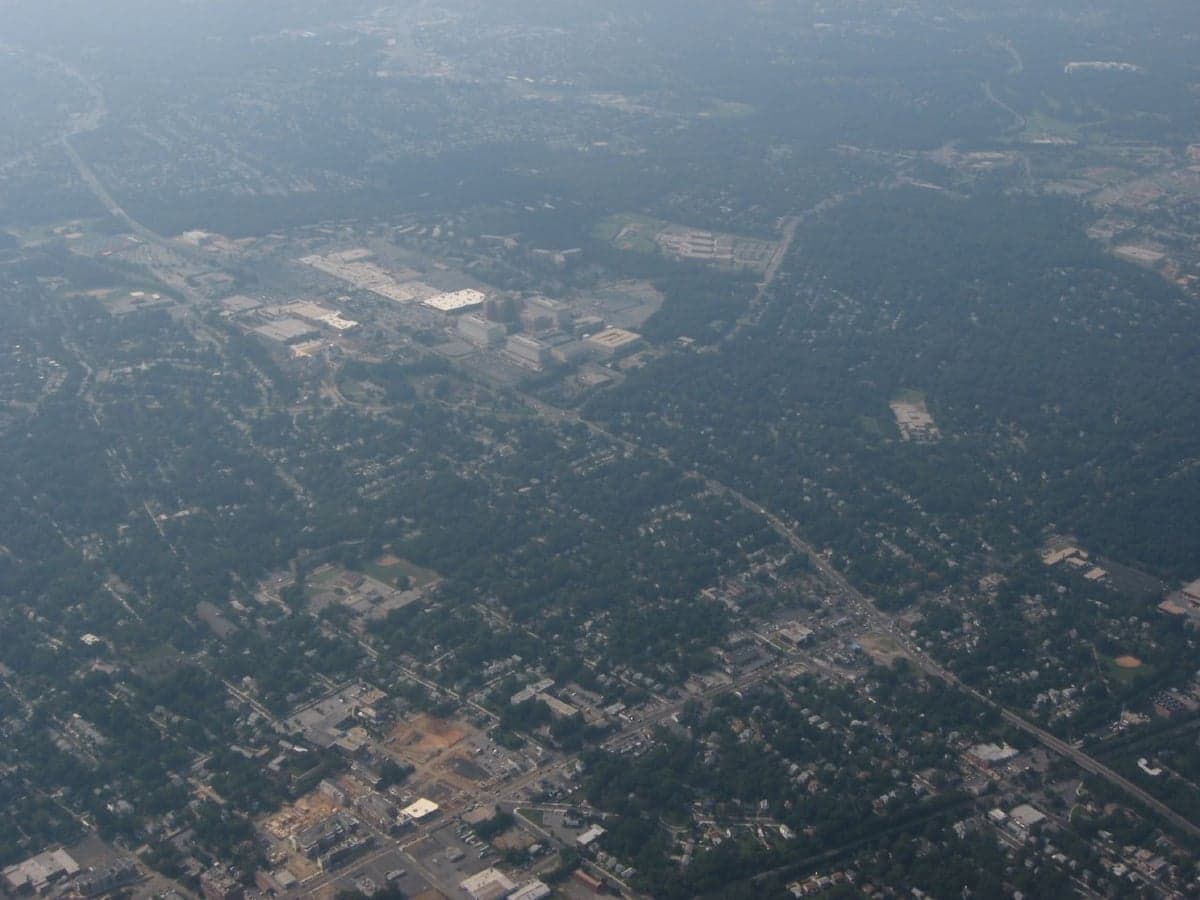
Photo: Wikipedia
Political ClimatePolitical Climate in Hyattsville, MD
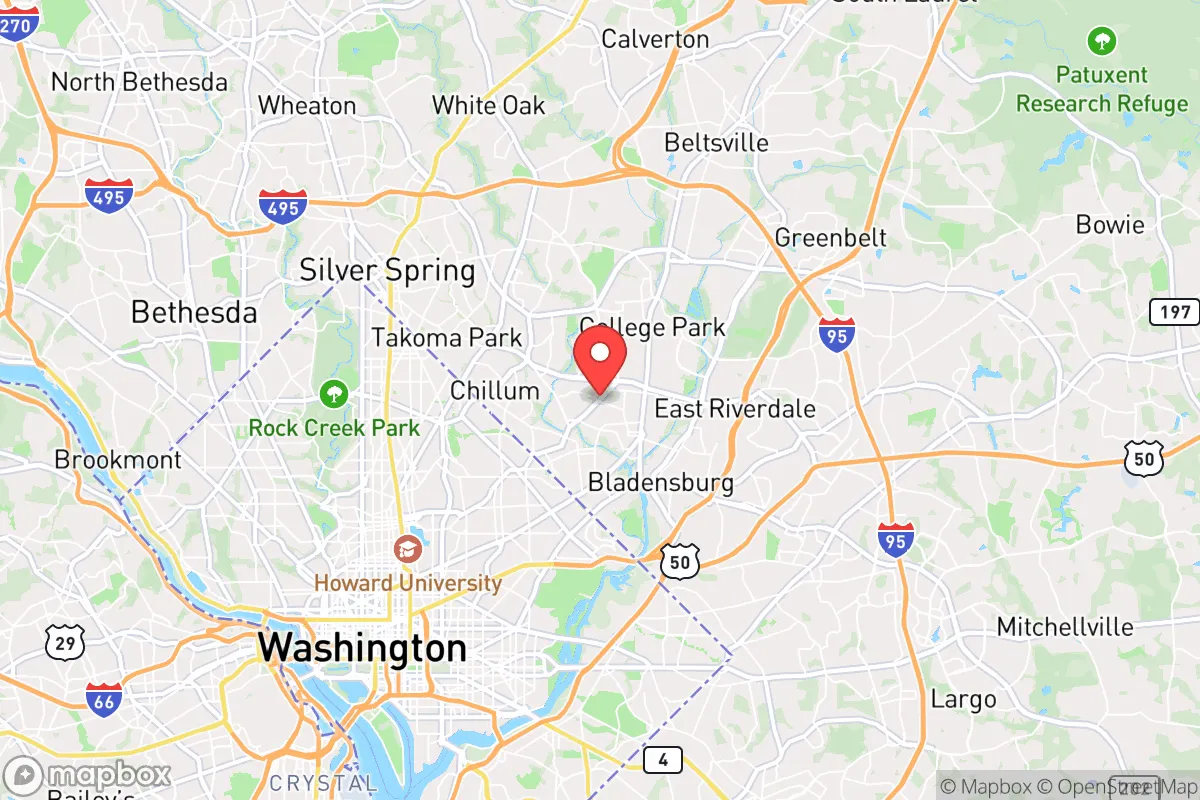
District shown is the primary district for this city’s centroid. Cities may span multiple districts.
Local Political AnalysisPolitical Analysis of Hyattsville, MD
Look, I’ve lived in Hyattsville long enough to remember when this town was a quiet, middle-class community where folks kept to themselves and the biggest political argument was over the school budget. Today, the political climate here is about as lopsided as it gets. With a Cook PVI of D+39, Hyattsville is one of the most heavily Democratic areas in the entire state—and it’s only gotten more progressive with each election cycle. The shift hasn’t been subtle; it’s been a steady march toward policies that, frankly, give me pause about how much government control we’re willing to accept in our daily lives.
How it compares
To understand just how deep blue Hyattsville is, you have to look at the surrounding areas. Drive ten minutes north to Laurel or west to Beltsville, and you’ll find communities that still have a mix of conservative and moderate voices—places where you can have a real conversation about taxes or property rights without being labeled a pariah. But Hyattsville? It’s become an island of progressive orthodoxy. Compare it to nearby College Park, which is also heavily Democratic but at least has a more transient student population that tempers some of the long-term policy drift. Hyattsville’s permanent residents have embraced a brand of politics that feels less like community governance and more like an experiment in top-down social engineering. The contrast with even slightly more balanced towns like Greenbelt—where you still see a few Republican yard signs during election season—is stark. Here, you’re lucky to find a single dissenting voice on the city council.
What this means for residents
For those of us who value personal freedom and limited government, living in Hyattsville means constantly feeling like you’re swimming against the current. The local government has a habit of getting into every nook and cranny of your life—from strict rental regulations that make it harder for small landlords to stay afloat, to zoning rules that prioritize dense, government-planned developments over the single-family homes that built this town. There’s a growing push for “equity” policies that sound good on paper but often translate into higher taxes and more bureaucracy. If you’re a small business owner, you’ve probably felt the squeeze of new fees and mandates that seem to come from nowhere. And if you’re a parent, you’ve watched the school board lean further into progressive curriculum changes that leave many of us wondering what happened to teaching the basics. The political monoculture here means there’s little pushback when the city council decides to spend your tax dollars on yet another feel-good initiative that doesn’t actually improve your quality of life.
One thing that really stands out is the cultural shift. Hyattsville used to have a strong sense of neighborly independence—people helped each other out without needing a government program. Now, there’s this creeping assumption that every problem requires a new ordinance or task force. The city’s embrace of sanctuary policies and its willingness to defy state and federal norms on immigration enforcement is a perfect example. It’s not about compassion; it’s about signaling that local government knows better than you do. If you’re looking for a place where you can live your life without constant political messaging and regulatory overreach, Hyattsville might feel suffocating. The trajectory is clear: more taxes, more rules, and less room for anyone who doesn’t fit the progressive mold. I’ve seen it happen slowly over the years, and I don’t expect it to reverse anytime soon.

State Political ClimatePolitical Climate in Maryland
State Political AnalysisPolitical Environment in the State
Maryland has long been a solidly blue state, but its political climate is far more nuanced than a simple Democratic label suggests. Over the past 20 years, the state has shifted from a moderate, union-driven Democratic stronghold to a more progressive, culturally liberal bastion, driven largely by the explosive growth of the Washington D.C. suburbs. While the state hasn't flipped in a presidential election since 1988, the margin has widened, and the internal cultural and policy battles have intensified, creating a stark divide between the urban corridor and the rest of the state.
Urban vs. rural divide
The political map of Maryland is a tale of two states. The western and eastern shores, along with the rural central counties, lean heavily Republican. Places like Garrett County (Deep Creek Lake) and Allegany County (Cumberland) routinely vote 65-70% Republican. The Eastern Shore, including Queen Anne’s County and Worcester County (Ocean City), is similarly red. However, these areas are sparsely populated. The entire state’s political gravity is dictated by the D.C. suburbs: Montgomery County, Prince George’s County, and increasingly Howard County. These three counties alone deliver over 1.5 million votes, and they vote 75-85% Democratic. Baltimore City is another deep-blue anchor, while the surrounding Baltimore County has become a competitive but trending-blue suburban battleground. The result is a state where a conservative living in Frederick or Harford County feels politically isolated, even though their local community may be red.
Policy environment
Maryland’s policy environment is aggressively progressive and interventionist. The state has a graduated income tax that tops out at 5.75%, but when combined with county-level "piggyback" taxes, effective rates can exceed 9% in places like Montgomery County. Property taxes are high, and the state has a 6% sales tax. On the regulatory front, Maryland is a leader in climate mandates, with a strict Clean Energy Jobs Act pushing toward 100% renewable electricity by 2030, driving up energy costs. Education policy is dominated by the Blueprint for Maryland’s Future, a massive funding overhaul that pours billions into public schools but also centralizes control in Annapolis, reducing local school board autonomy. Healthcare is heavily regulated, with a state-based insurance exchange and strict certificate-of-need laws that limit new hospital construction. Election laws are among the most liberal in the nation: no-excuse mail-in voting, same-day registration, and automatic voter registration are all standard. For a conservative, the policy environment feels like a top-down, one-size-fits-all approach that leaves little room for local variation or individual choice.
Trajectory & freedom
Maryland is becoming less free by nearly any measure of personal liberty. The most glaring example is gun rights. In 2023, the legislature passed the Gun Safety Act, which effectively banned the carry of firearms in most public places, including parks, hospitals, and any private business without explicit signage. This came after the Bruen decision, and the law is currently being challenged in court. On parental rights, the state passed the Trans Health Equity Act in 2023, which prohibits courts from considering a parent’s objection to gender-affirming care for minors in custody disputes, effectively overriding parental authority. Medical autonomy took a hit with the passage of a strict vaccine mandate for schoolchildren during COVID, which remains in effect for certain vaccines. Property rights are constrained by the state’s aggressive zoning and growth management laws, particularly the Smart Growth Act, which funnels development into designated areas and restricts rural landowners. On the positive side for conservatives, Maryland has no state-level rent control and no state income tax on Social Security benefits, a small but meaningful freedom for retirees. But the overall trajectory is unmistakably toward more government control over daily life.
Civil unrest & political movements
Maryland has a history of visible political activism, particularly in the D.C. suburbs and Baltimore. The 2020 George Floyd protests in Baltimore were large and occasionally violent, leading to property damage and a lasting tension between city leadership and the state police. The state’s sanctuary policies are a major flashpoint: Maryland has a "Trust Act" that limits local law enforcement cooperation with federal immigration authorities, and several counties, including Prince George’s and Montgomery, have doubled down on these policies. This has created friction with more conservative counties like Carroll County, which declared itself a "Second Amendment Sanctuary" in 2019. Election integrity has been a persistent concern for conservatives, particularly after the 2020 election, when Maryland’s universal mail-in ballot system was implemented without a voter ID requirement. The state’s Board of Elections has been criticized for purging voter rolls slowly and for a lack of transparency in ballot tracking. Organized conservative movements are active but outmatched: groups like the Maryland Republican Party and local "Moms for Liberty" chapters fight school board battles and gun rights, but they are consistently outspent and outvoted in the legislature. A new resident will notice the ubiquity of "Coexist" bumper stickers in the suburbs and the quiet, resigned frustration of rural conservatives who feel their votes don’t matter.
Projection
Over the next 5-10 years, Maryland will likely become more progressive, not less. The demographic trends are clear: the D.C. suburbs are growing faster than the rest of the state, and they are attracting a younger, more diverse, and more liberal population. The rural counties are aging and losing population. The state’s tax and regulatory environment will continue to drive out small businesses and middle-class families, while attracting high-income professionals who work for the federal government or in the D.C. tech sector. The Republican Party in Maryland is increasingly confined to a few rural strongholds and is unlikely to win a statewide office in the foreseeable future. The most realistic scenario is a slow, steady march toward a California-style policy environment: higher taxes, stricter gun laws, more centralized education control, and a growing disconnect between the ruling urban coalition and the rural minority. For someone moving in now, expect to see more toll roads, more renewable energy mandates, and a continued erosion of local control. The only wildcard is a potential federal shift: if the Supreme Court strikes down Maryland’s gun law or if a future Republican administration cuts federal funding to sanctuary states, the state’s trajectory could be disrupted. But barring that, the blue tide will keep rising.
Bottom line for a new resident: If you are a conservative moving to Maryland, you are moving into a state where your political views will be in the minority, and where state policy will frequently conflict with your values. You will pay high taxes, navigate a complex regulatory environment, and see your gun rights curtailed. However, you will also find strong, like-minded communities in places like Frederick County, Carroll County, and the Eastern Shore. The key is to choose your county wisely—local governance still matters, and a red county can offer a buffer against the worst of Annapolis’s overreach. Just don’t expect the state-level trend to reverse anytime soon.
* Values derived from national, state, county, city and local statistics and may differ in a specific area. Last updated: 2026-04-22T03:51:18.000Z
Narrative content on this page is AI-generated and may contain mistakes. Verify any details that matter before acting on them.
ReloMaps may earn a commission from affiliate links at no extra cost to you.

