
Photo: Wikipedia
Personal Sovereignty in Ada County
Moderate friction. Expect trade-offs in some aspect of personal liberty and independence.
What does Personal Sovereignty tell us?
Personal Sovereignty measures your capacity for self-reliance and independence with minimal government friction. Higher scores mean fewer barriers between you and the way you want to live... but it assumes you have the space you need and good neighbors.
What does this tell us?
Personal Sovereignty measures your capacity for self-reliance and independence with minimal government friction. Higher scores mean fewer barriers between you and the way you want to live... but it assumes you have the space you need and good neighbors.
State Policy
Energy independence: Importer (25% of energy produced in-state)
Personal Liberty
Homesteading

Personal Liberty Analysis
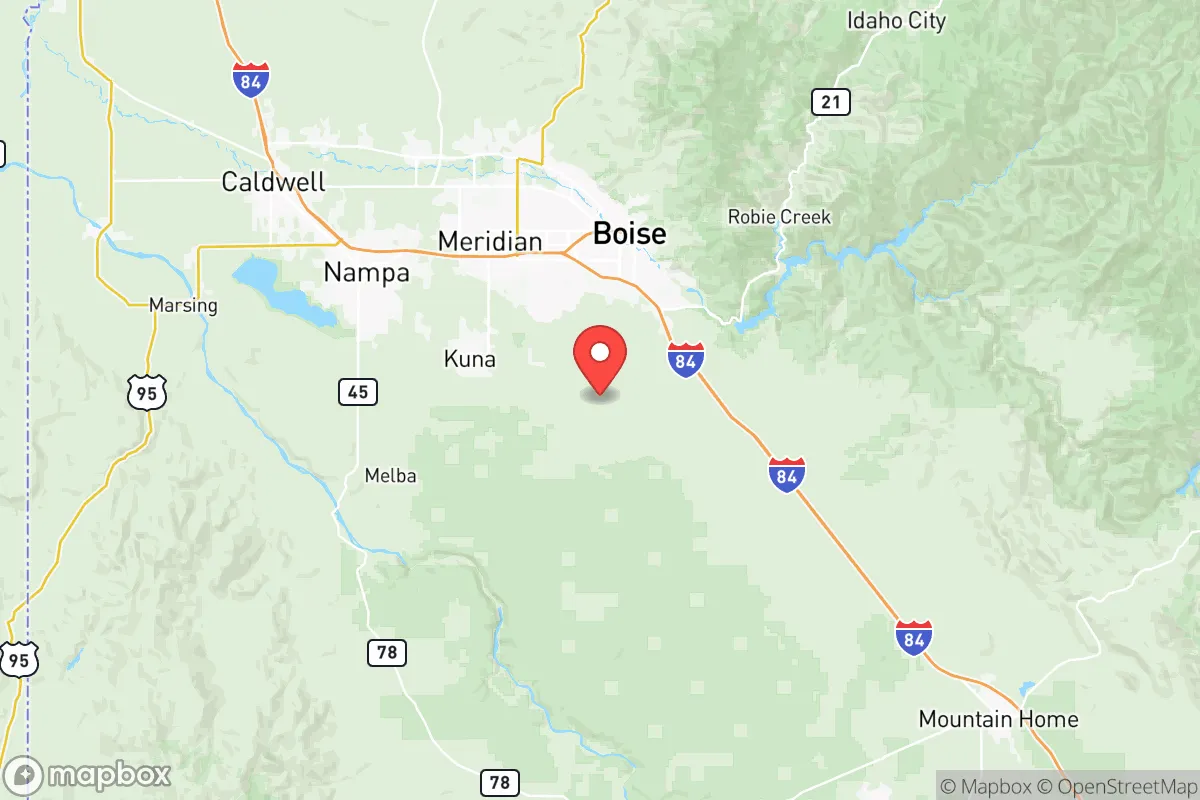
Ada County, Idaho, offers one of the strongest personal sovereignty environments in the Intermountain West, combining a state-level constitutional framework that prioritizes individual liberty with a county-level governance structure that, outside of Boise proper, tends to resist federal overreach and regulatory creep. For the strategic relocator—whether a single prepper or a parent seeking to insulate a family from top-down mandates—Ada County presents a mixed but generally favorable picture: the state’s preemption laws and culture of self-reliance provide a solid foundation, but the urban core of Boise and its immediate suburbs (Meridian, Eagle) exhibit a more progressive regulatory posture than the rural eastern and southern reaches of the county (Kuna, South Boise foothills, and the unincorporated areas near the Owyhee County line). The key is knowing where within Ada County the autonomy dial is set highest, and where it begins to tilt toward the collectivist norms that many are fleeing.
Tax burden and regulatory posture: How Ada County compares to surrounding areas
Idaho’s tax climate is a major draw for those seeking fiscal sovereignty. Ada County operates under a state-imposed property tax cap (the 1% rule) and no inventory tax, which keeps the burden on homeowners and small businesses relatively low compared to states like California or New York. However, the county’s regulatory posture is not uniform. Boise city limits impose a higher local-option tax (6% sales tax vs. the state’s 6% base, effectively 6% total) and have adopted more stringent building codes and energy-efficiency mandates that can frustrate off-grid or self-sufficient builds. In contrast, Kuna and the unincorporated areas near the Snake River (e.g., the Swan Falls corridor) have far fewer zoning restrictions, allowing for larger lot sizes, accessory dwelling units, and even small-scale agricultural operations without the red tape found in Meridian or Eagle. For the prepper or homesteader, the regulatory sweet spot in Ada County is the rural fringe—think the area around South Boise’s Hilltop Road or the Kuna-Mora Road corridor—where county zoning still permits metal buildings, livestock, and alternative energy systems without a parade of permits. The state’s right-to-farm laws further protect agricultural uses from nuisance lawsuits, a critical buffer against encroaching suburbanization.
Self-defense and gun law specifics: What the Second Sanctuary status means for residents
Idaho is a constitutional carry state, and Ada County has been a battleground for Second Amendment rights. In 2021, the county commissioners declared Ada a “Second Amendment Sanctuary,” a symbolic but meaningful stance against federal firearm restrictions. Practically, this means no county resources are used to enforce federal gun laws that conflict with state law, and concealed carry permits (though not required) are issued on a shall-issue basis with minimal wait times. The state preempts all local firearm ordinances, so Boise cannot impose its own magazine bans or waiting periods—a critical protection that cities like Seattle or Portland lack. For the survivalist, the key detail is that Ada County’s sheriff, as of 2026, has publicly stated he will not enforce any federal “red flag” orders without a court order based on Idaho law, which requires a criminal conviction or a documented threat of violence. This creates a legal buffer against the kind of preemptive confiscation seen in other states. However, note that the urban core—Boise’s North End and Downtown—has a higher density of “gun-free zone” signage at private businesses and public parks, so daily carry requires awareness of posted restrictions. The rural areas around Eagle Island State Park and the Boise River Greenbelt south of town remain largely unrestricted for lawful carry.
Self-reliance and homesteading viability: Lot sizes, zoning, and off-grid feasibility
Ada County’s zoning code is a patchwork that rewards those who know where to look. Inside the Boise city limits, minimum lot sizes are typically 6,000–8,000 square feet, and off-grid systems (solar, rainwater catchment, composting toilets) are heavily regulated—Boise requires connection to municipal water and sewer for any habitable structure, effectively banning true off-grid living within city limits. In contrast, unincorporated Ada County (zones A-1 and A-2) allows minimum lot sizes of 2.5 to 5 acres, with no requirement for municipal utilities. This makes areas like the South Boise foothills (e.g., the area around Blacks Creek Road) and the Kuna Bench (south of Kuna, toward the Snake River) viable for off-grid homesteading. Solar panels, wind turbines, and propane systems are permitted by right, and rainwater collection is legal (though limited to 2,500 gallons per property without a permit). The county’s building department is generally hands-off for agricultural structures, so a 40x60 metal shop with living quarters can be built as an “agricultural accessory building” on parcels over 5 acres, bypassing many residential code requirements. For the serious prepper, the area around Swan Falls Dam (southwest Ada County) offers the best combination of large parcels (10–40 acres), low population density, and minimal HOA restrictions, though water access requires well drilling (typically 200–400 feet deep, costing $15,000–$25,000).
Personal liberties: Parental rights, medical autonomy, speech, and property
Idaho’s legal framework strongly favors parental rights, medical freedom, and property rights—all pillars of personal sovereignty. The state’s “Parents’ Bill of Rights” (Idaho Code § 33-5201) gives parents explicit authority over their children’s education, medical decisions, and religious upbringing, and Ada County schools (particularly in Kuna and the rural districts) have resisted federal mandates like mask requirements or vaccine passports. Medical autonomy is protected by Idaho’s broad conscientious objection statute, which allows individuals to refuse any medical treatment, including vaccines, without penalty for employment or school attendance. The state also prohibits any mandate for “experimental” treatments (a term that has been tested in court regarding COVID-19 vaccines). For property rights, Ada County’s planning and zoning department is generally pro-development, but the key protection is the state’s “Private Property Protection Act,” which requires compensation for any regulatory taking that reduces property value by more than 20%. This deters the kind of overzealous land-use restrictions seen in Colorado or Oregon. Free speech is robust: Idaho has no hate speech laws, and the state’s public universities (Boise State) have been battlegrounds for campus free speech, with the legislature passing laws to protect conservative viewpoints. For the parent, this means curriculum transparency laws require schools to post all instructional materials online, and parents can opt children out of any sex education or “social-emotional learning” programs without hassle.
Overall, Ada County offers a high degree of personal sovereignty relative to the coastal states and even to neighboring counties like Blaine (Sun Valley) or Latah (Moscow), which lean more progressive. The trade-off is that the Boise metro area’s rapid growth is bringing with it the very regulatory creep many are fleeing—HOA-dominated subdivisions, increasing property taxes (though still low by national standards), and a city council that has flirted with “climate action” plans that could restrict energy choices. For the strategic relocator, the play is to buy in the unincorporated fringe—Kuna, South Boise, or the Swan Falls corridor—where county governance remains hands-off and the state’s constitutional protections provide a solid bulwark. If you want to live free, build your own infrastructure, and keep the government out of your family’s decisions, Ada County’s rural pockets are among the best in the West. Just avoid the city limits of Boise and the tightly HOAd subdivisions of Meridian and Eagle, where the sovereignty is more theoretical than practical.

* Values derived from national, state, county, city and local statistics and may differ in a specific area. Last updated: 2026-05-22T00:05:10.000Z
Narrative content on this page is AI-generated and may contain mistakes. Verify any details that matter before acting on them.
ReloMaps may earn a commission from affiliate links at no extra cost to you.

