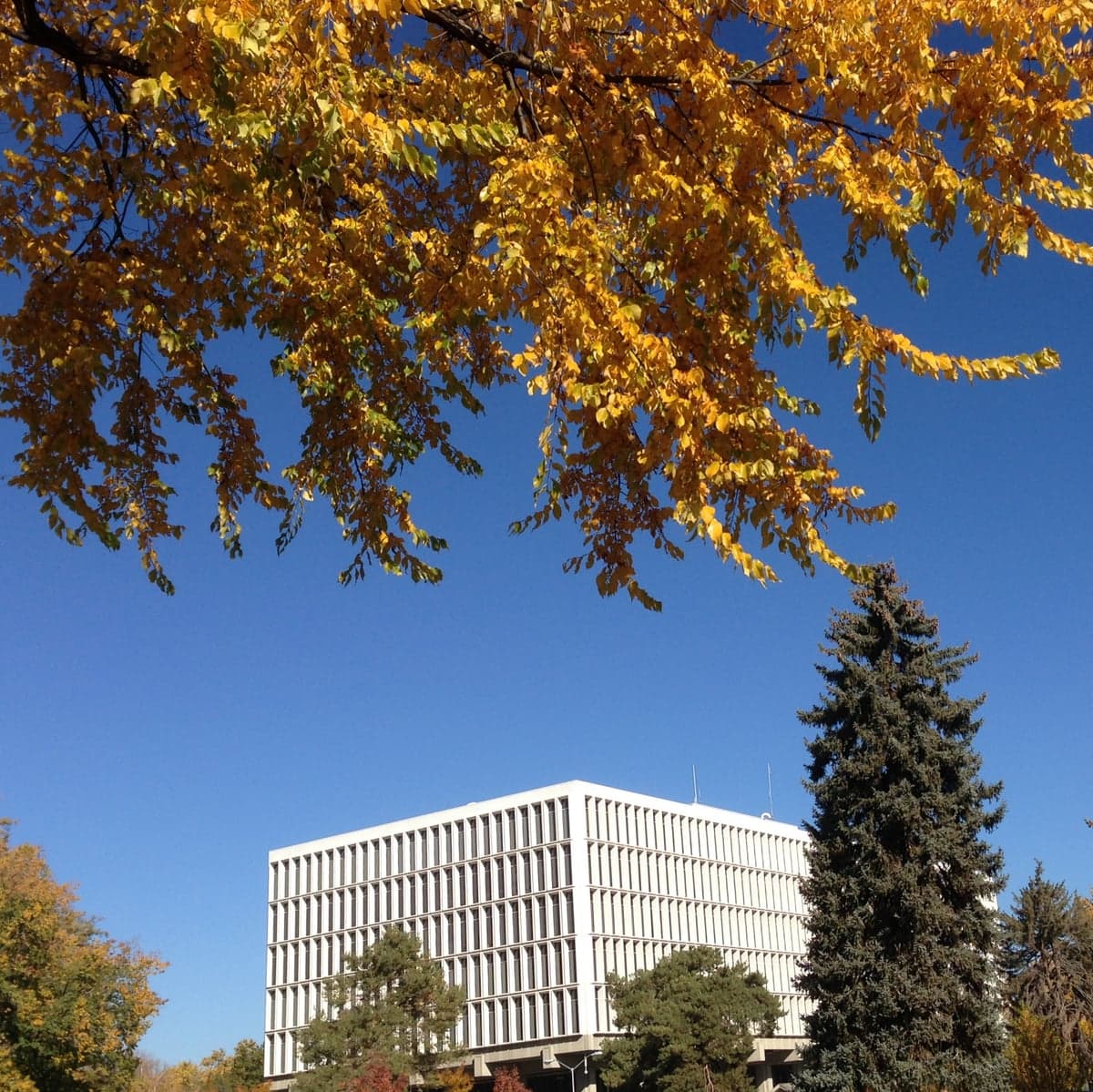
Photo: Wikipedia
Demographics of Ada County
Affluence Level in Ada County
An upper-middle-class area. Household wealth, education levels, and homeownership run ahead of national benchmarks.
People of Ada County
Ada County’s 508,052 residents today form a predominantly white, college-educated, and politically conservative population concentrated in the Boise metropolitan area. With 81.6% of the population identifying as white, 9.5% as Hispanic, and a foreign-born share of just 2.7%, the county remains less ethnically diverse than the national average, reflecting its history as a destination for domestic, not international, migration. The county’s identity is shaped by a blend of Mormon settlement, post-war federal investment, and recent waves of Californian and coastal transplants seeking lower taxes and a slower pace of life, creating a culture that prizes self-reliance, outdoor recreation, and fiscal conservatism.
Settlement & growth (pre-1960)
Before American settlement, the Boise River Valley was home to the Shoshone and Bannock peoples, who used the area for seasonal hunting and fishing. The first permanent American presence came with the Oregon Trail in the 1840s, but sustained settlement did not begin until the 1860s, when gold discoveries in the Boise Basin drew prospectors and merchants. The U.S. Army established Fort Boise in 1863, and the town of Boise City was platted the same year, quickly becoming the territorial capital. The earliest white settlers were a mix of New England Yankees, Midwestern farmers, and a small number of Mormon pioneers who pushed north from Utah, laying the foundation for the county’s conservative, family-oriented character.
Agriculture drove growth through the late 19th and early 20th centuries. The construction of the New York Canal (completed 1909) and the Arrowrock Dam (1915) opened thousands of acres to irrigated farming, attracting homesteaders from the Midwest and Great Plains. Towns like Meridian (founded 1893) and Eagle (founded 1863) grew as agricultural service centers, with Meridian becoming a hub for sugar beet and potato farming. The railroad arrived in the 1880s, linking Boise to the national economy and bringing a small wave of Chinese laborers, though most left after the railroad’s completion. By 1900, Ada County’s population was overwhelmingly native-born white, with a tiny minority of Black and Chinese residents.
The 1930s and 1940s brought two transformative shocks. The Great Depression pushed Dust Bowl refugees from Oklahoma, Texas, and the Plains into the valley, many settling in Garden City and the rural fringe of Kuna. World War II then transformed the economy: the U.S. Army built Gowen Field (now Boise Air Terminal) and Mountain Home Air Force Base just south of the county, drawing thousands of servicemen and defense workers. After the war, many veterans stayed, and the federal government’s investment in the Idaho National Laboratory (1949) and the expansion of the Bureau of Land Management’s Boise headquarters created a stable base of white-collar, government-adjacent employment. The 1950s saw the first wave of suburbanization, with Boise’s North End and West Bench developing as bedroom communities for these new professionals.
Modern era (post-1965)
The 1965 Hart-Cellar Act had a muted effect on Ada County compared to coastal regions. The foreign-born share remains low at 2.7%, and the county never developed the large ethnic enclaves seen in other Western cities. Instead, the dominant demographic force since the 1970s has been domestic in-migration from California, the Pacific Northwest, and the Rust Belt. The 1970s energy crisis and California’s rising housing costs triggered a steady stream of relocations, accelerating in the 1990s and 2000s as tech and aerospace firms expanded in the Treasure Valley. Micron Technology, founded in Boise in 1978, became the county’s largest private employer, pulling in engineers and skilled workers from across the U.S. and, to a lesser extent, from East and Southeast Asia (now 2.0% of the population).
Hispanic growth has been the most significant ethnic shift since 1965. The Hispanic share (9.5%) is concentrated in Nampa (just west of Ada County, in Canyon County) and in the agricultural areas of Kuna and southern Ada County, where Mexican and Central American immigrants arrived for farm labor and food processing jobs starting in the 1970s. Within Boise, the West Bench and Chinden Boulevard corridor have small but growing Hispanic communities, with family-owned restaurants and tiendas. The Black population (1.2%) and Indian subcontinent population (0.5%) remain tiny, with most Black residents concentrated in Boise’s Veterans Park area and Indian families clustered near the university and tech campuses.
Suburbanization has reshaped the county since the 1980s. Meridian exploded from a farm town of 2,000 in 1970 to over 117,000 today, becoming the state’s third-largest city and a magnet for families seeking new schools and larger homes. Eagle transformed from a rural crossroads into an affluent exurb, with large-lot subdivisions and a median household income well above the county average. Kuna and Star have seen similar growth, attracting younger families priced out of Boise and Meridian. The result is a county that is increasingly suburban and car-dependent, with Boise’s urban core becoming denser and more liberal while the outlying towns remain deeply conservative.
The future
Ada County’s population is projected to grow by another 150,000–200,000 by 2040, driven almost entirely by domestic in-migration from California, Washington, and Oregon. The county is not tribalizing into distinct ethnic enclaves; instead, it is homogenizing into a broadly white, conservative, family-oriented suburbia, with Hispanic and Asian communities slowly assimilating into the mainstream. The foreign-born share is likely to remain below 5% for the foreseeable future, as the county lacks the industrial base or chain-migration networks that drive large-scale international immigration. The biggest cultural tension will be between long-time residents and coastal transplants, not between ethnic groups.
The next decade will see continued sprawl into the county’s agricultural fringe, with Kuna and Star absorbing most of the new housing. Boise’s urban core will become more liberal and walkable, but the county’s political character will remain conservative, as the suburbs vote overwhelmingly Republican. The Hispanic population will grow slowly, reaching perhaps 12–14% by 2040, but will not approach the shares seen in neighboring Canyon County or in the Southwest. The East/Southeast Asian community will grow modestly, tied to Micron’s expansion and the tech sector, but will remain a small professional enclave.
For someone moving in now, Ada County is becoming a more prosperous, more suburban version of its 20th-century self: whiter and more conservative than the nation, but with a growing Hispanic minority and a small but stable Asian professional class. The county’s identity as a destination for Americans seeking lower taxes, safer neighborhoods, and outdoor access will only intensify, making it a magnet for those who fit that profile and a less obvious choice for those seeking ethnic diversity or urban density.

* Values derived from national, state, county, city and local statistics and may differ in a specific area. Last updated: 2026-05-22T00:05:10.000Z
Narrative content on this page is AI-generated and may contain mistakes. Verify any details that matter before acting on them.
ReloMaps may earn a commission from affiliate links at no extra cost to you.

