Photo: Wikipedia
Political ClimatePolitical Climate in Blaine County
Showing district-level results — no local-only data available.
Local Political AnalysisPolitical Analysis of Blaine County
Blaine County, Idaho, has historically been a bit of a political outlier in the state, but the winds are shifting in a way that should give any freedom-loving resident pause. While the county as a whole carries a Cook PVI of R+13, making it reliably Republican, that number masks a significant and concerning undercurrent. The real story is the growing progressive influence in the county seat, Hailey, and the resort town of Ketchum, which are pulling the county's politics further left than the surrounding rural areas would ever tolerate on their own.
How it compares
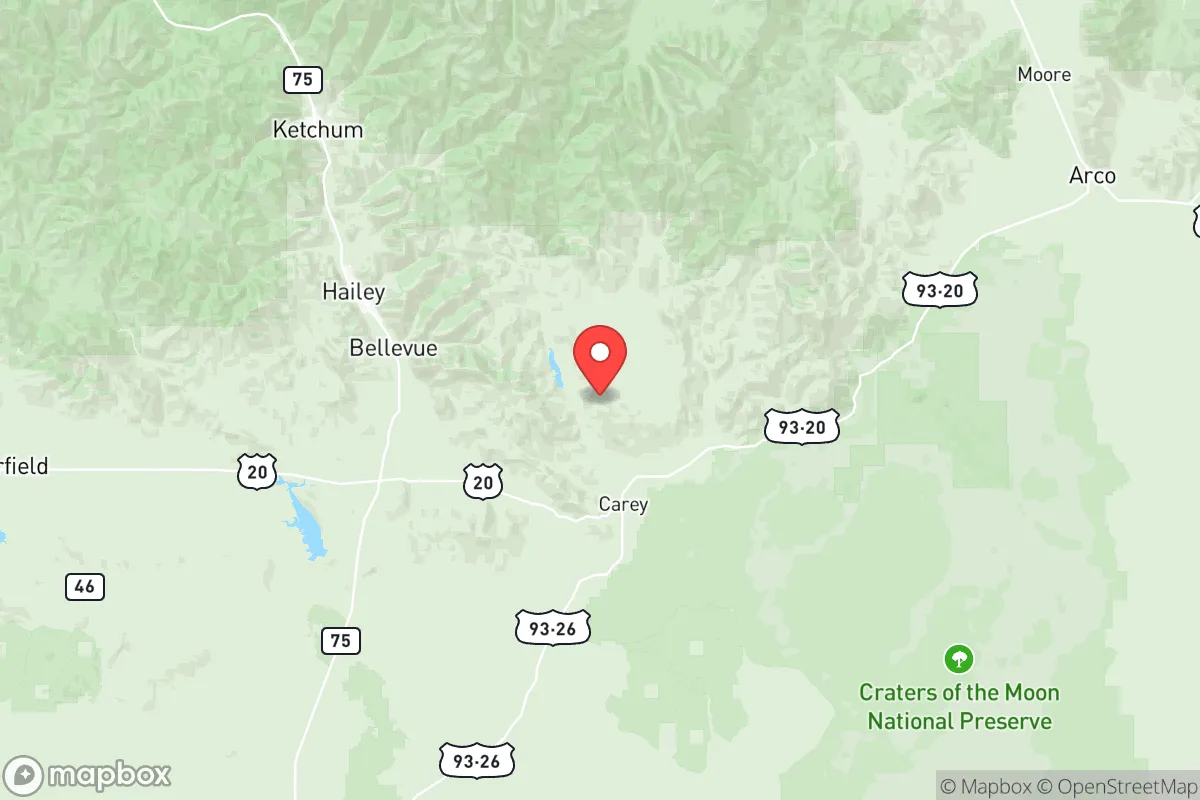
To understand the divide, you have to look at the map. The state of Idaho as a whole is a rock-solid R+18, a deep-red bastion where conservative values are the default. Blaine County, at R+13, is noticeably less red, and that gap is widening. The difference isn't coming from the ranchers and farmers in places like Bellevue or the rural precincts around Carey and Picabo—those folks vote straight-ticket Republican. The blue shift is concentrated in Ketchum and Hailey, where an influx of out-of-state transplants, many from California and the Pacific Northwest, have brought a very different set of priorities. These are the precincts that occasionally flip blue in local races, and they're the engine driving the county's slow drift away from the state's conservative mainstream. You can practically see the cultural divide at the county line.
What this means for residents
For a long-time resident, the most visible consequence is the steady creep of government overreach into local affairs. The Hailey City Council, for example, has been pushing ordinances that feel more like Portland or Seattle than Idaho—things like strict short-term rental regulations that infringe on property rights, and a general attitude of "we know better" when it comes to land use and business operations. The county commission is still majority conservative, but the progressive bloc in Ketchum and Hailey is vocal and organized. They're constantly trying to impose their vision on the rest of the county, using zoning and environmental regulations as a cudgel. It's a classic case of the urban core trying to dictate to the rural majority, and it's a direct threat to the personal freedoms that make Idaho great.
This isn't just about party labels; it's about a fundamental difference in worldview. The state legislature in Boise is solidly conservative, pushing back on federal overreach and protecting Second Amendment rights. But in Blaine County, you'll find local officials who are more than happy to accept federal grants with strings attached, or to implement policies that prioritize "equity" over individual liberty. The school board in the Blaine County School District has also become a battleground, with progressive members pushing curriculum changes that many parents find intrusive and ideologically driven. It's a constant fight to keep the local government from becoming an arm of a national progressive agenda.
Looking ahead, the trend is concerning. If the population growth in Ketchum and Hailey continues to outpace the rest of the county, the political balance could tip further left. The rural precincts are holding the line for now, but they're being outvoted by a concentrated, well-funded progressive minority in the tourist towns. For anyone who moved to Blaine County to escape the overregulation and high taxes of blue states, the writing is on the wall. The fight to keep Blaine County from becoming a liberal enclave within a conservative state is far from over, and it's a fight that every resident who values their freedoms needs to pay attention to.

State Political ClimatePolitical Climate in Idaho
State Political AnalysisPolitical Environment in the State
Idaho is one of the most reliably conservative states in the nation, with a Cook PVI of R+18 that reflects a deep, durable Republican dominance at every level of government. Over the past 10-20 years, the state has shifted even further right, driven by a combination of native libertarian-leaning culture and a massive influx of conservative migrants from California, Washington, and Oregon seeking lower taxes, less regulation, and a more traditional way of life. The dominant coalition is a blend of rural ranchers, Latter-day Saint communities, and exurban refugees from coastal states, all united by a suspicion of federal overreach and a preference for local control.
Urban vs. rural divide
The political map of Idaho is starkly divided between its few urban islands and the vast, deeply red countryside. The Treasure Valley, anchored by Boise, Meridian, and Nampa, is the state’s population center and the only region where Democrats can be competitive. Ada County (Boise) has trended purple in recent cycles, with Boise itself electing a Democratic mayor and sending a few Democrats to the legislature, but even here, the suburbs like Eagle and Star are reliably conservative. The real power lies in the rural counties: Boundary County in the north, Lemhi County in the central mountains, and Oneida County on the Utah border routinely vote 80%+ Republican. The Idaho Panhandle, including Coeur d’Alene and Post Falls, has seen explosive growth from conservative Californians and Washingtonians, turning what was once a swing region into a solid red bastion. The only notable blue dot outside Boise is Blaine County (Sun Valley), a wealthy ski resort area that votes like a coastal enclave, but its influence is negligible statewide.
Policy environment
Idaho’s policy environment is aggressively pro-business and anti-tax. The state has a flat income tax rate of 5.8% (down from 6% in 2024) and a corporate rate of 5.8%, with a constitutional supermajority requirement for any tax increase. There is no estate tax, no inheritance tax, and no franchise tax on businesses. The regulatory posture is light-touch: occupational licensing is minimal, environmental permitting is streamlined, and there is no state-level rent control or price gouging law. Education policy is a flashpoint: the state has a robust school choice landscape, including charter schools, open enrollment, and a new education savings account (ESA) program passed in 2023 that allows parents to use state funds for private school tuition or homeschooling expenses. Healthcare is largely market-driven, with no state-run insurance exchange and a Medicaid expansion (passed by ballot initiative in 2018) that remains controversial among conservatives. Election laws are among the most secure in the nation: voter ID is required, same-day registration is not allowed, and absentee ballots require an excuse. The state also passed a law in 2023 banning ranked-choice voting and requiring hand-count audits of all ballots.
Trajectory & freedom
Idaho is becoming more free in most dimensions, particularly on gun rights, parental rights, and medical autonomy. In 2023, the legislature passed a constitutional carry law (HB 124) allowing permitless carry of concealed firearms, and in 2024 it passed a “Second Amendment Preservation Act” that prohibits state enforcement of any future federal gun bans. Parental rights were strengthened with the “Parents’ Bill of Rights” (SB 1328, 2024), which requires schools to notify parents of any curriculum involving sexuality or gender identity and prohibits school employees from withholding information about a child’s mental health. Medical autonomy was expanded with the “Medical Freedom Act” (HB 220, 2023), which bans vaccine mandates by private employers and prohibits discrimination based on vaccination status. On the other hand, property rights have seen some erosion: the state’s “eminent domain for economic development” law remains on the books, and a 2024 bill (SB 1345) that would have banned homeowners’ associations from restricting solar panels was watered down. Taxation is trending downward: the 2024 legislative session cut the top income tax rate from 5.8% to 5.695% and increased the grocery tax credit. The overall trajectory is toward greater individual liberty, with the state consistently ranking in the top 5 on the Cato Institute’s “Freedom in the 50 States” index.
Civil unrest & political movements
Idaho has a long history of anti-government sentiment, but large-scale civil unrest is rare. The most visible flashpoint in recent years was the 2020 protests in Boise, where Black Lives Matter demonstrations drew several hundred people and were met with counter-protests from armed militia groups, including the “Idaho Three Percenters.” That tension has largely subsided, but the underlying political movements remain active. The Idaho Freedom Foundation, a conservative think tank, wields outsized influence in the legislature, pushing for tax cuts, school choice, and anti-vaccine legislation. On the left, the Idaho Democratic Party is weak and fractured, with its strongest base in Boise’s North End and the Sun Valley area. Immigration politics are a major issue: the state passed a law in 2024 (HB 421) requiring all employers to use E-Verify and making it a felony for illegal immigrants to vote, and there is ongoing debate about a “sanctuary city” ordinance in Boise, which the city council rejected in 2023. Election integrity remains a hot topic: the 2022 primary saw a controversy over ballot drop boxes in Ada County, leading to a 2023 law banning unmonitored drop boxes statewide. There is no serious secession or nullification movement, though the “Idaho State Sovereignty” resolution (passed in 2021) asserts the state’s right to nullify federal laws it deems unconstitutional.
Projection
Over the next 5-10 years, Idaho will likely become even more conservative, driven by continued in-migration from blue states. The population is projected to grow by 15-20% by 2035, with most new residents settling in the Treasure Valley and the Panhandle. These migrants are overwhelmingly conservative-leaning, often citing taxes, crime, and school closures as reasons for leaving their home states. The Democratic Party’s base will remain confined to Boise and Blaine County, with no realistic path to statewide power. The biggest wildcard is the growing tension between the “native” libertarian strain of Idaho conservatism and the “newcomer” evangelical strain: natives tend to favor minimal government across the board, while newcomers sometimes push for more aggressive social legislation (e.g., abortion bans, book bans). The 2024 legislative session saw a failed attempt to ban abortion at conception (HB 666), which was opposed by some libertarian Republicans who argued it was an overreach. Expect more such battles, but the overall direction is clear: lower taxes, less regulation, stronger gun rights, and greater parental control over education. A new resident moving in now should expect to find a state that is increasingly aligned with the values of the pre-2020 Republican Party, with a growing economy and a political culture that prizes individual freedom over collective action.
Bottom line for a new resident: If you’re moving to Idaho for freedom, you’re making the right call. The state is on a trajectory toward even lower taxes, stronger property rights, and greater personal autonomy. But be aware that the rapid growth is straining infrastructure and housing, and the political culture is becoming more polarized between the libertarian old guard and the evangelical newcomers. Pick your community carefully: Eagle and Star are solidly conservative suburbs, Coeur d’Alene is a booming red enclave, and Boise’s North End is the only place you’ll find progressive politics. If you value low taxes, gun rights, and school choice, you’ll feel right at home. If you’re looking for a place where the government stays out of your life, Idaho is about as close as you’ll get in the Lower 48.
* Values derived from national, state, county, city and local statistics and may differ in a specific area. Last updated: 2026-05-27T19:05:07.000Z
Narrative content on this page is AI-generated and may contain mistakes. Verify any details that matter before acting on them.
ReloMaps may earn a commission from affiliate links at no extra cost to you.

